How Much Are Your Cards Worth? A Realistic Valuation Guide

Published August 10, 2026 · Updated July 23, 2026 · 13 min read

Here is the honest answer up front: most trading cards — Pokémon, Magic, or anything else — are worth a few cents each, and no amount of wishful searching changes that. The value of a collection is almost never spread evenly across it; it concentrates in a handful of specific cards, in specific printings, in good condition. The job of valuing your cards is really the job of finding those few and not fooling yourself about the rest.

This guide shows you how to do that properly: what actually makes a card valuable, how to identify the exact version you own (this is where most people go wrong), where to check prices that reflect real transactions rather than seller fantasies, and why the amount you can get selling a card is not the same as what it is worth in a trade. Every price cited here comes from live market data in the Swaptio catalog, so you can see how wide the real range is — from a $0.33 token to a four-figure piece of 1993 cardboard.

The uncomfortable truth: most cards are worth cents

Trading card games are printed in enormous volumes, and the rarity systems exist precisely to make most of what you pull nearly worthless while a thin top layer carries the value. Commons and uncommons from any modern set exist in the millions of copies. Supply that large meets limited demand, and the market price lands at pocket change — often less than the sleeve you would put the card in.

That is not a scam and it is not bad luck; it is the design of the hobby. Bulk cards are how the game gets played, how beginners build decks, and how packs stay affordable. The mistake is not owning bulk — everyone does — the mistake is assuming a big stack of cards must add up to real money. A thousand commons at a few cents each is still lunch money, and the shipping costs to sell them usually exceed their value.

The practical consequence: when you sit down to value a collection, do not count cards, triage them. Set aside everything that is a visibly higher rarity (holos, full arts, alternate arts, anything with a low print run), anything old enough to predate modern print volumes, and anything you know is played competitively. That short stack is where essentially all of your money lives. The rest still has a use — as trade filler, deck material, or gifts — just not as a payday.

What actually makes a card valuable?

Four factors decide almost every card price, and they multiply rather than add. Rarity is the first filter: how hard the card is to pull or how few were printed. Demand is the second, and it comes in two flavors — competitive players who need the card to win, and collectors who want the character, the artwork, or the set completion. Condition is the third, and it can divide a price by five or more. Edition is the fourth: the same card name printed in different sets or years can differ in value by orders of magnitude.

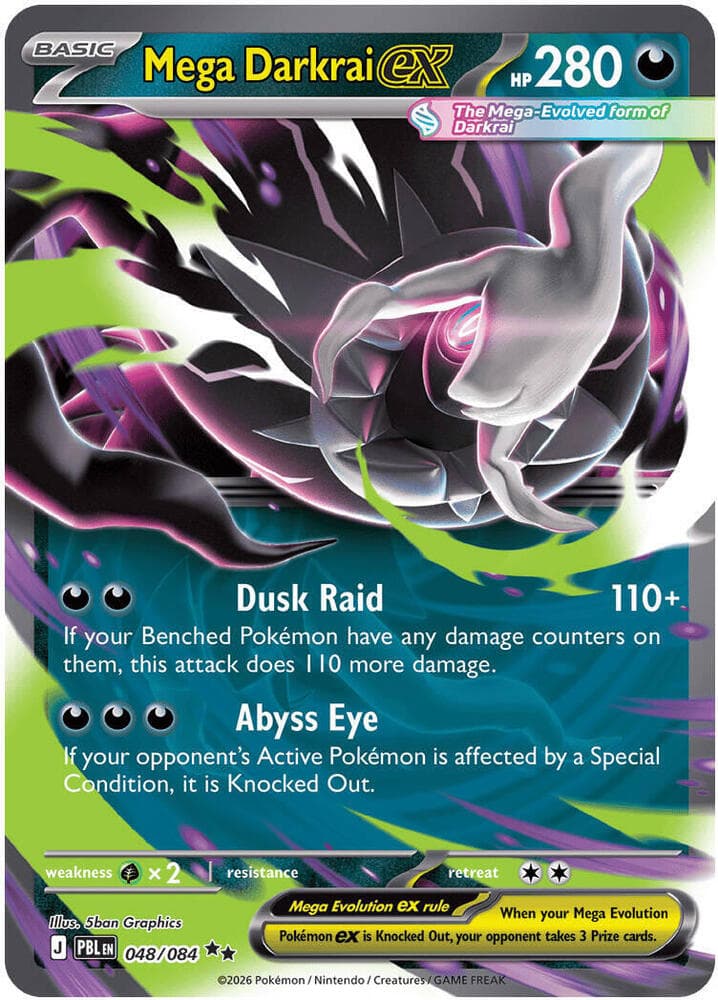
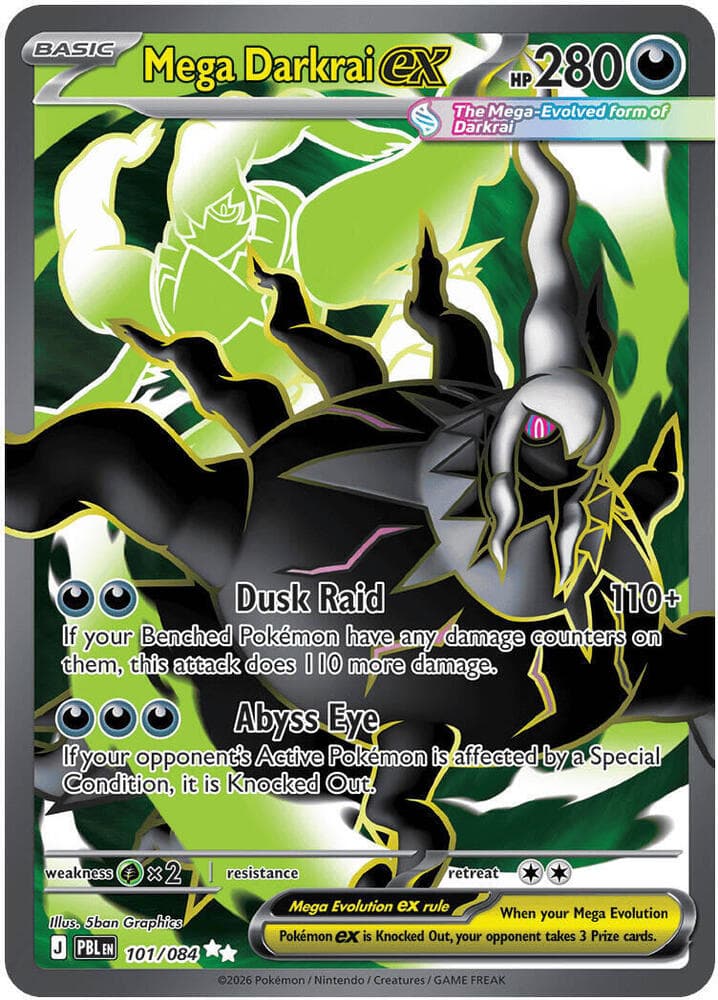
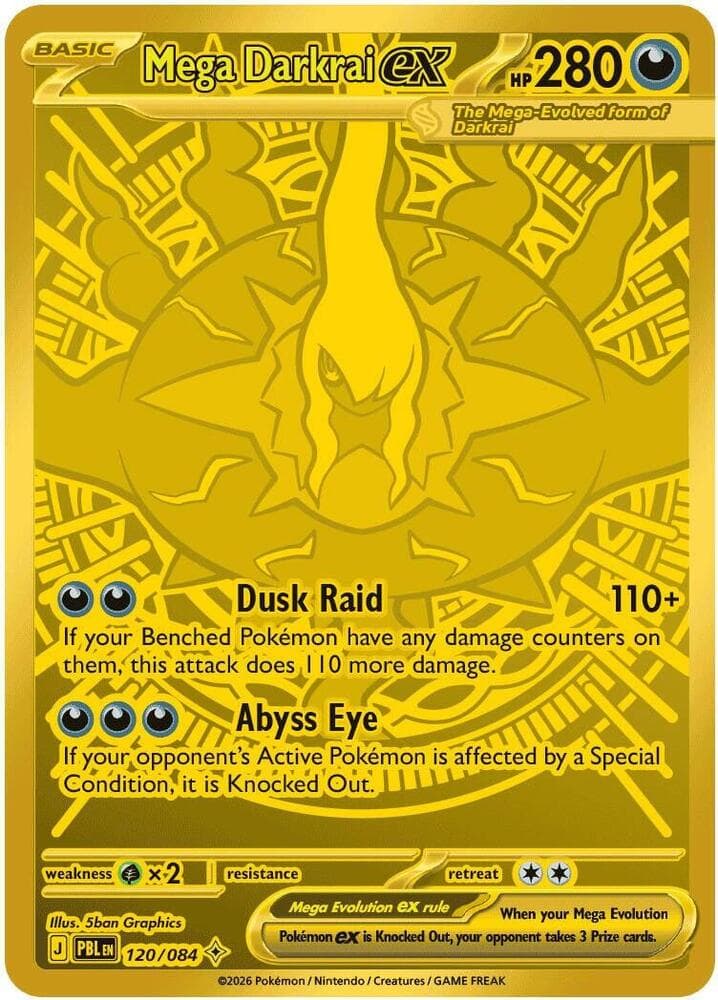
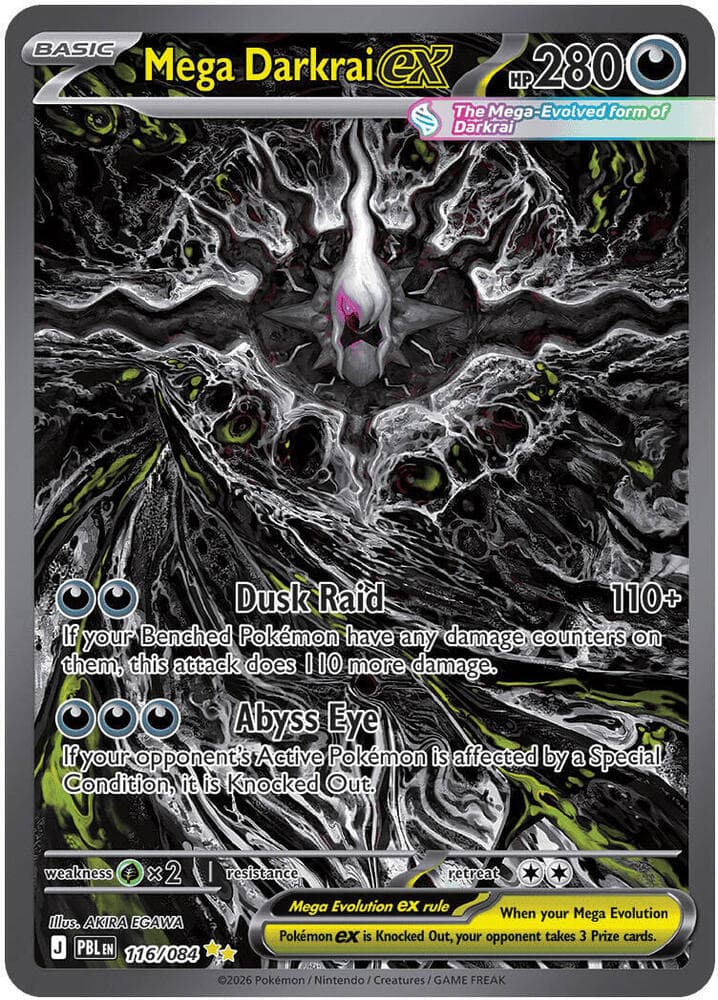
The rarity effect is easiest to see when the same card exists at several tiers in one set. Mega Darkrai ex from Pitch Black is the perfect live example: the regular Double Rare (#048) sits around $0.92, the full-art Ultra Rare (#101) around $13.76, the gold Mega Hyper Rare (#120) around $199.60, and the Special Illustration Rare (#116) around $293.88. Identical Pokémon, identical playability, same set — a spread of more than 300x driven purely by pull rates and artwork.

The edition effect can be even more extreme. Sol Ring is one of the most reprinted cards in Magic's history, and modern copies cost about as much as a coffee. But the Limited Edition Alpha printing from 1993 — same name, same function — carries a market price around $1,147.47, because only a tiny number were ever printed and Alpha is the origin point of the entire hobby. When someone tells you "Sol Ring is worth a thousand dollars", they are telling you about one printing out of dozens. Which brings us to the single most important skill in valuation: knowing exactly which version you hold.

How to identify exactly which card you have

Almost every disappointing valuation story starts the same way: someone looked up their card by name, saw the price of a different printing, and anchored on it. To price a card you need four data points, all printed on the card itself: the set (identified by a symbol or a set code near the bottom), the collector number (like 116/086 or 269), the variant (holo, reverse holo, foil, first edition stamp, promo stamp), and the language of the print. Change any one of these and you may be looking at a completely different price.

The Mega Darkrai ex example from the previous section is exactly why the collector number matters: four cards with the same name in the same set, ranging from under a dollar to nearly three hundred. Variant matters just as much — a reverse holo and a regular print of the same number are different products to the market — and language shifts prices too, because supply and demand differ by region. Japanese prints of some cards are cheaper than English; for others it is the opposite.

This identification work is tedious by hand, which is why the Swaptio catalog is built around exact printings rather than card names. Every card page — for example the Mega Darkrai ex Special Illustration Rare — shows the specific set, number, and variant, along with its current market price and a price history chart, so you can see not just what it is worth today but whether that number has been rising, falling, or flat. Once you can match the card in your hand to its exact catalog entry, the guesswork is gone.

Where should you look up prices — and which prices count?

There are two kinds of prices on the internet, and confusing them is the most expensive mistake in this hobby. List prices are what sellers ask. Market prices are what buyers actually pay. Anyone can list a card for any number they like; a listing sitting unsold at an absurd price for months is not evidence of value, it is evidence of the opposite. Real value shows up only where transactions actually close.

That is why serious price references are built from completed sales — aggregated transaction data across many marketplaces — rather than from whatever is currently listed. When you research your card, always prefer sold or market figures over asking prices, and look at several recent data points rather than one outlier. A single lucky sale does not set a price; a cluster of them does. The market prices shown in the Swaptio catalog follow this principle: they come from aggregated market data for the exact printing, not from what any individual seller hopes to get.

Two more habits keep your expectations honest. First, check the price history, not just today's number — trading card prices move with set rotations, tournament results, reprints, and hype cycles, and a card that spiked last month may already be sliding. Second, remember that a market price assumes a typical copy in the condition most copies are traded in. Yours might be better or worse — which is the next section.

Condition can multiply or divide the price

Every market price you see implicitly describes a card in good shape — typically Near Mint. The moment your copy has visible wear, you are no longer selling that card; you are selling a discounted version of it. The standard scale runs from Near Mint (NM) through Lightly Played (LP) and Moderately Played (MP) down to Heavily Played (HP) and Damaged, and each step down takes a real bite out of the value. On expensive cards, the gap between NM and MP alone can be worth more than most of your collection combined.

The discounts are not linear, and they get steeper the more valuable the card is. Wear that would be irrelevant on a fifty-cent common — slight edge whitening, a soft corner — matters enormously on a chase card, because the buyers at that level are collectors who care about presentation and future grading potential. A scratch across the holofoil or a crease is even harsher: a creased card is effectively capped near the bottom of the scale no matter how good the rest of it looks.

Before you value anything, look at your card under good light: corners, edges, surface, and centering, front and back. Be more skeptical of your own cards than you would be of a stranger's — every collector overgrades their own. Our card condition guide walks through the NM/LP/MP/HP scale with the exact criteria traders use, and learning it is the fastest upgrade you can make to your valuation skills: it protects you both when estimating your own cards and when evaluating what someone offers you.

Sale value vs. trade value: they are not the same number

Here is the part most valuation guides skip. When you sell a card, you almost never receive its market price. Sell to a shop or a buylist and you typically get a substantial cut below market — the intermediary needs margin to resell. Sell on a marketplace yourself and you give up platform fees, payment fees, and shipping, plus the time cost of listing and the risk of returns. The number you see in a price guide and the cash that lands in your pocket are two different figures, and the gap between them is the intermediary's spread.

Trading changes that math. When two collectors swap cards directly, both sides can value their cards at full market price, because nobody in the middle is taking a margin. Your $13.76 Ultra Rare trades as $13.76 of value, not as the fraction a buylist would pay you for it. That is the core economic argument for trading over cash-out: the spread disappears, and both sides keep it. This is exactly the model Swaptio is built on — collectors exchanging directly, with real market prices as the neutral reference so both parties can see that a deal is balanced.

The practical takeaway: before selling a card at a steep discount to its market price, check whether someone wants to trade for it. Your duplicates are worth more as trade currency than as buylist fodder, and the cards you actually want cost you less when you pay in cards instead of cash. If you do trade, do it with the same care you would apply to a sale — our guide on how to trade cards safely online covers verifying the other side, documenting condition, and shipping properly.

When is grading worth it?

Professional grading — sending a card to a company that authenticates it, scores its condition, and seals it in a case — can multiply the value of the right card. It can also turn a fifty-dollar card into a thirty-dollar card in a plastic tomb, once you subtract fees and shipping. Grading costs real money per card regardless of the outcome, so the math only works when the card is valuable enough, and its condition good enough, for a high grade to add more than the process costs.

As a rough triage: cards worth a few dollars are essentially never worth grading; strong candidates are genuinely rare cards in near-perfect condition, where the difference between a raw copy and a top-graded copy is large. Condition is the gate — if your card would not honestly grade at the top of the scale, the case rarely pays for itself. The full decision — which grader, which fee tier, how centering and surface are scored, and how to estimate a grade before you pay — deserves its own article, and we are working on a dedicated grading guide for this blog.

Until then, the safe default is: identify the exact printing, check its market price and history, assess condition honestly, and only then ask whether grading changes the picture. For the overwhelming majority of cards, it does not — and that is one more piece of the realistic answer to "how much are my cards worth".

Real market price examples

Six real cards from the Swaptio catalog, with live market prices, chosen to show how wide the honest range is — from a token worth less than a stamp to a 1993 uncommon worth four figures. Treat these numbers as a snapshot of the moment, not a promise: every card page in the catalog shows the current price and its history.

Ragavan #2

common · Market price: $0.33

A Ragavan token from Aether Revolt at around $0.33 — not even a playable card in its own right, printed as filler in huge volume. This is the honest baseline: the large majority of any binder lives at this end of the scale, and that is normal.

View in catalog →

Mega Darkrai ex #048

Double Rare · Market price: $0.92

The regular Double Rare printing of Mega Darkrai ex, around $0.92. A genuinely playable card from a current set — proof that game demand alone does not create value when the print run is large. The cheap version of a chase card is one of the most common things people misprice.

View in catalog →

Mega Darkrai ex #101

Ultra Rare · Market price: $13.76

The same Mega Darkrai ex as a full-art Ultra Rare, around $13.76. One step up the rarity ladder and the price moves by an order of magnitude. Set and collector number — not the card name — are what you are actually pricing.

View in catalog →

Mega Darkrai ex #120

Mega Hyper Rare · Market price: $199.60

The gold Mega Hyper Rare printing, around $199.60. At this tier the buyers are collectors, not players, and pull rates are brutal. Condition starts to matter enormously here: small wear takes large bites out of prices like this.

View in catalog →

Mega Darkrai ex #116

Special Illustration Rare · Market price: $293.88

The Special Illustration Rare, around $293.88 — over 300x the regular printing of the same Pokémon in the same set. Chase artwork plus scarcity is the formula behind almost every modern high-value card.

View in catalog →

Sol Ring #269

uncommon · Market price: $1147.47

Sol Ring from Limited Edition Alpha (1993), around $1,147.47. The most reprinted staple in Magic costs pocket change in modern sets — but the original printing is a four-figure collectible. Edition can matter more than everything else combined.

View in catalog →

Turn the valuation into actual value

Knowing what your cards are worth is only useful if you do something with it. The cards you triaged as trade material are worth more moving than sitting: publish what you are looking for so collectors holding your missing cards can find you, and offer your duplicates so their full market value works for you instead of gathering dust — no intermediary spread in the middle.

And if you want to go deeper on what specific cards are worth chasing, the set guides on the blog break down current sets card by card, with the same real market data used throughout this article.

Frequently asked questions

Are my Pokémon cards from the 90s worth anything?

Some are, most are not. Commons and uncommons from the late 90s were printed in enormous quantities and usually sell for little, especially with played-condition wear. The value concentrates in holo rares (especially 1st Edition or Shadowless Base Set printings) and in cards in genuinely good condition. Identify the exact set and printing before assuming either way — a 90s card is old, but old alone is not rare.

Why does the same card have such different prices online?

Usually because they are not actually the same card: different set, collector number, variant (holo, reverse, 1st Edition), language, or condition. Mega Darkrai ex from Pitch Black ranges from $0.92 to $293.88 across printings in the same set. The rest of the gap comes from list prices versus real market prices — what sellers ask is routinely far above what buyers pay.

Is a big binder of commons worth any money?

As a lump of cash, almost never — bulk commons trade for cents each, and selling them costs more in time and shipping than they return. But they are not useless: they have value as deck-building material, as extras in trades, and for new players. Just do not count them when estimating what your collection is worth.

Why is the price I get offered lower than the price I see online?

Because a shop or buylist has to resell your card at market price and live on the difference — that spread is their margin, not a scam. Selling it yourself recovers part of the gap but costs fees, shipping, and time. Trading directly with another collector is the one route where both sides can use full market price as the reference, because no intermediary takes a cut.

Should I sell my valuable cards or trade them?

If you need cash, sell — knowing you will receive meaningfully less than market price. If what you actually want is other cards, trading is usually the better deal: your card counts at its full market value and so does theirs, so neither side pays the intermediary spread. Either way, price the exact printing and be honest about condition first.