Storm Emeralda (M6) Card List, Chase Cards & Pull Rates Guide

Published August 9, 2026 · 44 min read

The MEGA expansion pack Storm Emeralda (set code M6) hit Japanese shelves on July 31, 2026 — five days before this guide was written — and it arrives carrying the heaviest crown in the modern hobby: Mega Rayquaza ex. The sky dragon that once defined an entire competitive era returns as the set mascot, and its Mega Ultra Rare printing (#113) is already the most expensive card of the M-series launch window, sitting at $1,299.99 in our market snapshot of August 9, 2026. Around it, a Hoenn-soaked checklist celebrates the Emerald side of the classic weather-trio story: Kyogre, Groudon and Rayquaza all appear, flanked by characters straight out of the Emerald and Omega Ruby/Alpha Sapphire games — Zinnia, Aarune, and the Mossdeep twins Tate & Liza.

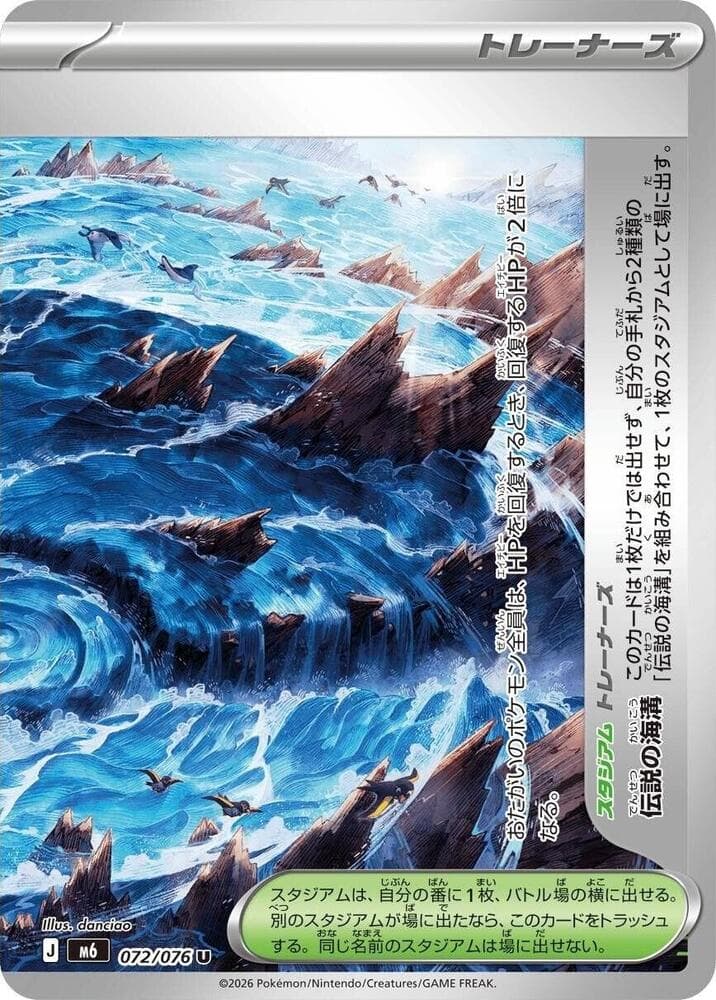
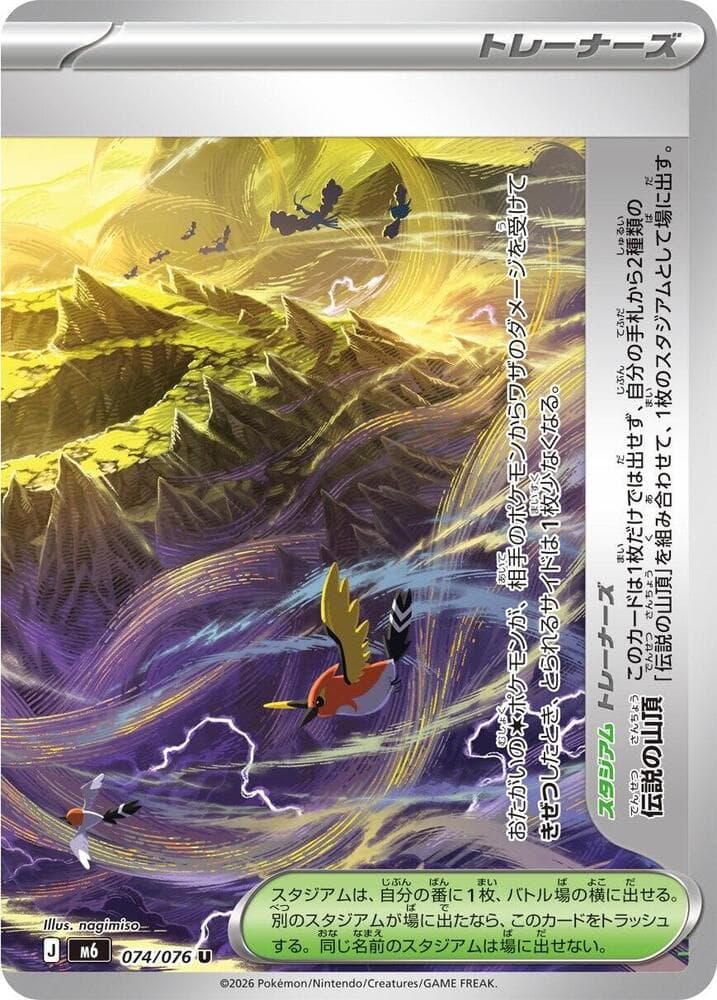
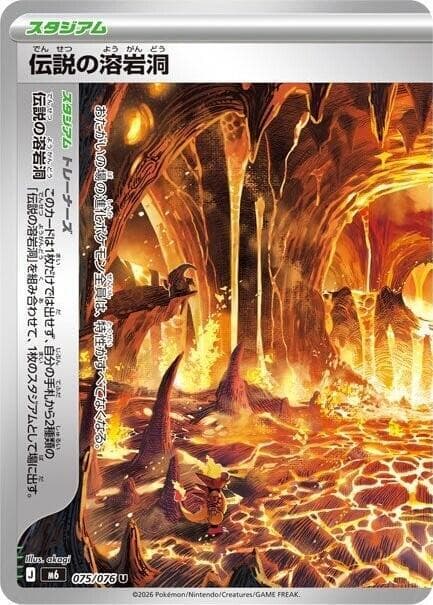
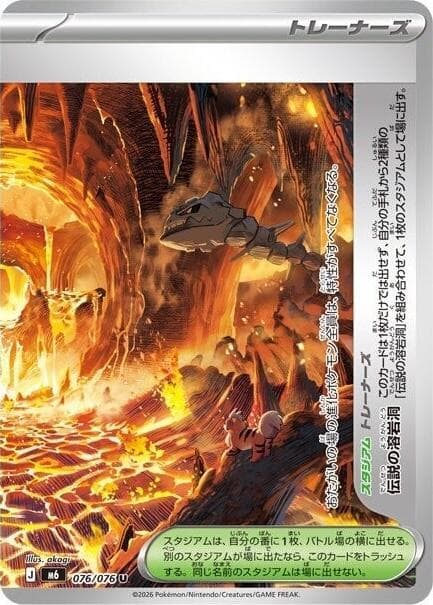
Storm Emeralda is also a genuinely interesting set beyond its trophy card. It introduces the first split Stadium cards in the game's history — three "Legendary" Stadiums, each printed across two collector numbers that join into a single panoramic artwork and play as one card — and it debuts three new Mega evolutions alongside Rayquaza: Mega Golisopod ex, Mega Golurk ex and Mega Malamar ex. The print structure is classic modern Japan: 76 cards in the main set, then 37 secret numbers stacked above it — 12 Art Rares, 18 Super Rares, 6 Special Art Rares and the single MUR — for 113 numbers in total, 116 physical cards once you count the two-part Stadium "Set of 2" variants.

This guide walks the entire checklist card by card, with the market price of every printing taken from the same August 9, 2026 snapshot — launch-window prices, five days old, which is exactly the moment when they are least stable. We flag that honestly throughout: what you see here is where the market opened, not where it will settle. Along the way we cover what a box actually yields, how the set will reach the international game, and how to trade a brand-new Japanese set without paying the week-one hype tax.

Storm Emeralda at a Glance: Japan's M6 Mega Expansion

The structure first. Storm Emeralda's main set runs 76 printed cards (numbered 001–076): 38 Commons, 25 Uncommons, 8 Rares and 8 Double Rares — the Double Rare tier being where the set's eight ex Pokémon live, including all four Mega debuts. Above the printed total sit 37 secret numbers: 12 Art Rares (077–088), 18 Super Rares (089–106, including three gold Special Energy cards), 6 Special Art Rares (107–112) and one Mega Ultra Rare (113). Add the alternate "Set of 2" printings of the three split Stadiums and the physical checklist lands at 116 cards. If rarity tiers are new territory for you, our rarity symbols guide covers how the Japanese tiers work.

The product itself follows the standard Japanese formula: 30 packs per box, 5 cards per pack, ¥200 per pack (¥6,000 per box at MSRP). Distribution is the story of the year, though — like other recent MEGA-era sets, initial supply moved through store lotteries and allocations rather than open retail, which is a big part of why aftermarket box prices opened far above MSRP.

Thematically, this is the Emerald chapter of the Mega era. Where M5 Abyss Eye went dark with Darkrai, M6 goes up into the stratosphere: the checklist is built around the Hoenn weather trio and the sky-dragon lore that the Emerald generation told best. Kyogre and Groudon appear as printed Rares with Art Rare encores, the three split Stadiums are literally the trio's homes — the Marine Trench, the Summit, the Lava Tube — and the Trainer roster (Zinnia, Aarune, Tate & Liza) reads like an ORAS cast reunion. It is a coherent, affectionate set design, and collectors have responded to it.

One structural note worth internalizing before you read the card-by-card commentary: this set's value is extraordinarily top-heavy even by modern standards. Of the 116 cards in the snapshot, the top two numbers — the MUR and the Rayquaza SAR — carry roughly two thirds of the set's total market value. Everything below the Special Art Rare tier is, by chase-set standards, affordable.

The Chase Cards: One Crown and Six Special Art Rares

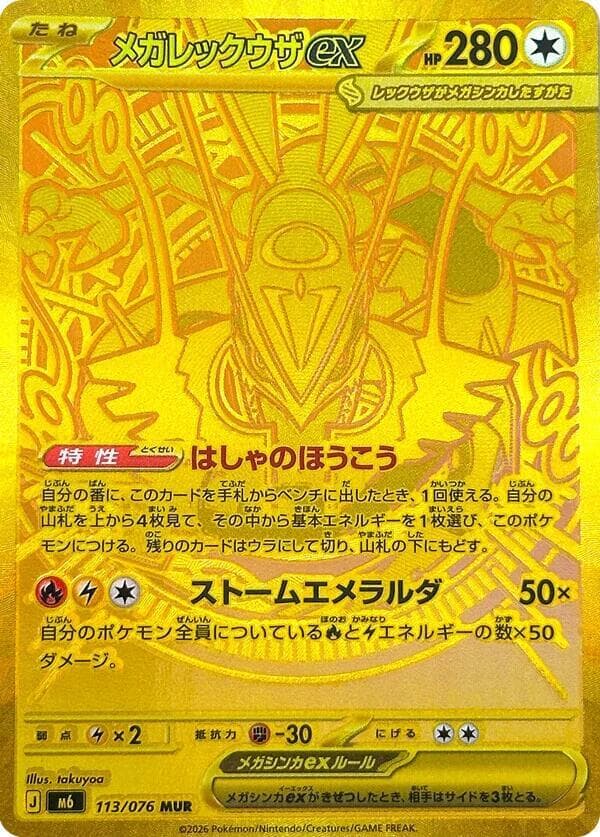
The summit is **Mega Rayquaza ex MUR #113**, at $1,299.99 in our August 9 snapshot. The Mega Ultra Rare tier — introduced in this block as the rarity above Special Art Rare — turns the set mascot into a trophy card, and this is only the second MUR ever printed after Abyss Eye's Mega Darkrai ex. Japanese market reports in the first week put raw copies above ¥200,000 with graded copies asking substantially more, which matches the USD figure you see here. It is a genuine trophy: the hardest pull in the set, of the most beloved Mega of all time, in the set named after its signature move.

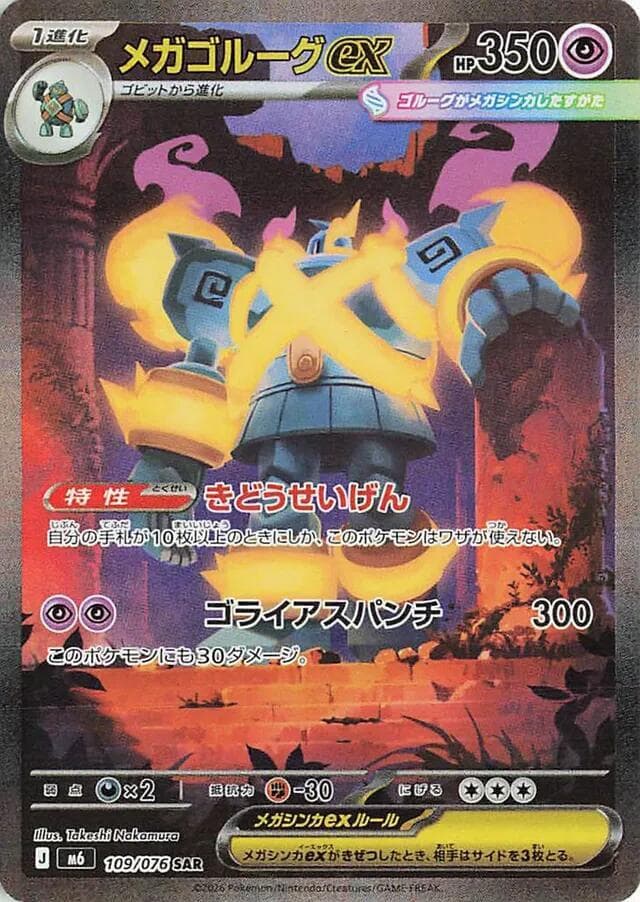
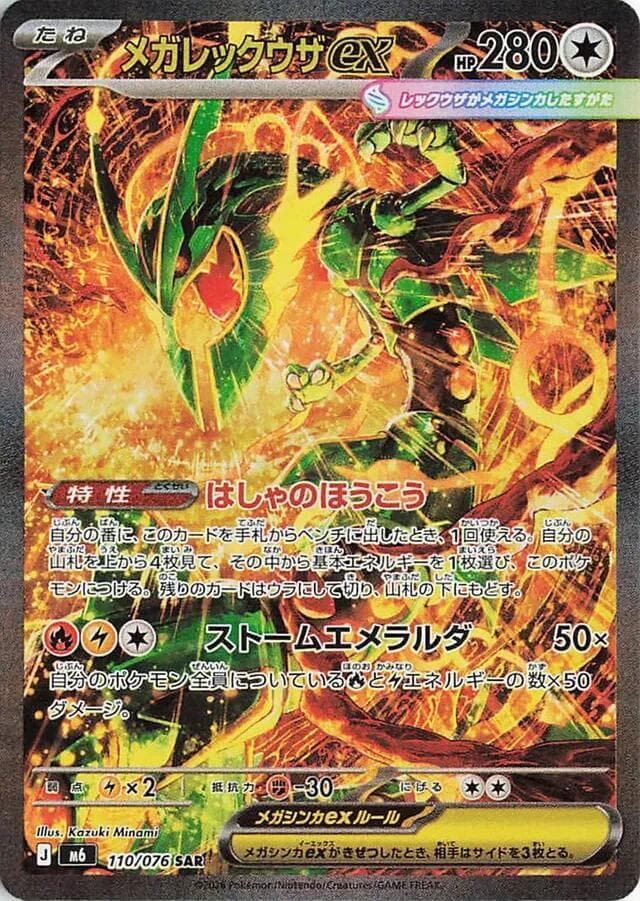
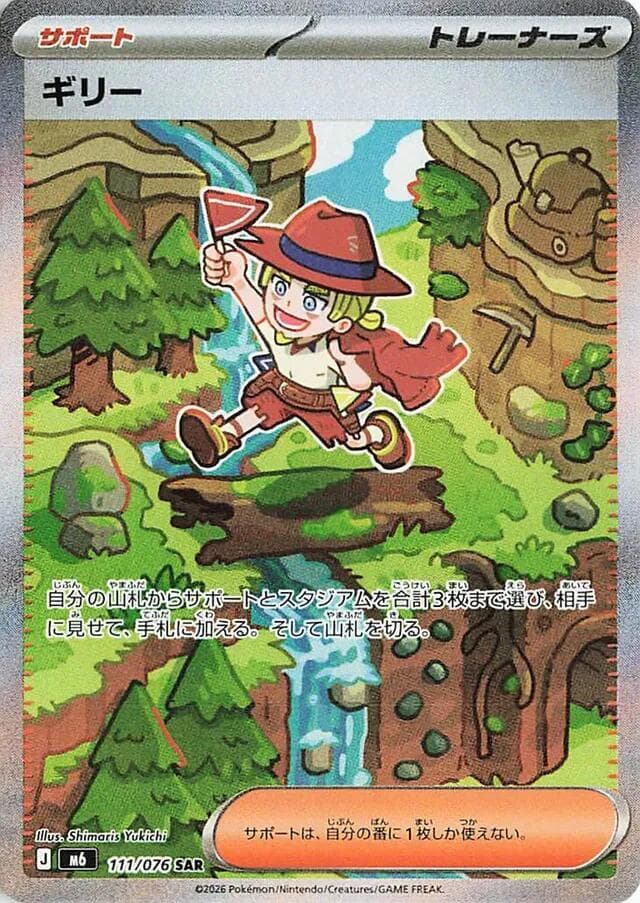
One tier down live the six Special Art Rares, and the gap between them is instructive. **Mega Rayquaza ex SAR #110** is the clear second chase at $791.32 — an outlier by SAR standards and priced like a mini-trophy in its own right. Then comes a huge drop to Raikou ex SAR #108 at $92.83, Zinnia's Trust SAR #112 at $76.26, Mega Golurk ex SAR #109 at $54.89, Mega Golisopod ex SAR #107 at $54.40, and Aarune SAR #111 at $27.76. In other words: five of the six SARs combined cost less than half of the Rayquaza SAR alone.

The Super Rare tier has its own headline act: Mega Rayquaza ex SR #095 at $75.98 — a gold-frame version priced above two of the SARs, which tells you everything about where demand in this set concentrates. The strongest non-Rayquaza SRs are the character cards: Tate & Liza's Training #103 ($24.98), Aarune #101 ($21.10), Raikou ex #092 ($20.70) and the surprisingly strong Emcee's Hype #100 ($18.96). Among Art Rares, the standouts are Kecleon #088 ($32.37), Kyogre #080 ($27.21) and Groudon #084 ($23.40).

Every price in the previous paragraphs is a launch-window number, captured nine days after release. If the Abyss Eye cycle taught the market anything, it is that week-one prices on chase cards are opening bids, not valuations — we cover what that means for trading further down.

Pull Rates: What a Box of Storm Emeralda Actually Gives You

Community tracking gives us early numbers. An aggregate of 1,380 opened packs (46 booster boxes) published by TCGtalk in the first opening wave found the typical box produced roughly 2 Art Rares, 2 Super Rares and 1 gold Ultra Rare item card — with about 83% of packs containing nothing above a regular Rare or Double Rare. That is a noticeably leaner box than the community reported for Abyss Eye, where three-plus ARs per box was the norm.

At the top end, the same sample saw Special Art Rares and the Mega Ultra Rare each land at roughly 1 per 23 boxes — but that figure rests on just four combined top-tier pulls across the entire sample, and all four were Mega Rayquaza ex variants. Treat it as directional at best. The honest framing: SAR-or-better pulls are rare enough that no realistic number of boxes guarantees one, and The Pokémon Company publishes no official odds.

Run the arithmetic before romanticizing the gamble. At ¥6,000 MSRP — if you can even find MSRP given the lottery-allocation rollout — 23 boxes is roughly ¥138,000, and aftermarket boxes have been trading well above face. Against a $1,299.99 MUR that math can look tempting, but it is precisely the lottery math that Abyss Eye's price correction punished: the expected value of a box collapses the moment chase prices normalize. If a specific card is the goal, acquiring the single — by trade or otherwise — beats opening product in almost every scenario.

What a box does reliably deliver: a full or near-full run of Commons and Uncommons, most of the Rare slots, a handful of the eight Double Rare ex cards, and two or three secret rares that will most often come from the Art Rare and lower Super Rare tiers. For set-completion collectors, that is genuinely decent — for chase hunters, it is a slow way to get lucky.

When Does Storm Emeralda Come Out in English?

Here the calendar gets more interesting than usual. The next international release is ME: 30th Celebration on September 16, 2026 — but that is *not* Storm Emeralda's counterpart. 30th Celebration is a standalone anniversary set built around Eeveelutions, Pikachu and three decades of franchise history; we cover it in our 30th Celebration set guide. Storm Emeralda's actual English home, per the current release calendar reported by set trackers, is Delta Reign (ME06) on November 6, 2026 — the anniversary set claimed the September slot and pushed the M6 material back.

That three-month gap changes the collecting decision. With M5 Abyss Eye, the English Pitch Black set followed the Japanese release by about eight weeks; with M6 the wait is over three months, and the anniversary set will absorb much of the market's attention in between. If you want Storm Emeralda cards in hand this year, the Japanese printing is the only game in town until November.

The Japanese-versus-English question itself has stable rules that this set does not change: Japanese printings come first, usually carry lower prices for equivalent rarities once supply normalizes, and use the same artwork; English versions integrate into the international tournament card pool and reach a wider trading audience. We walk through the full trade-offs — legality, price behavior, grading, liquidity — in our Japanese vs English cards guide. The short version for M6: collect Japanese if the art and the early window matter to you, wait for Delta Reign if you trade mostly within the international community.

One caution that applies specifically to chase math: English counterpart sets in this block have not reprinted the Japanese MUR tier one-for-one, and until Delta Reign's checklist is finalized nobody knows which of Storm Emeralda's secrets cross over, at which rarities, or with which exclusives added. Decisions that hinge on "the English version will/won't have it" are speculation until the ME06 list is public.

Trading a Week-One Set: Frameworks, Not Predictions

Every price in this guide is nine days old at most, and launch-window prices have a documented pattern in this block: they open high on scarcity and hype, then drift — sometimes sharply — as boxes keep getting opened and the initial demand spike is fed. Abyss Eye's headline cards lost roughly half their launch value within weeks. That is not a prediction that Storm Emeralda repeats the move; it is a reason to structure trades so that you are not the one holding the hype premium if it deflates.

Framework one: trade like-for-like freshness. Swapping one week-one M6 chase for another week-one M6 chase keeps both sides exposed to the same correction risk — the trade stays fair even if the whole set reprices. The asymmetric version — giving up stable older cards for freshly launched chases at snapshot prices — is where week-one trades go wrong, because one side of the trade can deflate while the other cannot.

Framework two: price the tier, not the card. In a nine-day-old market, individual card prices are noisy but tier relationships are informative: the MUR above the Rayquaza SAR, that SAR far above the other five, SARs above SRs, the Rayquaza SR trading like a SAR. Deals that respect the tier ladder survive repricing; deals built on one card's exact dollar figure often do not.

Framework three: let the commons move now. The one part of a launch-window market that is genuinely liquid and fairly priced is the bottom: Commons through Double Rares are cheap, abundant, and in demand from set-completion collectors racing to finish the checklist while the set is the newest thing in the hobby. Week one is the best moment to trade away duplicate bulk — and the worst moment to be forced to acquire a specific chase at any cost.

Grass and Bug (001–009): Beetles, Bees and the Armored Mega

The set opens with a compact Grass corner that runs from fan-favorite beetles to the first of the set's four Mega debuts. Heracross leads off at an unusually respectable price for a Common, and the block builds through two complete evolution lines to Mega Golisopod ex, the armored isopod's long-awaited Mega form. Nothing here is expensive — this is binder-filler territory with one playable payoff at the end.

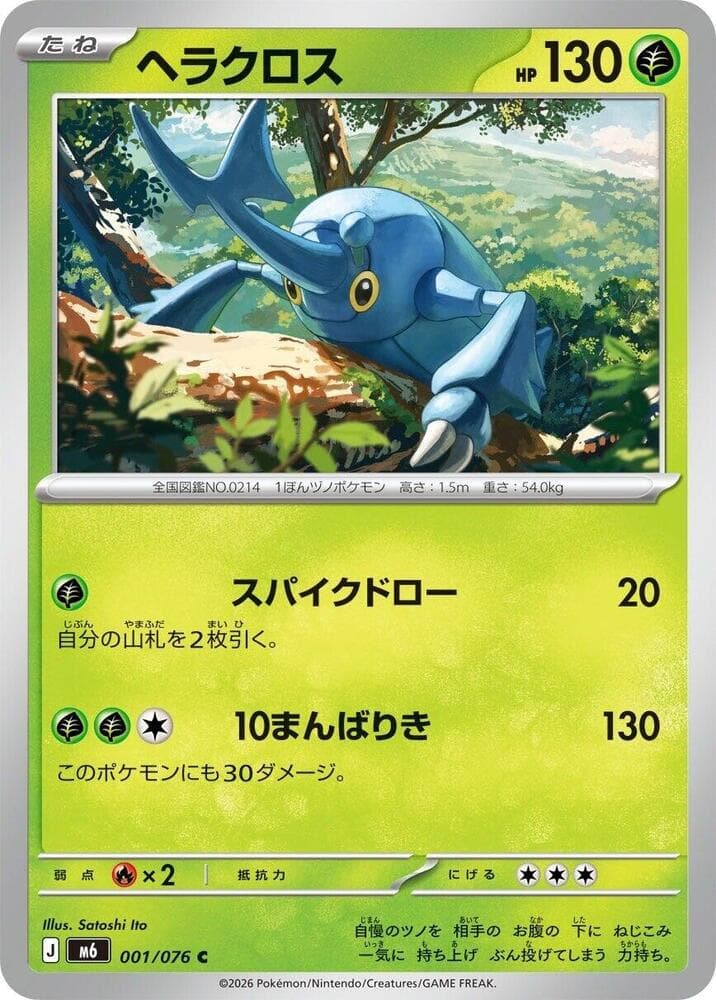
Heracross #001

Common · Market price: $2.01

Heracross opens the checklist at $2.01 — a striking price for a lead-off Common, and an early hint of this set's pattern of popularity-priced commons. The single-horn beetle is a Hoenn-era favorite, and set completionists will find it in nearly every stack of packs. In trades it moves best inside completion lots — sellers of singles rarely bother shipping a two-dollar Common, which quietly makes swap platforms the natural home for cards priced exactly like this.

View in catalog →

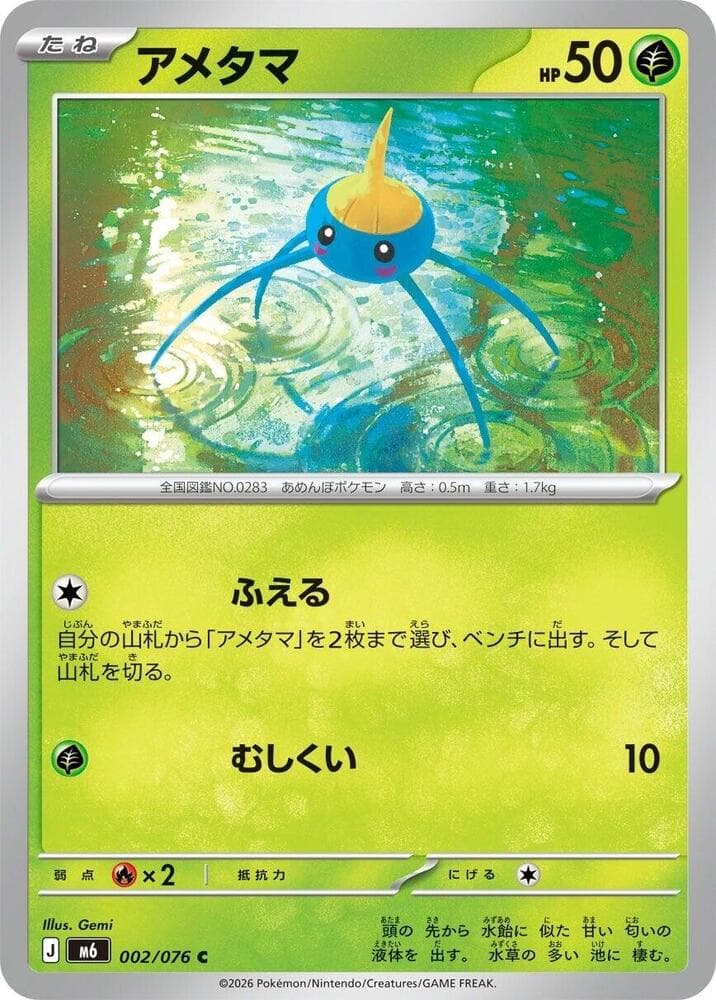
Surskit #002

Common · Market price: $0.40

Surskit, $0.40, the pond-skater that exists to evolve. Pure binder filler, and one of the cheapest cards in the set — exactly what the bottom of a Common tier is for. Its one claim to relevance is feeding the Masquerain AR line — pull a few, keep one, and let the rest pad out a bulk swap.

View in catalog →

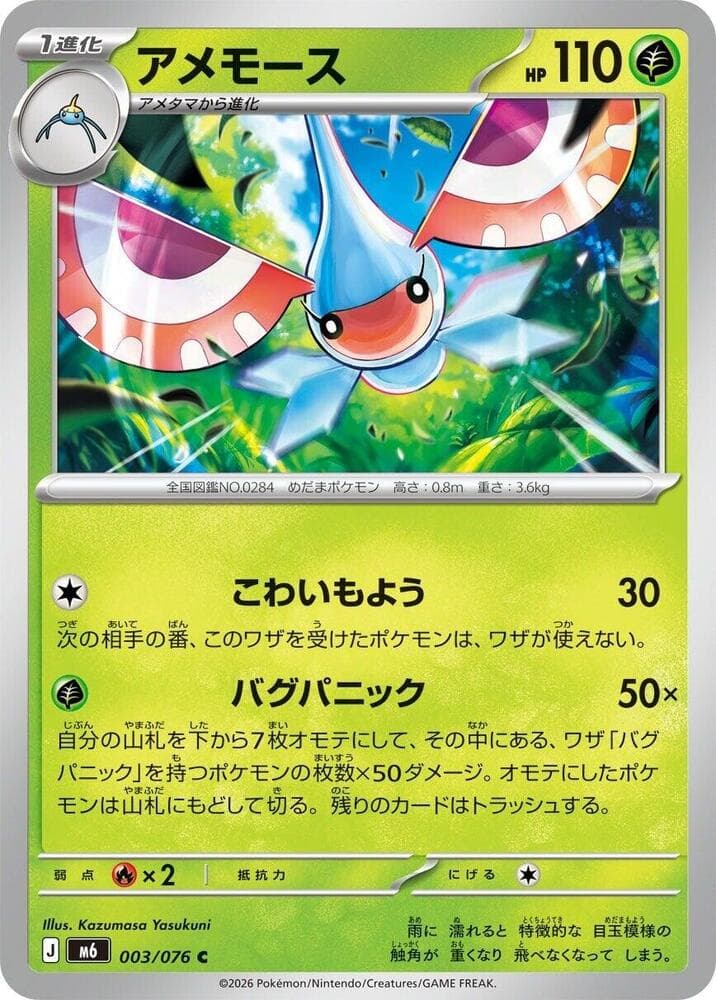
Masquerain #003

Common · Market price: $0.99

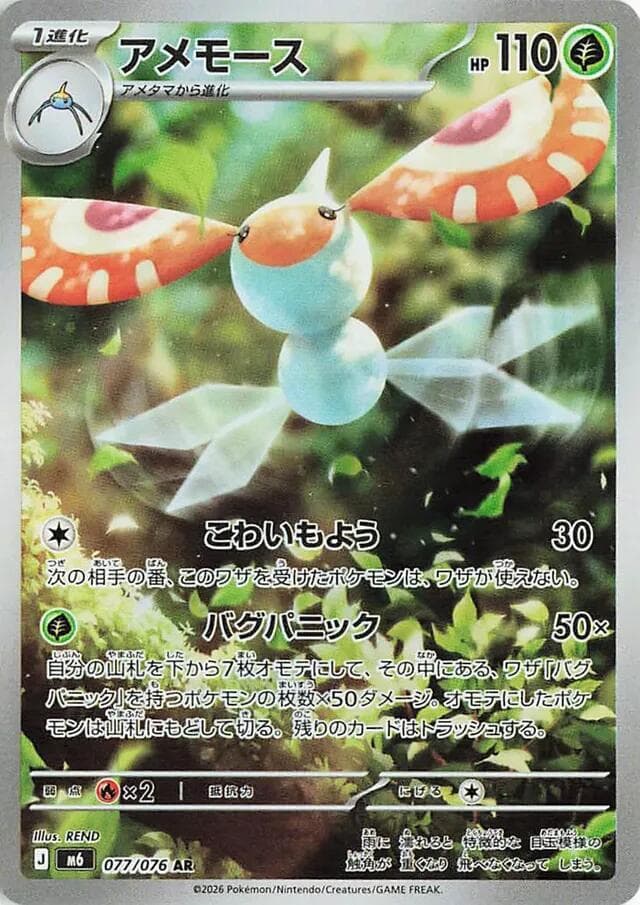
Masquerain, $0.99, the eyebrow-winged evolution of Surskit. Modest as a printed card, but keep the name in mind: its Art Rare at #077 is where this line's actual value lives. As a printed Common it is the cheapest way to own the set's opening evolution line complete, and the AR connection gives even the plain version a whisper of relevance in binder trades.

View in catalog →

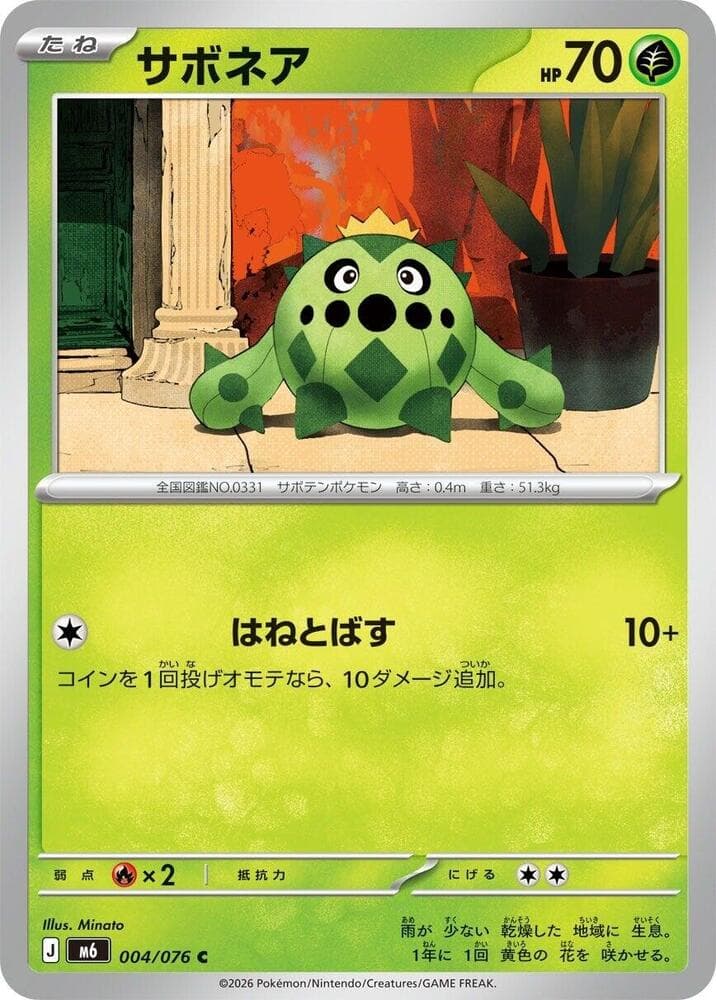
Cacnea #004

Common · Market price: $0.51

Cacnea, $0.51, the spiky desert Common that sets up Cacturne. Nobody trades hard for this one; every completed set needs it anyway. The Hoenn desert pair it forms with Cacturne is pure regional flavor — the kind of inclusion that exists so the set feels like Hoenn rather than to move markets.

View in catalog →

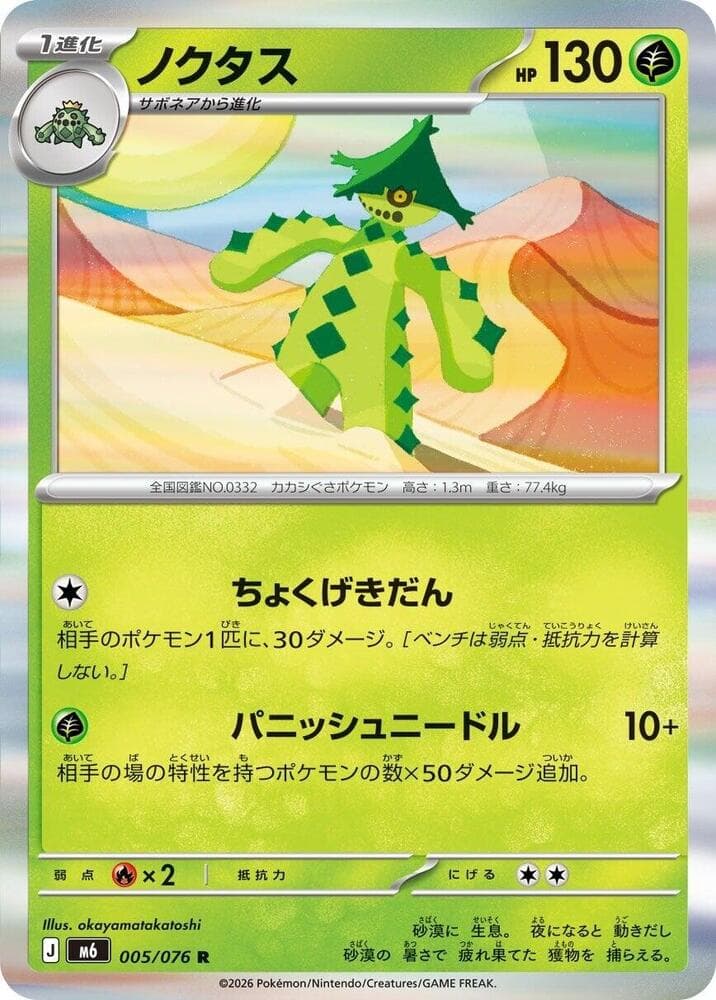
Cacturne #005

Rare · Market price: $0.97

Cacturne, $0.97, one of the set's eight printed Rares. The scarecrow cactus has never been a market card, and at under a dollar this Rare behaves like a Common in trade terms. Its main audience is completionists and the occasional Harvest Moon-style aesthetic collector; in trade terms, bundle it rather than list it alone.

View in catalog →

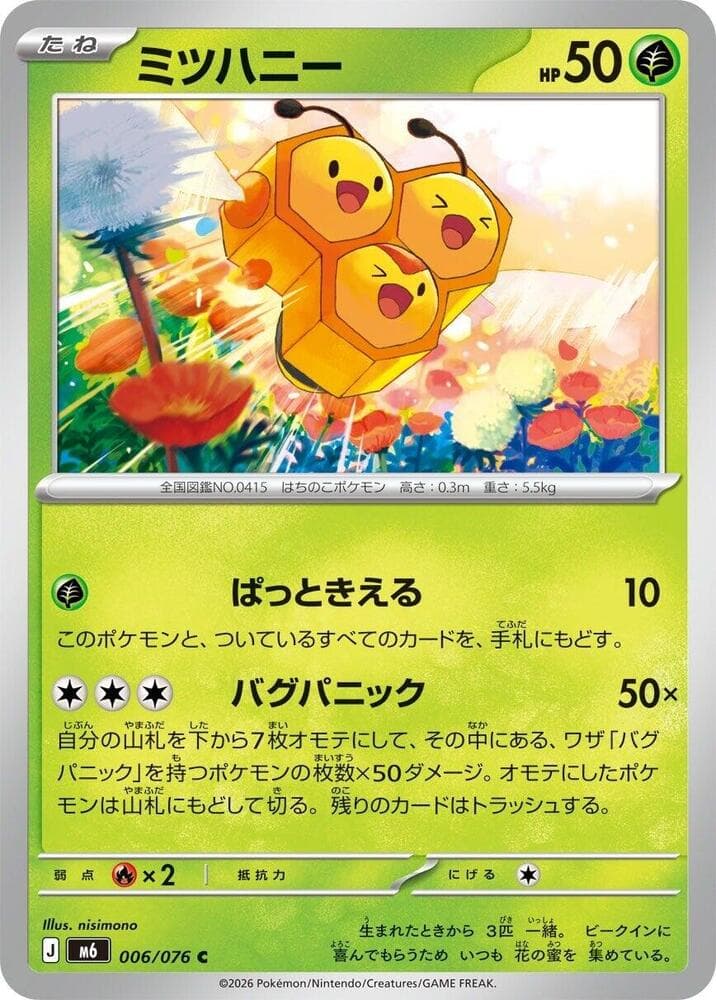
Combee #006

Common · Market price: $0.46

Combee, $0.46, the honeycomb trio doing what it always does: waiting to become Vespiquen. Bottom-tier filler with charm. A three-Combee page corner remains one of the hobby's small aesthetic pleasures, and at this price you can build it from a single trade.

View in catalog →

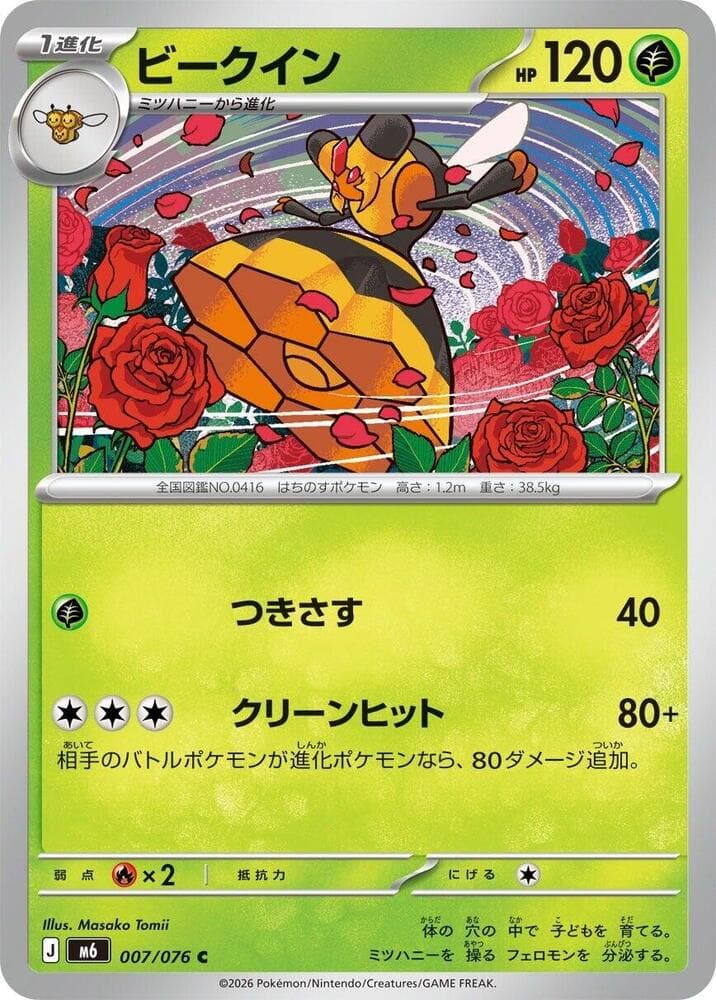
Vespiquen #007

Common · Market price: $1.02

Vespiquen, $1.02, the hive queen as a Common. A complete little evolution pairing with Combee that costs about a dollar and a half combined — the kind of line that pads out completion trades nicely. Vespiquen has quietly appeared in more Japanese sets than most players realize, and this printing continues the tradition without disturbing anyone's wallet.

View in catalog →

Wimpod #008

Common · Market price: $2.00

Wimpod, $2.00, priced well above typical Common territory because everyone knows what it becomes here. The cowardly bug is the entry ticket to the set's first Mega line. Wimpod's whole narrative is cowardice redeemed by evolution, which makes it a fitting mascot for the pre-Mega slot — and a card worth holding a copy of while its Mega line stays popular.

View in catalog →

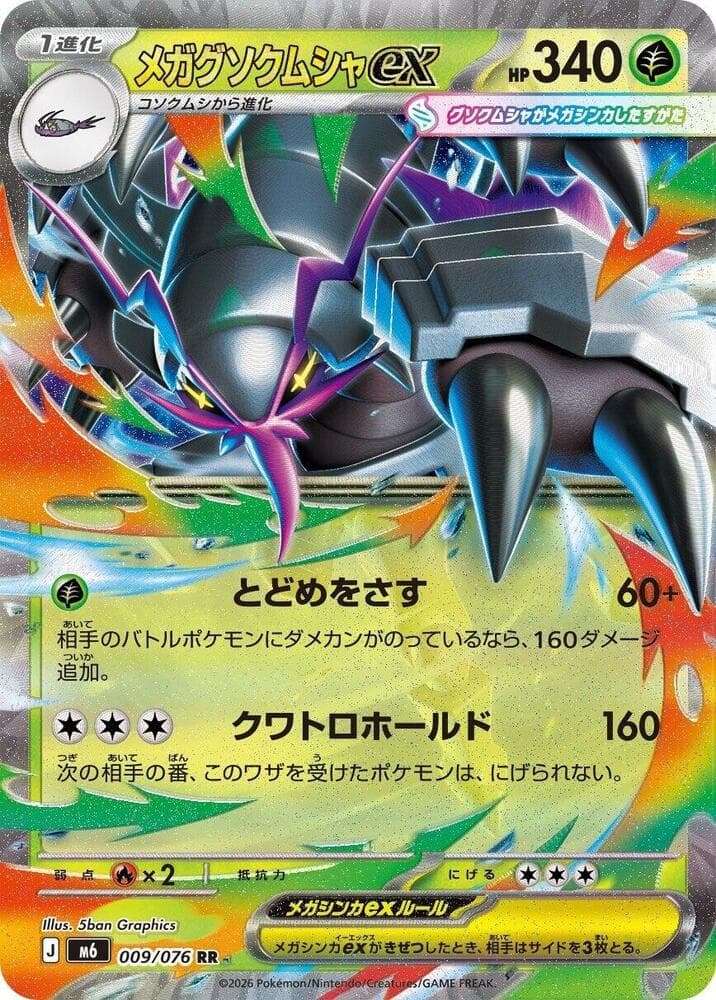
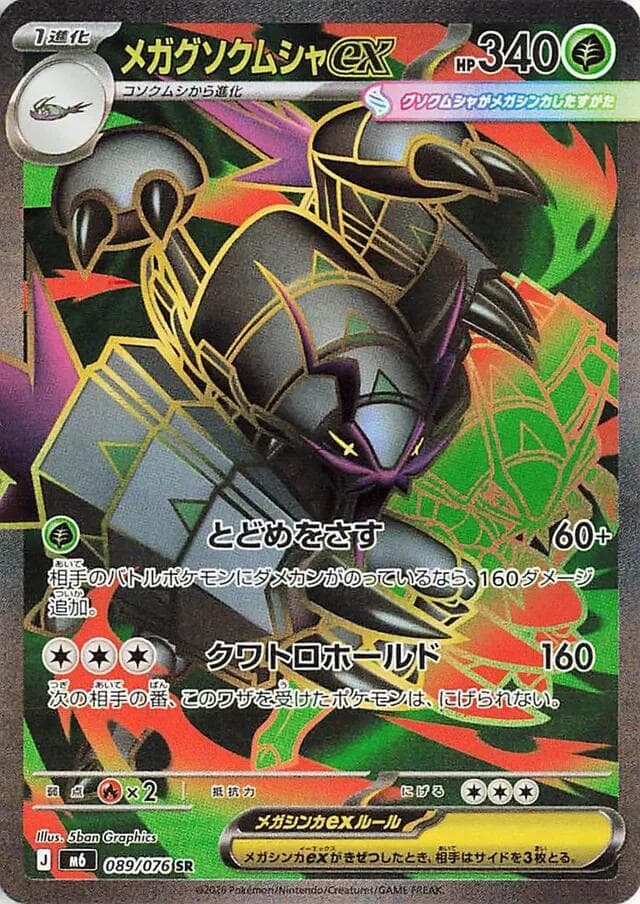
Mega Golisopod ex #009

Double Rare · Market price: $3.47

Mega Golisopod ex, $3.47, the first of Storm Emeralda's four Mega debuts and a Double Rare. The armored isopod's Mega form finally arrives, and this RR is the playable, affordable way to own it — its gold SR (#089) runs $11.98 and its SAR (#107) $54.40. Base Megas are common enough pulls that the chase value concentrates entirely in the secret versions. Competitively it is the set's most intriguing non-Rayquaza design, and if the deck materializes when this rotates into the international game, the RR is the printing that will feel the demand first.

View in catalog →

Fire (010–016): Growlithe's Corner

Seven Fire cards, and the market has already picked its favorite: Growlithe, a Common trading at nearly five dollars purely on character devotion — the classic proof that in Japanese sets, popularity beats rarity. Around it sit the Arcanine payoff, a Magmar line, and Heat Rotom ex, the tier's Double Rare.

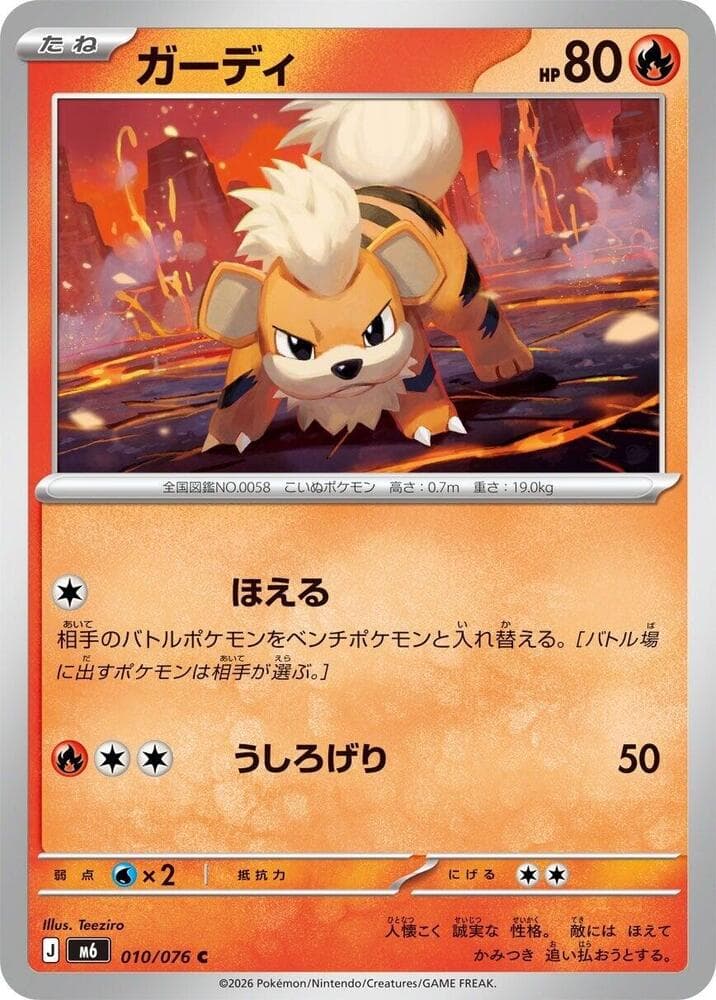
Growlithe #010

Common · Market price: $4.69

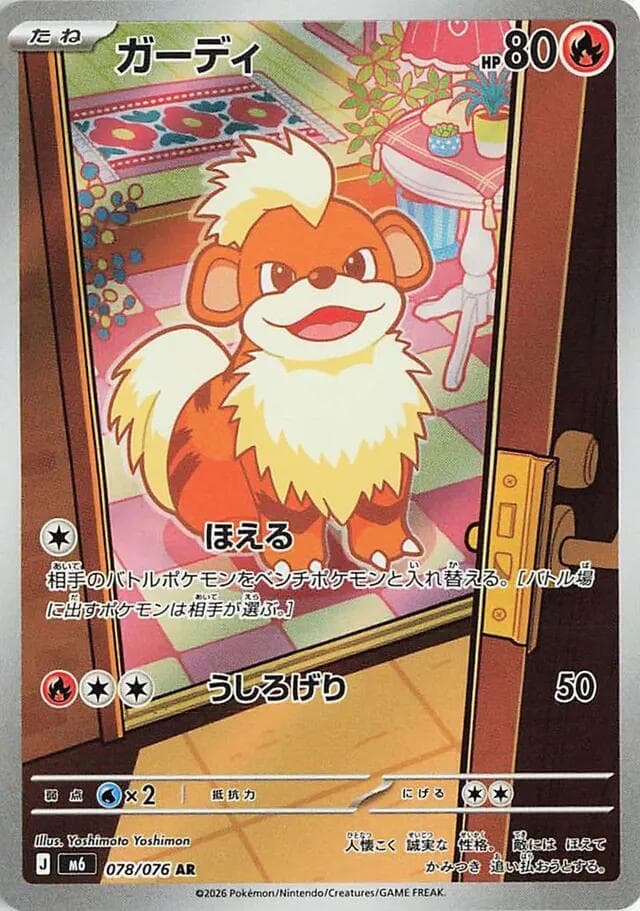
Growlithe, $4.69 — the most expensive Common in the set, and it is not close. The puppy's enduring fanbase does this in nearly every set it graces, and its Art Rare (#078) more than doubles down on the effect. If you pull spares, they trade far better than their rarity suggests. It is also a card whose price behaves more like a character good than a TCG single — corrections that hit chase cards tend to leave Growlithe commons untouched.

View in catalog →

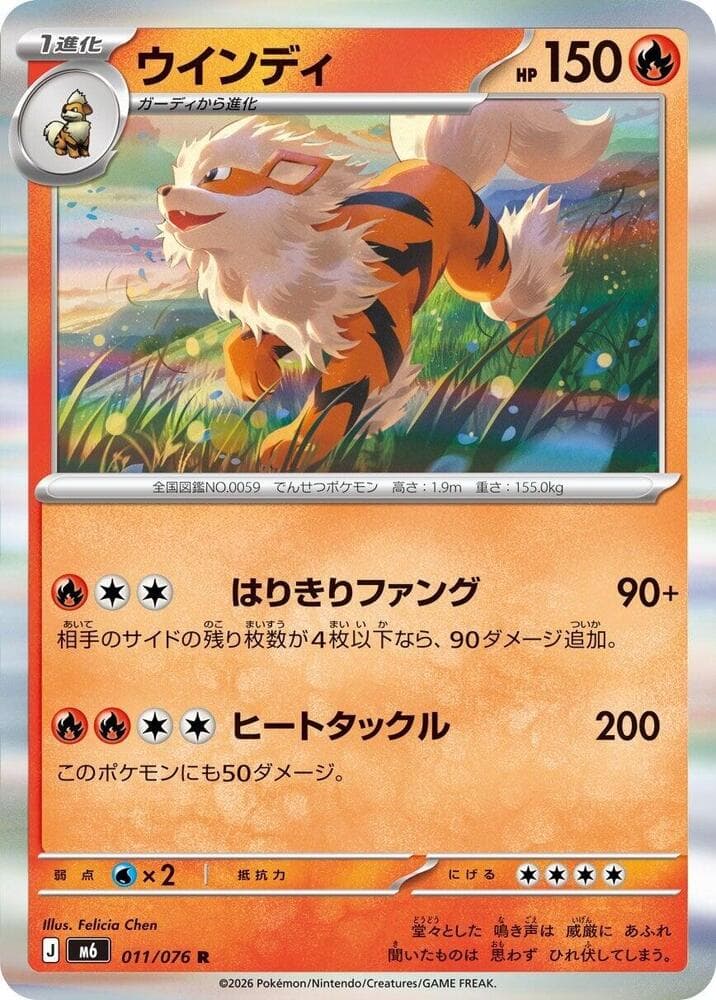
Arcanine #011

Rare · Market price: $6.43

Arcanine, $6.43, the priciest printed Rare in the set — priced above several secret rares, which almost never happens. The legendary-styled dog completes the set's most beloved non-chase line; a genuinely liquid card in trades. Historically, Arcanine Rares from Japanese sets have been steady, boring holds — broad demand, no spikes — and this printing gives no reason to expect otherwise.

View in catalog →

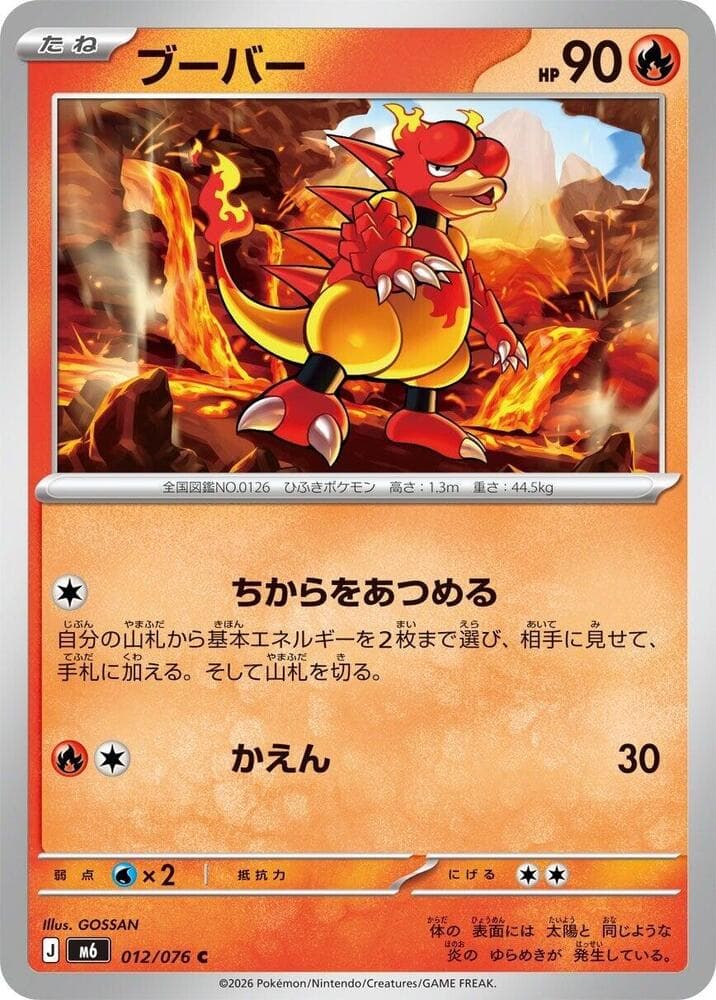
Magmar #012

Common · Market price: $1.87

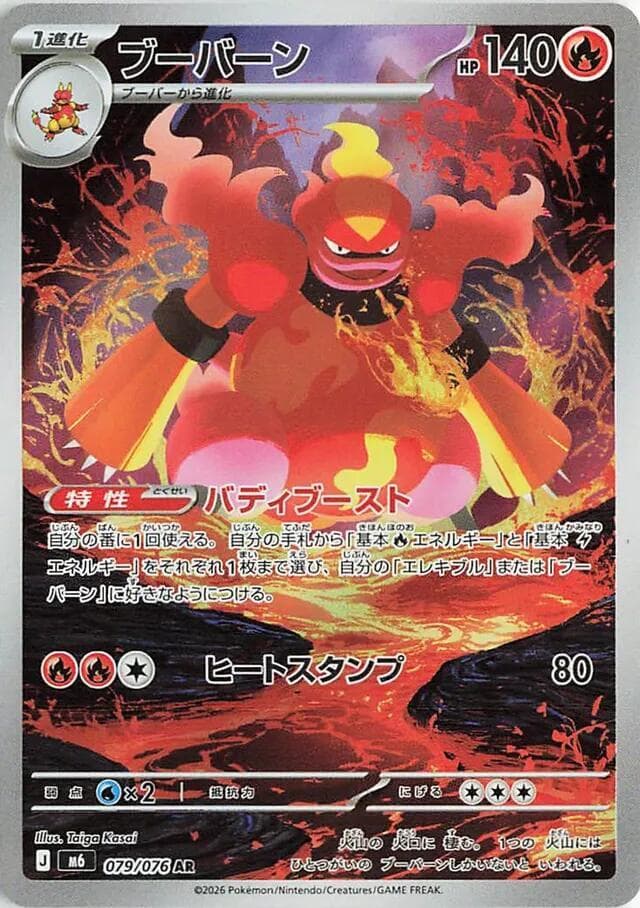
Magmar, $1.87, the classic fire-duck Common wearing its price like a nostalgia badge. Its Art Rare at #079 gives this line its premium version. Like Electabuzz later in the set, it trades on generational memory: the buyers are people who had it in 1999 and want it in every new frame since.

View in catalog →

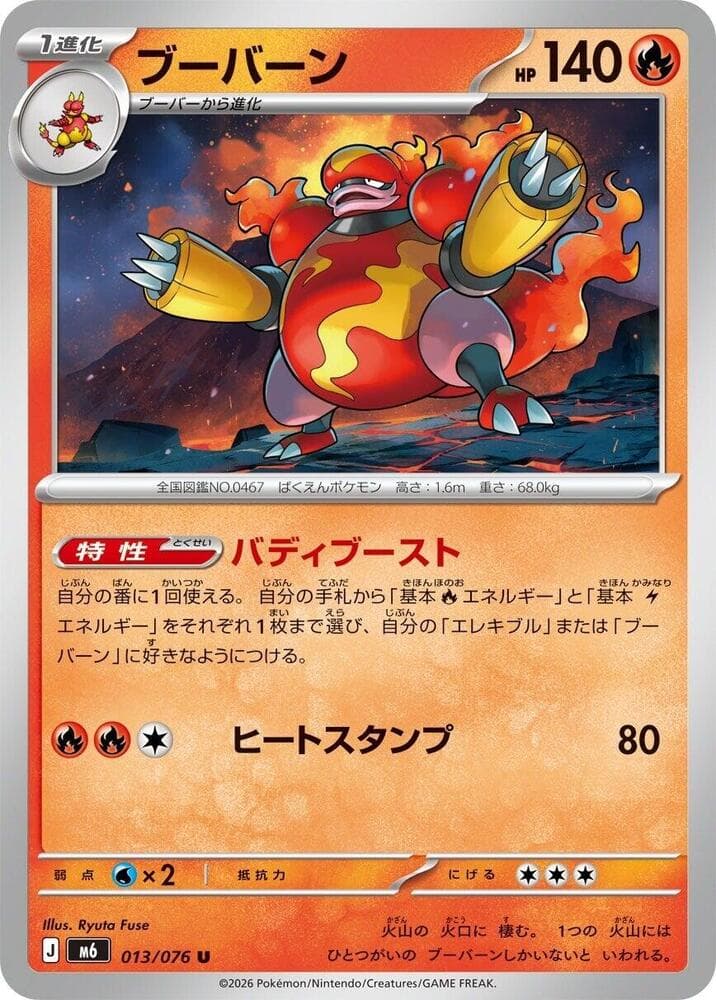
Magmortar #013

Uncommon · Market price: $1.01

Magmortar, $1.01, the Uncommon evolution with cannon arms. Cheap, easy to find, and mostly relevant as the top of Magmar's line for set completion. Its price gap against the AR-blessed Magmar below it shows how thoroughly the illustration tiers have absorbed this era's premium demand.

View in catalog →

Torkoal #014

Common · Market price: $0.51

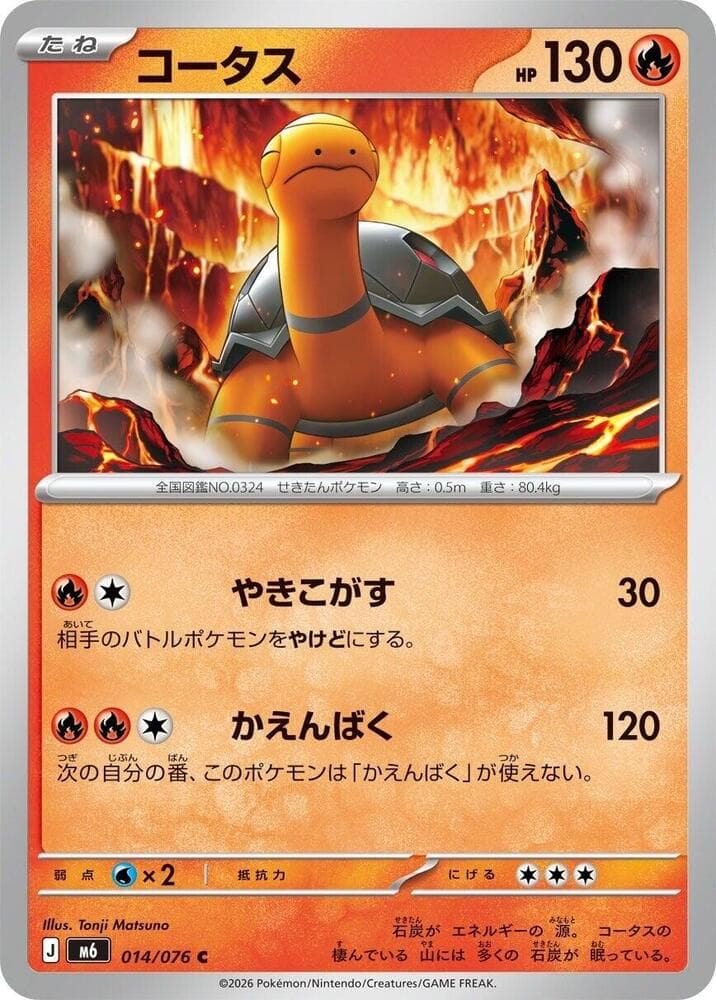
Torkoal, $0.51, the coal tortoise as pure Common filler. Its role in the set is thematic — smoke and heat for the Groudon side of the story. Smoke-vent tortoises do not move markets, but Torkoal loyalists exist, and every one of them completes this set's Fire page for pocket change.

View in catalog →

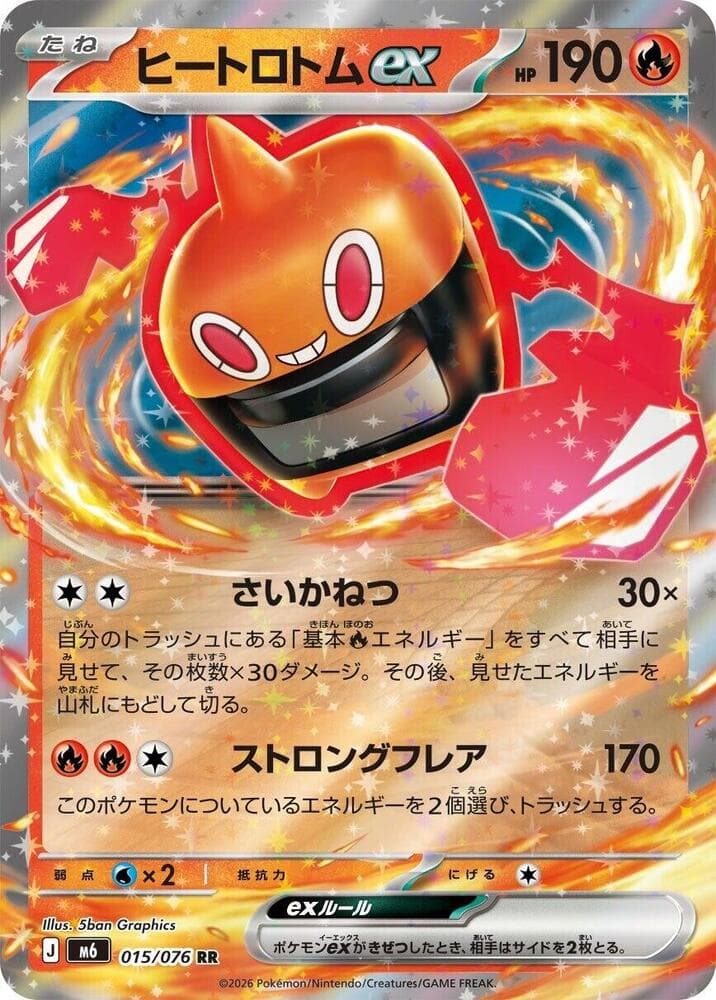
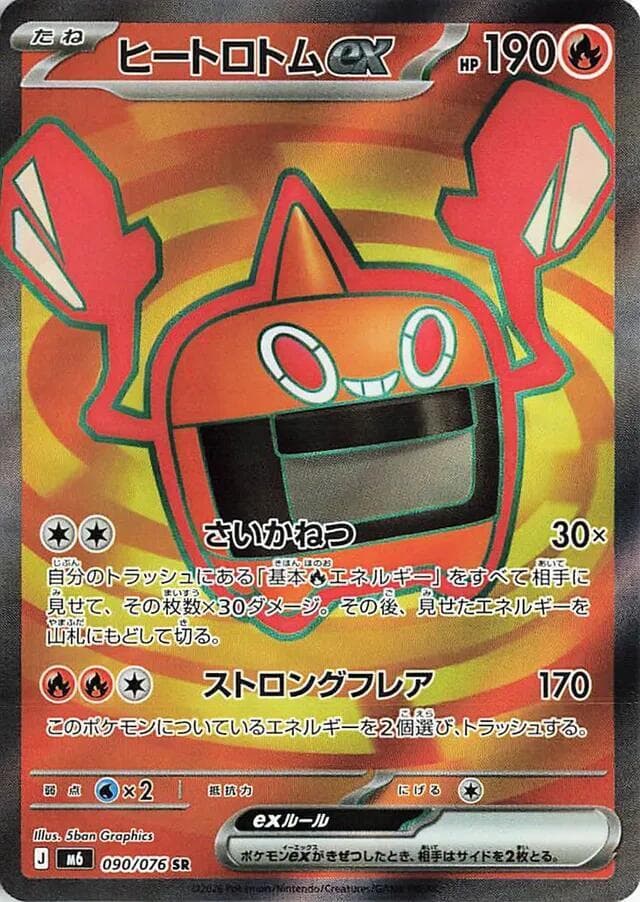
Heat Rotom ex #015

Double Rare · Market price: $2.18

Heat Rotom ex, $2.18, a Double Rare and the Fire block's ex payoff. Appliance Rotom forms have a devoted collector niche, but as a market card this one sits at the affordable end of the RR tier — its gold SR (#090) at $13.44 is where the premium lives. For binder purposes the RR is perfectly presentable — the appliance-form gag reads clearly even in the standard frame.

View in catalog →

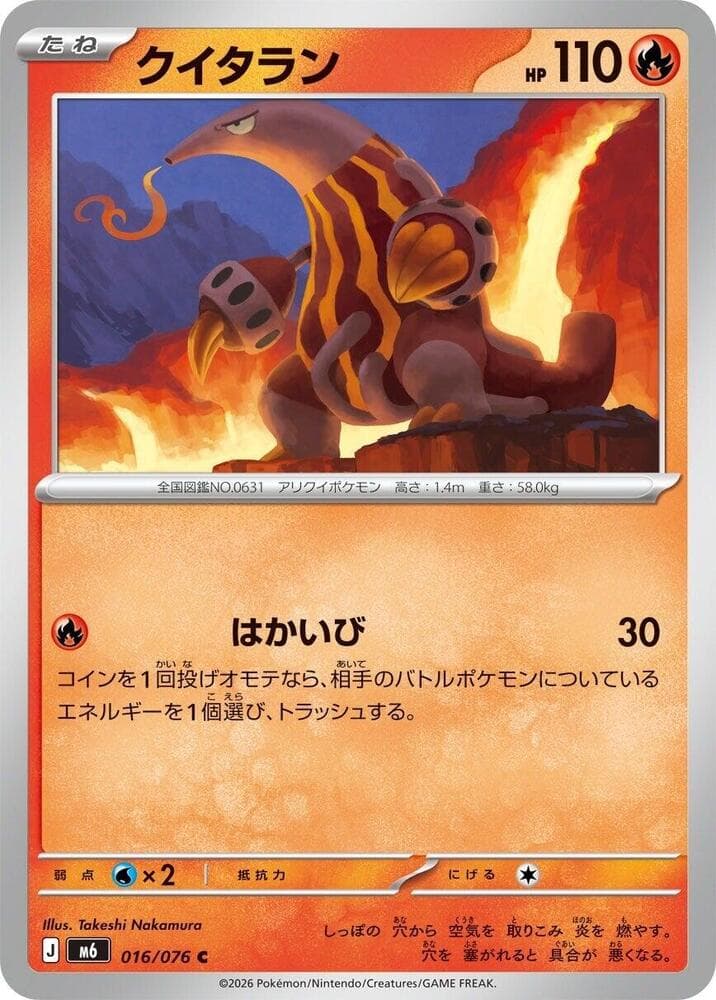
Heatmor #016

Common · Market price: $0.50

Heatmor, $0.50, the anteater that eats Durant — printed here without its prey, which feels almost merciful. Binder filler at half a dollar. One of those cards whose existence is a rules footnote and whose price is a rounding error; toss it into any swap to balance the math.

View in catalog →

Water and Lightning (017–028): Kyogre's Domain

The rain half of the weather-trio story lives here — Kyogre as a printed Rare with its far pricier Art Rare encore waiting in the secrets — alongside a schooling Wishiwashi ex, the legendary beast Raikou ex, and a pair of Electric bird lines. Mantine quietly joins Growlithe in the club of Commons that cost more than most Rares.

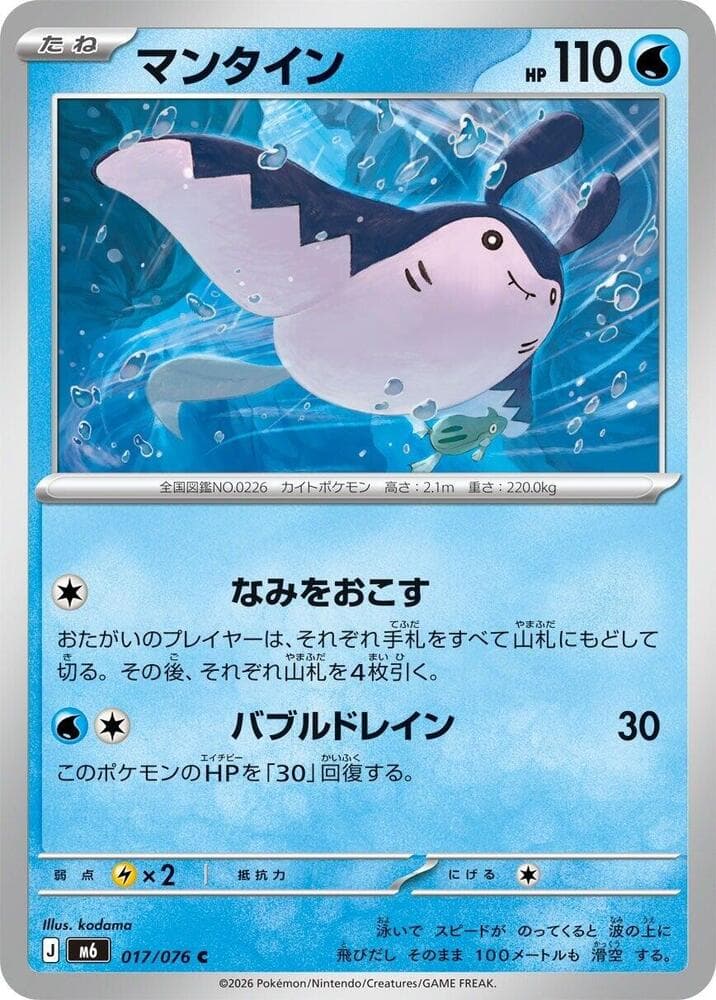
Mantine #017

Common · Market price: $3.99

Mantine, $3.99, another entry in this set's surprising club of expensive Commons. The serene ray has quiet, persistent collector demand, and at four dollars it outprices every printed Rare except Arcanine. Its liquidity is better than its fame — Mantine copies leave binders steadily, which is more than most of this set's Rares can say.

View in catalog →

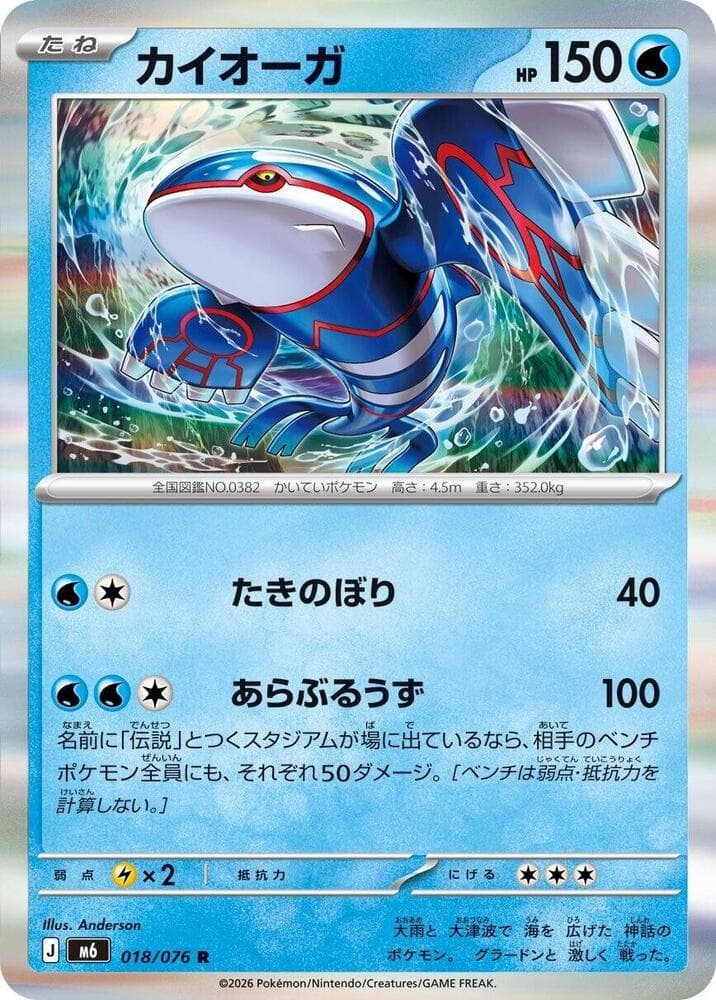
Kyogre #018

Rare · Market price: $2.99

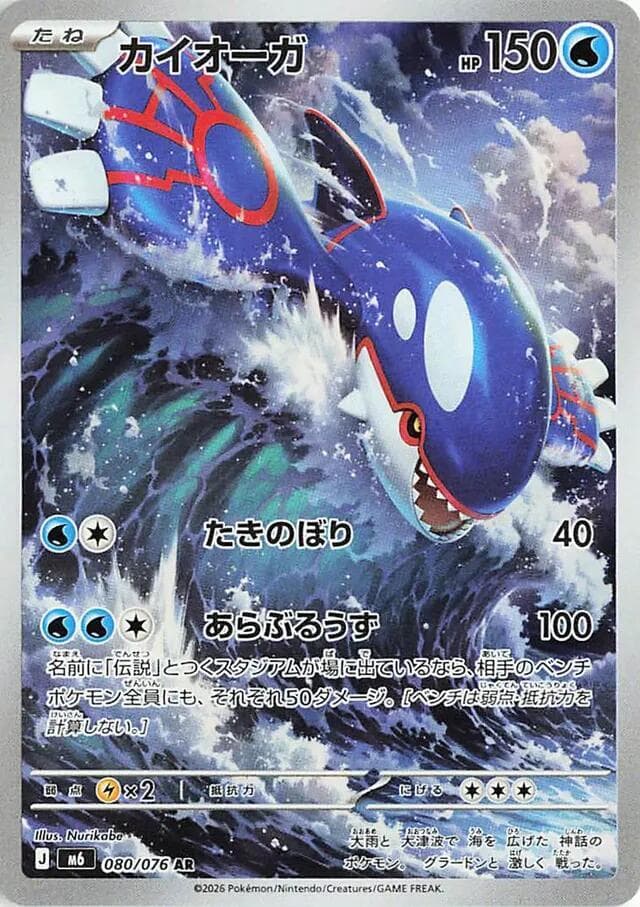
Kyogre, $2.99, the sea basin legendary as a printed Rare. Modest here — but its Art Rare (#080) at $27.21 is the second-priciest AR in the set, and thematically this is one third of the reason the set exists. The affordable way to own the rain half of the trio. Between the printed Rare, the AR and the split Marine Trench Stadium, Kyogre's presence in this set is really a three-card suite, and completing it costs less than a single mid-tier SAR.

View in catalog →

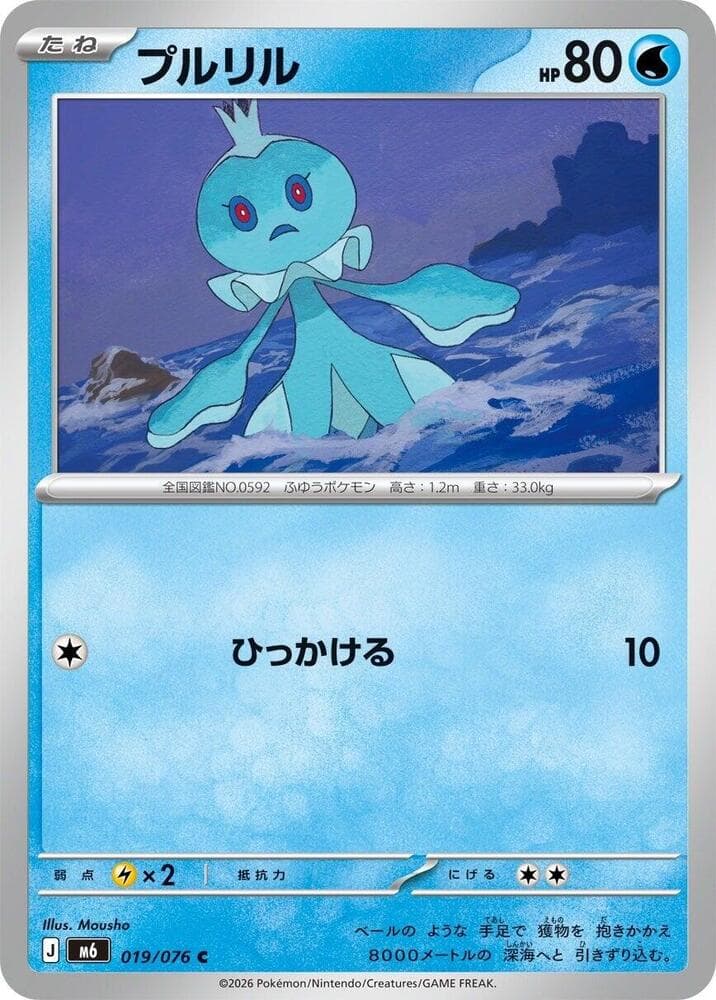
Frillish #019

Common · Market price: $0.72

Frillish, $0.72, the ghostly jellyfish Common setting up Jellicent. Filler with a good hat. Its translucent-veil design is genuinely one of the better Common artworks in the set — worth a look before it disappears into a bulk stack.

View in catalog →

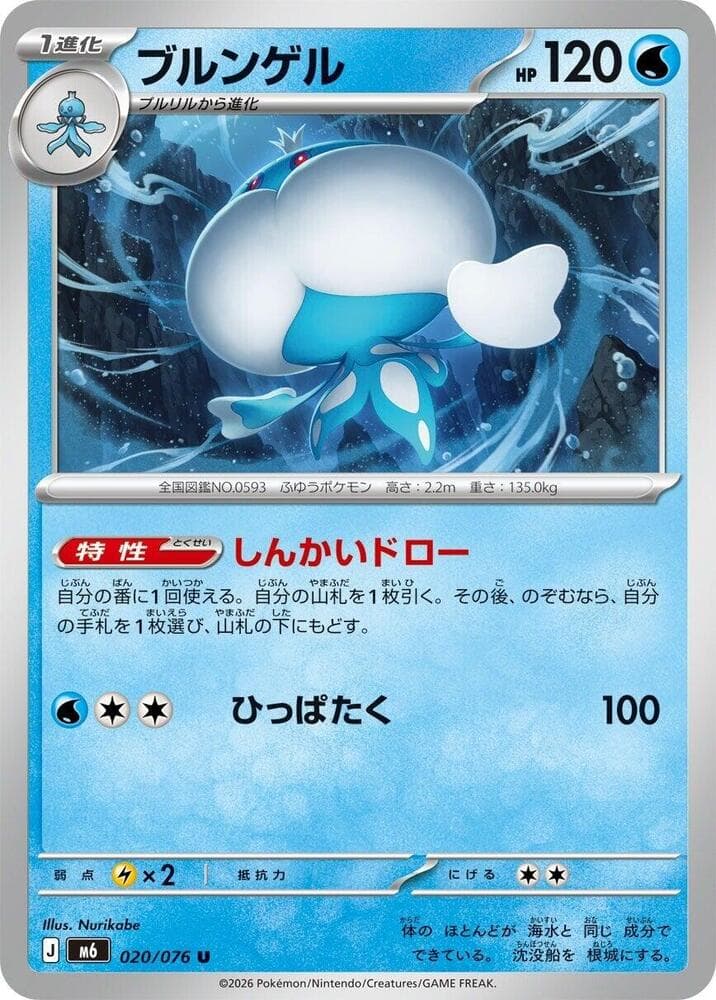
Jellicent #020

Uncommon · Market price: $1.75

Jellicent, $1.75, the Uncommon evolution floating at the top of Frillish's line. Slightly above filler pricing, likely on general Water-box demand. The line has no secret version, so this Uncommon is the ceiling for Jellicent collectors in M6 — a two-card story finished for under three dollars.

View in catalog →

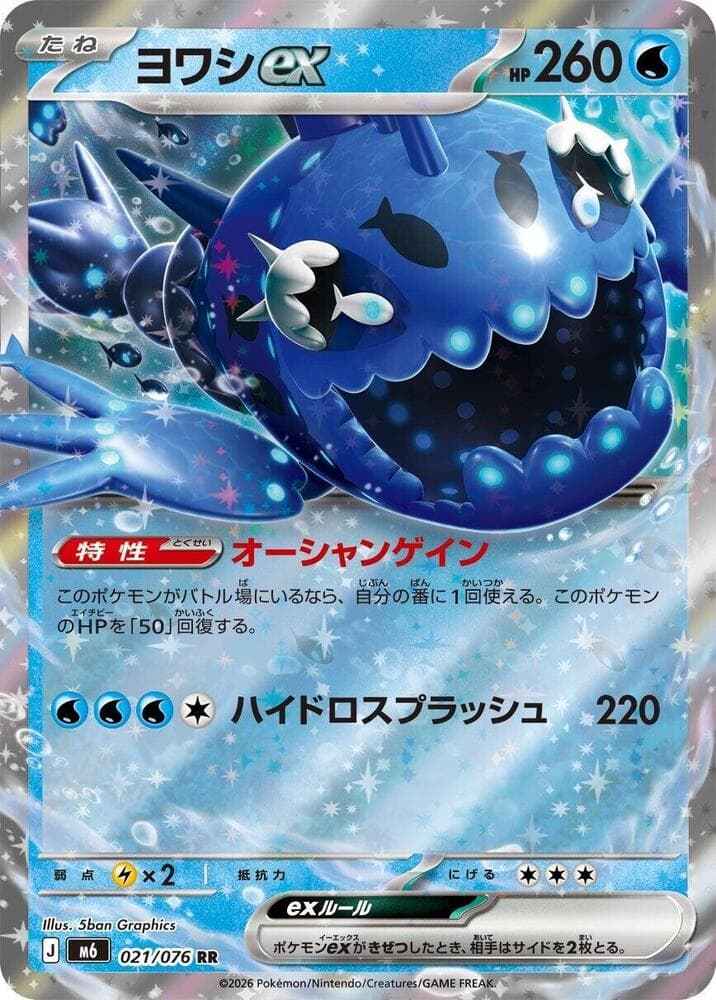
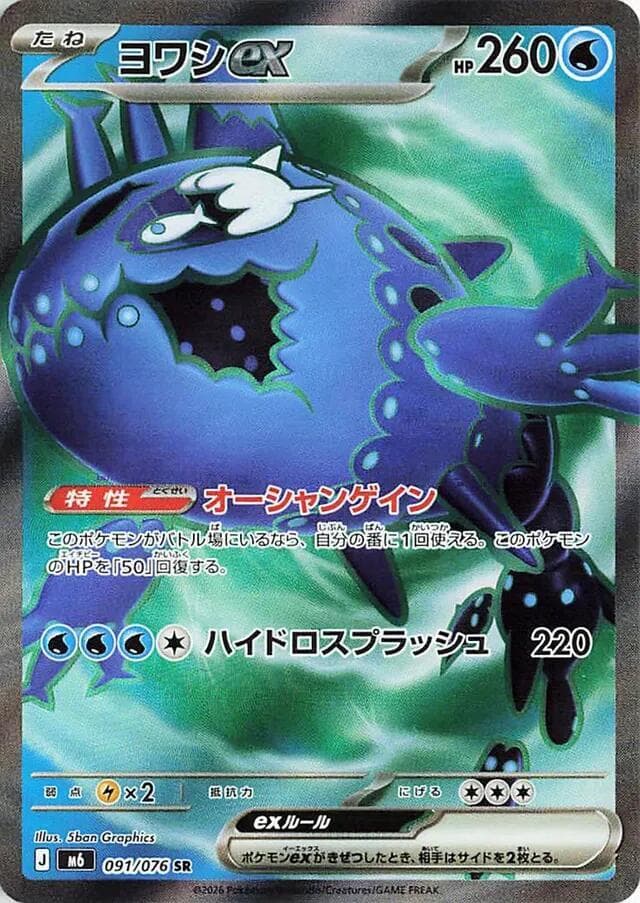
Wishiwashi ex #021

Double Rare · Market price: $0.93

Wishiwashi ex, $0.93 — a Double Rare under a dollar, the cheapest ex in the set. The schooling sardine is a flavor-first inclusion, and the market has priced it accordingly. Its gold SR (#091) at $8.98 is similarly the tier's low end. There is something honest about a schooling Pokémon being the cheapest ex: the whole gimmick is that one fish is worthless. The set's best joke, priced accordingly.

View in catalog →

Electabuzz #022

Common · Market price: $1.97

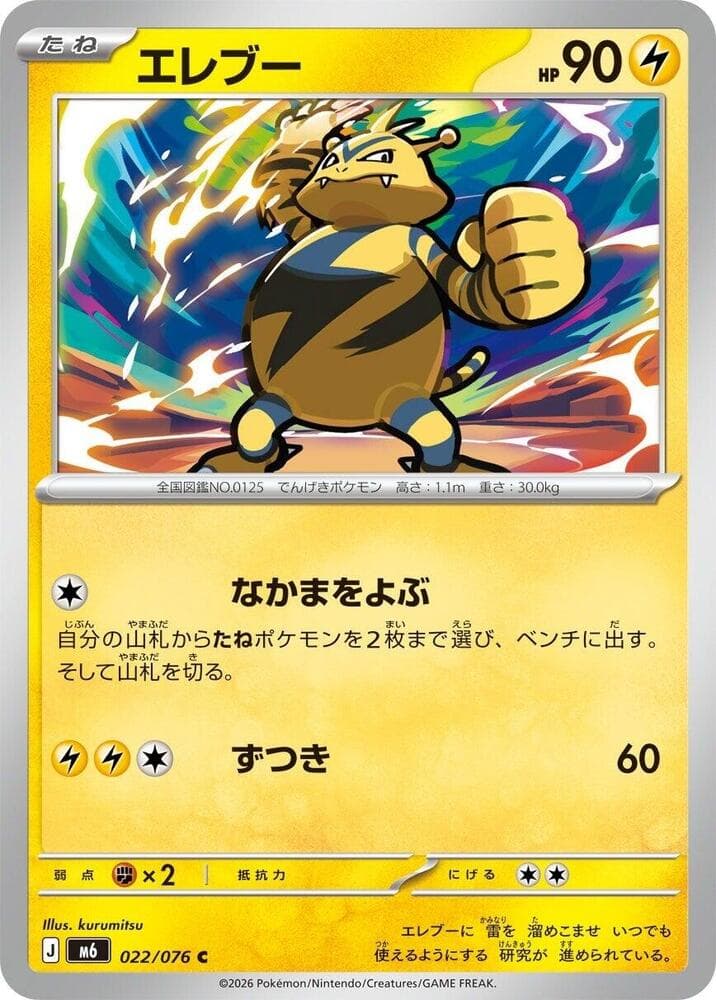
Electabuzz, $1.97, the vintage Electric Common priced on the same nostalgia curve as Magmar. A generation of collectors reflexively keeps these. Its per-cent parity with Magmar (both within pennies of two dollars) suggests the market prices vintage Kanto commons as a basket, not as individuals.

View in catalog →

Electivire #023

Uncommon · Market price: $2.01

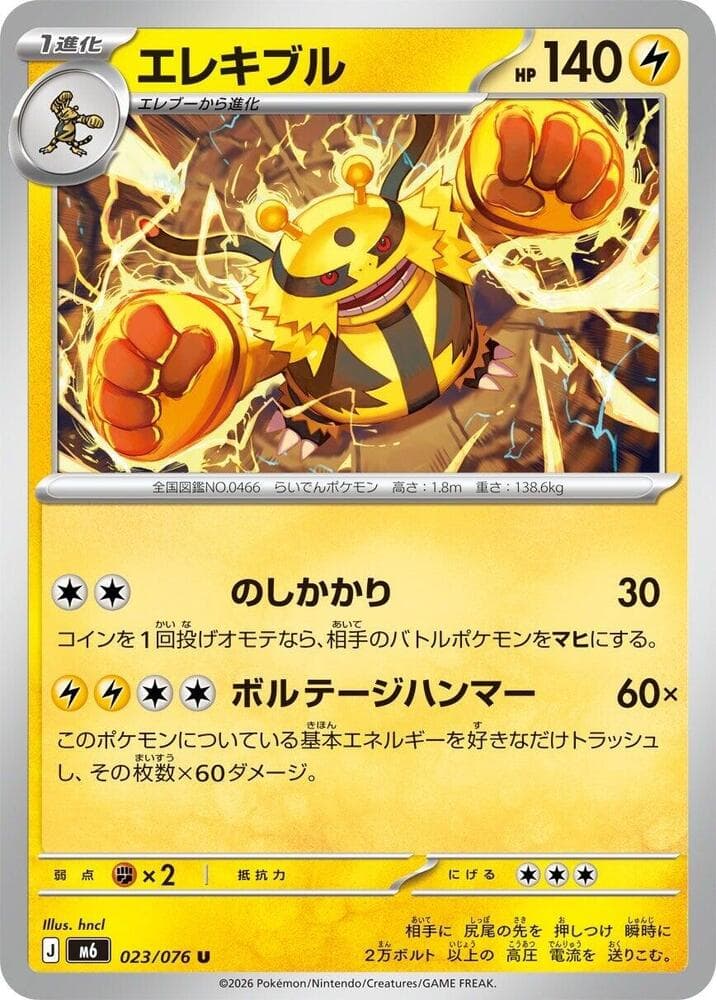
Electivire, $2.01, the Uncommon evolution — and unusually, it also gets an Art Rare (#081), making this a two-premium line. The printed version stays cheap. The AR at #081 means pulling the plain version is no dead end — the line has a premium ceiling to trade toward.

View in catalog →

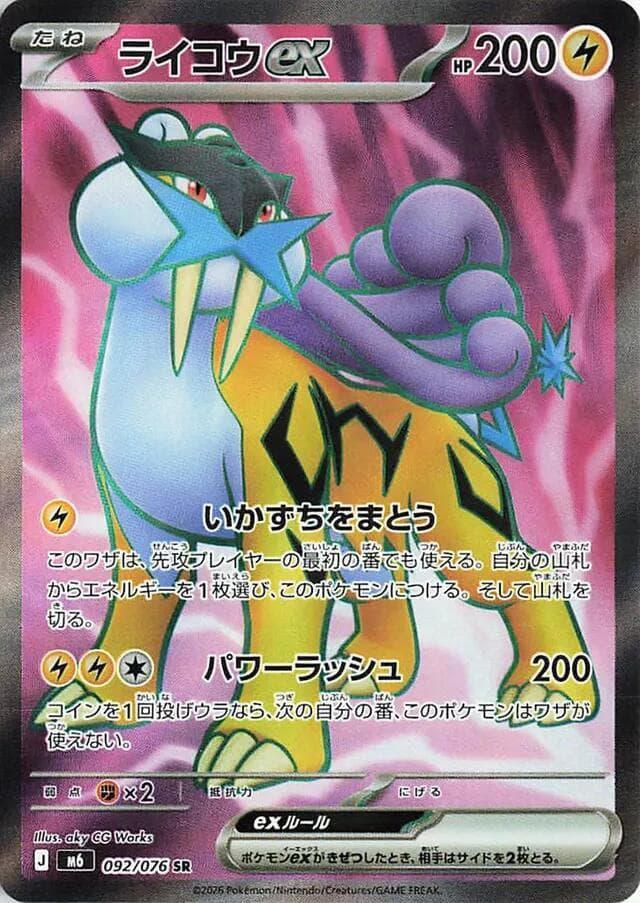
Raikou ex #024

Double Rare · Market price: $2.47

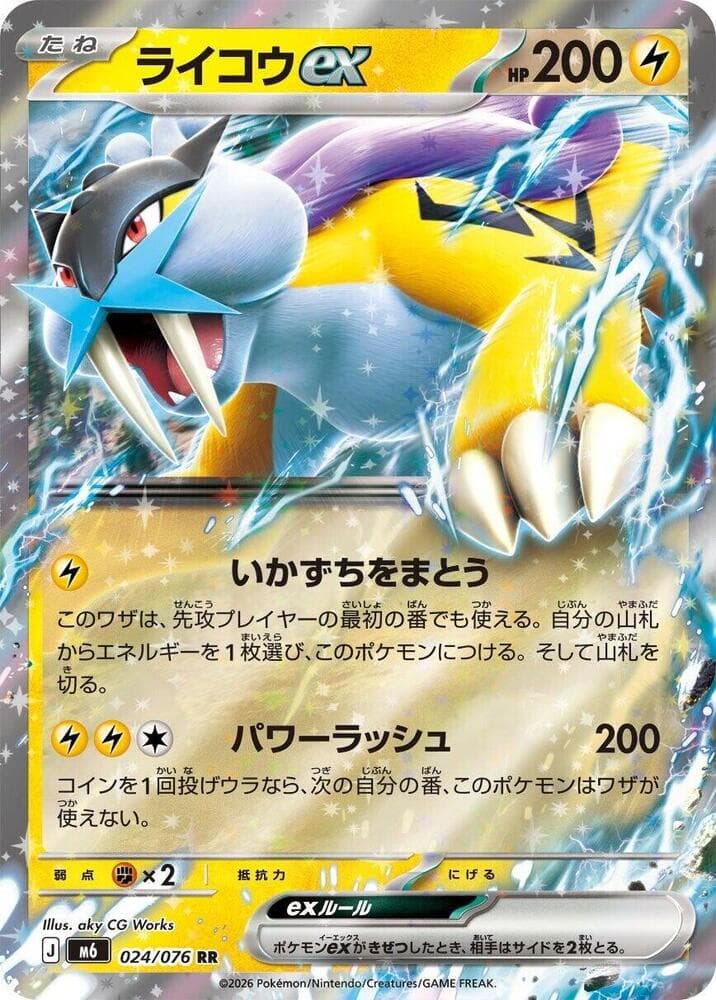
Raikou ex, $2.47, the legendary beast as a Double Rare. Raikou's collector base is deep and patient, and this line escalates hard: gold SR #092 at $20.70 and the set's second-priciest SAR at #108 ($92.83). The RR is the budget entry to one of the set's strongest non-Rayquaza lines. Raikou also benefits from being the only legendary beast in the set — no Entei or Suicune split the demand this time.

View in catalog →

Thundurus #025

Uncommon · Market price: $0.96

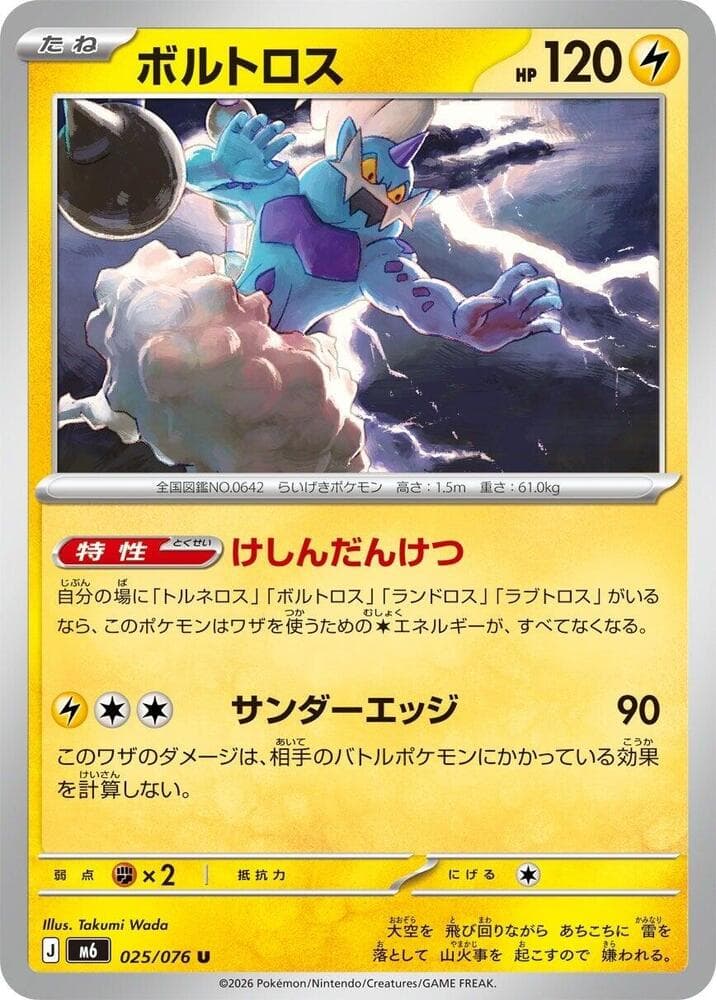
Thundurus, $0.96, the thunder genie as an Uncommon — part of the full genie roll call (with Tornadus, Landorus and Enamorus) scattered through this set. Cheap, and mostly of interest to legendary completionists. Its real function is completing the four-genie subplot the set threads through its type blocks — a checklist within the checklist for legendary hunters.

View in catalog →

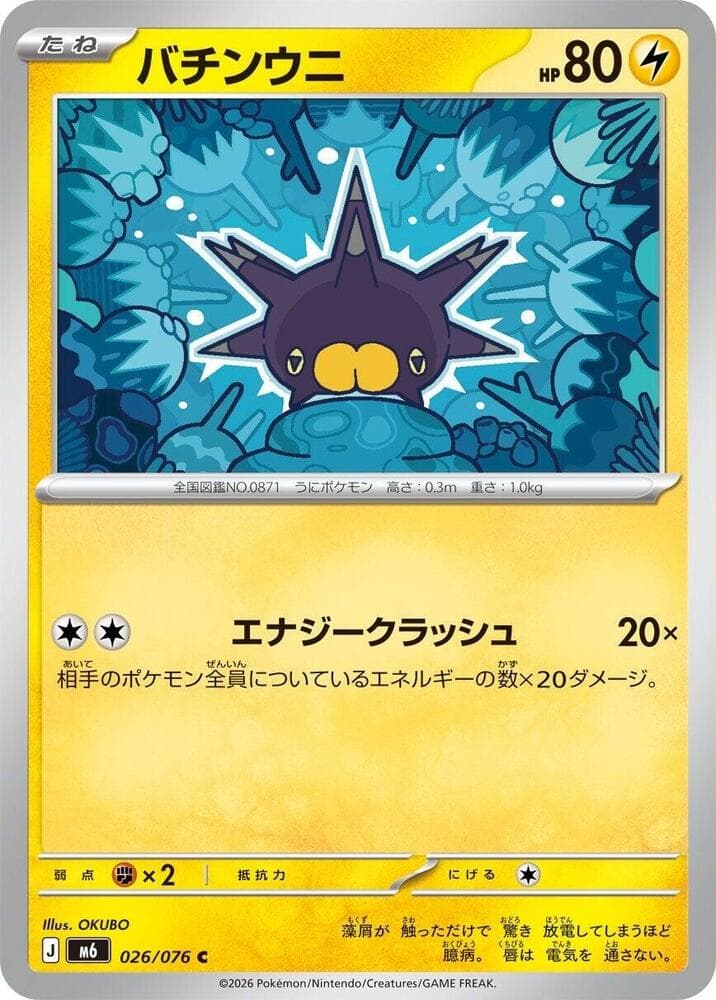
Pincurchin #026

Common · Market price: $1.12

Pincurchin, $1.12, the grumpy sea urchin. An unassuming Common — until you see its Art Rare (#082) at $22.59, one of the tier's surprise hits. Somebody at the illustration desk loves this Pokémon. Buy-the-common, want-the-AR is the standard M6 pattern, but Pincurchin is its purest case: over twenty dollars of gap between the two versions of the same grumpy urchin.

View in catalog →

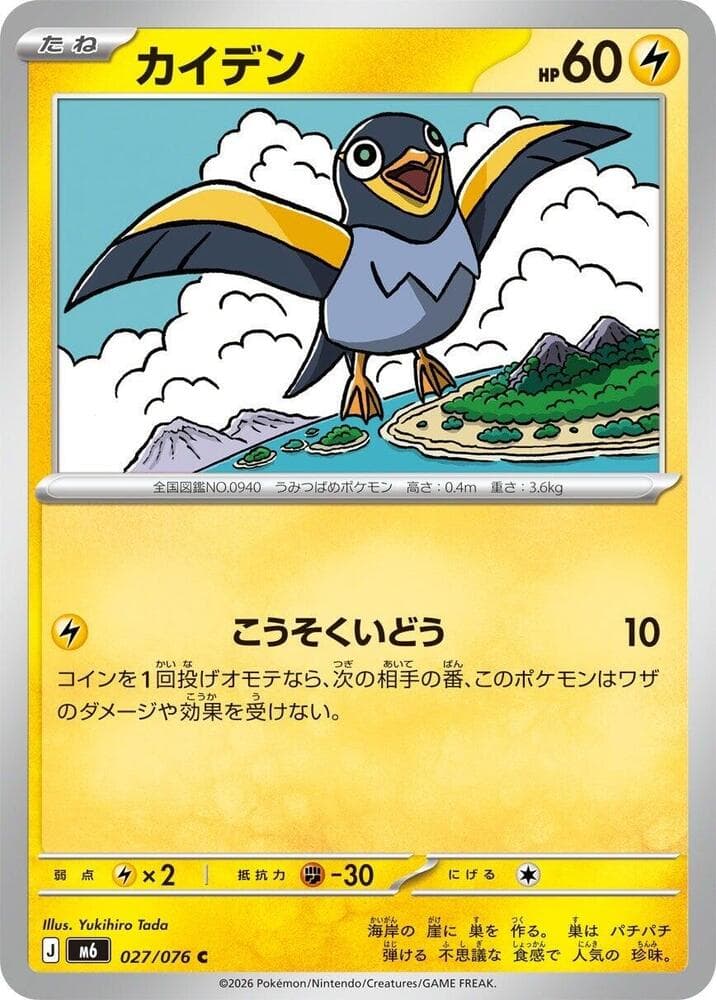
Wattrel #027

Common · Market price: $0.66

Wattrel, $0.66, the storm petrel Common. Flavor-perfect for a storm-themed set; economically invisible. As with most of this set's bird commons, its destiny is the bulk stack — but the storm-petrel flavor is note-perfect for the set's theme.

View in catalog →

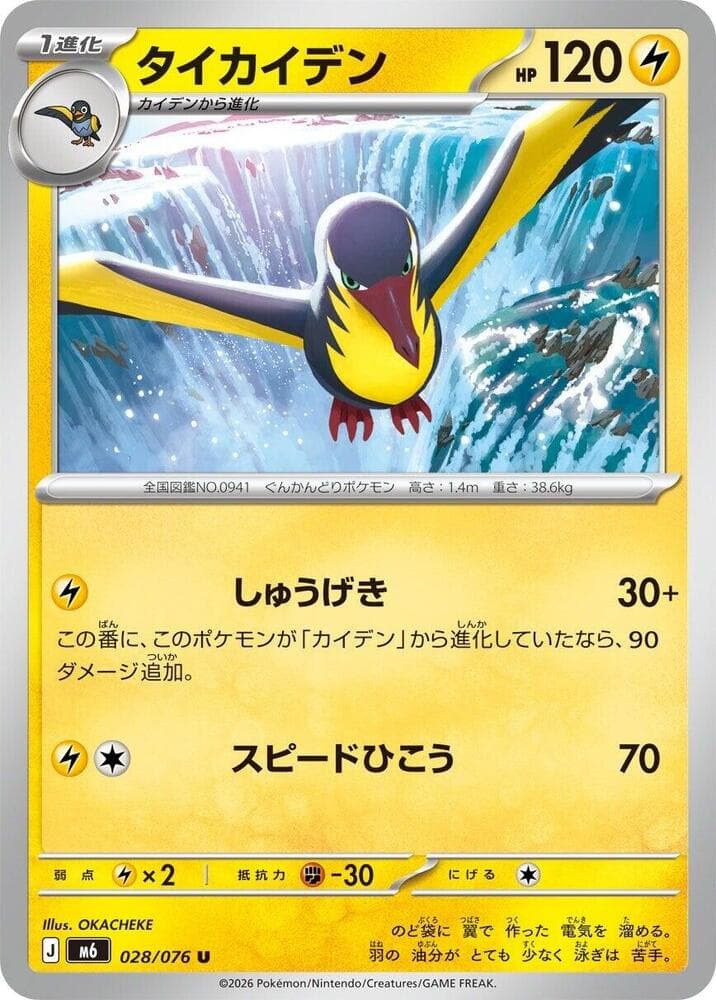
Kilowattrel #028

Uncommon · Market price: $1.25

Kilowattrel, $1.25, the Uncommon evolution gliding above Wattrel. Standard evolution-line economics, nothing more. The line tops out here — no AR, no ex — making this one of the few evolution families in M6 with no premium version to chase.

View in catalog →

Psychic, Fighting and Metal (029–040): Ghosts, Ground and Groudon

The middle of the checklist covers a lot of typing ground: a Drowzee line and Giratina for the Psychic corner, the automaton Mega Golurk ex — the sleeper favorite among the new Megas — and then the continent-raising Groudon heading the Fighting block with Sandshrew, Onix and Steelix in support. Landorus and Enamorus continue the genie roll call that Thundurus and Tornadus start elsewhere in the set.

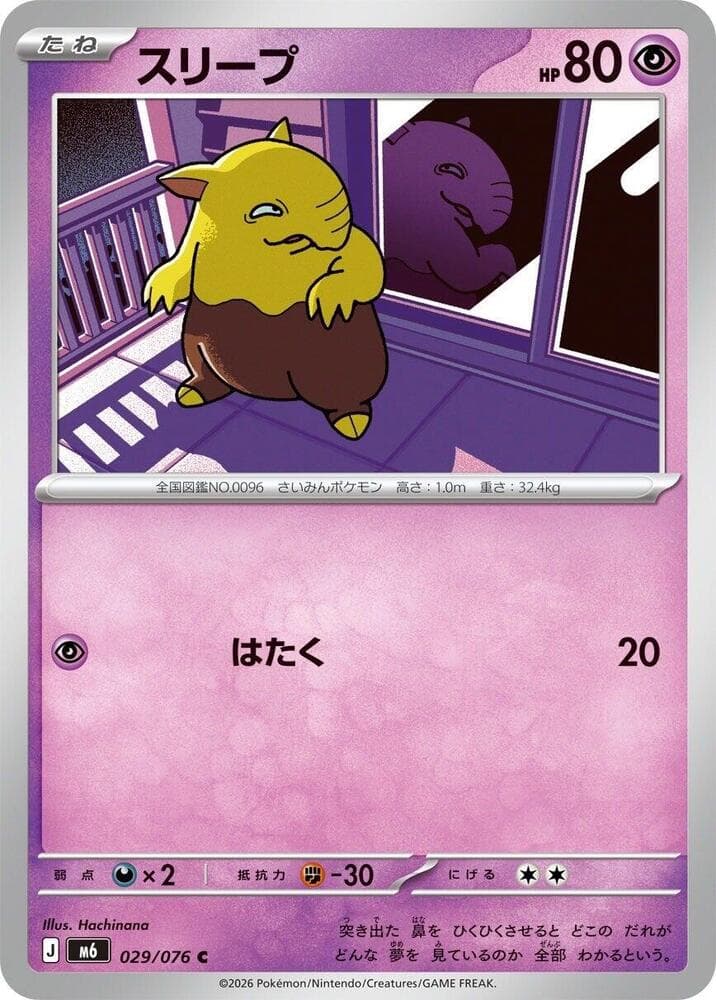
Drowzee #029

Common · Market price: $0.99

Drowzee, $0.99, the tapir hypnotist opening the Psychic corner at a nostalgic dollar. Kanto Commons never quite hit zero. Drowzee's pendulum has been swinging since 1996, and its market price has barely moved in that time either; consistency is its own kind of charm.

View in catalog →

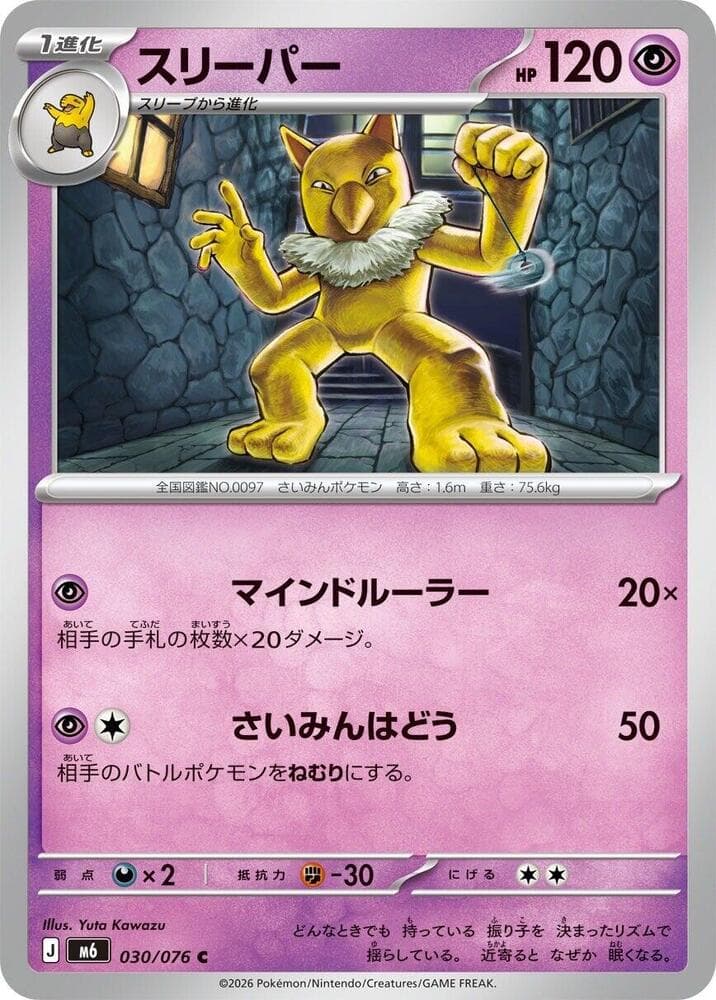
Hypno #030

Common · Market price: $0.97

Hypno, $0.97, completing the Drowzee line as a Common. The pendulum swings, the price does not. No secret version exists, so this dollar Common is the definitive M6 Hypno — a sentence that has never excited anyone, which is rather the point.

View in catalog →

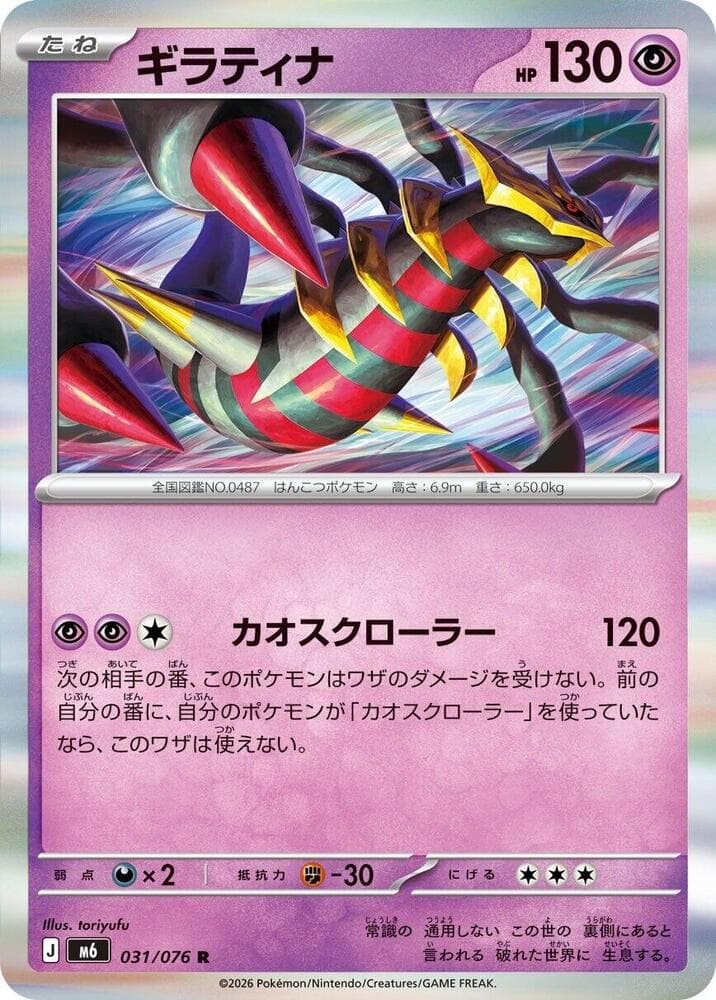
Giratina #031

Rare · Market price: $1.83

Giratina, $1.83, the Renegade Pokémon as a printed Rare — a big name at a small price, with no secret version in this set to escalate to. For Giratina collectors, this is the whole M6 story: two dollars, done. That absence of an AR or SAR for a Pokémon of Giratina's stature is one of the set's genuine surprises — and it keeps this Rare unusually relevant for its price.

View in catalog →

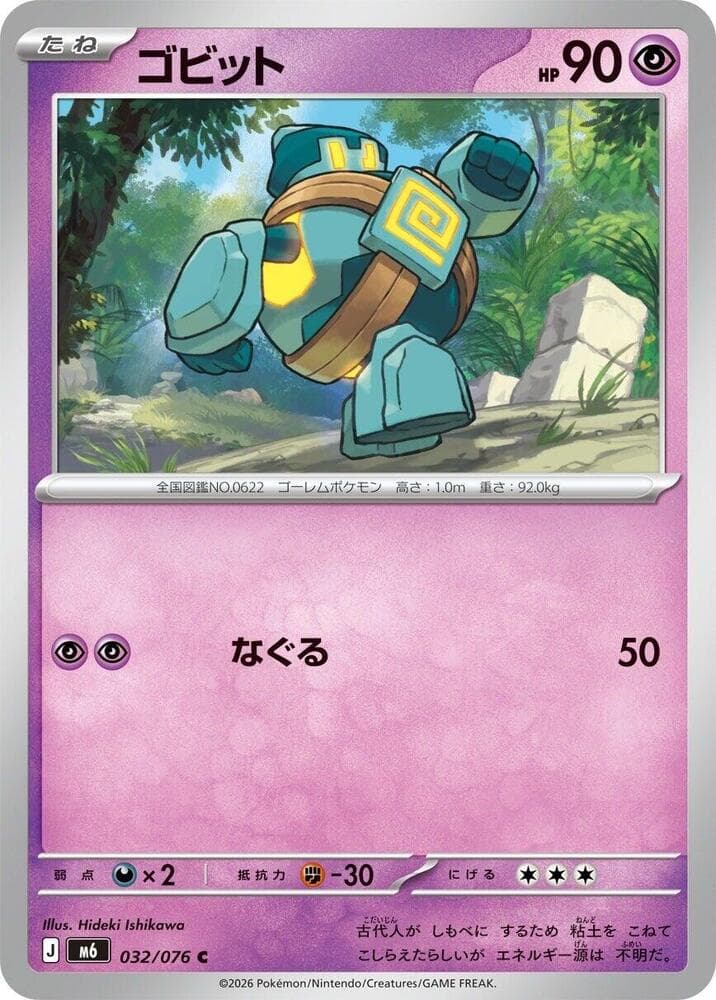
Golett #032

Common · Market price: $0.51

Golett, $0.51, the clay golem Common that exists to become the set's sleeper Mega. Grab it in any completion lot. Golett commons historically spike only when Golurk decks do; with the Mega line landing well, this is the cheapest lottery ticket in the set.

View in catalog →

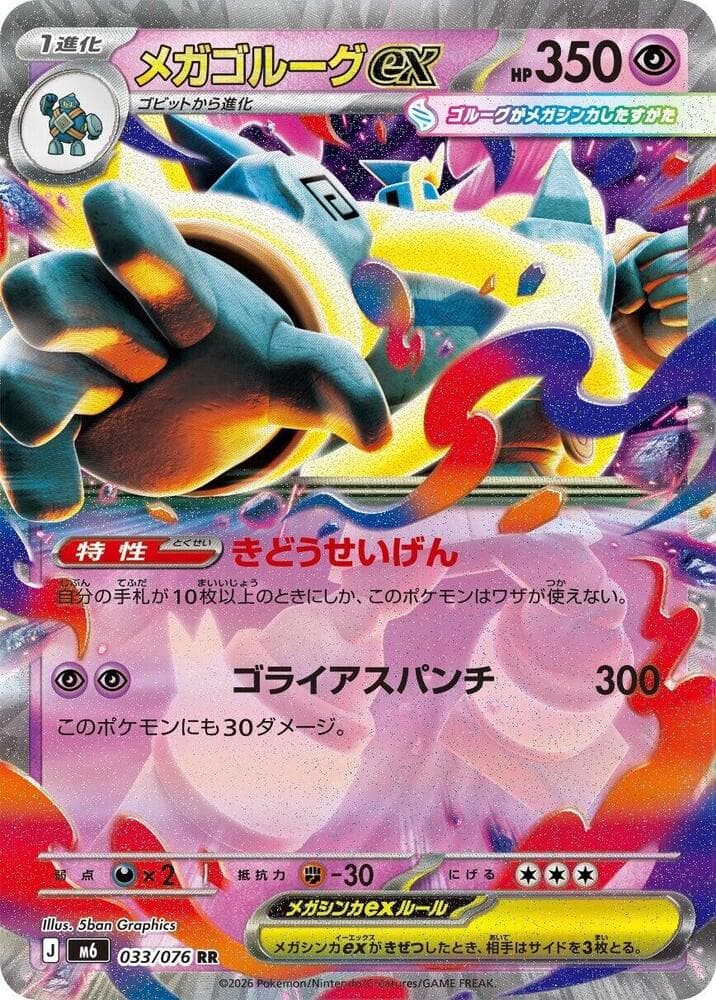
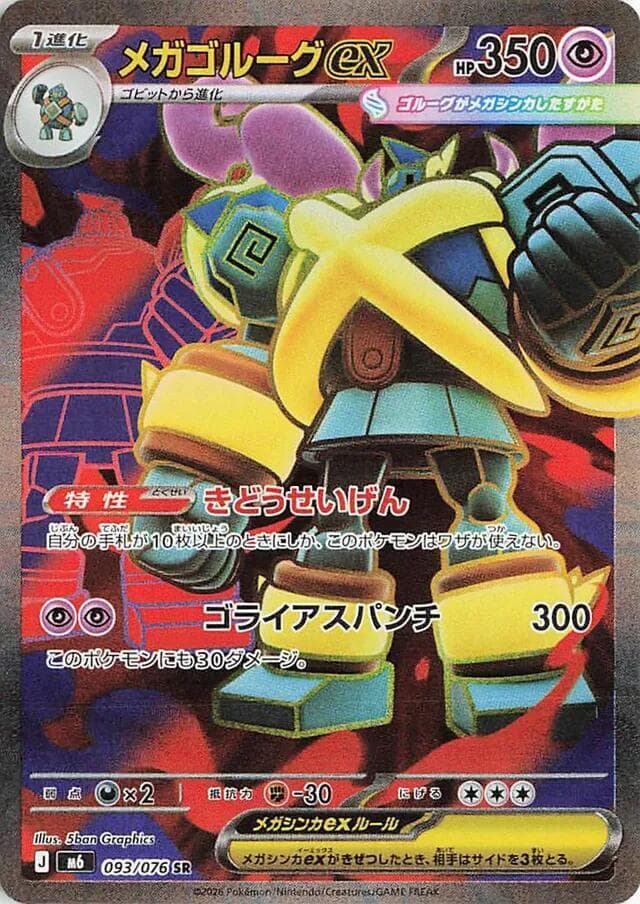
Mega Golurk ex #033

Double Rare · Market price: $3.45

Mega Golurk ex, $3.45, Double Rare — the second Mega debut, and the quiet favorite among them. The automaton's Mega form has real presence, and its secret versions carry the third-highest SAR in the set (#109, $54.89) plus the most expensive non-Rayquaza SR (#093, $34.75). The RR remains firmly affordable. If any non-Rayquaza card in this set develops a competitive story, the smart money is here — and the RR is the version decks will actually run.
View in catalog →

Enamorus #034

Uncommon · Market price: $0.16

Enamorus, $0.16 — the cheapest card in the entire set. The love-hate genie closes the roll call at literal pocket change, then turns around and commands $20.42 as an Art Rare (#083). No card in the set has a steeper printed-to-secret ratio. It is also a small lesson in how Japanese sets price: printed rarity tracks print runs, but value tracks artwork and character, and Enamorus's printed version has neither working for it.

View in catalog →

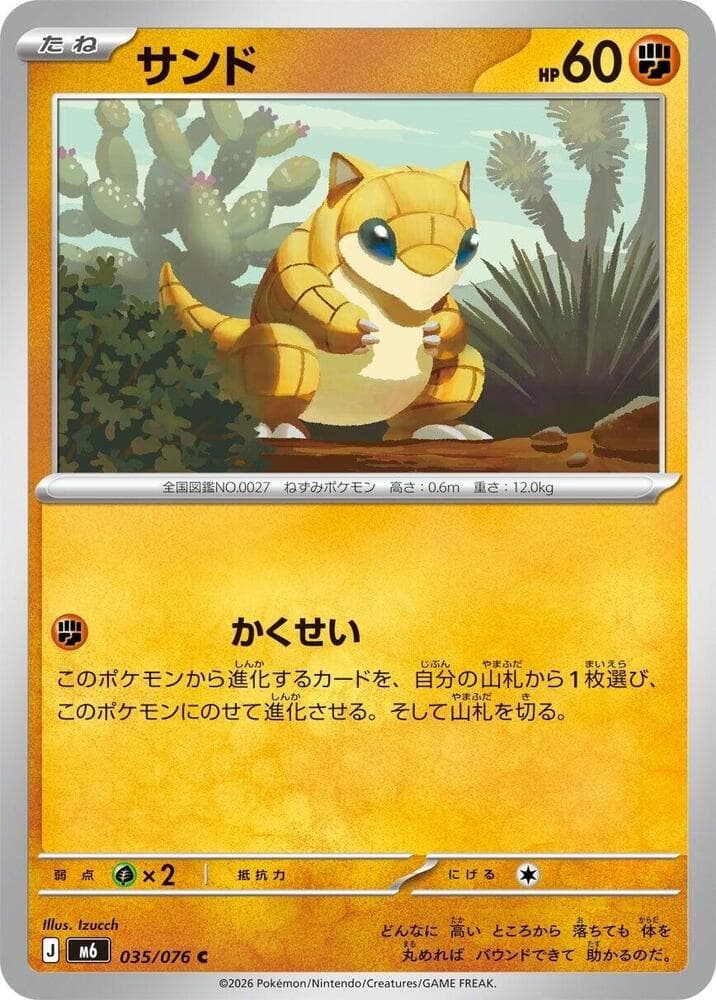
Sandshrew #035

Common · Market price: $1.51

Sandshrew, $1.51, the curled-up ground mouse at a mild nostalgia premium. Kanto originals keep their floor. Its Alolan and Paldean cousins get the attention these days, which leaves the original curled up here at a price any Kanto completionist will happily pay.

View in catalog →

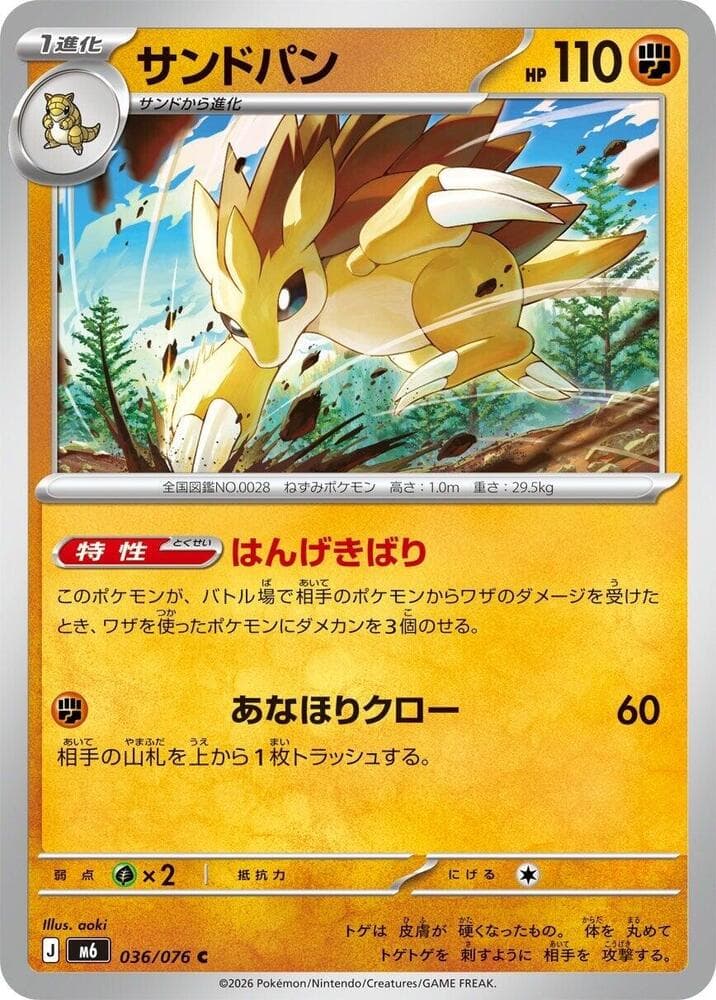
Sandslash #036

Common · Market price: $0.51

Sandslash, $0.51, finishing the line as a Common. The spikes are free. The line's total cost — about two dollars for both stages — makes it ideal trade ballast when a swap needs a small top-up.

View in catalog →

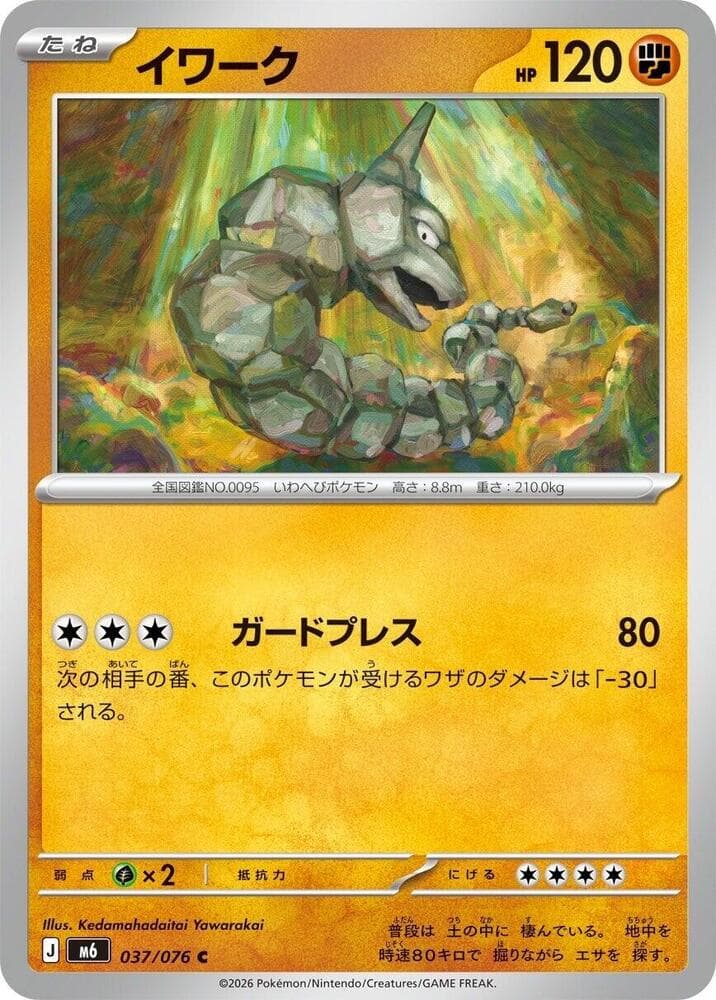
Onix #037

Common · Market price: $2.00

Onix, $2.00, the rock snake priced like the icon it is rather than the Common it says it is. Another entry for the popularity-beats-rarity file this set keeps building. Onix also profits from Steelix nostalgia flowing backward: the pre-evolution outprices the evolution here, an inversion collectors find genuinely funny.

View in catalog →

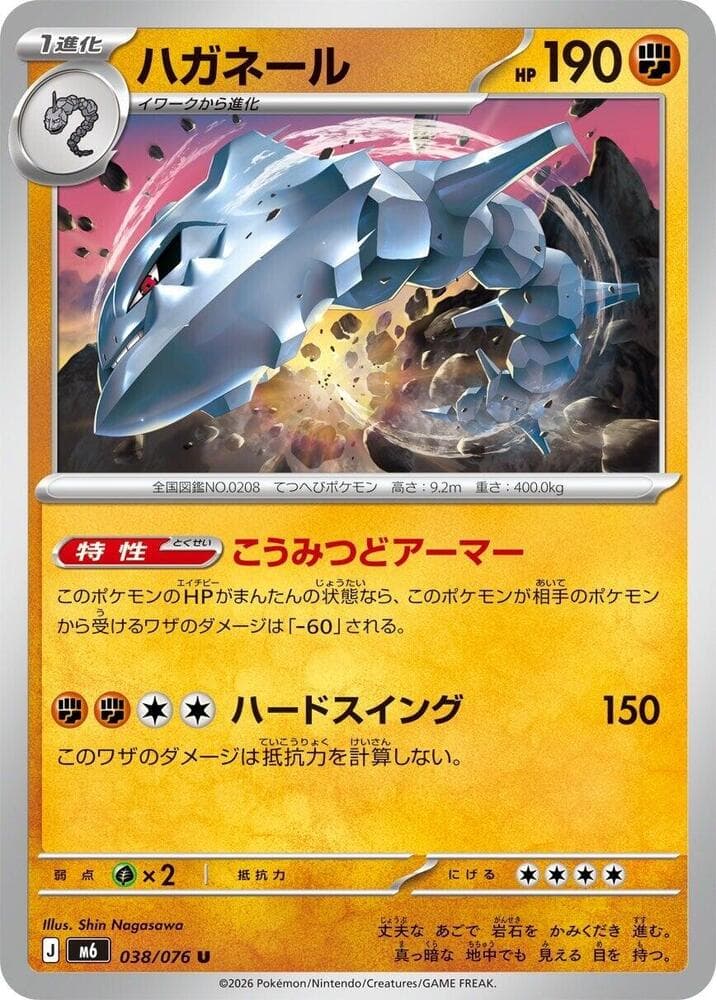
Steelix #038

Uncommon · Market price: $0.97

Steelix, $0.97, the Uncommon steel evolution. Cheaper than its pre-evolution — the market has a sense of humor about icons. A sub-dollar Steelix is the kind of card that makes completion trading satisfying — an iconic silhouette for the price of a sleeve.

View in catalog →

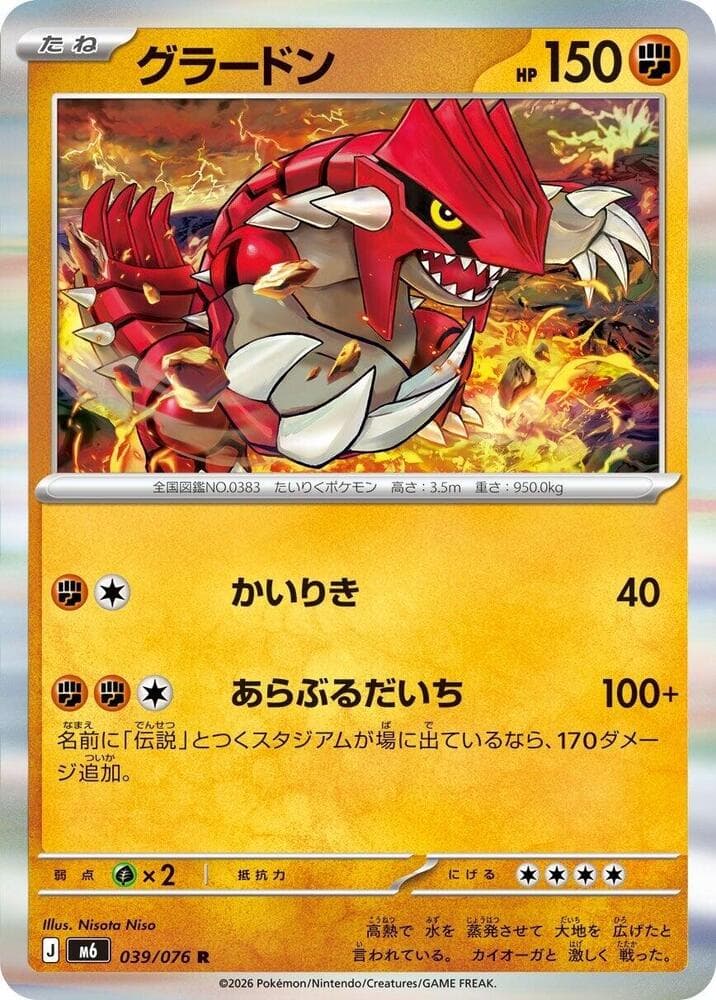
Groudon #039

Rare · Market price: $0.86

Groudon, $0.86, the continent legendary as a printed Rare — the cheapest of the weather trio here, oddly. Its Art Rare (#084) at $23.40 restores the hierarchy. As with Kyogre, this Rare is the budget way to own a third of the set's mythology. Its bargain price also makes it the cheapest entry point into the weather-trio theme that defines this set — the whole printed trio costs under seven dollars.

View in catalog →

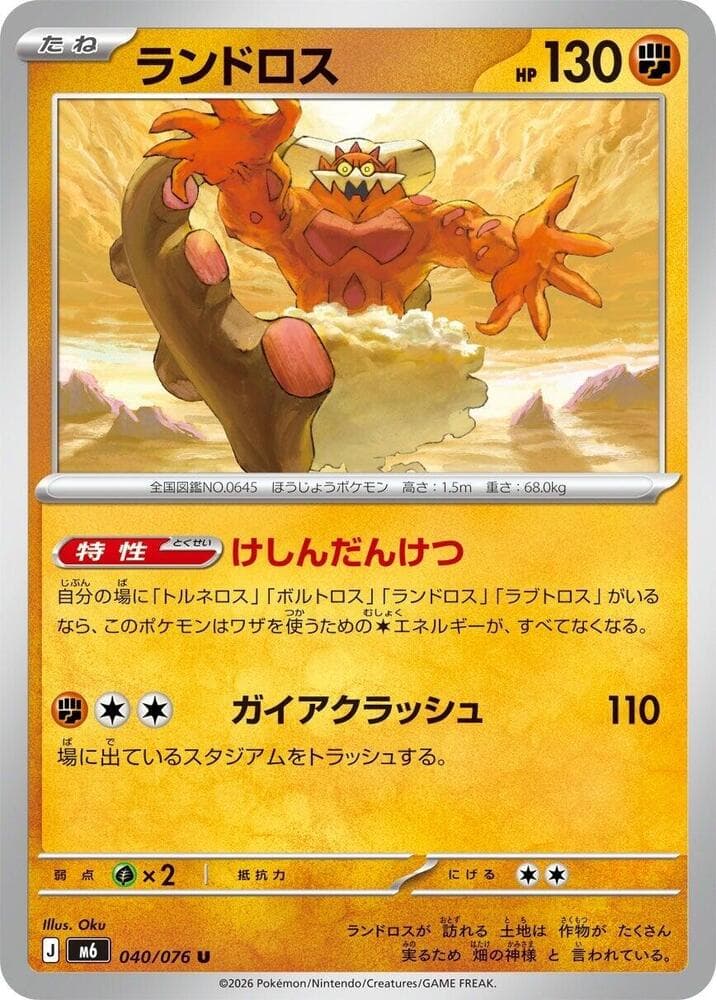
Landorus #040

Uncommon · Market price: $0.97

Landorus, $0.97, the land genie Uncommon rounding out the Fighting block. Like its siblings, printed cheap and mostly a completionist's checkbox. With Enamorus, Thundurus and Tornadus elsewhere in the checklist, pulling Landorus completes the genie quartet — the set's most affordable sub-collection.

View in catalog →

Darkness and Poison (041–048): Sableye's Heist and the Squid Mega

A Nidoran family opens the Poison corner before the block turns dark: Spinarak, Ariados, the gem-eyed Sableye — another Common with a Rare-sized price — and the Inkay line that culminates in Mega Malamar ex, the most expensive Double Rare in the set after Rayquaza itself.

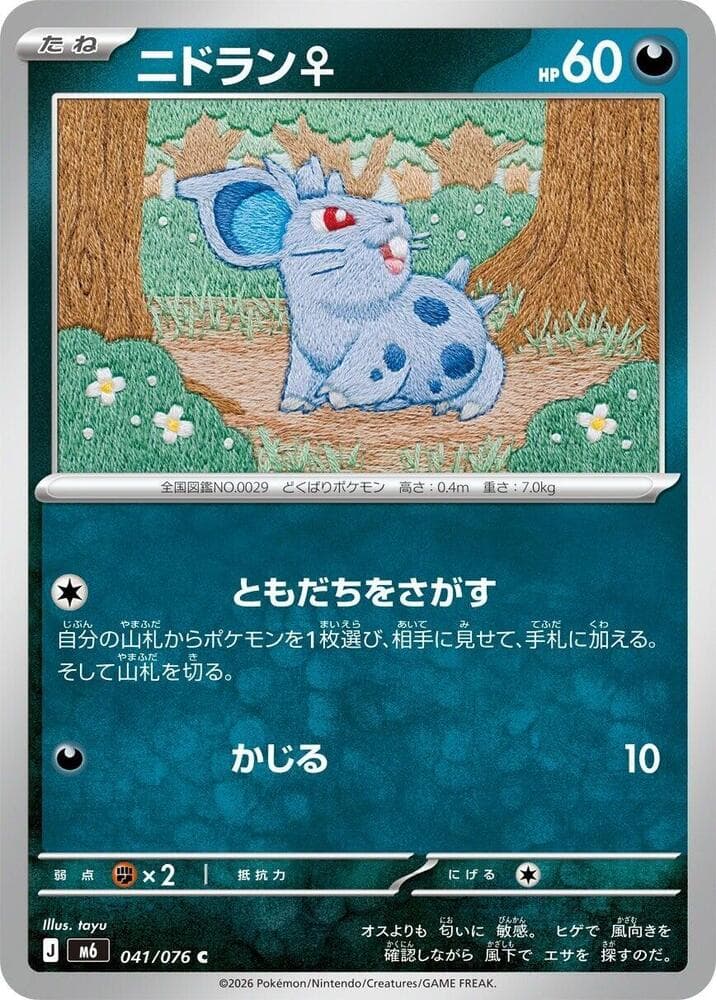
Nidoran F #041

Common · Market price: $1.39

Nidoran F, $1.39, opening the Poison corner with the female Nidoran — the classic starting point of one of the game's oldest evolution families. Gen-one Commons hold their small premium as always. The male counterpart is absent from this set, a small asymmetry that Nidoran completionists will notice immediately and everyone else never will.

View in catalog →

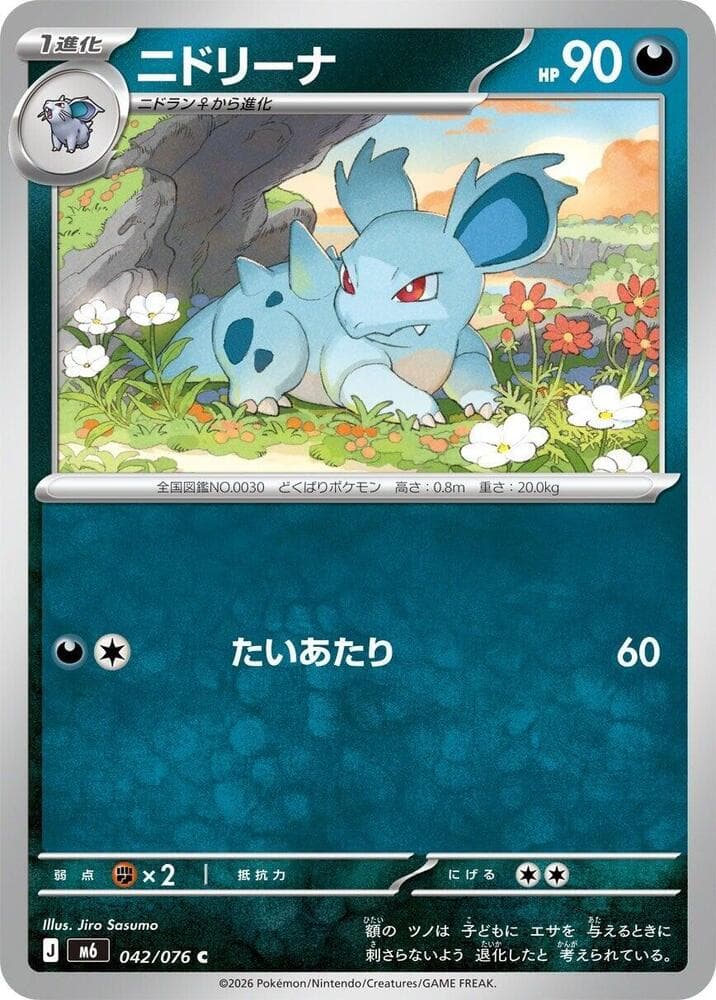
Nidorina #042

Common · Market price: $2.57

Nidorina, $2.57, the middle stage priced above both its neighbors — middle evolutions are printed in fewer contexts, and completionists feel it. The most expensive card in the Nidoran line, oddly enough. Middle-stage scarcity is one of the quiet structural facts of Japanese sets, and Nidorina has been its poster child since the Jungle days.

View in catalog →

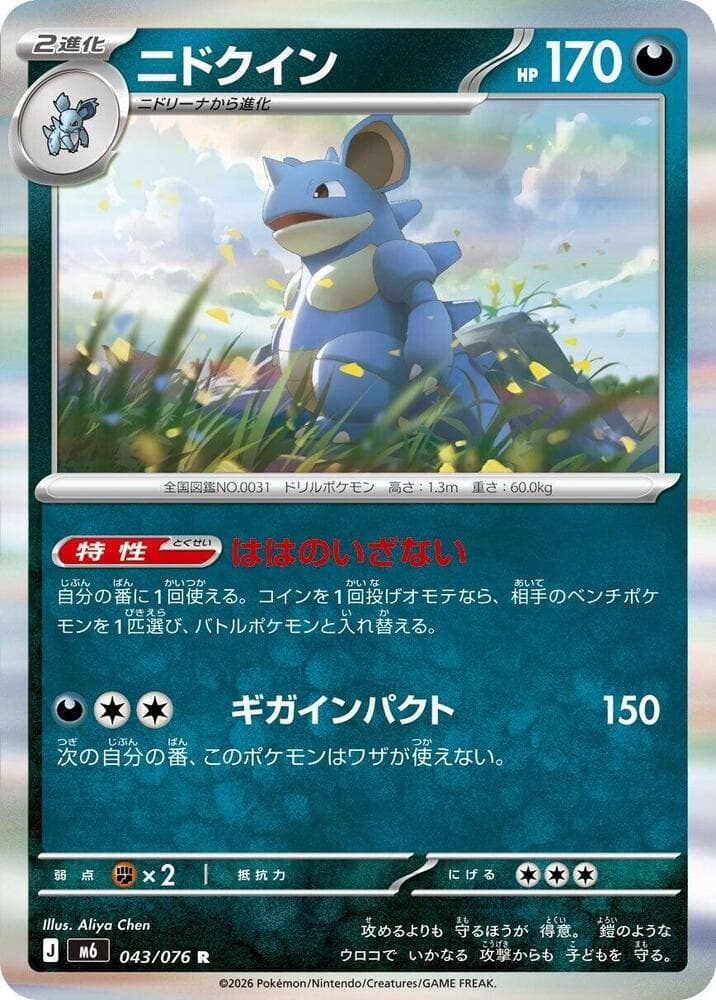
Nidoqueen #043

Rare · Market price: $1.24

Nidoqueen, $1.24, the matriarch as one of the set's eight printed Rares. A complete queen-side line for under six dollars total is quietly one of the set's nicest completion targets. Nidoqueen Rares have outsold their market price in trade volume for years — a card everyone seems to want at exactly the price nobody minds paying.

View in catalog →

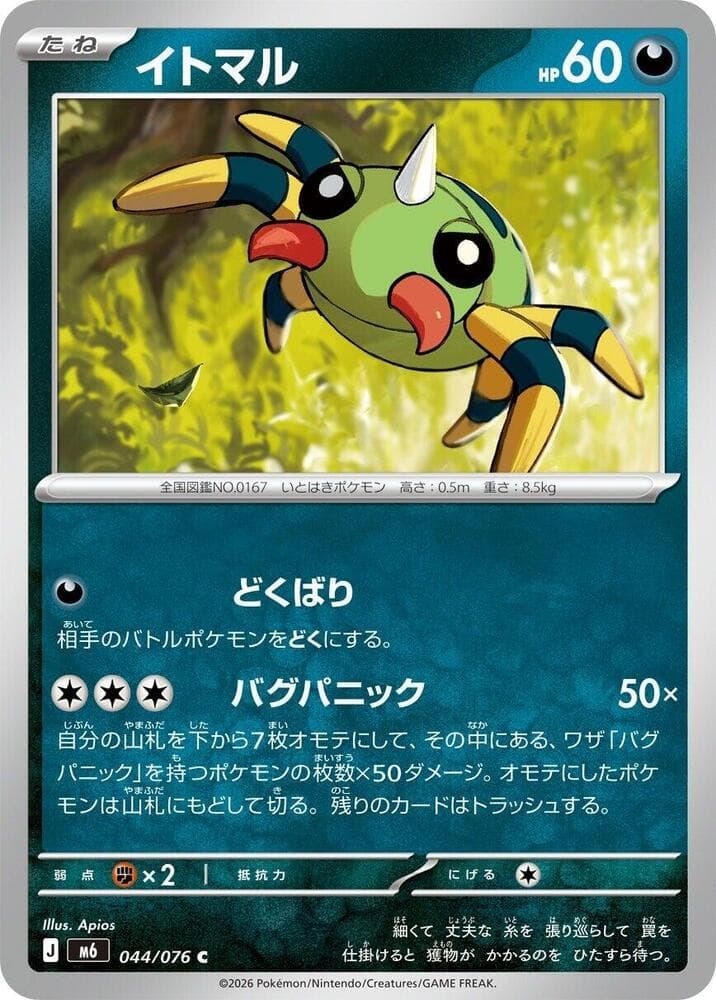
Spinarak #044

Common · Market price: $0.99

Spinarak, $0.99, the smiling spider Common. Johto filler with a fanbase just large enough to keep it off the floor. Its Johto-era art lineage gives it a soft nostalgia floor, but this is fundamentally a card you acquire by accident and keep out of fondness.

View in catalog →

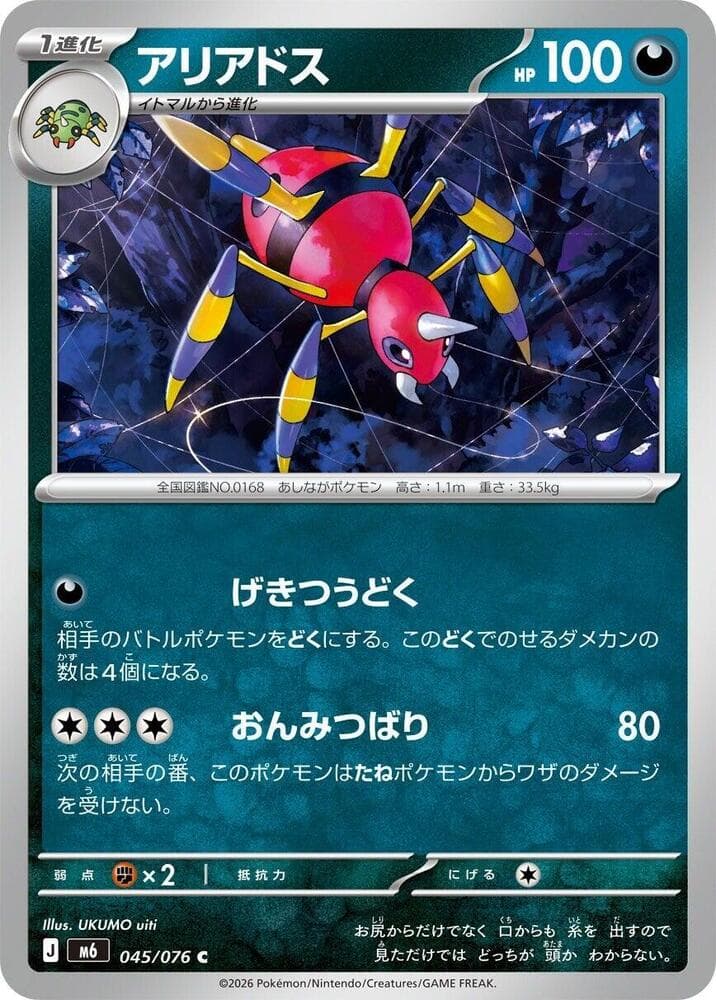
Ariados #045

Common · Market price: $0.51

Ariados, $0.51, completing the spider line at half a dollar. Web included, premium not. The line caps here with no premium version, which makes the spider family one of the cheapest complete lines in the set — under two dollars for both stages.

View in catalog →

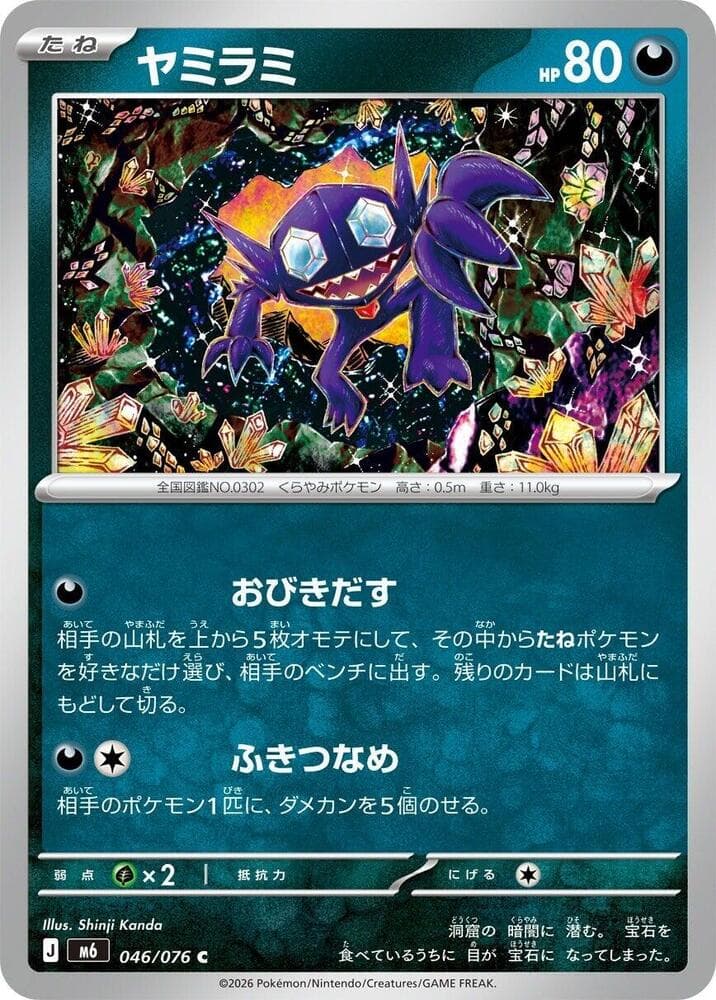
Sableye #046

Common · Market price: $4.27

Sableye, $4.27 — the set's second-priciest Common, behind only Growlithe. The gem-eyed imp is a perennial collector darling, and its Hoenn pedigree fits this set perfectly. Spare copies trade like Uncommons-plus. Sableye also has one of the set's best flavor fits: a gem-thief in a set whose name is a gemstone. Cards with that kind of internal rhyme tend to hold their premiums.

View in catalog →

Inkay #047

Common · Market price: $1.98

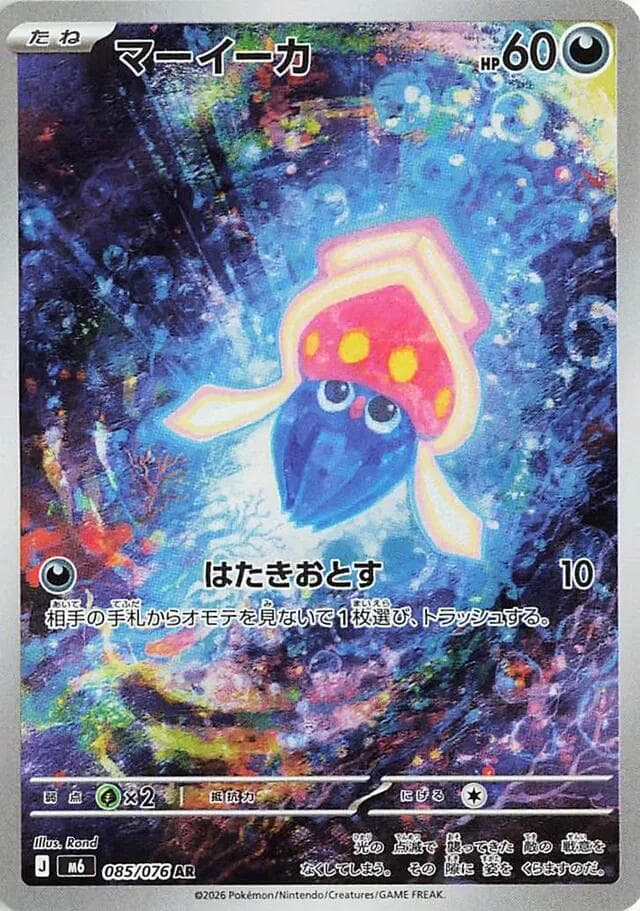
Inkay, $1.98, the upside-down squid priced above filler because of what it leads to — and because its own Art Rare (#085) at $15.03 shows the line has illustration appeal beyond the Mega. Inkay's inverted-evolution gimmick (flip the console upside down, in the games) has made it a minor cult favorite, and cult favorites are exactly what launch-window trades are made of.

View in catalog →

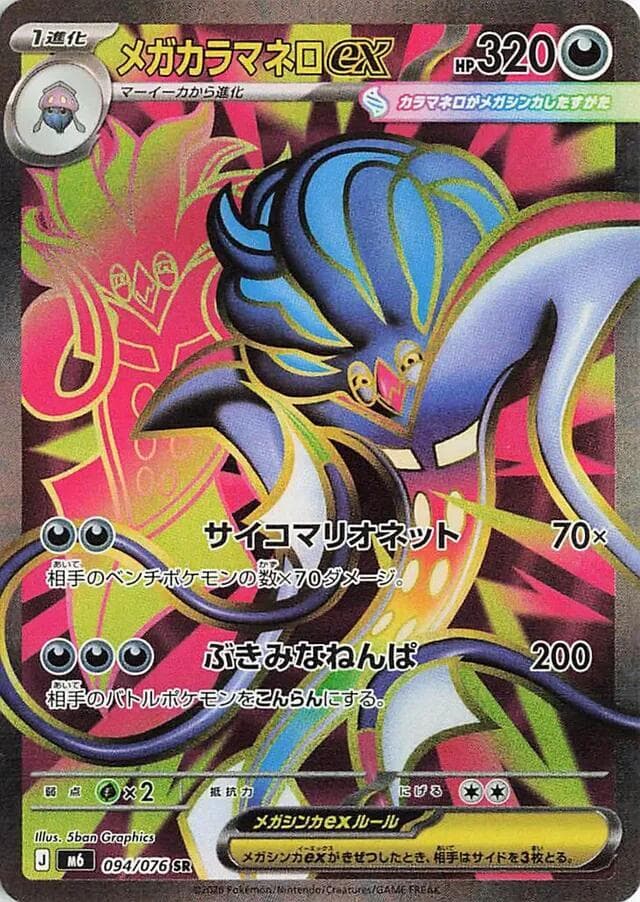
Mega Malamar ex #048

Double Rare · Market price: $4.56

Mega Malamar ex, $4.56, Double Rare — the third Mega debut and the most expensive RR in the set after Mega Rayquaza itself. The hypnotic squid has genuine play-pattern intrigue, and its gold SR (#094) at $8.16 is one of the tier's most affordable. Unusually, the base RR here is a meaningful fraction of the SR's price. Its RR-to-SR ratio is the flattest among the Megas, which the market usually reads as playability demand rather than collector demand — worth watching when the international version lands.
View in catalog →

Dragons and Colorless (049–062): The Face of the Set

The heart of Storm Emeralda. The Dragon block builds through Druddigon and the full Jangmo-o line, the Colorless corner adds Altaria and the oddball Kecleon, and then number 058 delivers the reason the set exists: Mega Rayquaza ex, a Double Rare at $10.90 — five times the price of any other RR in the set, and still the cheapest way to own the card everyone is here for. The Talonflame ex line closes out the printed Pokémon.

Druddigon #049

Uncommon · Market price: $1.01

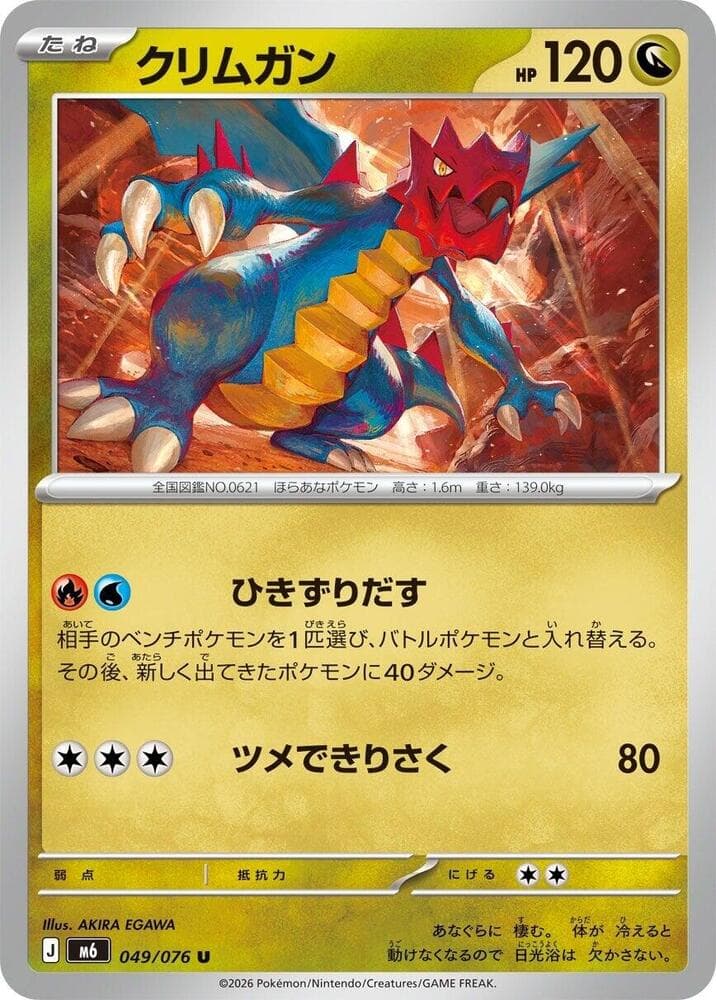
Druddigon, $1.01, the cave dragon Uncommon opening the Dragon block. A dollar for a dragon is the deal it always is: fine. No evolution, no secret version, no drama: Druddigon remains the TCG's most self-sufficient dragon, complete in a single card.

View in catalog →

Jangmo-o #050

Common · Market price: $1.99

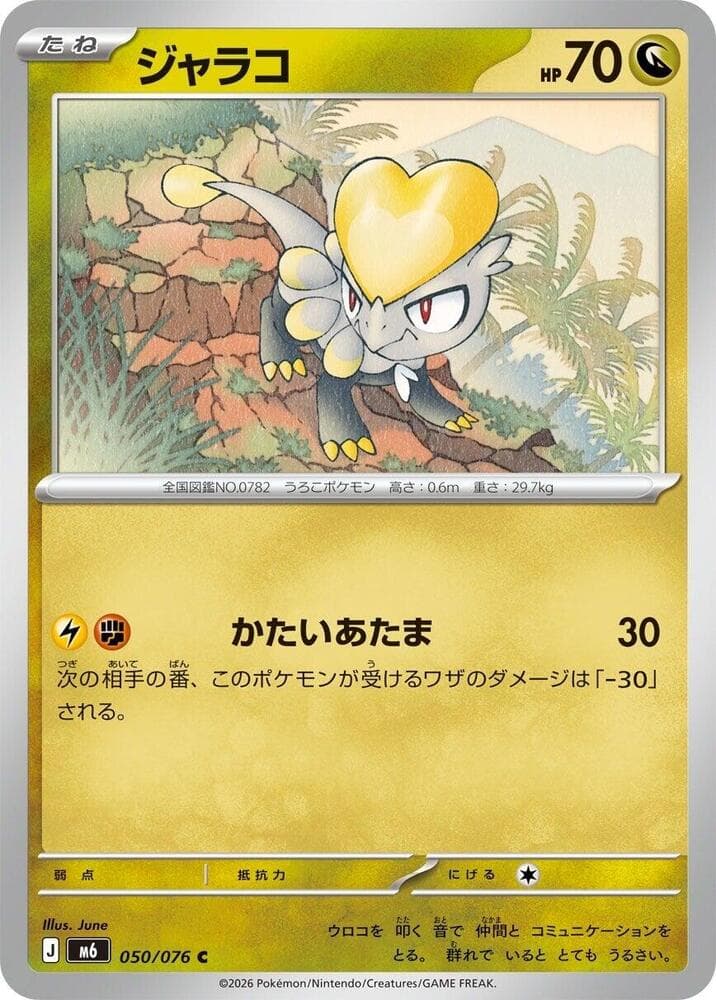
Jangmo-o, $1.99, the scaly-headed Common starting Kommo-o's line, priced with a small anticipation premium. The full three-stage dragon line completes for under four dollars. Pseudo-legendary base stages carry a reliable trickle of demand from line collectors, which keeps even this Common off the true floor.

View in catalog →

Hakamo-o #051

Common · Market price: $0.72

Hakamo-o, $0.72, the middle dragon stage. The market never learned to love middle stages, and this one proves it again. Its sub-dollar price against Jangmo-o's two dollars is the middle-stage discount in its purest form — same line, half the interest.

View in catalog →

Kommo-o #052

Rare · Market price: $0.69

Kommo-o, $0.69 — a fully evolved pseudo-legendary dragon Rare for under seventy cents, the cheapest printed Rare in the set. If you want a snapshot of how top-heavy this set's value is, here it is. For budget dragon collectors this might be the best pure value in the set: pseudo-legendary, fully evolved, Rare frame, pocket change.

View in catalog →

Cyclizar #053

Common · Market price: $2.05

Cyclizar, $2.05, the friendly motorcycle lizard as a Common. Rides alone here — no Koraidon or Miraidon in this checklist — and carries a mild popularity premium anyway. Cyclizar's day as a competitive staple came and went in Paldea, but the affection stuck — it remains one of those commons that always finds a taker.

View in catalog →

Azurill #054

Common · Market price: $2.09

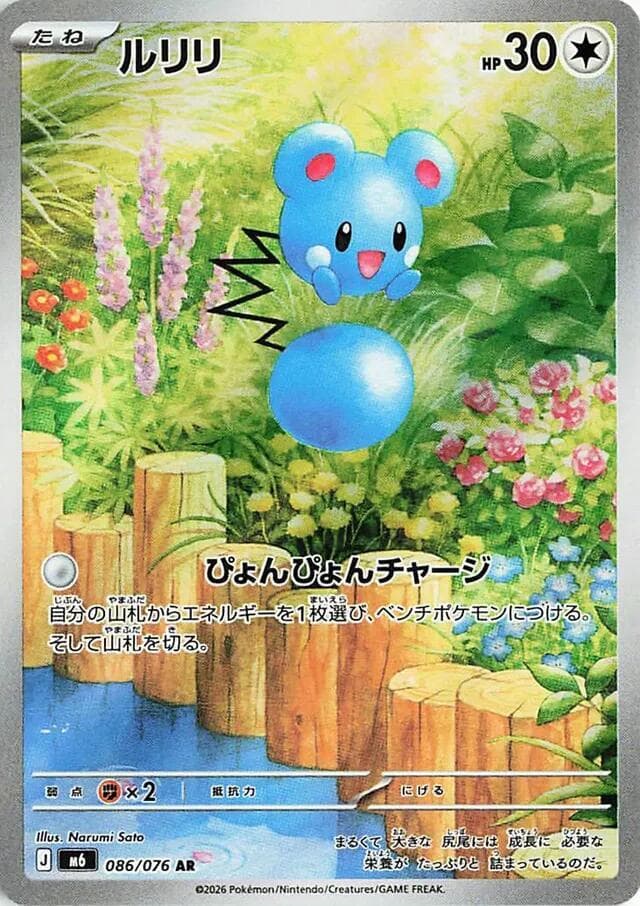
Azurill, $2.09, the bouncing tail-ball Common priced on pure cuteness, with an Art Rare (#086, $10.29) to prove the illustrators agree. Baby Pokémon do numbers in Japanese sets. Azurill also opens the set's most family-friendly trade package: pair it with the AR and you have a gift-ready two-card set for under thirteen dollars.

View in catalog →

Swablu #055

Common · Market price: $0.26

Swablu, $0.26, the cotton-winged Common — one of the set's cheapest cards, and the on-ramp to Altaria. Every binder needs a cloud. Swablu bulk is the confetti of Japanese Water/Dragon sets — everyone has it, nobody resents it, and one copy always makes the binder.

View in catalog →

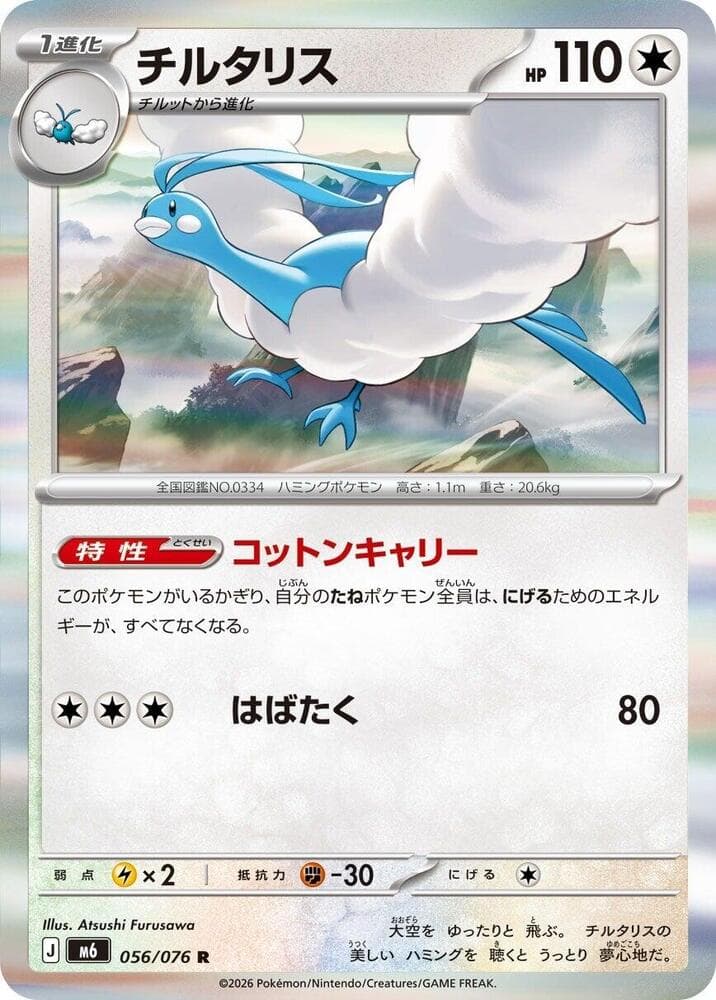
Altaria #056

Rare · Market price: $1.33

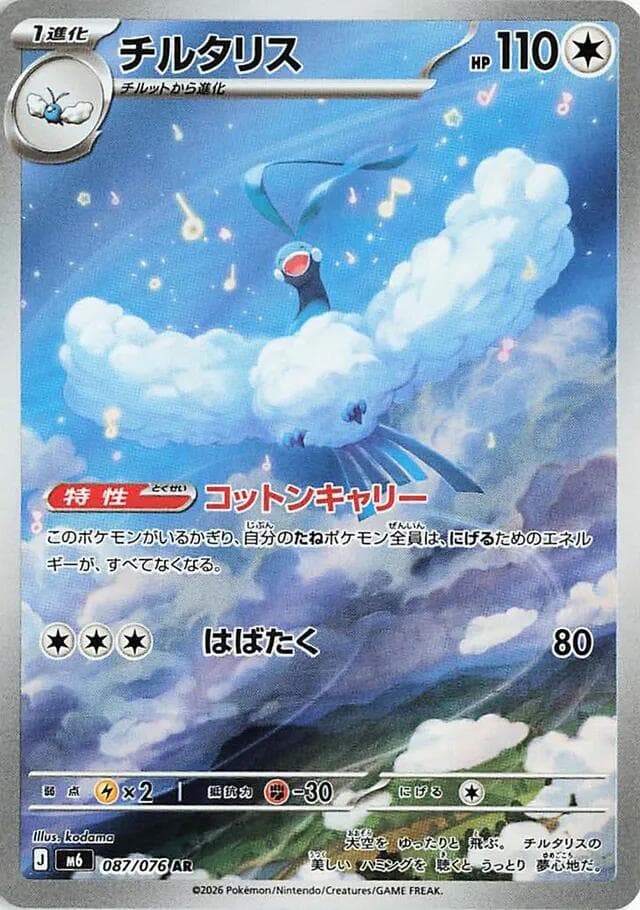
Altaria, $1.33, the humming dragon as a printed Rare with an Art Rare encore at #087 ($16.73). The printed version is the affordable half of one of the set's prettiest lines. Altaria's line is the set's best example of the two-tier structure working as intended: a cheap printed version for the checklist, a mid-priced AR for the art collectors, and no confusion about which is which.

View in catalog →

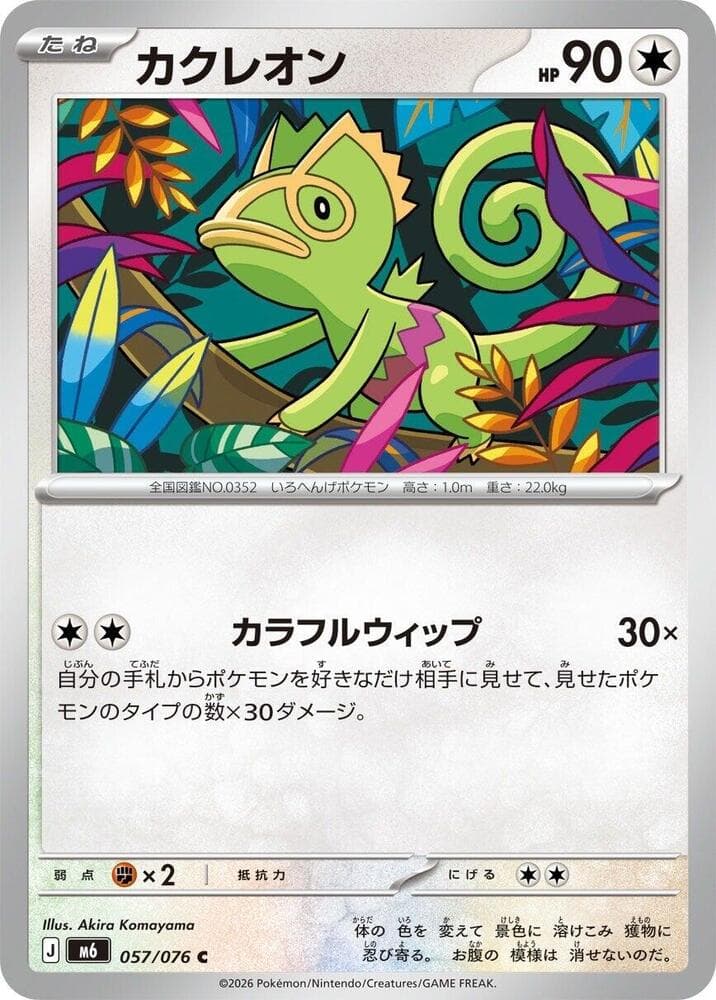
Kecleon #057

Common · Market price: $0.41

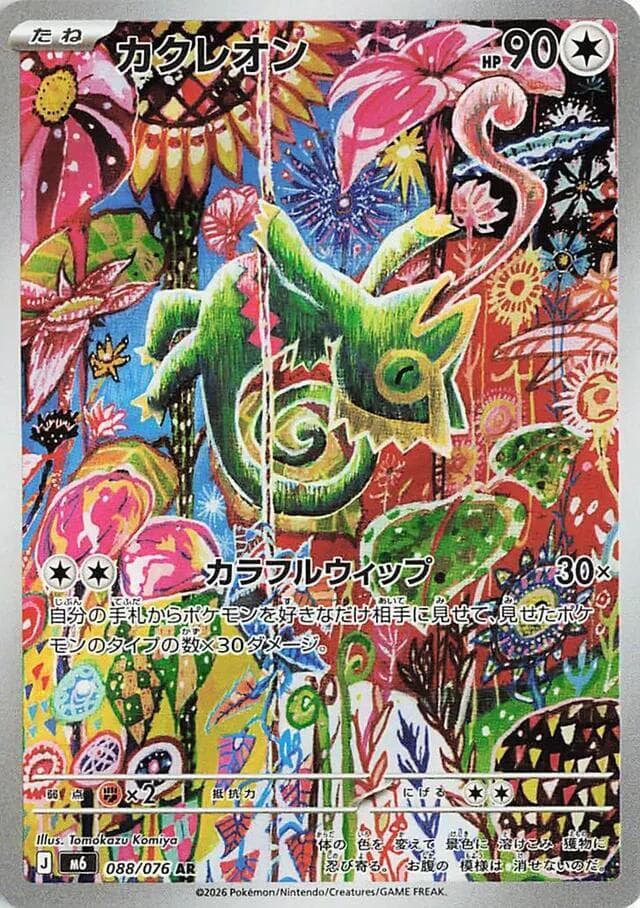
Kecleon, $0.41 — forty-one cents here, $32.37 as the set's most expensive Art Rare (#088). An 80-to-1 ratio between a card and its own illustration version is the kind of statistic this rarity era produces. The printed Common is, fittingly, nearly invisible. The invisible-Pokémon joke writes itself at this price point, and the market clearly enjoys telling it — right up until the AR punchline.
View in catalog →

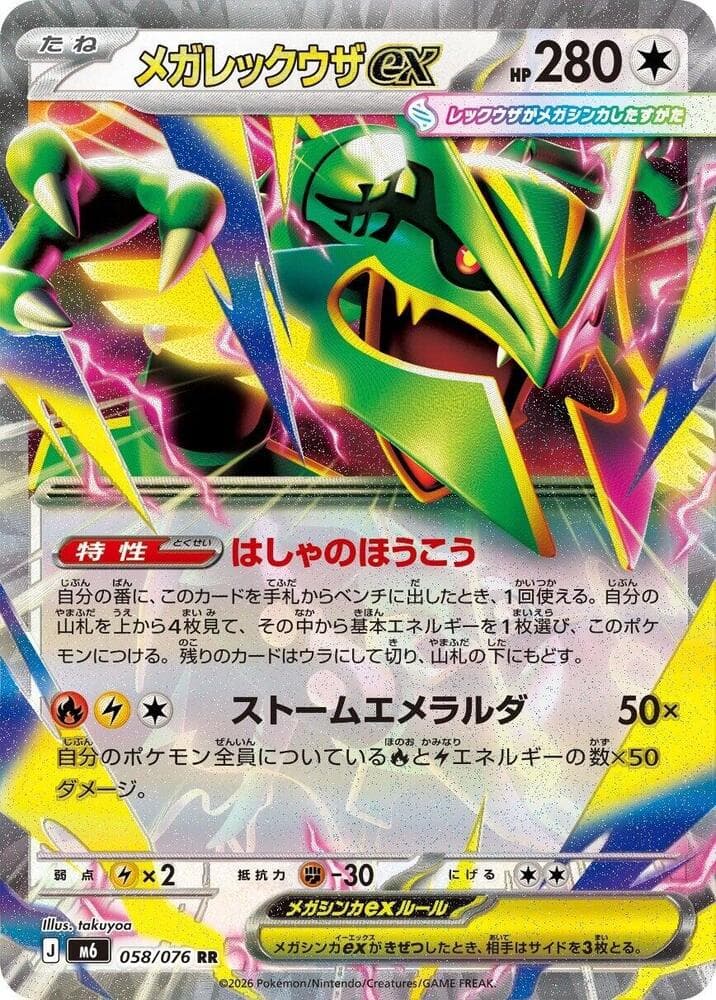
Mega Rayquaza ex #058

Double Rare · Market price: $10.90

Mega Rayquaza ex, $10.90, the face of the set as a Double Rare — five times the price of any other RR here, and still the cheapest way to own the card Storm Emeralda is named for. The 280 HP Colorless dragon scales its signature attack with Energy across your board, echoing its format-warping XY-era ancestor. From here the line only ascends: SR #095 at $75.98, SAR #110 at $791.32, MUR #113 at $1,299.99. This RR is where most collectors will actually live. It is also, notably, the only printed card in the set whose price holds double digits — week-one demand for the mascot reaches all the way down to the RR tier.

View in catalog →

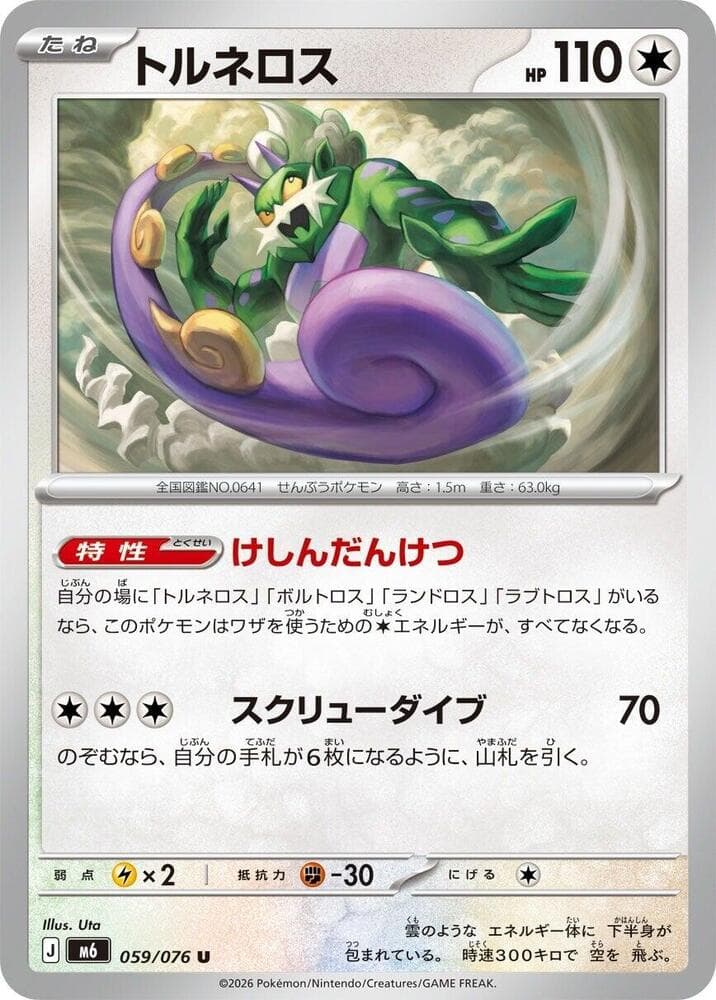
Tornadus #059

Uncommon · Market price: $0.96

Tornadus, $0.96, the storm genie Uncommon — the most thematically on-brand filler card in a set literally named for a storm. Cheap like its genie siblings. Its kite-riding artwork is a nice nod to the storm theme, and that is the extent of the analysis this card requires.

View in catalog →

Fletchling #060

Common · Market price: $1.01

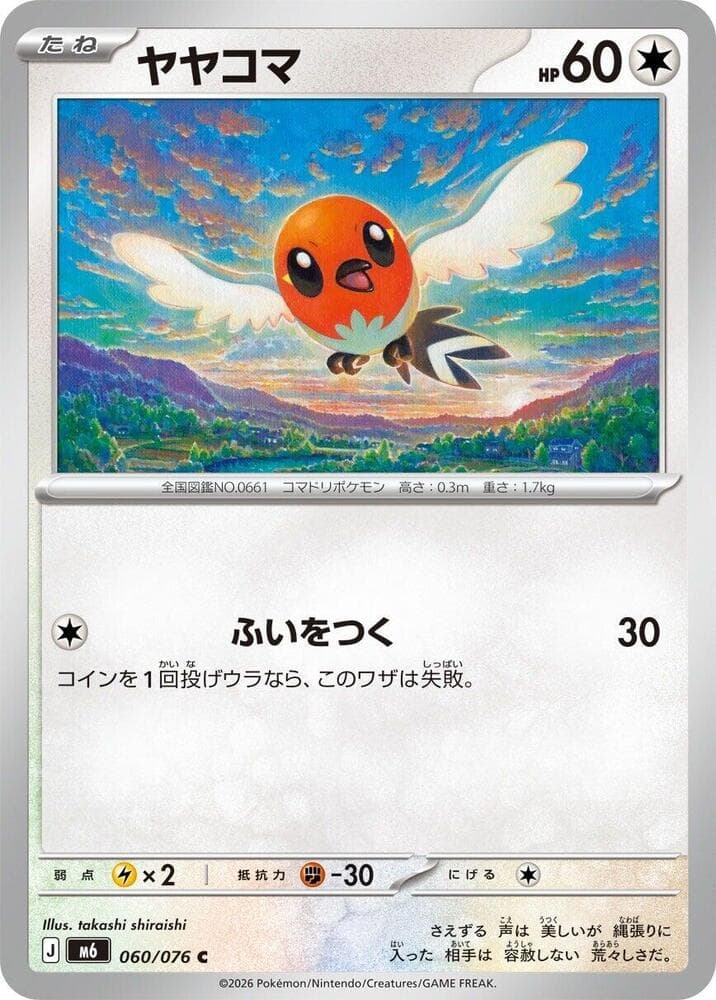
Fletchling, $1.01, the tiny robin Common starting the set's final evolution line. A dollar for the bird that opens every Kalos binder page. Fletchling also holds the honorable title of the set's last Common — number 060 closes the tier before the checklist climbs toward the trainers.

View in catalog →

Fletchinder #061

Common · Market price: $1.01

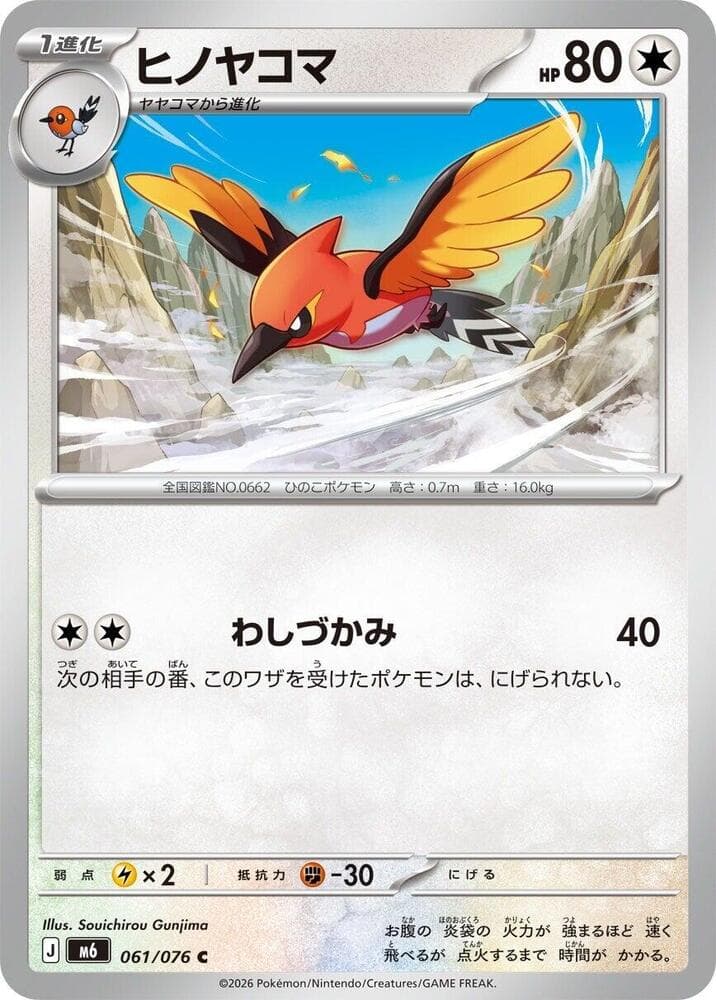
Fletchinder, $1.01, the middle stage matching its pre-evolution to the cent. The market occasionally has a sense of order. The dollar-for-dollar symmetry with Fletchling is the kind of accidental order that makes checklist collectors unreasonably happy.

View in catalog →

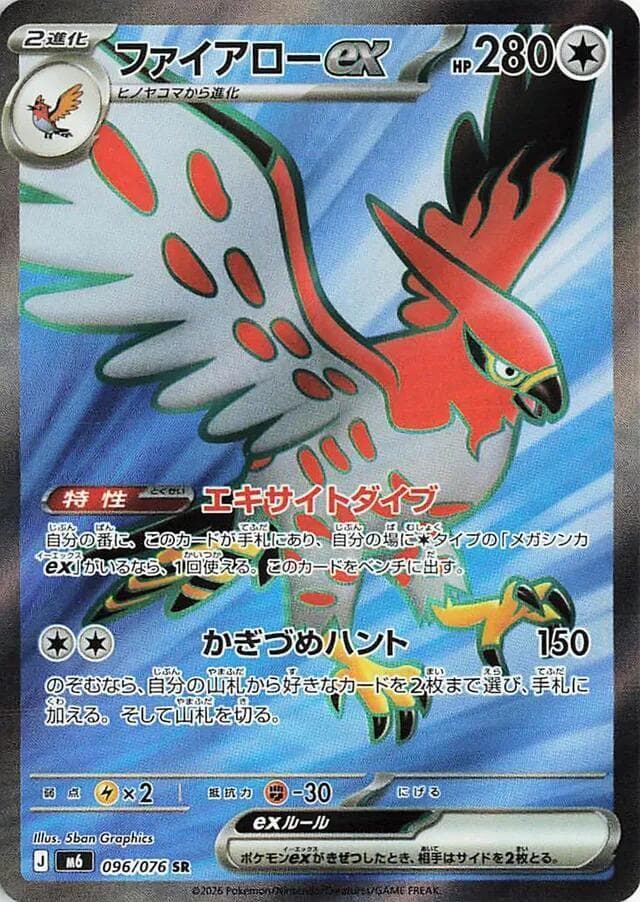
Talonflame ex #062

Double Rare · Market price: $4.31

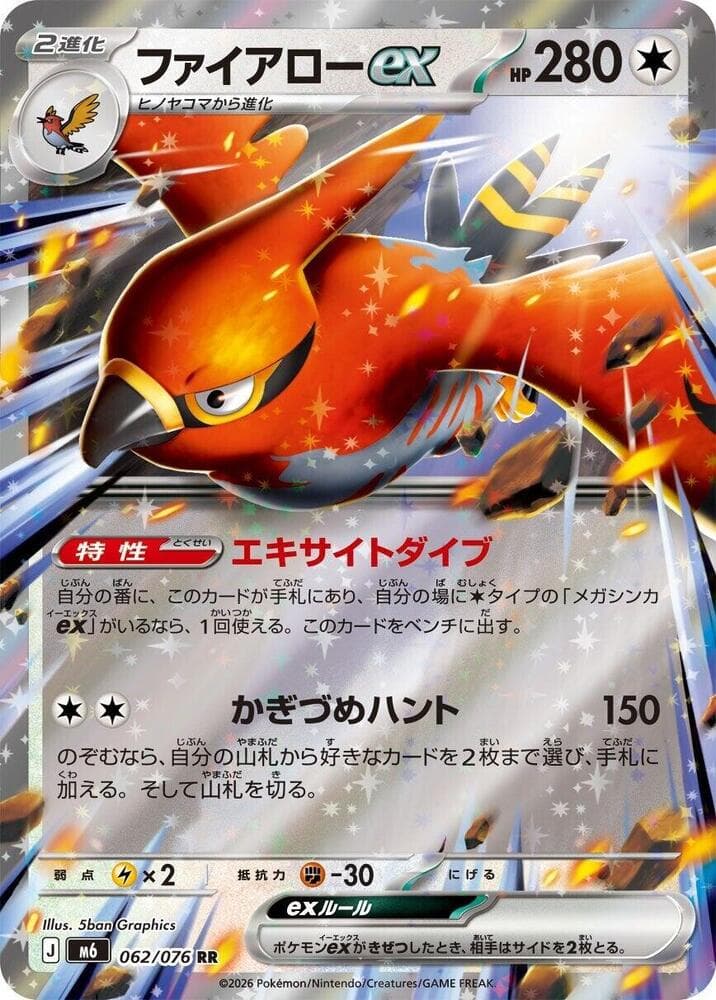
Talonflame ex, $4.31, Double Rare — the printed set's closing Pokémon and a fan-favorite fire falcon. Its gold SR (#096) at $5.00 is barely pricier than this RR, one of the smallest printed-to-secret gaps in the set; if you want the shinier version, it costs almost nothing extra. Talonflame ex also carries mild competitive memory from its earlier printings, which gives this RR a small playability floor under the collector price.

View in catalog →

Trainers and the Split Stadiums (063–076): The Set's New Mechanic

The Trainer block is where Storm Emeralda innovates. After a run of flavorful Items (rice balls, lanterns, a Rayquaza cap) and three ORAS-cast Supporters — Aarune, Zinnia's Trust, Tate & Liza's Training — come the six numbers that make history: three split Stadiums, each printed as two cards (071+072, 073+074, 075+076) that share one panoramic artwork and are played together as a single Stadium. The Marine Trench, the Summit and the Lava Tube are, of course, the homes of Kyogre, Rayquaza and Groudon. Numbers 071, 073 and 075 also exist as "Set of 2" sealed pairings, which is why the physical checklist outruns the numbered one.

Delicious Onigiri #063

Common · Market price: $0.51

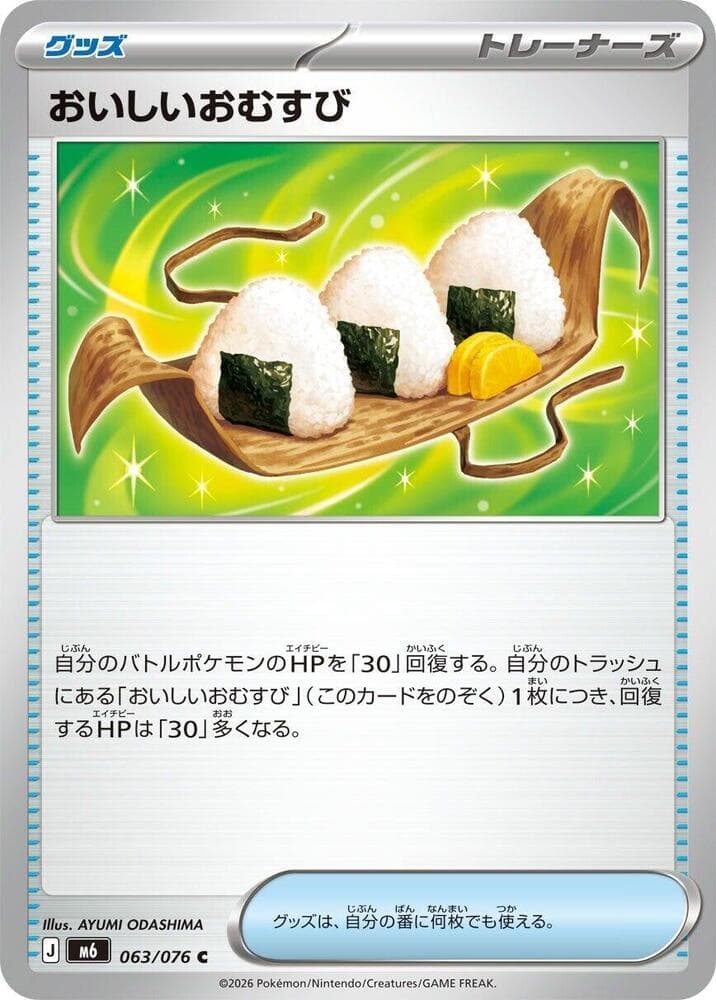
Delicious Onigiri, $0.51, an Item card of a rice ball, and the set's comic-relief flavor slot. Half a dollar buys you the healing snack; the joy is free. Food-item cards have become a beloved microgenre in Japanese sets, and the onigiri slots neatly into that tradition — expect it to be the set's most-photographed Common.

View in catalog →

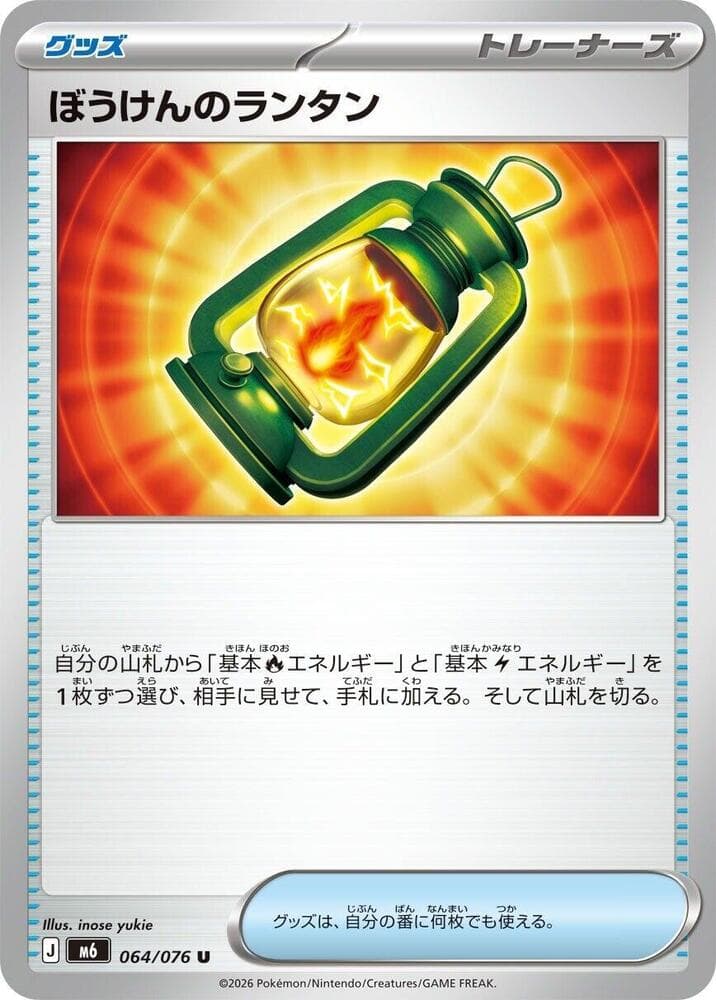
Adventuring Lantern #064

Uncommon · Market price: $2.99

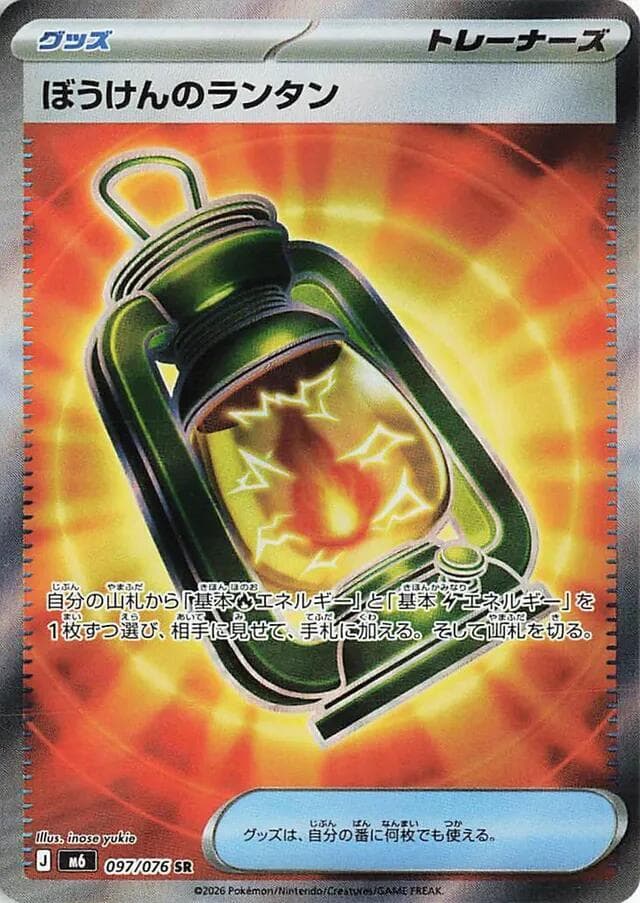
Adventuring Lantern, $2.99, an Item priced near the top of the trainer block — a utility tool with a gold SR version (#097, $3.45) barely above it. When a card's secret version costs fifty cents more than its regular one, pull rates have spoken about demand. The lantern's exploration flavor ties into the set's Aarune subplot, one of several small thematic threads M6 rewards readers for noticing.

View in catalog →

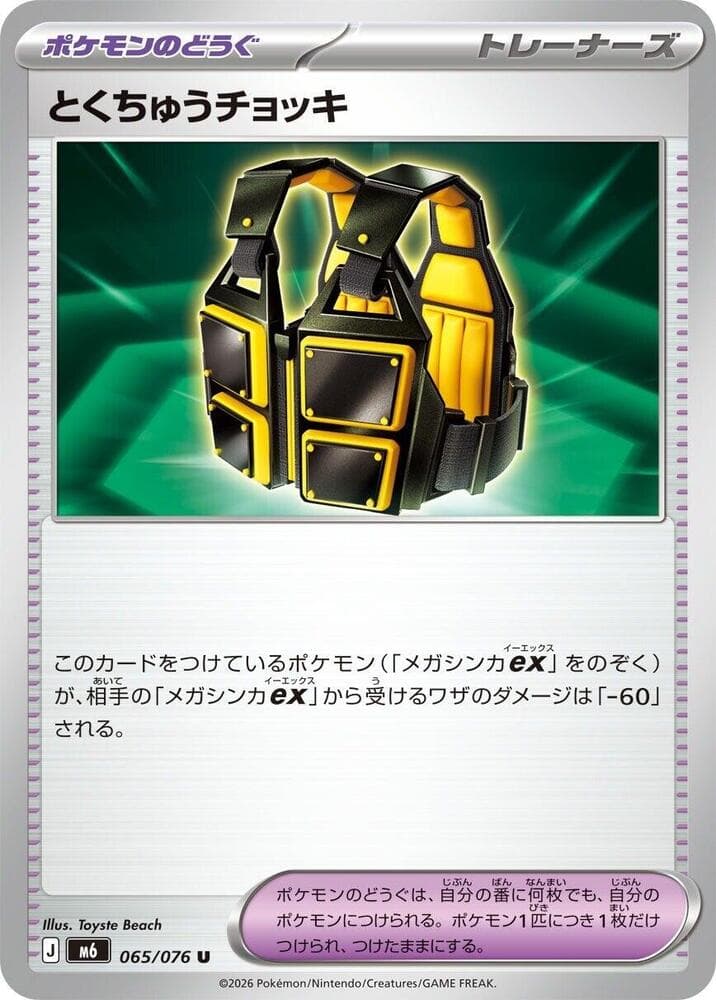
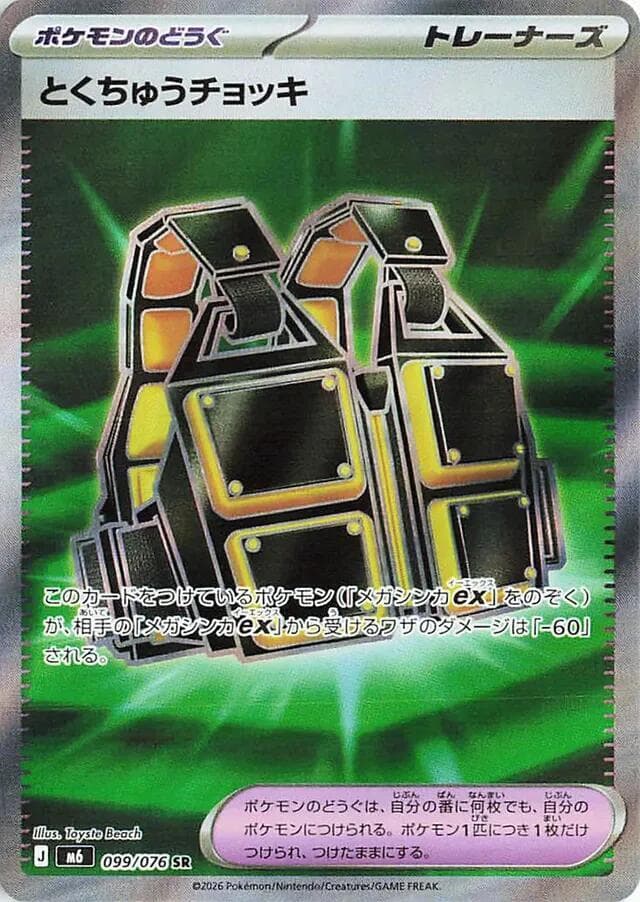
Custom Vest #065

Uncommon · Market price: $0.99

Custom Vest, $0.99, a Tool card at a dollar with a gold SR (#099) at $3.32. Playable-adjacent equipment; the market shrugs politely. Tool cards live or die by the metagame, and the market's one-dollar verdict says this one is waiting for a deck that has not arrived yet.

View in catalog →

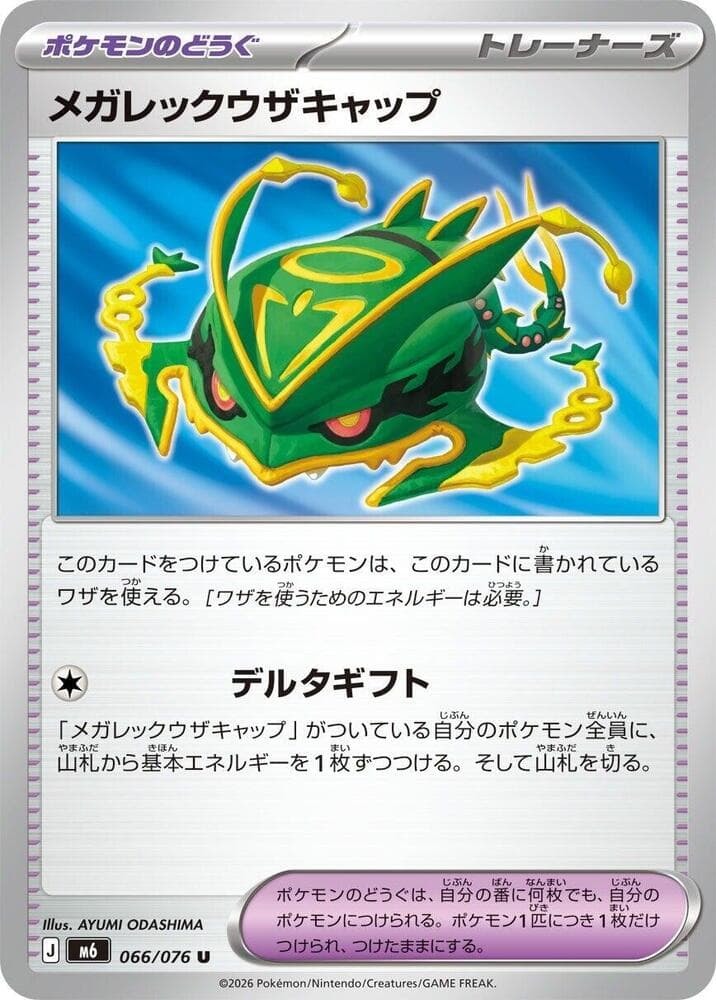
Mega Rayquaza Cap #066

Uncommon · Market price: $1.14

Mega Rayquaza Cap, $1.14, a Tool that dresses your Pokémon in the mascot's merchandise — pure flavor delight, and the only sub-$2 way to put "Mega Rayquaza" on a card name in this set. No secret version. It is also the single cheapest piece of the set's Rayquaza suite — the completionist's consolation entry when the SAR and MUR are out of reach.

View in catalog →

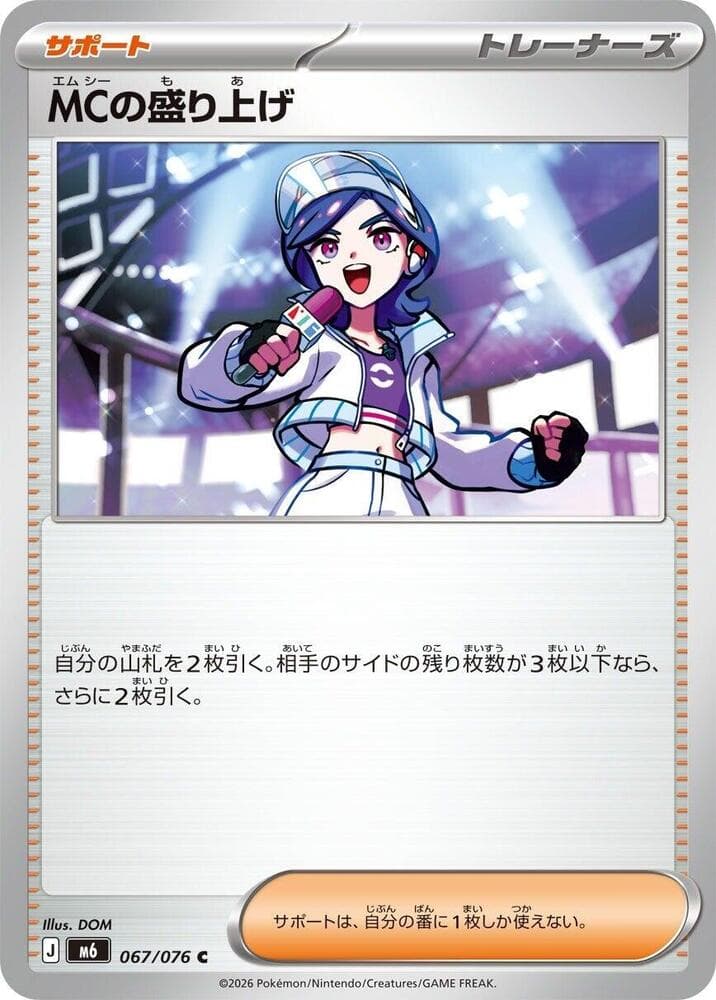
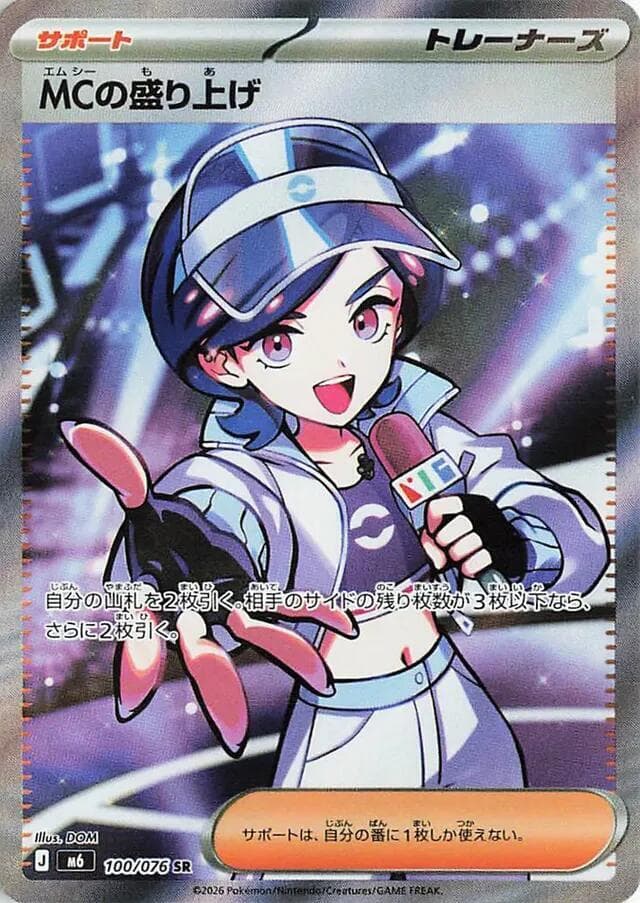
Emcee's Hype #067

Common · Market price: $0.51

Emcee's Hype, $0.51, an unassuming Uncommon-priced Item — whose gold SR (#100) at $18.96 is one of the trainer gallery's genuine surprises. Pull the gold one; trade confidently. The gap between its two versions is the trainer gallery's running joke: same card, thirty-seven times the price in gold.

View in catalog →

Aarune #068

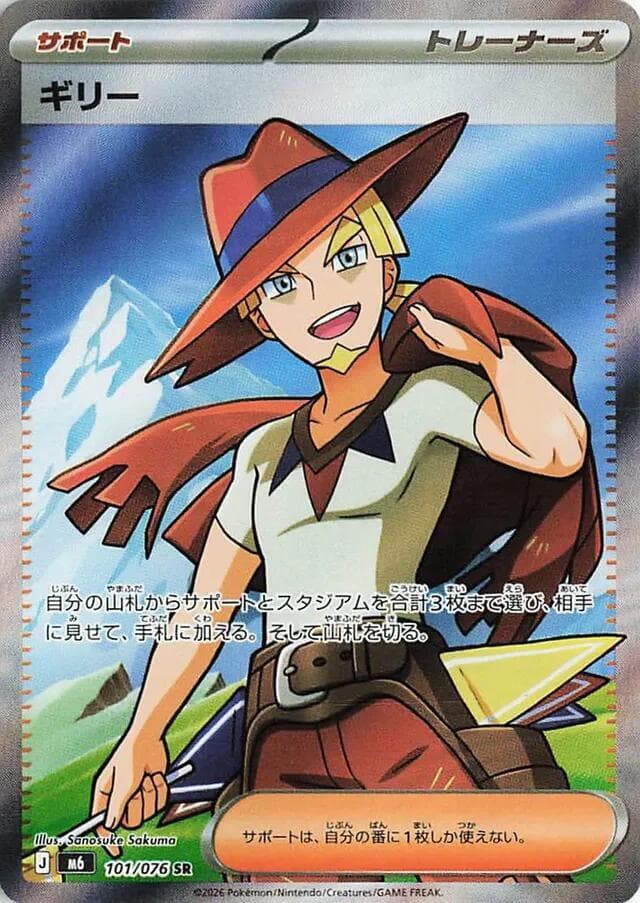
Uncommon · Market price: $1.75

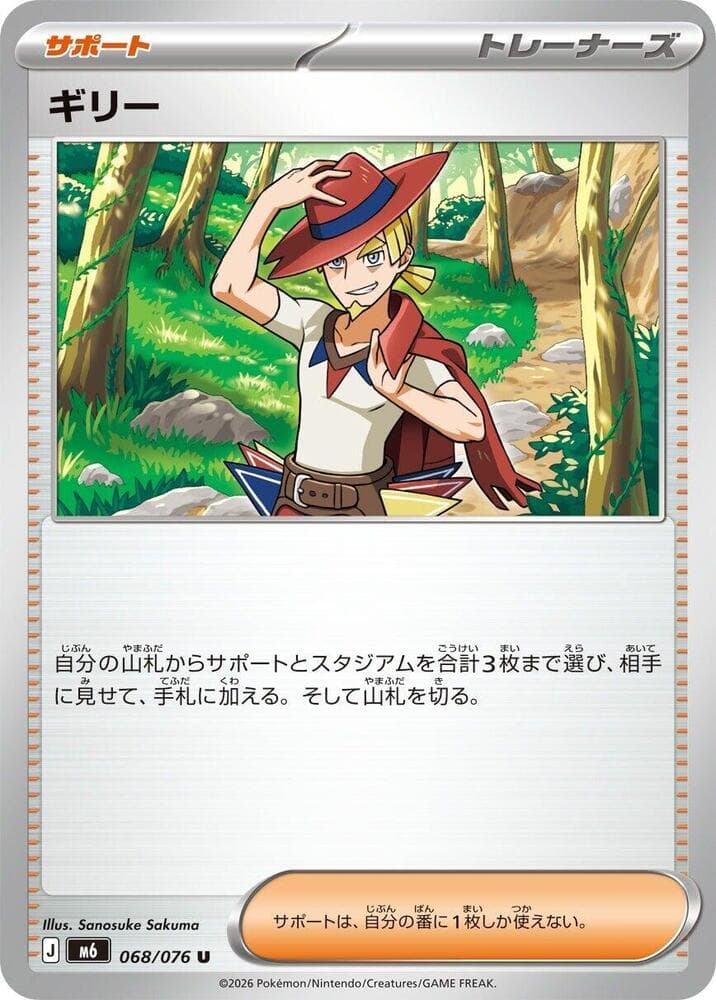
Aarune, $1.75, the Secret Base guru from ORAS as a Supporter. The printed version is cheap; his SR (#101, $21.10) and SAR (#111, $27.76) make him the set's most-escalated non-Zinnia character. Flavor-wise, nobody belongs in an exploration-themed set more. His three-version escalation (printed, SR, SAR) mirrors Zinnia's exactly, making the two Supporters natural companion collections for ORAS fans.

View in catalog →

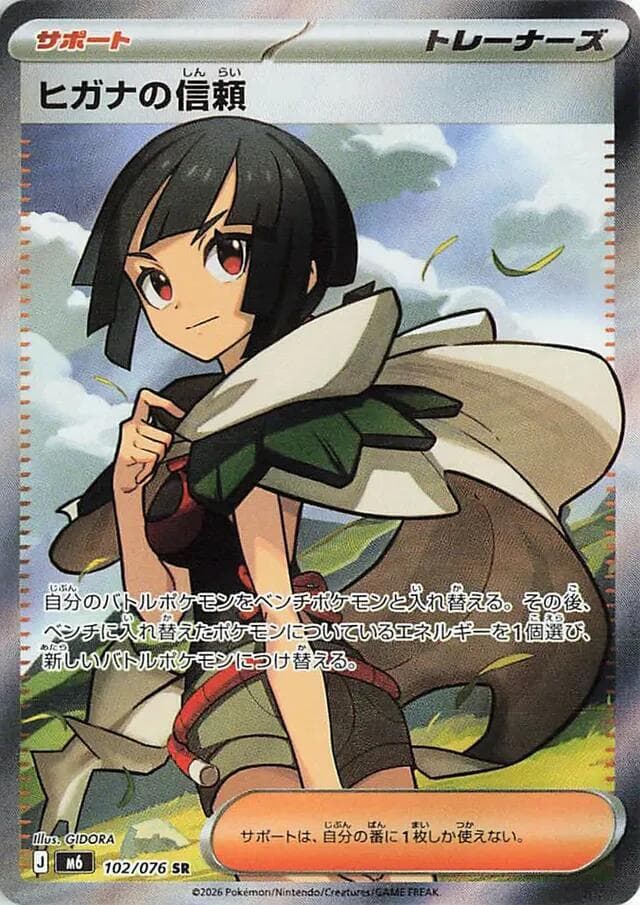
Zinnia's Trust #069

Uncommon · Market price: $0.59

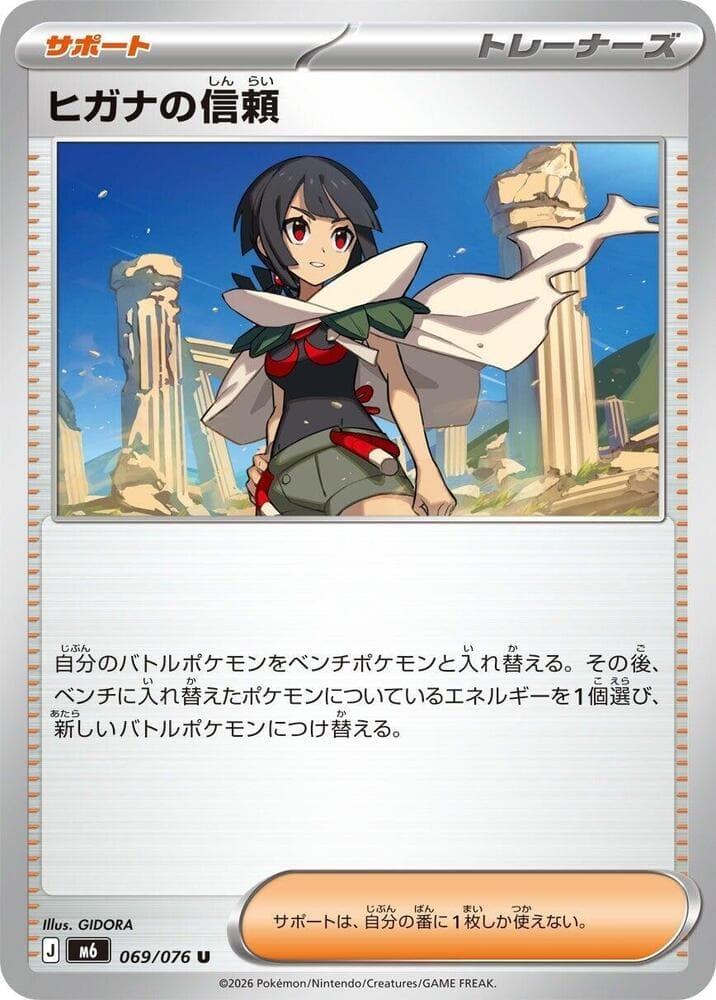
Zinnia's Trust, $0.59, the Draconid lorekeeper's Supporter — the emotional core of the set's cast, given Zinnia's place in the Rayquaza mythology. Cheap in print, but its SR (#102, $17.86) and especially its SAR (#112, $76.26) are the set's premier character chases. As the cheapest entry to the set's most emotionally resonant character line, this printed version is the sleeper pickup for story-driven collectors.

View in catalog →

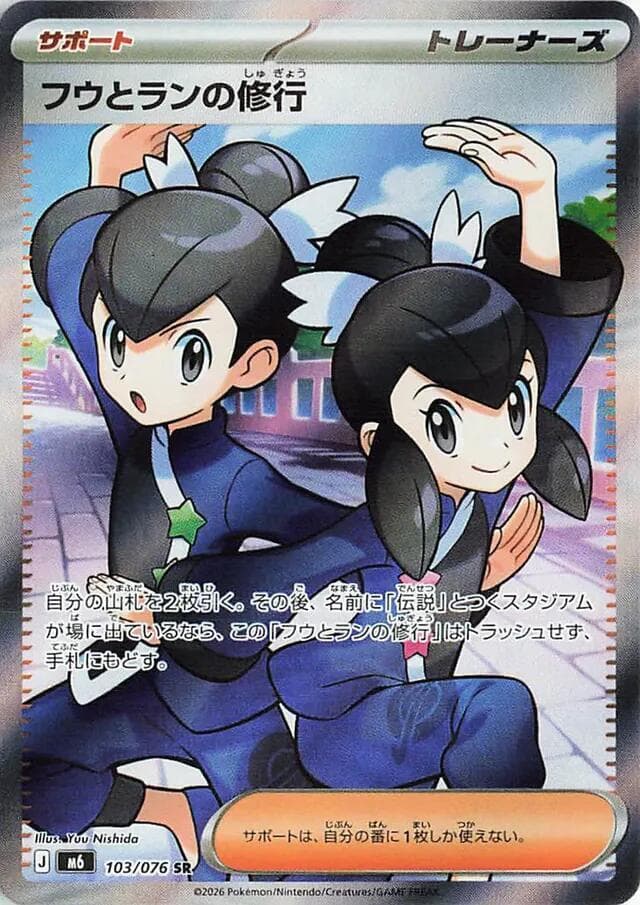
Tate & Liza's Training #070

Uncommon · Market price: $1.50

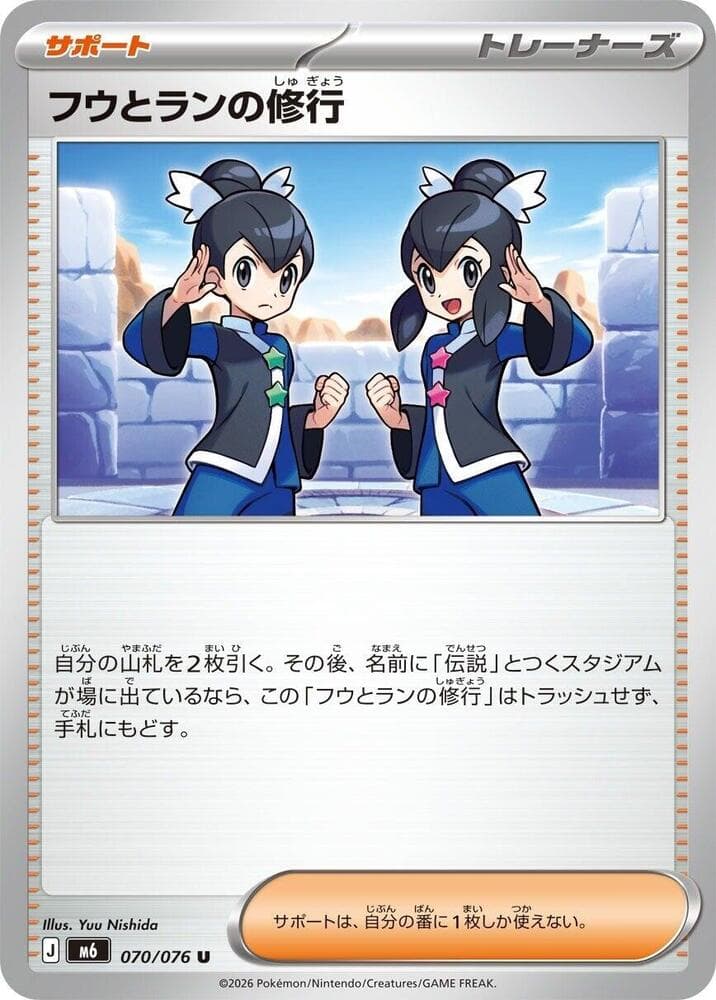
Tate & Liza's Training, $1.50, the Mossdeep gym twins' Supporter. Its gold SR (#103) at $24.98 is the most expensive trainer SR in the set — psychic twins, it turns out, photograph well in gold. The printed version's modest price makes the twins one of the set's better value character cards — full art-gallery presence for a dollar and a half.

View in catalog →

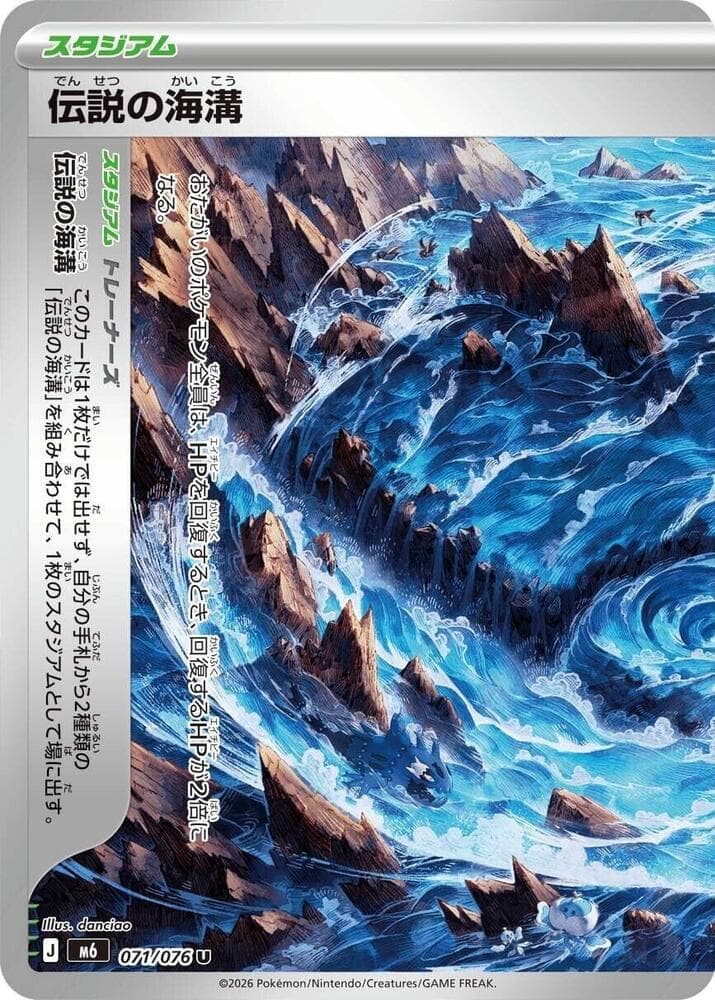
Legendary Marine Trench #071

Uncommon · Market price: $1.01

Legendary Marine Trench (first half), $1.01 as a single — the opening half of the game's first-ever split Stadium, Kyogre's deep-sea home. Useless alone, historic together: it combines with #072 into one panoramic Stadium played as a single card. Catalogued twice because a sealed "Set of 2" pairing (both halves together, $1.96) also exists — the tidier way to own the mechanic. For players, note the deckbuilding wrinkle: both halves count toward the same name limit, so the Stadium effectively costs two slots per assembly.

View in catalog →

Legendary Marine Trench #072

Uncommon · Market price: $1.39

Legendary Marine Trench (second half), $1.39, completing the trench panorama with #071. As with all three split Stadiums, the halves share a name — so a deck runs at most two full assemblies. The art payoff of laying both halves side by side is the real product here. Between the two halves and the Set of 2, the Marine Trench exists in four catalog entries — a small bibliographic puzzle that set completionists will either love or curse.

View in catalog →

Legendary Summit [Set of 2] #073

Uncommon · Market price: $2.11

Legendary Summit (first half), $3.00 as a single — the priciest Stadium half, fittingly, since this is Rayquaza's mountaintop from the Emerald finale. Pairs with #074; also sold as a "Set of 2" ($2.11), which amusingly costs less than this single half at snapshot. Launch-week markets are not efficient. For Emerald-generation players, this location is sacred ground — the Sky Pillar's peak where the Rayquaza story resolves — which explains the single-half premium better than any market logic.
View in catalog →

Legendary Summit #074

Uncommon · Market price: $1.00

Legendary Summit (second half), $1.00, the other side of the sky pillar's peak. Combine with #073 and the set's most storied location spreads across two card frames. Its round one-dollar price makes it the cheapest ticket into the split-Stadium mechanic — half a piece of TCG history for the cost of a sleeve pack.

View in catalog →

Legendary Lava Tube #075

Uncommon · Market price: $1.96

Legendary Lava Tube (first half), $1.96 as a single ($1.88 as the "Set of 2" pairing) — Groudon's magma dwelling, opening the third and final split Stadium. The three paired Stadiums map one-to-one onto the weather trio, the set's neatest design flourish. The single-versus-pair price inversion here (the single costs more than its share of the pair) repeats the Summit's pattern — launch-week pricing at its most charmingly irrational.

View in catalog →

Legendary Lava Tube #076

Uncommon · Market price: $2.25

Legendary Lava Tube (second half), $2.25, closing the printed checklist at number 076 with the completion of Groudon's lair. A Stadium half as a set's final printed card is a first — fitting for the set that invented the mechanic. As the set's final printed number it will likely acquire minor trivia value over time; last-card status has a way of aging into collectibility.

View in catalog →

Art Rares (077–088): Twelve Illustration Cards

The first secret tier gives twelve Pokémon the full-scene illustration treatment, at roughly two per box. The spread is classic AR economics: most sit between $7 and $23, with Kecleon ($32.37), Kyogre ($27.21) and Groudon ($23.40) at the top. Notably, the two legendaries' ARs cost roughly ten times their printed Rare versions — the illustration premium in its purest form.

Masquerain #077

Art Rare · Market price: $7.43

Masquerain AR, $7.43, opens the illustration gallery with the pond skater's evolution in a full rain-drenched scene — the cheapest of the twelve Art Rares, and typical of the tier's entry level: affordable to trade, lovely to keep. It is also the payoff for the set's opening evolution line — the humble Surskit from card 002 ends its journey here, twenty times more valuable with scenery.

View in catalog →

Growlithe #078

Art Rare · Market price: $13.67

Growlithe AR, $13.67 — the set's priciest Common gets the illustration treatment, and its fanbase follows. Growlithe cards with scenery consistently outperform their tier, and this one already trades at triple the cheapest ARs.

View in catalog →

Magmar #079

Art Rare · Market price: $15.50

Magmar AR, $15.50, the vintage fire-duck in a full magma landscape. Nostalgia plus illustration is a reliable formula, and this AR quietly sits in the tier's upper half.
View in catalog →

Kyogre #080

Art Rare · Market price: $27.21

Kyogre AR, $27.21, the second most expensive Art Rare — the sea legendary finally priced like a member of the weather trio, at roughly nine times its printed Rare. For trio collectors this is the definitive M6 Kyogre.

View in catalog →

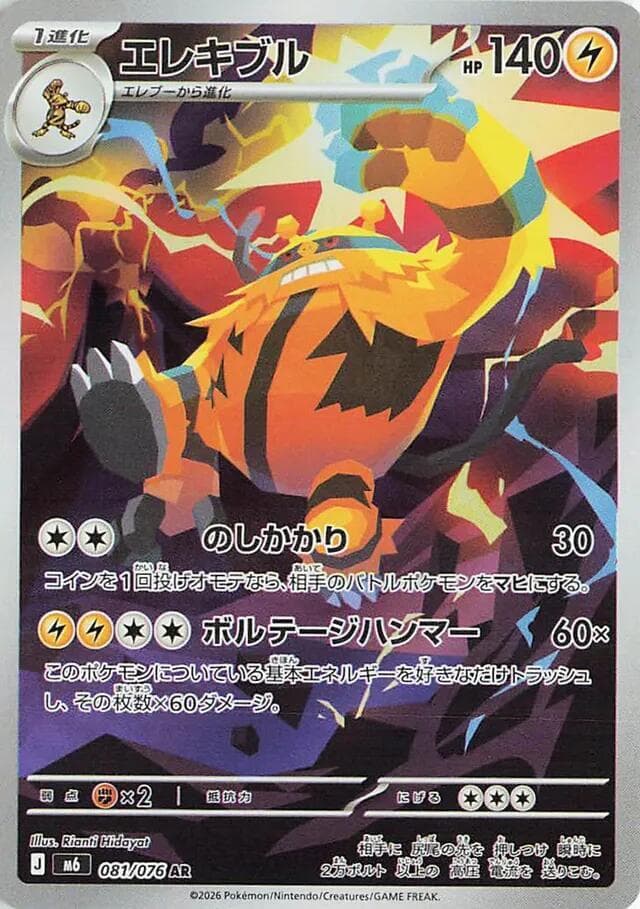
Electivire #081

Art Rare · Market price: $10.92

Electivire AR, $10.92, giving the thunder ogre a scene of its own. Mid-tier AR economics; a solid trade piece in the $10–15 band where most of this gallery lives. It is also the only Art Rare in the set drawn from an Uncommon rather than a Common or Rare — a small checklist curiosity for tier-watchers.

View in catalog →

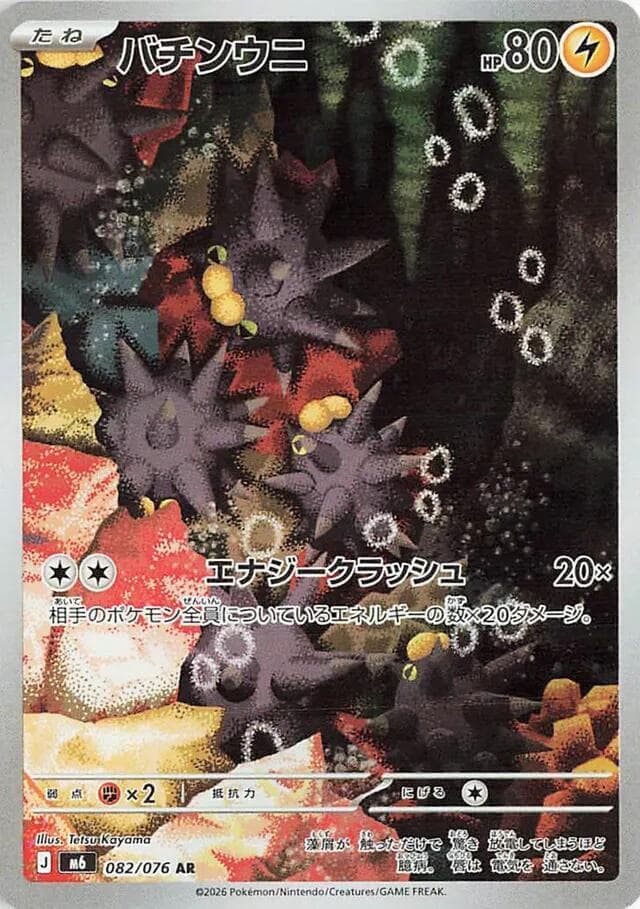
Pincurchin #082

Art Rare · Market price: $22.59

Pincurchin AR, $22.59 — the surprise of the gallery. The grumpy urchin outprices legendaries here, purely on the strength of its illustration. Proof that in the AR tier, the picture is the product.

View in catalog →

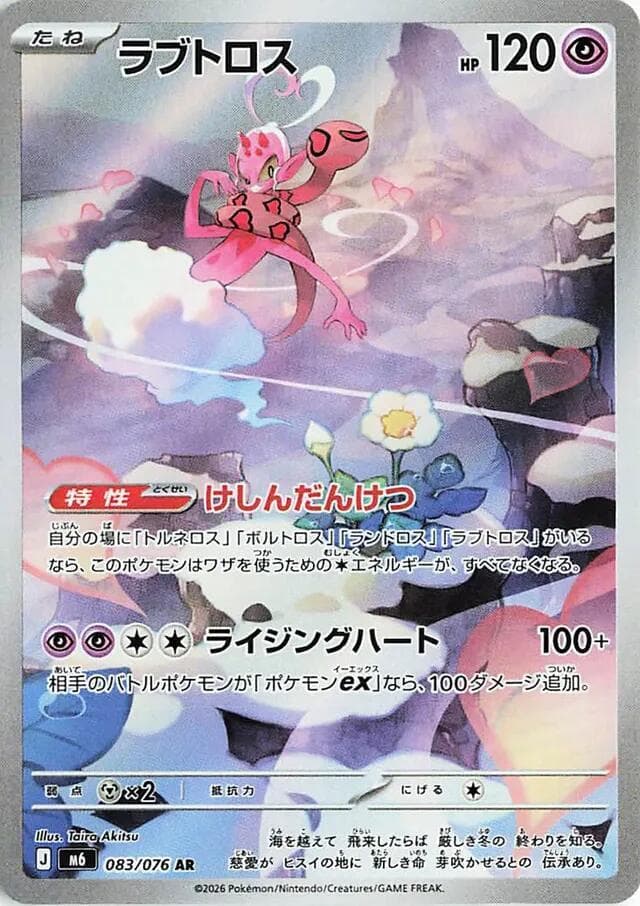
Enamorus #083

Art Rare · Market price: $20.42

Enamorus AR, $20.42, the love-hate genie redeemed: sixteen cents in print, twenty dollars in illustration. The steepest glow-up in the set, and a strong entry in the tier's upper half.

View in catalog →

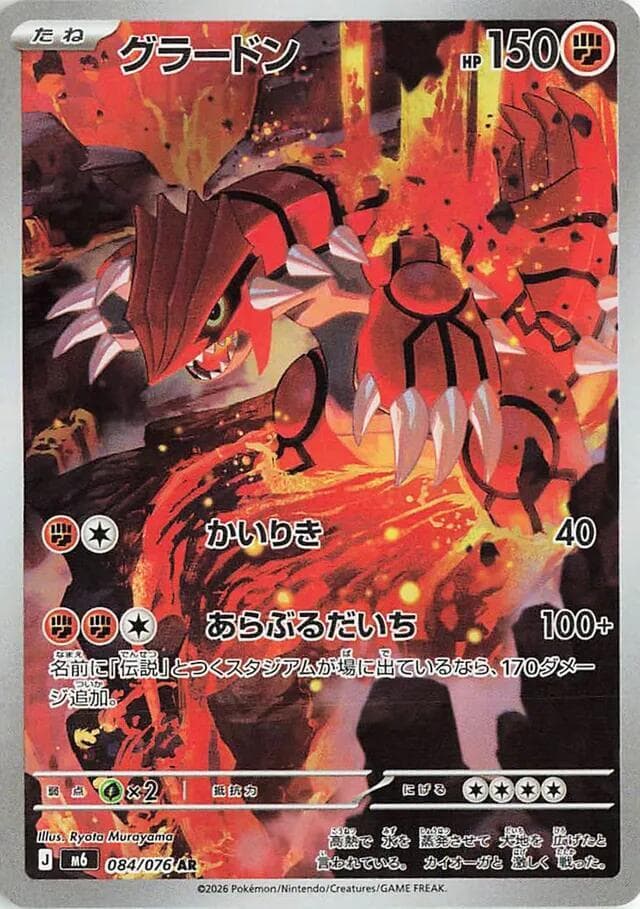
Groudon #084

Art Rare · Market price: $23.40

Groudon AR, $23.40, the continent legendary restored to chase relevance after its bargain-bin printed Rare. Third-priciest AR, and the definitive M6 Groudon for trio collectors.

View in catalog →

Inkay #085

Art Rare · Market price: $15.03

Inkay AR, $15.03, the squid before the Mega, floating in a scene worth seven of its printed versions. Malamar line collectors get a well-priced companion piece to the RR and SR. Its presence gives the Malamar line four distinct versions across the set — RR, SR, AR and the printed Inkay — the deepest non-Rayquaza line in M6.

View in catalog →

Azurill #086

Art Rare · Market price: $10.29

Azurill AR, $10.29, weaponized cuteness at the tier's affordable end. Baby Pokémon ARs are dependable trade currency — everyone eventually wants one. The tier's history says cards like this age well: cute-baby ARs from previous M-sets have been among the tier's most stable holds.

View in catalog →

Altaria #087

Art Rare · Market price: $16.73

Altaria AR, $16.73, the cloud dragon in full sky — arguably the most serene artwork in the gallery, in a set otherwise full of storms. Upper-middle of the AR band.

View in catalog →

Kecleon #088

Art Rare · Market price: $32.37

Kecleon AR, $32.37 — the most expensive Art Rare in Storm Emeralda, eighty times its own printed Common. The chameleon's illustration has become the gallery's signature card, and it trades accordingly: this is the AR people actively hunt.

View in catalog →

Super Rares (089–106): The Gold Gallery

Eighteen gold-frame cards: the eight ex Pokémon, seven Trainers, and three Special Energies. One number towers over the rest — Mega Rayquaza ex SR #095 at $75.98, priced above two of the set's SARs. Below it, the character Supporters (Tate & Liza, Aarune, Zinnia) and the strangely beloved Emcee's Hype outprice most of the Pokémon, while the gold Energies and Item cards fill the affordable end of the tier.
Mega Golisopod ex #089

Super Rare · Market price: $11.98

Mega Golisopod ex SR, $11.98, the armored Mega's gold-frame version at the accessible end of the SR gallery. A clean middle step between the $3.47 RR and the $54.40 SAR. Gold Golisopod also benefits from the Mega line's competitive intrigue — if the deck ever materializes, SR copies are historically the first tier to feel it.

View in catalog →

Heat Rotom ex #090

Super Rare · Market price: $13.44

Heat Rotom ex SR, $13.44, the appliance spirit in gold. Rotom form collectors are few but devoted; for everyone else this is a mid-tier gold ex that trades on rarity alone. Appliance-Rotom golds have a habit of becoming quiet long-term holds — small supply, niche-but-permanent demand, no hype to deflate.

View in catalog →

Wishiwashi ex #091

Super Rare · Market price: $8.98

Wishiwashi ex SR, $8.98, the cheapest Pokémon SR in the set — the schooling sardine stays humble even in gold. If you want an M6 gold ex on a budget, this is the door in. It is also the gold gallery's best gag: a Pokémon defined by strength in numbers, printed in the tier where numbers are smallest.

View in catalog →

Raikou ex #092

Super Rare · Market price: $20.70

Raikou ex SR, $20.70, the legendary beast in gold and the tier's strongest non-Mega Pokémon card. Raikou's deep collector base keeps every version of this line liquid; a dependable mid-value trade piece.

View in catalog →

Mega Golurk ex #093

Super Rare · Market price: $34.75

Mega Golurk ex SR, $34.75 — the most expensive Pokémon SR in the set after Rayquaza. The market's quiet crush on this Mega is real: its gold version outprices every other new Mega's SR by a factor of three or more.

View in catalog →

Mega Malamar ex #094

Super Rare · Market price: $8.16

Mega Malamar ex SR, $8.16, the hypnotic squid's gold version priced barely above its own RR — the smallest rarity premium among the Megas. For gold-gallery completionists, a painless pickup. For line collectors this closes the Malamar quartet at a total cost under thirty dollars — remarkable depth for the money in a launch-window set.

View in catalog →

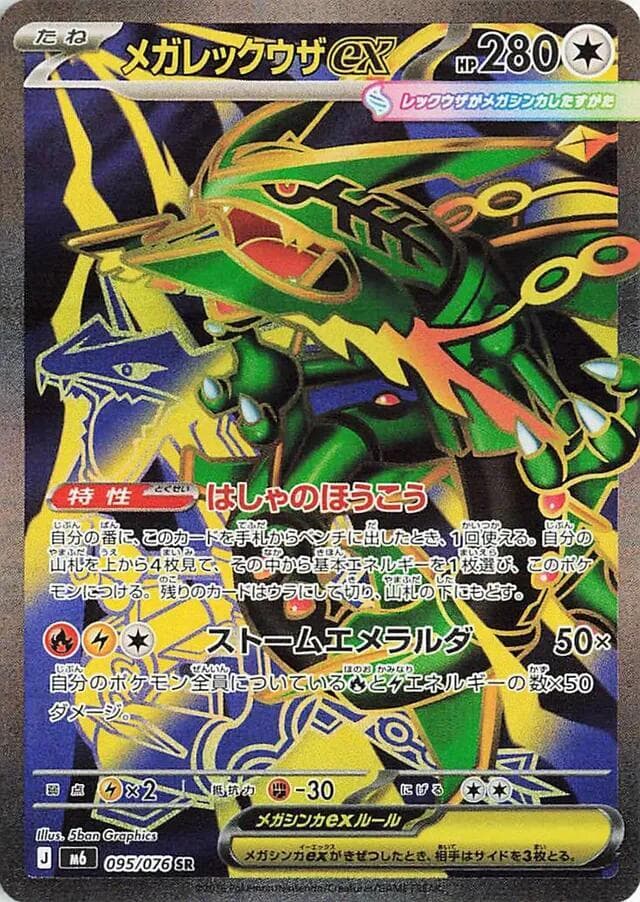
Mega Rayquaza ex #095

Super Rare · Market price: $75.98

Mega Rayquaza ex SR, $75.98 — the gold version of the set's face, priced above two of the set's SARs. This is the strongest evidence of how completely demand in Storm Emeralda concentrates on one Pokémon: even the third-best Rayquaza outprices almost everything else in the set. The realistic top-end target for most collectors.

View in catalog →

Talonflame ex #096

Super Rare · Market price: $5.00

Talonflame ex SR, $5.00, the fire falcon in gold at almost RR money. The cheapest Mega-era gold ex you will find this year, and a nice consolation pull. Talonflame's near-flat escalation is the tier's clearest evidence that gold framing alone no longer commands a premium — the art tiers have absorbed that demand.

View in catalog →

Adventuring Lantern #097

Super Rare · Market price: $3.45

Adventuring Lantern SR, $3.45, the gold version of the utility Item — cheapest card in the SR gallery. Gold Item cards are printed as box staples, roughly one per box, and their prices reflect it. Its near-parity with the printed version makes it the cheapest full gold card in the set — a fine first secret rare for a young collector's binder.

View in catalog →

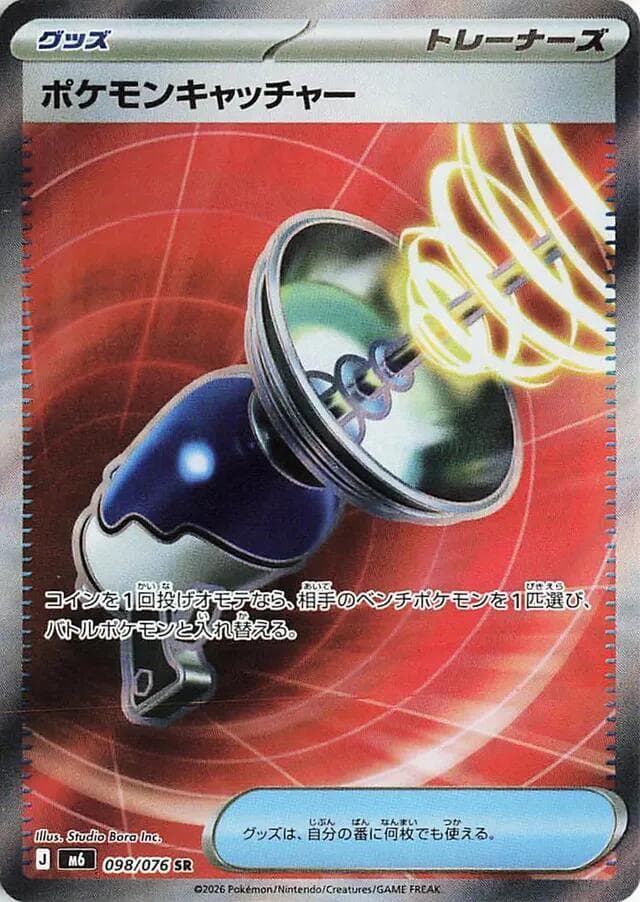
Pokemon Catcher #098

Super Rare · Market price: $6.94

Pokemon Catcher SR, $6.94, the classic disruption Item in gold. A reprint staple with permanent utility, which keeps its gold version modestly above the other Items. Catcher's gold version also carries a whisper of competitive-history nostalgia — the card has decided real tournaments, which few Items in this gallery can claim.

View in catalog →

Custom Vest #099

Super Rare · Market price: $3.32

Custom Vest SR, $3.32, the gold Tool at the bottom of the trainer golds. One-per-box economics; trade it freely. Its main trade role is as a make-weight: the gold frame dresses up a bundle without meaningfully moving its value.

View in catalog →

Emcee's Hype #100

Super Rare · Market price: $18.96

Emcee's Hype SR, $18.96 — the trainer gallery's sleeper. A fifty-cent Item in print, it commands nineteen dollars in gold, outpricing half the Pokémon SRs. Community consensus: the gold confetti did it.

View in catalog →

Aarune #101

Super Rare · Market price: $21.10

Aarune SR, $21.10, the Secret Base guru in gold — part of the strong showing character Supporters make in this set's SR tier. His SAR (#111) at $27.76 is barely above this; an unusually flat escalation.

View in catalog →

Zinnia's Trust #102

Super Rare · Market price: $17.86

Zinnia's Trust SR, $17.86, the gold version of the set's emotional centerpiece Supporter. With the SAR at $76.26, this SR is the affordable way to put Zinnia in a binder — and it trades briskly on character demand alone.

View in catalog →

Tate & Liza's Training #103

Super Rare · Market price: $24.98

Tate & Liza's Training SR, $24.98 — the most expensive trainer card in the set outside the SAR tier. The Mossdeep twins' gold card outprices most gold exes here; character cards are this set's quiet strength.

View in catalog →

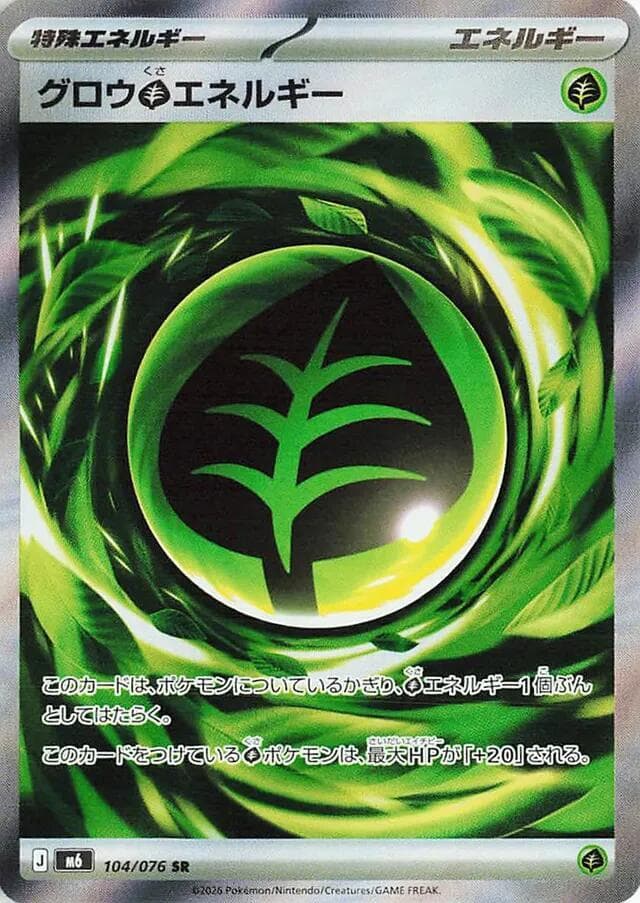
Growing Grass Energy #104

Super Rare · Market price: $5.89

Growing Grass Energy SR, $5.89, the priciest of the three gold Special Energies. Special Energy golds are niche, but deck-builders and gold-set completionists keep a steady floor under them. Gold Energy cards also serve an underrated practical role: they are the flex slot of SR-tier trades, easy to add or drop to balance a swap.

View in catalog →

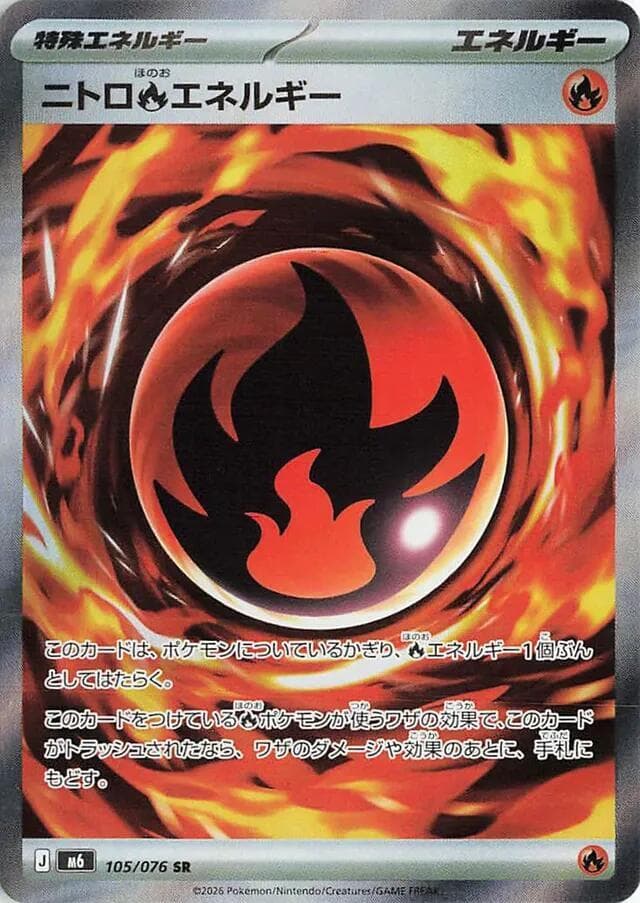
Nitro Fire Energy #105

Super Rare · Market price: $2.00

Nitro Fire Energy SR, $2.00, the fire half of the Energy trio and the cheapest of the three. A two-dollar gold card is a fine thing to sweeten a trade with. Note the flavor alignment: a nitro Fire Energy in the set where Groudon's lava tube forms a Stadium — the Energy trio quietly mirrors the weather trio.

View in catalog →

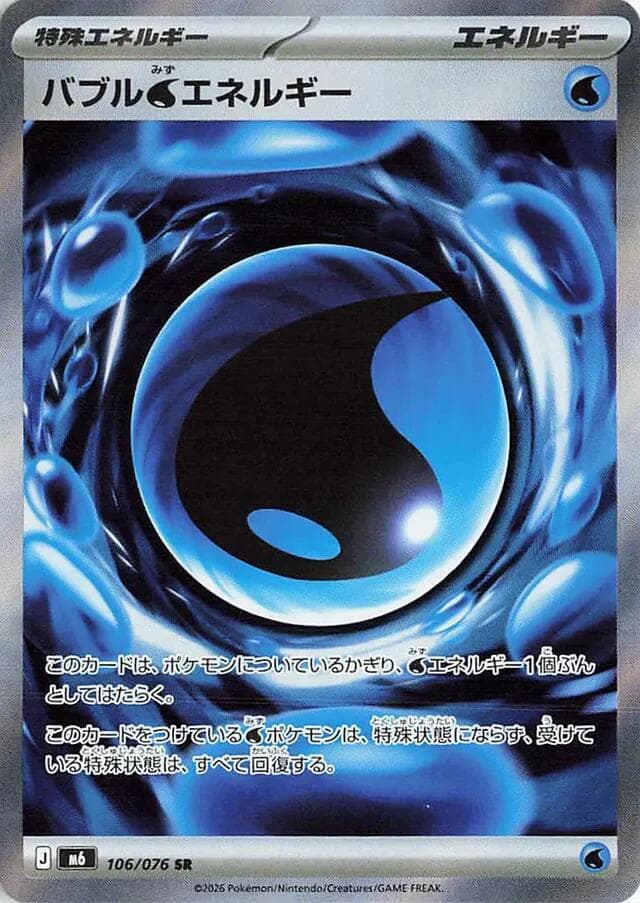
Bubbly Water Energy #106

Super Rare · Market price: $2.48

Bubbly Water Energy SR, $2.48, closing the Super Rare gallery with the water Energy. Like its siblings, a small, satisfying gold card that rounds out completion trades. It completes the Energy trio's mapping onto the set's elemental triangle — water for Kyogre, fire for Groudon, grass for the sky serpent's forests below.

View in catalog →

Special Art Rares (107–112): The Premium Six

Six Special Art Rares, and a market that has already sorted them into one king and five commoners: Mega Rayquaza ex #110 at $791.32, then everything else between $27 and $93. At a community-estimated rate of roughly one SAR per 23 boxes, any of these is a genuinely rare pull — but the market only treats one of them as a trophy.

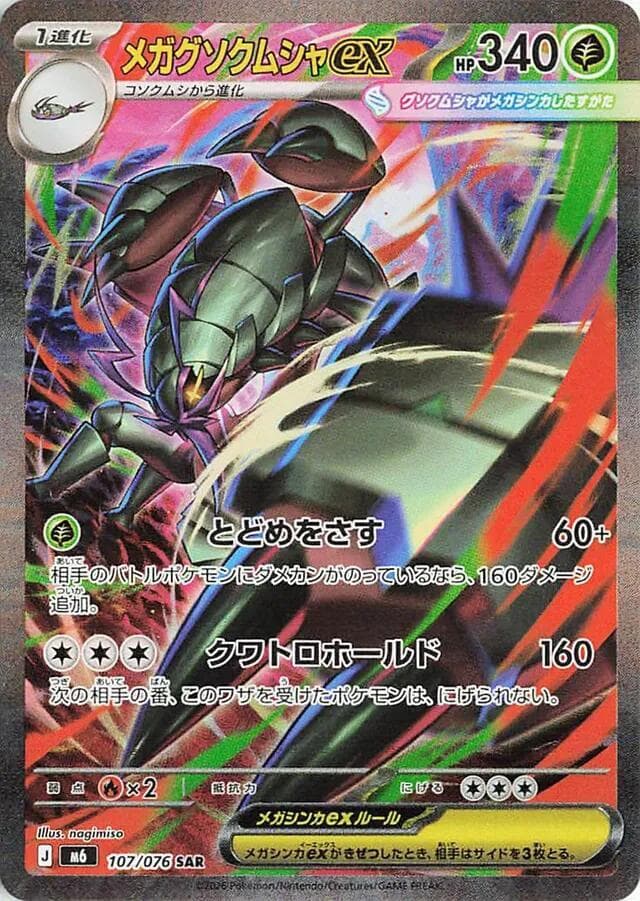
Mega Golisopod ex #107

Special Art Rare · Market price: $54.40

Mega Golisopod ex SAR, $54.40, the armored Mega's special-art version — a full-scene showcase for the set's first Mega debut. Mid-pack among the six SARs, and at a ~1-per-23-boxes tier rate, a legitimately rare pull whose price says more about Rayquaza's gravity than about this card's quality.

View in catalog →

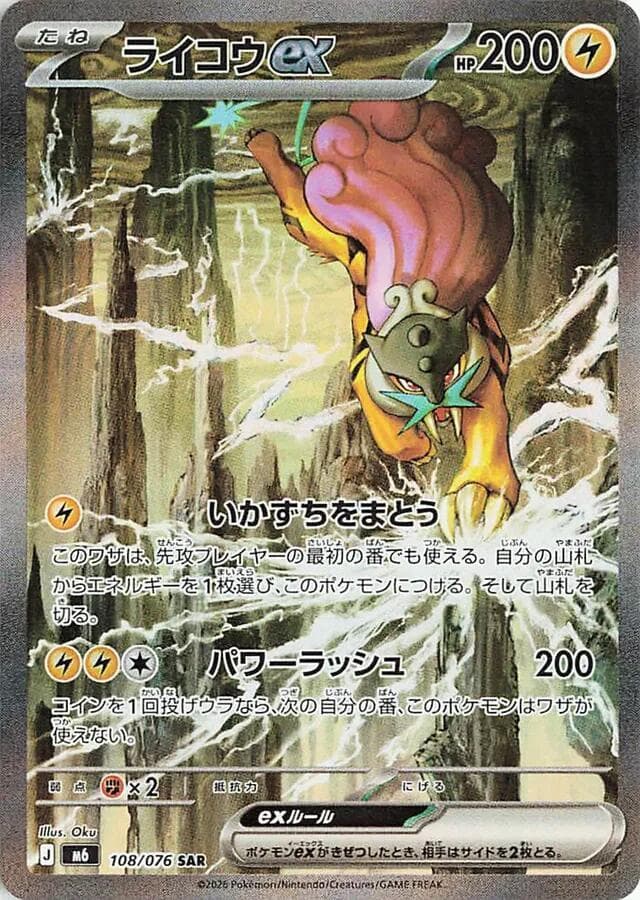
Raikou ex #108

Special Art Rare · Market price: $92.83

Raikou ex SAR, $92.83 — the most expensive non-Rayquaza card in Storm Emeralda. The legendary beast's special art tops the 'everything else' hierarchy, and Raikou's evergreen collector demand makes this the set's most stable-looking high-end card outside the two trophies.

View in catalog →

Mega Golurk ex #109

Special Art Rare · Market price: $54.89

Mega Golurk ex SAR, $54.89, the automaton's showcase card and the third-priciest SAR. Between this, its $34.75 SR and its RR, the Golurk line is the set's best-supported non-mascot Mega — the market has adopted it.

View in catalog →

Mega Rayquaza ex #110

Special Art Rare · Market price: $791.32

Mega Rayquaza ex SAR, $791.32 — the set's second chase, an outlier priced at eight to fourteen times its five SAR siblings. Japanese market reports had this card correcting from even higher launch asks within the first week, a pattern worth remembering: this is exactly the price tier where week-one numbers move most. A mini-trophy in its own right, and the realistic grail for collectors who will not chase the MUR.

View in catalog →

Aarune #111

Special Art Rare · Market price: $27.76

Aarune SAR, $27.76 — the cheapest Special Art Rare in the set, priced below several Art Rares and barely above its own SR. The exploration guru's special art is the tier's value pick: same ~1-in-23-boxes scarcity, one thirtieth the price of the Rayquaza.

View in catalog →

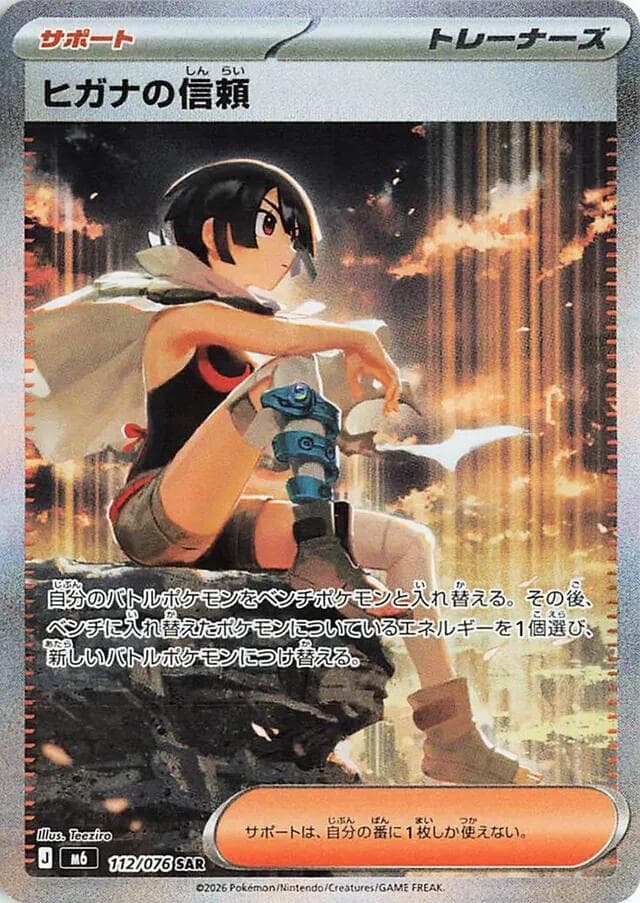
Zinnia's Trust #112

Special Art Rare · Market price: $76.26

Zinnia's Trust SAR, $76.26, the Draconid storyteller's showcase and the set's premier character chase. Zinnia's bond with Rayquaza makes this the thematically perfect companion piece to the mascot cards, and Japanese sources singled it out as a launch-window standout. Third-priciest SAR, and the one with the clearest story behind it.

View in catalog →

The Crown: Mega Ultra Rare (113)

One number, one card, one reason the set sold out through lotteries: the Mega Ultra Rare Mega Rayquaza ex, the second MUR ever printed and the most expensive card of the launch window at $1,299.99.

Mega Rayquaza ex #113

Mega Ultra Rare · Market price: $1299.99

Mega Rayquaza ex MUR, $1,299.99 — the crown of Storm Emeralda, the most expensive card of the M-series launch window, and only the second Mega Ultra Rare ever printed after Abyss Eye's Mega Darkrai ex. Early community tracking pegs it at roughly 1 per 23 boxes, from a sample too small to trust precisely; Japanese first-week reports had raw copies above ¥200,000 with graded copies asking far more. Do the acquisition math honestly: at box prices well above the ¥6,000 MSRP, opening your way to this card costs multiples of its market price — if it belongs in your collection, trade for the single. This is the card the Swaptio wishlist exists for. The last number in the checklist, and the reason the checklist sold out.

View in catalog →

Trade for Storm Emeralda Singles Instead of Chasing the Lottery

Everything in this guide points the same way: the set's value is concentrated in two cards, boxes are scarce and trading above MSRP, and the community's own pull data says the top tier appears about once per 23 boxes. That is lottery math, and the launch window is when lottery tickets cost the most. The alternative is the one this platform exists for: plenty of collectors are opening Storm Emeralda right now, which means duplicates of every tier — ARs, gold SRs, even SARs — are entering binders and looking for their right owners.

If a specific card from this checklist belongs in your collection, post it as a want and let holders come to you with offers. And if your own boxes left you with doubles — a second Golurk SAR, a spare gold Rayquaza, a stack of Double Rare exes — list them for exchange while launch demand is at its peak. A week-one duplicate is at its most tradeable exactly now; the same card in three months competes with the entire opened supply of the set.

What Your Storm Emeralda Pulls Are Worth in a Swap

For quick trade-table math, the snapshot sorts the set into clean tiers. The MUR ($1,299.99) and Rayquaza SAR ($791.32) are trophy pieces — trades at this level are one-for-one negotiations, not bundle material. The mid-chase band runs from the Raikou SAR ($92.83) through the Rayquaza SR ($75.98) and Zinnia SAR ($76.26) down to the Golisopod and Golurk SARs in the mid-$50s. Below that, ARs and character SRs live mostly in the $10–35 range and trade fluidly against each other. And the entire printed set — all 76 numbers — can realistically be assembled for less than the price of one mid-tier SAR, which makes completion swaps the best value in the set.

Whatever tier you are trading in, anchor on current numbers, not launch headlines: prices this young move weekly, and both sides of a fair trade should be looking at the same day's data.

Frequently asked questions

What is the most expensive card in Storm Emeralda?

The Mega Ultra Rare Mega Rayquaza ex (#113), at $1,299.99 in our August 9, 2026 market snapshot. It is the set's single MUR — the rarity tier above Special Art Rare, appearing for only the second time ever — and early community data suggests it is roughly a 1-in-23-boxes pull, though that estimate rests on a very small sample. The Special Art Rare Mega Rayquaza ex (#110) is second at $791.32.

What is a Mega Ultra Rare (MUR)?

MUR is the top rarity tier introduced in the Japanese MEGA-era sets: a single trophy-style printing of the set mascot, rarer than a Special Art Rare. Storm Emeralda's Mega Rayquaza ex is only the second MUR ever, after Abyss Eye's Mega Darkrai ex. Each MUR set so far contains exactly one.

When does Storm Emeralda release in English?

Its international counterpart, Delta Reign (ME06), is slated for November 6, 2026, according to current release-calendar reporting. The September 16 international release, ME: 30th Celebration, is a separate anniversary set — not the Storm Emeralda counterpart. Exactly which of M6's secret rares cross over to Delta Reign, and at what rarities, is unknown until the English checklist is finalized.

Is it worth collecting the Japanese set if an English version is coming?

It depends on what you collect for. Japanese cards get you the artwork three-plus months early, typically at lower prices per rarity tier once launch hype fades, and the JP printing is the original. English versions plug into the international tournament pool and a larger trading audience. There is no wrong answer — but paying week-one Japanese launch premiums for cards you mainly want in English later is the one combination that rarely works out.

How do the split Stadium cards work?

Storm Emeralda introduces three "Legendary" Stadiums — Marine Trench, Summit and Lava Tube — each printed across two collector numbers (071+072, 073+074, 075+076) whose artworks join into one wide scene. The two halves are played together as a single Stadium; neither half functions alone. The odd-numbered halves also exist as sealed "Set of 2" pairings, which is why numbers 071, 073 and 075 each have two catalog entries.

What are the pull rates for a Storm Emeralda box?

Community tracking of 1,380 packs (46 boxes) found roughly 2 Art Rares, 2 Super Rares and 1 gold Ultra Rare item per box, with SAR and MUR pulls each around 1 per 23 boxes in that sample. The top-tier estimate rests on just four pulls, so treat it as directional. The Pokémon Company publishes no official odds.