Published July 11, 2026 · Updated July 21, 2026 · 46 min read
Price update — July 21, 2026. We refreshed every market price in this guide today. The headline chase cards now sit at about $480 for the Mega Ultra Rare Mega Darkrai ex (#118) and $313 for its Special Art Rare (#114) — the correction this article describes has held two months on. The market price shown beside each card is the current July 21 figure; the card-by-card commentary keeps its July 11 numbers for context.
When the MEGA expansion pack Abyss Eye (アビスアイ, set code M5) hit Japanese shelves on May 22, 2026, it did something few sets manage anymore: it made the entire hobby stop and stare. The reason was a single Pokémon. Mega Darkrai ex makes its TCG debut here, and its top rarities briefly commanded prices normally reserved for vintage cards — before gravity reasserted itself in one of the most dramatic corrections of the Mega era. If you have heard anything about this set, it is probably that story, and we will tell it honestly, numbers and all.
There is far more to Abyss Eye than one crash chart, though. This is a genuinely well-built 118-card expansion: a darkness-soaked main set with a charming fossil sub-theme, a Special Art Rare lineup featuring work from artists like AKIRA EGAWA and Naoki Saito, and a Trainer chase card in Misty's Spirit that has quietly outlasted most of the launch hype. This guide merges everything that is usually scattered across five different pages — the complete card list, current market prices for every single card, verified pull rates, and a clear comparison with the English-language equivalent, Pitch Black (ME05), arriving July 17, 2026.
One housekeeping note before we dive in: every price in this article is a live TCGplayer market price recorded on July 11, 2026. Japanese set prices move fast — Abyss Eye has already proven that better than any set in recent memory — so treat every figure as a snapshot, not a promise. Card names below are the English names used in our catalog (sourced from TCGplayer data); the physical Japanese cards are, of course, printed in Japanese.
Abyss Eye at a Glance: Japan's M5 Mega Expansion
Abyss Eye is the Japanese MEGA-era expansion coded M5, released in Japan on May 22, 2026. A booster box carries an MSRP of ¥6,000 and contains 30 packs of 5 cards each — the standard modern Japanese configuration, and part of why Japanese boxes remain so much cheaper per pack than their English counterparts. The set totals 118 cards: 81 in the numbered base set, plus 37 secret rares. That secret lineup breaks down into 12 Art Rares (AR), 18 Super Rares (SR), 6 Special Art Rares (SAR), and a single Mega Ultra Rare (MUR).
The name is not random. It comes directly from the mascot's signature move: Mega Darkrai ex carries an attack literally called Abyss Eye, which automatically Knocks Out any Pokémon affected by a Special Condition. Naming an entire expansion after one attack tells you exactly how confident The Pokémon Company was in this card — and given that this is Mega Darkrai's first appearance in the trading card game ever, that confidence was justified. Darkness types dominate the checklist accordingly, reinforced by a Shadowy D Energy special energy card that anchors the set's shadow theme.
Beneath the Darkrai headline sit two well-developed supporting casts. Mega Excadrill ex and Rampardos ex head up a fossil-excavation sub-theme, complete with Antique Skull and Armor Fossil items and a Fossil Excavation Site Trainer — a fun deck-building corner that also spills into the set's flavor, with living-fossil Pokémon like Relicanth and the Shieldon line filling out the middle numbers. Mega Zeraora ex, Mega Chandelure ex, Lurantis ex, Wailord ex, and the internet's favorite hangry hamster Morpeko ex round out the ex roster. It is a deeper set than its one-Pokémon reputation suggests.
Chase Cards and Prices: Anatomy of a Correction
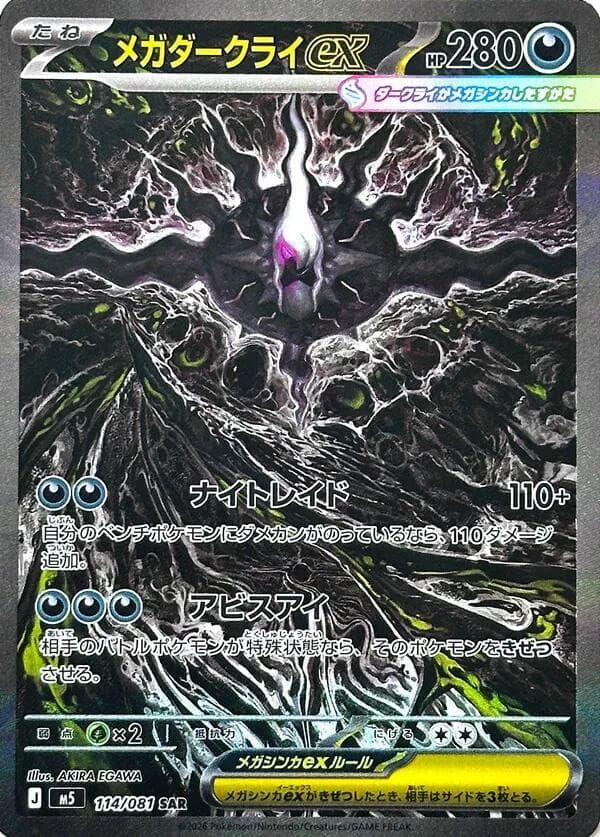
Let's address the abyss-shaped elephant in the room. At launch, the Mega Darkrai ex SAR (114/081) — illustrated by AKIRA EGAWA — was listed in Japan at an eye-watering ¥99,800. By early July, Japanese market prices had collapsed to roughly ¥30,000 (around $200). On TCGplayer, the same card went from launch sales near $570 to a market price of $383.27 as of July 11, 2026 — Western prices typically lag and carry an import premium, so that gap between the Japanese and US figures is itself worth understanding before you buy. Whichever market you look at, the direction is the same: down roughly 60–70% from peak in about seven weeks.
Why did it crash? The same reason most launch spikes crash: hype-driven scarcity pricing met an enormous print run. Japanese Mega-era sets are printed heavily and reprinted aggressively, and once supply caught up with the Darkrai frenzy, prices normalized. We flag this not to be gloomy but because honest numbers are the whole point of a set guide — anyone quoting you launch-week prices in July 2026 is either out of date or hoping you are.
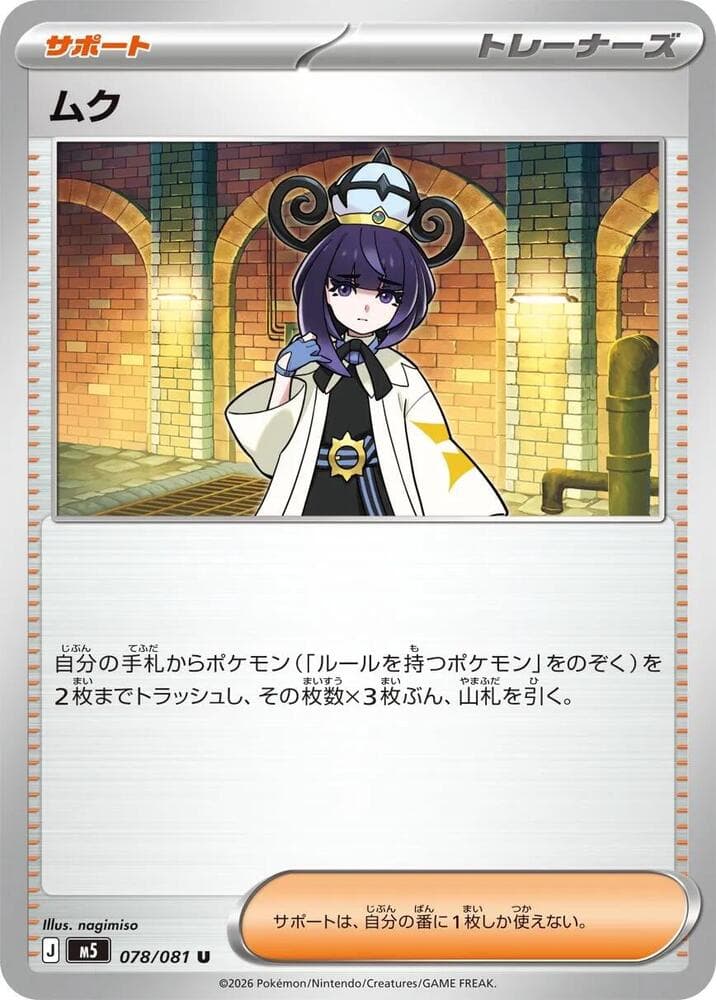
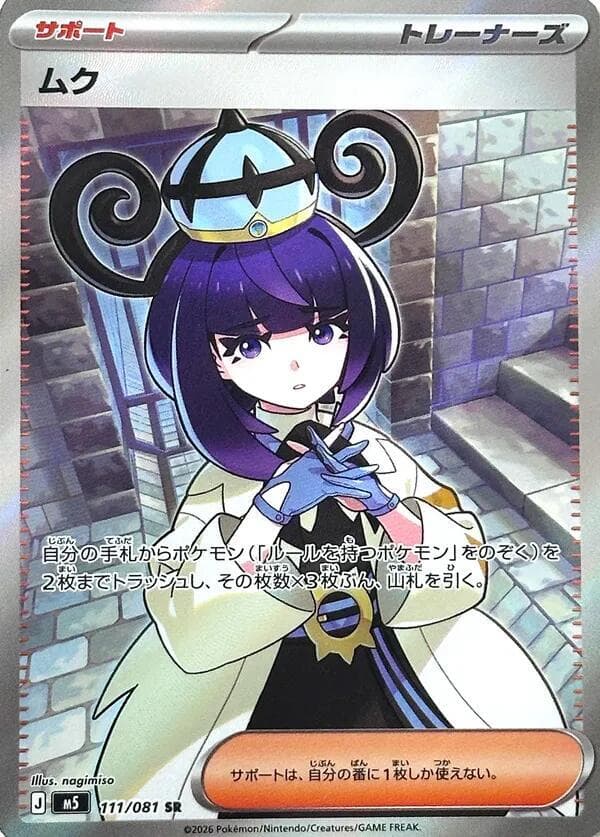
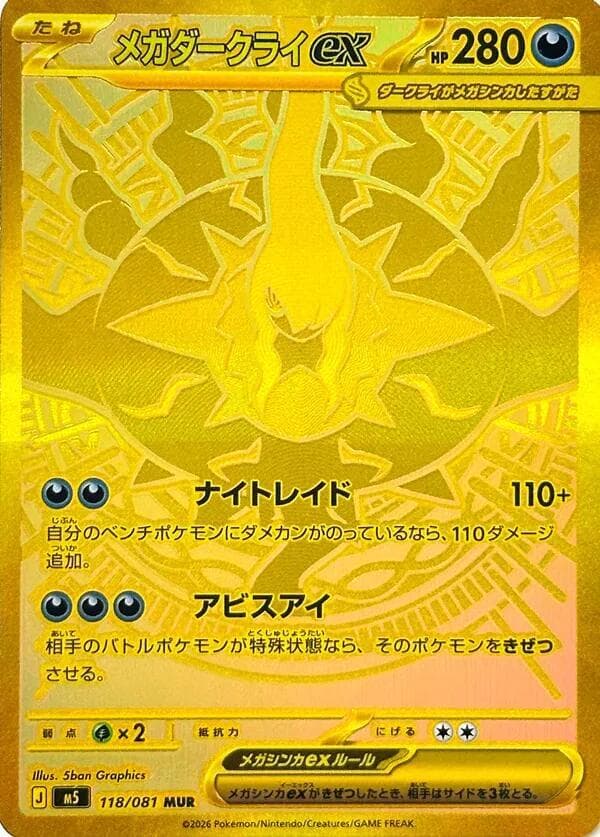
So what actually leads the set today? The Mega Darkrai ex MUR (118/081) remains king at $497.50, down from launch listings of ¥158,000–198,000 (comfortably over $1,000) but still a genuine trophy card given its brutal pull rate. The SAR Darkrai sits second at $383.27. Then comes the set's quiet overachiever: Gwynn SAR (117/081), illustrated by Naoki Saito, at $66.44 — a Trainer from the Pokémon Legends: Z-A cast (ムク, Muku, in Japanese) that has consistently outperformed the Mega Zeraora ex SAR. The rest of the top ten as of July 11: Morpeko ex SAR at $62.63, Misty's Spirit SR at $49.24, Mega Zeraora ex SAR at $42.71, Mega Chandelure ex SAR at $34.52, Gladion's Showdown SAR at $33.18, Gwynn SR at $18.06, and Mega Darkrai ex SR at $17.71. Notice how many Trainers are on that list — character cards, not just Megas, are carrying this set's value.
Pull Rates: What a ¥6,000 Box Actually Gives You
Japanese boxes are refreshingly predictable compared to English product, and Abyss Eye follows the modern pattern. A 30-pack box averages roughly 3 Art Rares and 4 Double Rares (RR) — so every box delivers a handful of illustration cards and most or all of the main ex Pokémon lineup. Super Rares land at a rate that makes the gold-etched exes and Trainers reasonably attainable across a couple of boxes.
The premium tiers are where the gambling starts. A Special Art Rare appears roughly once every 3.4 boxes — meaning most single boxes contain no SAR at all, and even when you hit one, there are six different SARs it could be. Only one of those six is the $383 Darkrai. The Mega Ultra Rare is dramatically rarer still: community tracking puts it somewhere between 1 in 45 and 1 in 100 boxes. We present that as a range deliberately — nobody outside The Pokémon Company knows the exact rate, and any site quoting a precise MUR figure is estimating, just like everyone else.
Run the math and it gets sobering fast. At ¥6,000 MSRP (assuming you can even get boxes at MSRP, which post-launch often requires lottery entries at Japanese retailers), an expected SAR costs you around ¥20,000 in boxes — and an expected MUR Darkrai anywhere from ¥270,000 to ¥600,000. Against a $497.50 market price, box-cracking your way to the MUR is a spectacularly bad trade. Keep that arithmetic in mind; we will come back to it when we talk about trading for singles instead.
Abyss Eye vs Pitch Black (ME05): What Changes in English
The international version of this set is Pitch Black, set code ME05, releasing worldwide on July 17, 2026 — just under two months after the Japanese debut. The two sets are nearly 1:1, which makes Abyss Eye an unusually clean set to buy Japanese: almost everything you pull has a direct English counterpart, and our full comparison in the Pitch Black set guide maps the numbering in detail.
Nearly 1:1 is not exactly 1:1, though, and the differences matter to collectors. Pitch Black adds three promo-sourced cards — Mega Slowbro ex, Jett, and Mega Delphox ex — that do not exist in the Japanese M5 checklist. The Zarude Art Rare is removed from packs and becomes an Elite Trainer Box promo in English. And three cards — Miraidon, Koraidon, and Zarude — are demoted from their Japanese slots to standard Holo Rares in ME05. If you want the pack-pulled Zarude AR specifically, the Japanese set is the only place it lives.
There is also the perennial Japanese-vs-English calculus: Japanese cards release earlier, cost less per pack, and are widely considered to have better centering and print quality on average, while English cards feed a larger graded-card market. Neither is objectively better — but for this set in particular, the two-month head start meant Japanese singles established the price story long before a single English pack was opened. English launch prices for the Darkrai chase cards will be worth watching against the corrected Japanese numbers above.
Is a Japanese Abyss Eye Box Worth It in 2026?
If your goal is the experience — thirty packs of a beautifully dark, fossil-flavored set with guaranteed illustration cards — a Japanese box at or near ¥6,000 MSRP is one of the better entertainment purchases in the hobby. You will reliably come away with around 3 ARs, 4 RRs, and a shot at golds. Import pricing is the catch: European retailers have listed boxes around €99.95, a hefty markup over MSRP that materially changes the expected-value math.
If your goal is specific cards, the box math above should give you pause. One SAR per 3.4 boxes, a one-in-six chance that the SAR you hit is the Darkrai, and a MUR rate between 1/45 and 1/100 means chasing the top two cards through sealed product is strictly for people who enjoy opening packs more than owning cards. The market has already priced this in — it is exactly why singles crashed once supply normalized, and why the smart post-correction play is acquiring the singles you actually want. Everything in the card-by-card list below includes its current market price so you can do that math per card.
One more honest caveat: nothing in this guide is investment advice, and Abyss Eye's own seven-week price history is the best argument for that disclaimer we could possibly write. Buy or trade for cards you want to own. If you are comparing this set against other current chase-heavy expansions before committing, our Chaos Rising set guide makes a useful side-by-side read.
Grass & Fire (001–011): Mantises, Matcha, and Armored Flames
The set opens with a compact Grass corner headlined by Lurantis ex, then shifts into Fire with two fan-favorite lines — the ghostly tea Pokémon and Paldea's armored warrior Armarouge. Nothing here breaks the bank, which makes this stretch prime binder-filler territory for set completionists trading on Swaptio.
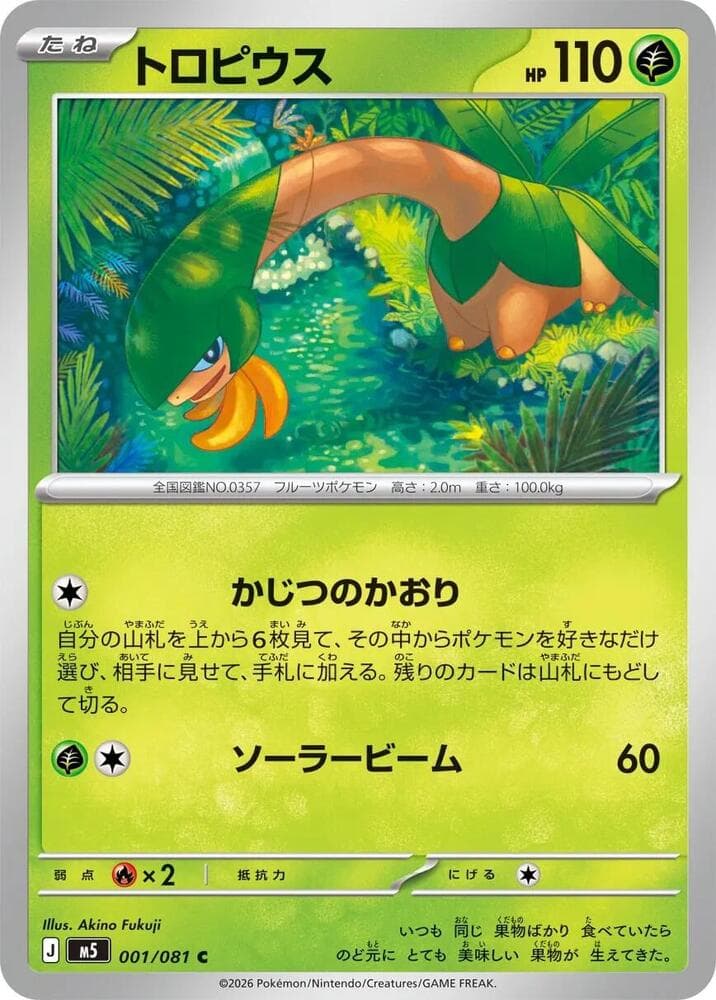
Tropius opens the set as its lead-off Common at $0.19. The banana-bearing Grass dinosaur from Hoenn is a long-running favorite of tropical set aesthetics, and it fits Abyss Eye's opening Grass corner comfortably. A guaranteed early pull in almost any stack of packs — nobody trades hard for this one, but every set-completion binder needs it.
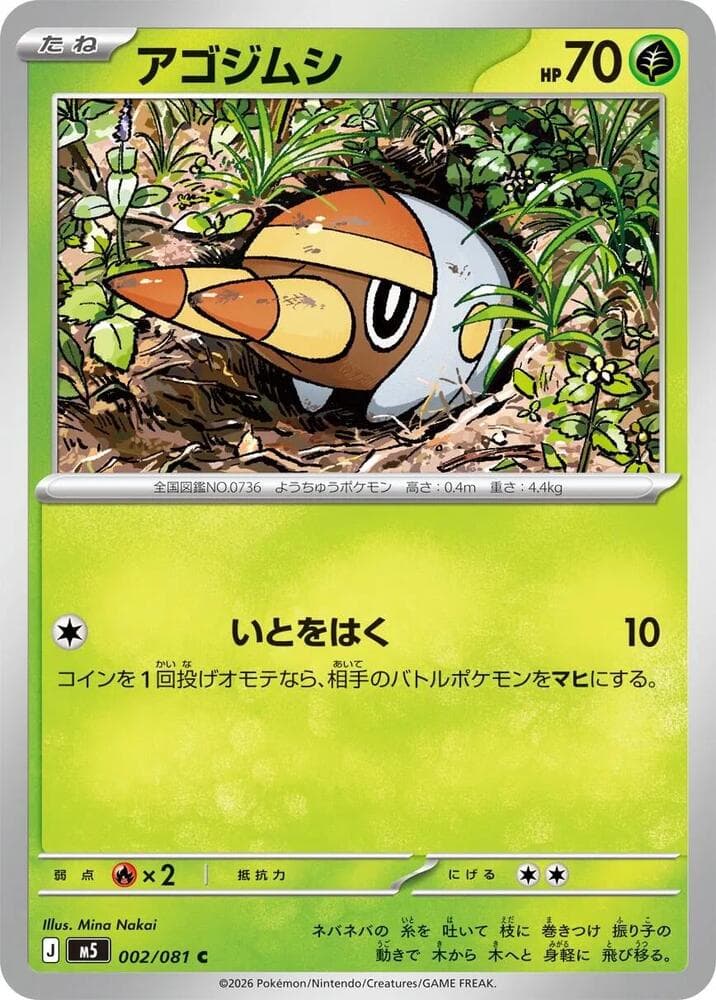
Grubbin is here at $0.32 doing what larva Pokémon do: setting up an evolution payoff that lands much later in the checklist, since its evolved forms Charjabug and Vikavolt appear over in the Lightning block. The little Alolan bug is a Common through and through, but its cross-type family line is a nice structural touch in this set.
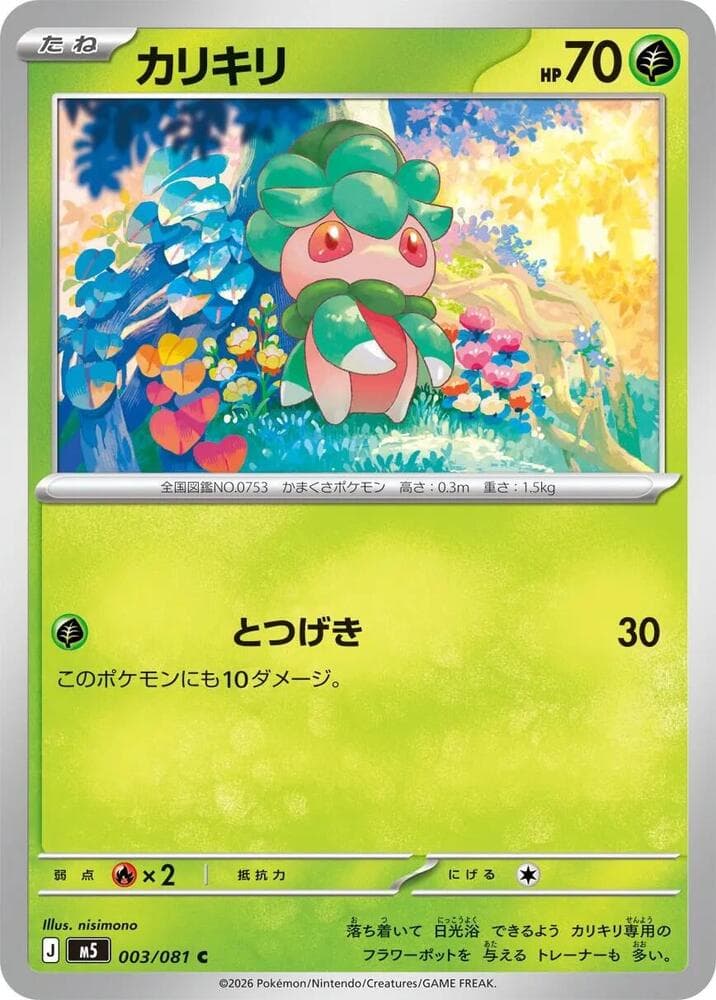
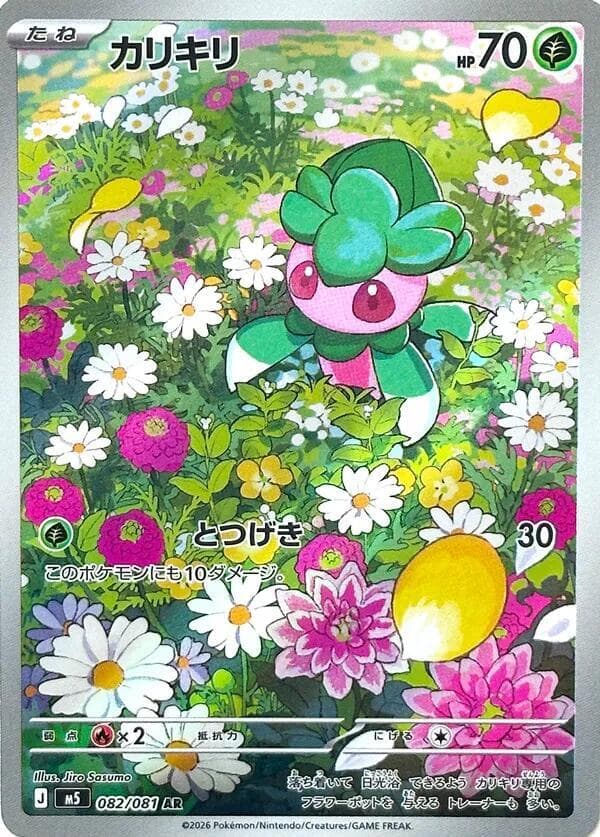
Fomantis, $0.21. The tiny sickle-grass Pokémon exists mainly to enable Lurantis ex one slot up, but do not dismiss it entirely — this same Fomantis gets a genuinely lovely Art Rare treatment at 082/081. The Common printing is filler; the species clearly got some illustrator love this set.
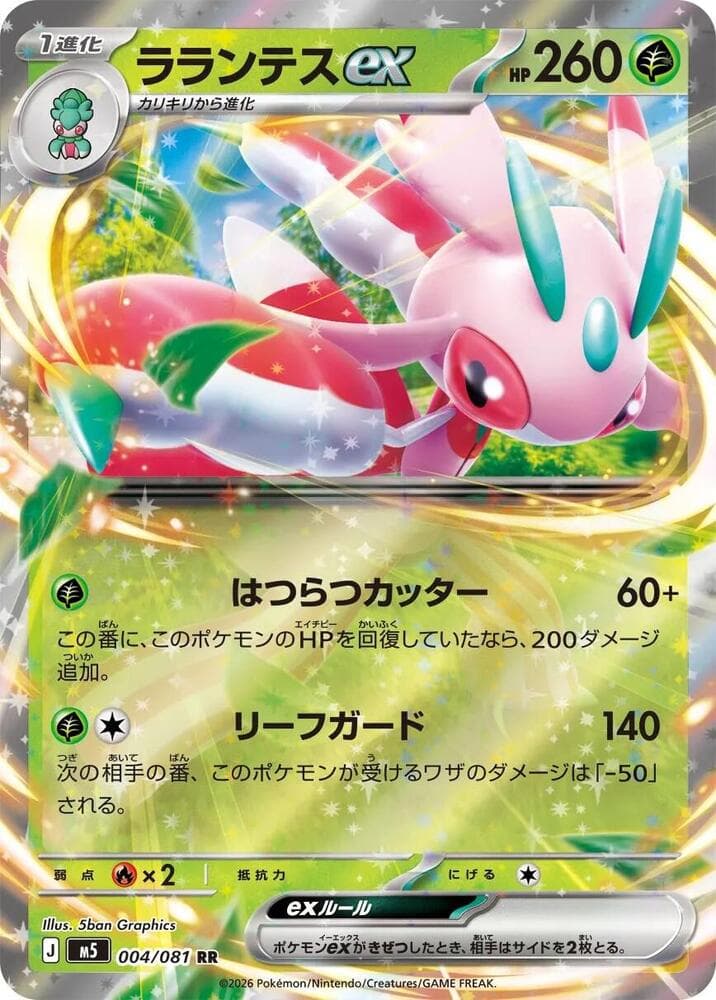
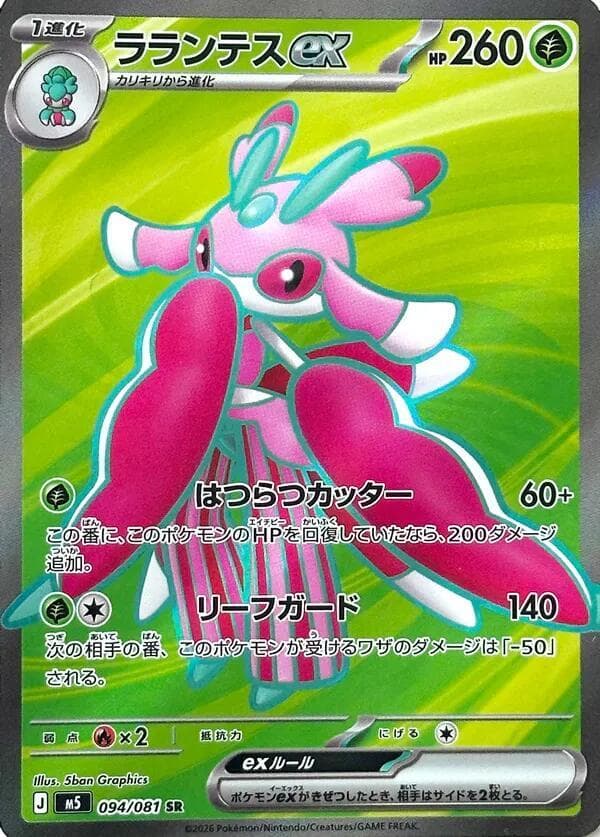
Lurantis ex leads the Grass exes as a Double Rare at $0.47. The orchid-mantis Pokémon has one of the best designs in Alola's dex, and like every RR in this set it also appears as a gold Super Rare (094/081). RR exes in Japanese sets are pulled four to a box on average, which is why even the set's marquee names cost pocket change in base form.
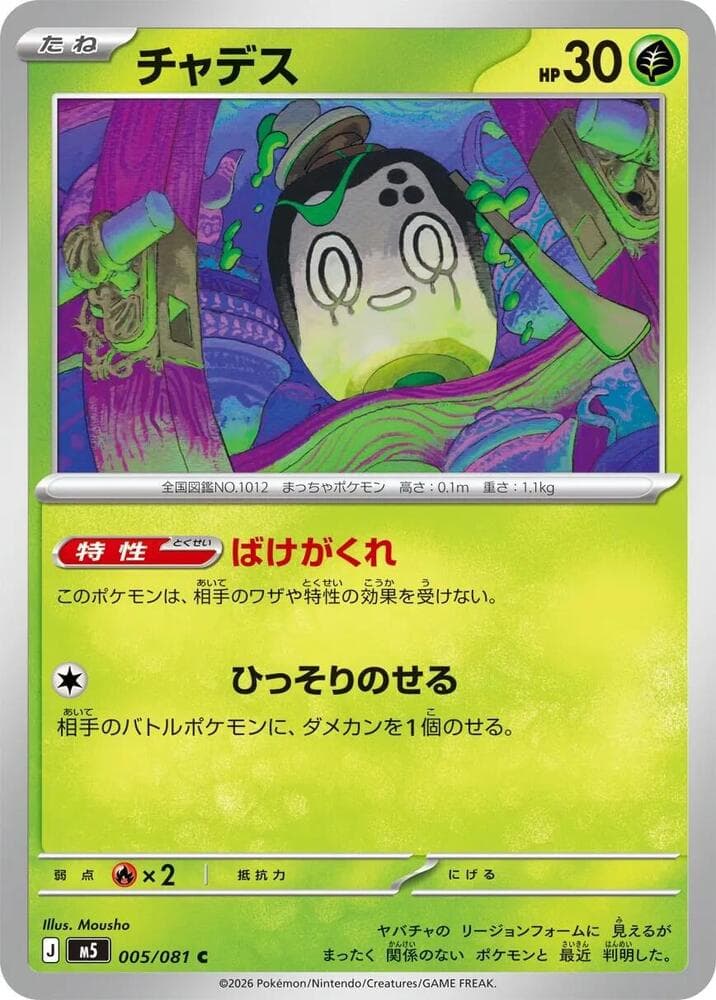
Poltchageist brings Kitakami's possessed-matcha energy to the set at $0.23. The little tea-spirit is one of the most merchandised new Pokémon of its generation, and its inclusion here alongside Sinistcha gives the Grass block a ghost-story flavor that suits Abyss Eye's shadowy mood surprisingly well.
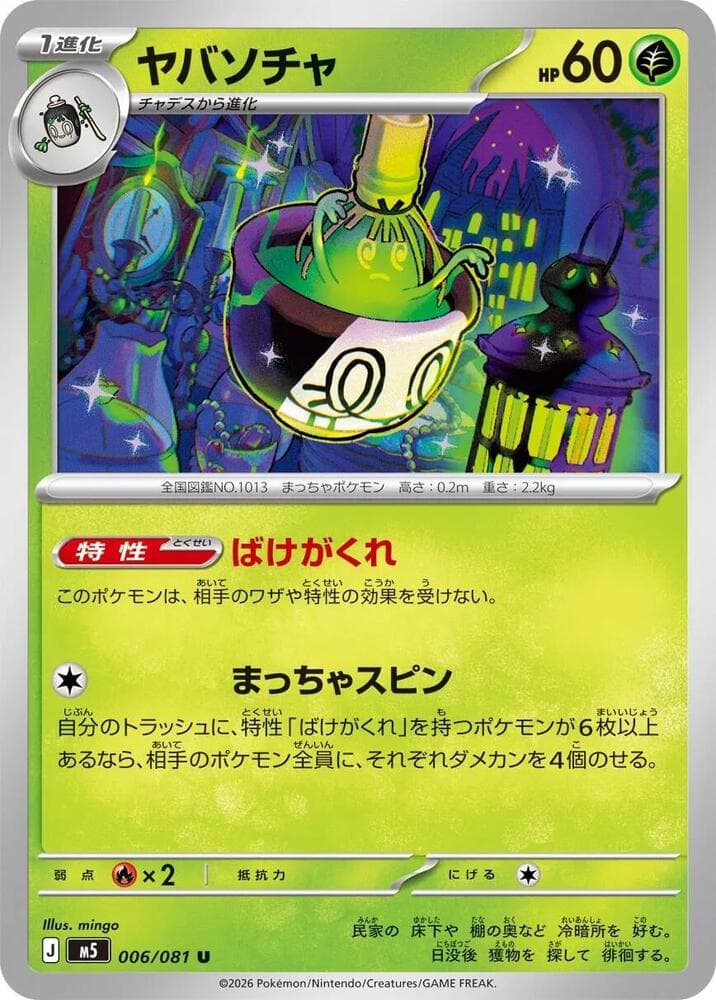
Sinistcha, the haunted tea Pokémon, lands as an Uncommon at $0.40 — modest money for a species with a real competitive pedigree in the video games. Collectors who chase the tea-set duo will want this paired with Poltchageist; at these prices, both together cost less than a vending-machine drink.
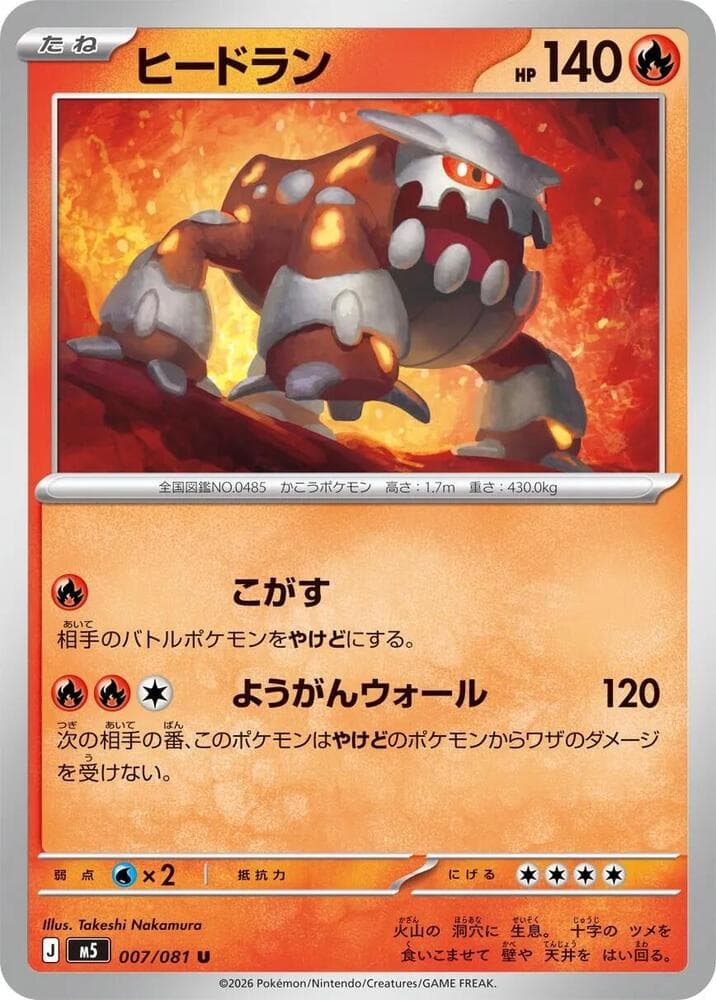
Heatran is a quiet flavor win: the molten legendary of Stark Mountain as an Uncommon at $0.82, one of the pricier non-holo cards in the main set. Legendary Pokémon at low rarities always carry a small premium from species collectors, and Heatran's magma-crab menace fits a set full of caves, fossils, and dark places.
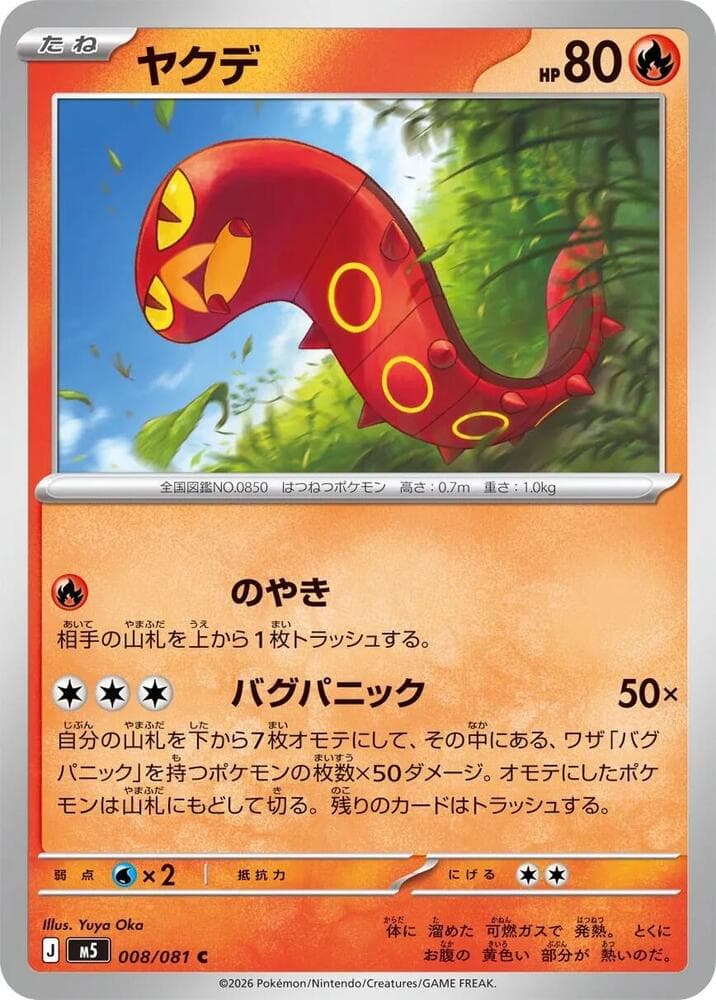
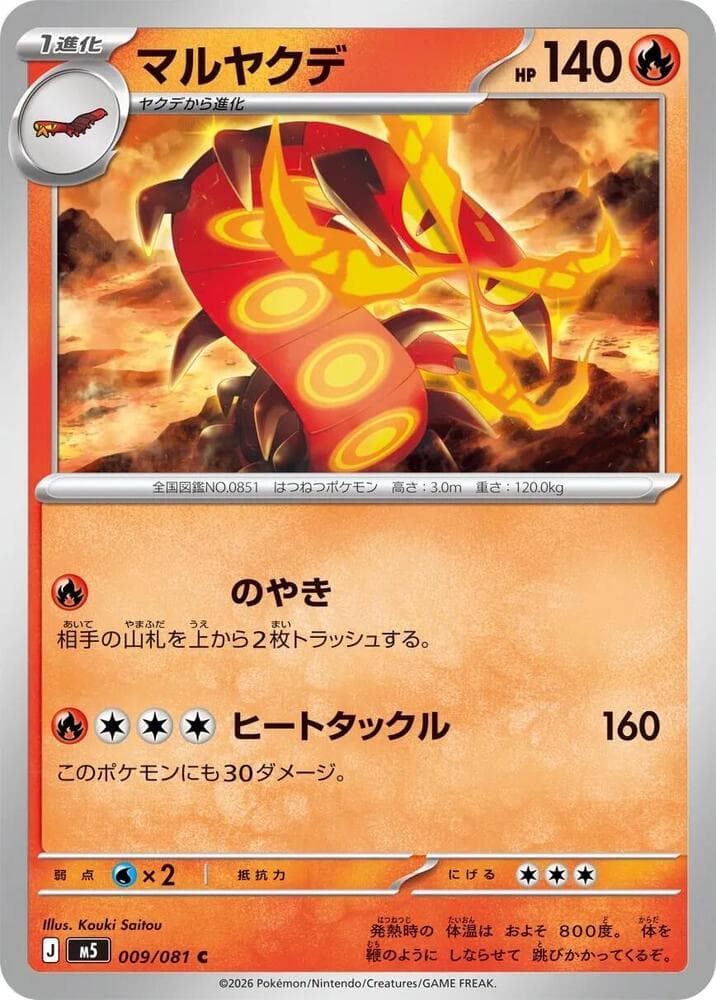
Sizzlipede, $0.10 — the cheapest card in the entire set as of July 11, 2026. The radiator centipede from Galar begins the set's only Fire evolution line that is not Paldean. If you are assembling a full M5 master set, this is the card your wallet will thank you for.
Centiskorch completes the fiery centipede at $0.19. Its coiled, ember-lit design has always been more impressive than its card prices suggest, and this Common continues the tradition. A binder card, plain and simple — but a good-looking one.
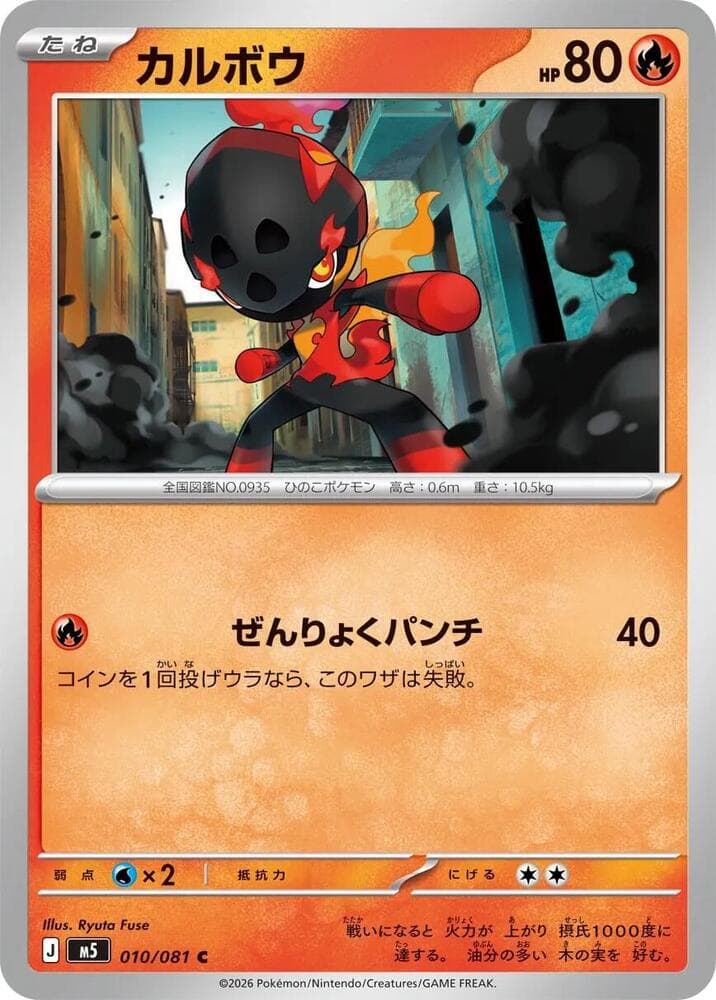
Charcadet, $0.23, is here for one reason: to evolve. Paldea's little ember soldier is among the most popular new species of the Scarlet & Violet generation, and its presence signals the Armarouge payoff one slot up. Cheap, common, and always in demand from evolution-line collectors who refuse to binder an Armarouge alone.
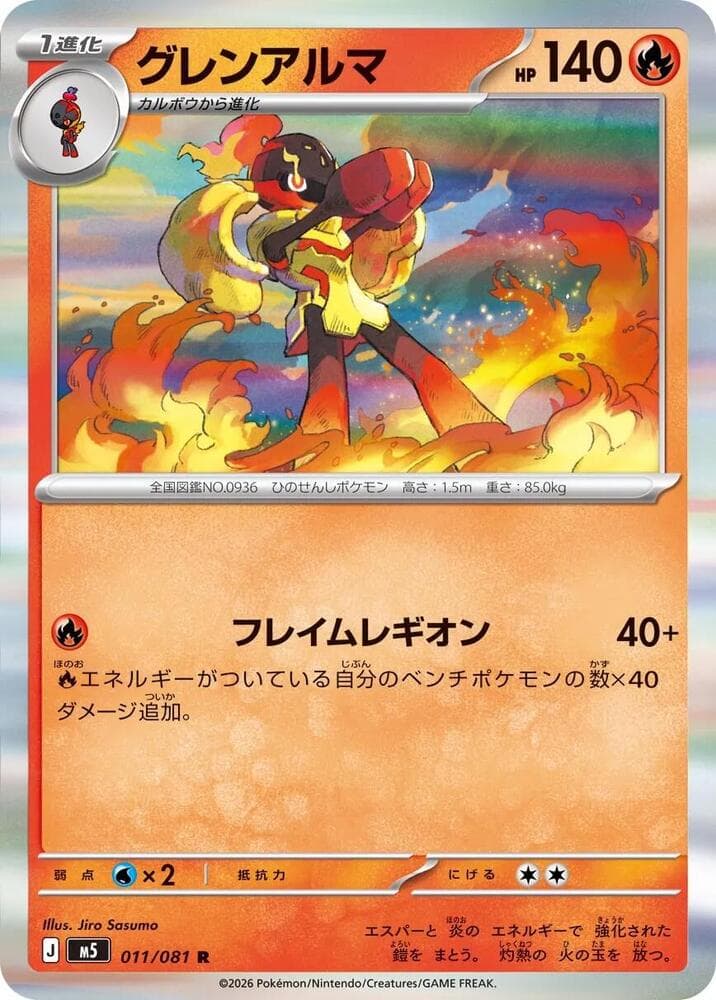
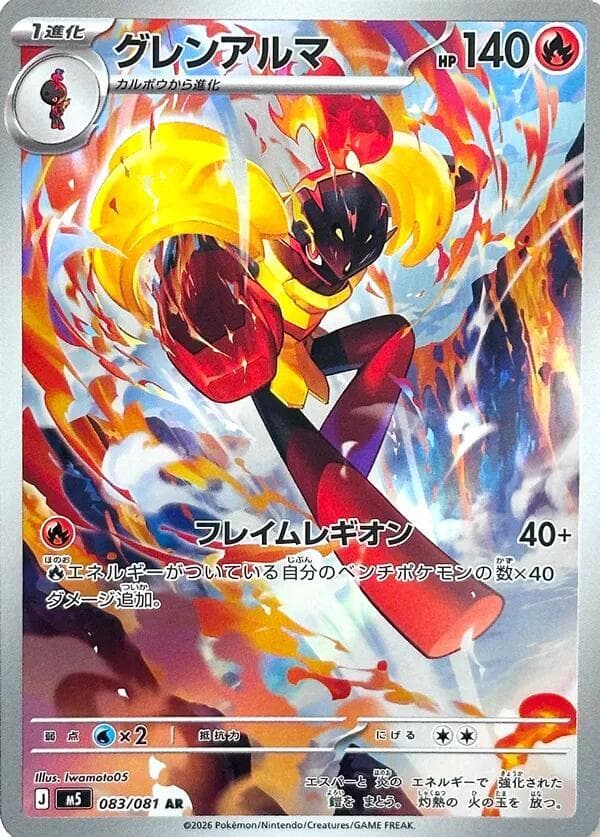
Armarouge closes the Fire block as a Rare at $0.66, and its psychic-flame knight aesthetic is a natural fit for this set's tone. This is also your budget route to the species — the same Armarouge gets an Art Rare at 083/081 for about eight times the price. Fire-warrior fans are well served either way.
Water & Lightning (012–027): From Wailord to Mega Zeraora ex
A long aquatic stretch gives way to the set's first Mega chase in base form. Wailord ex brings the size, Primarina brings the elegance, and Mega Zeraora ex closes the block as one of the set's marquee exes — with Miraidon making a cameo that plays out differently in the English release.
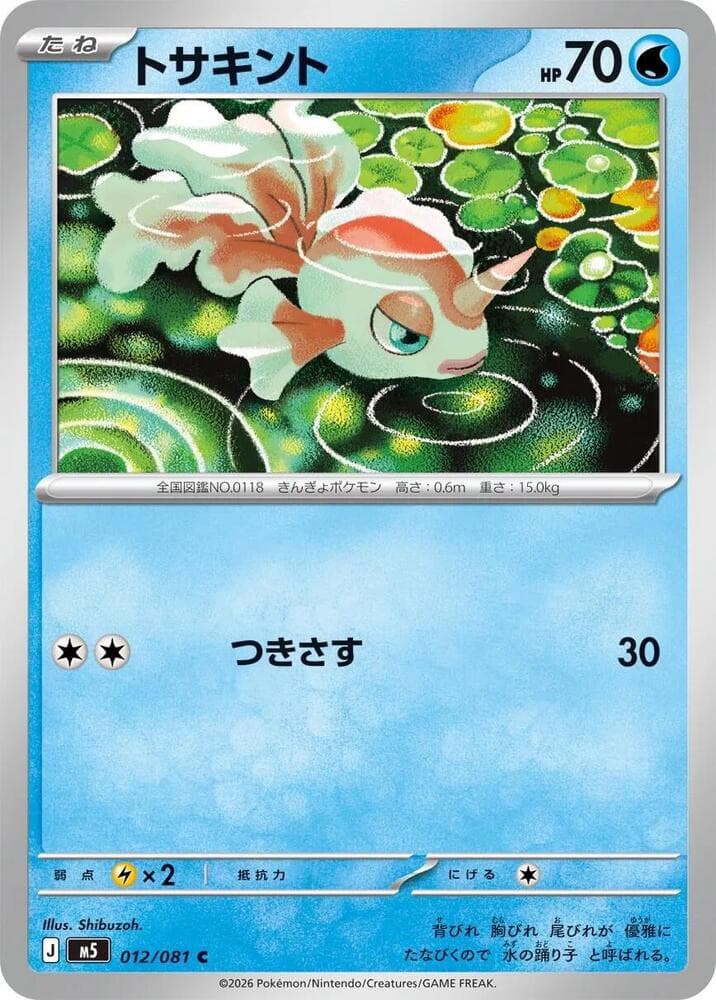
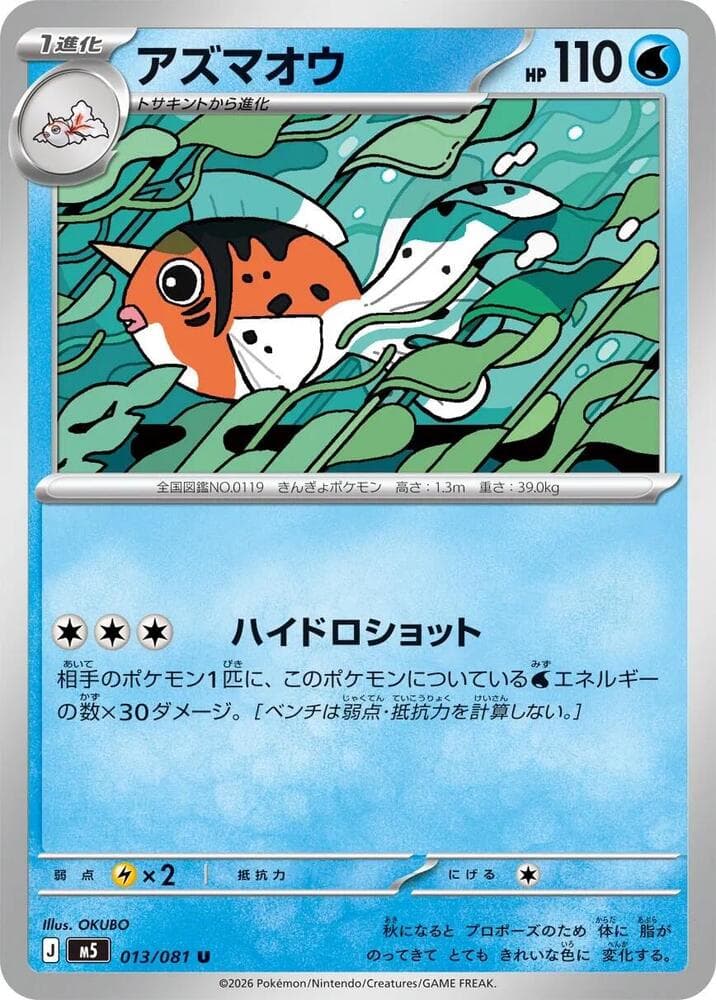
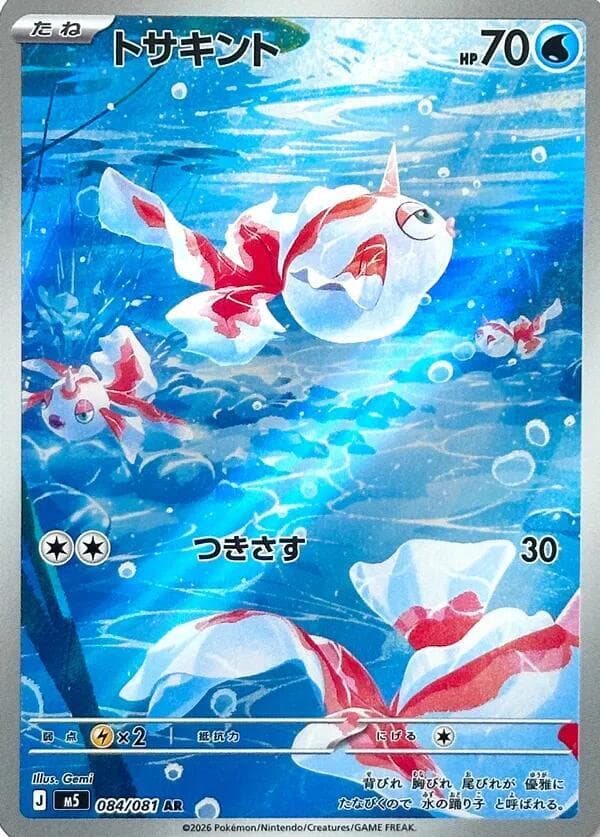
Goldeen at $0.24 looks like the most skippable card in the set — a Gen 1 Common of a decorative goldfish. Except its Art Rare counterpart (084/081) is one of the priciest ARs in Abyss Eye at $9.27, which retroactively makes this humble base printing part of one of the set's more interesting stories.
Seaking follows its pre-evolution as an Uncommon at $0.18. The regal goldfish rarely headlines anything, but the pair gives Abyss Eye's Water block a classic Kanto anchor. Fun bit of trivia for your trade partners: this line has been appearing in the TCG since the very first Japanese sets in 1996.
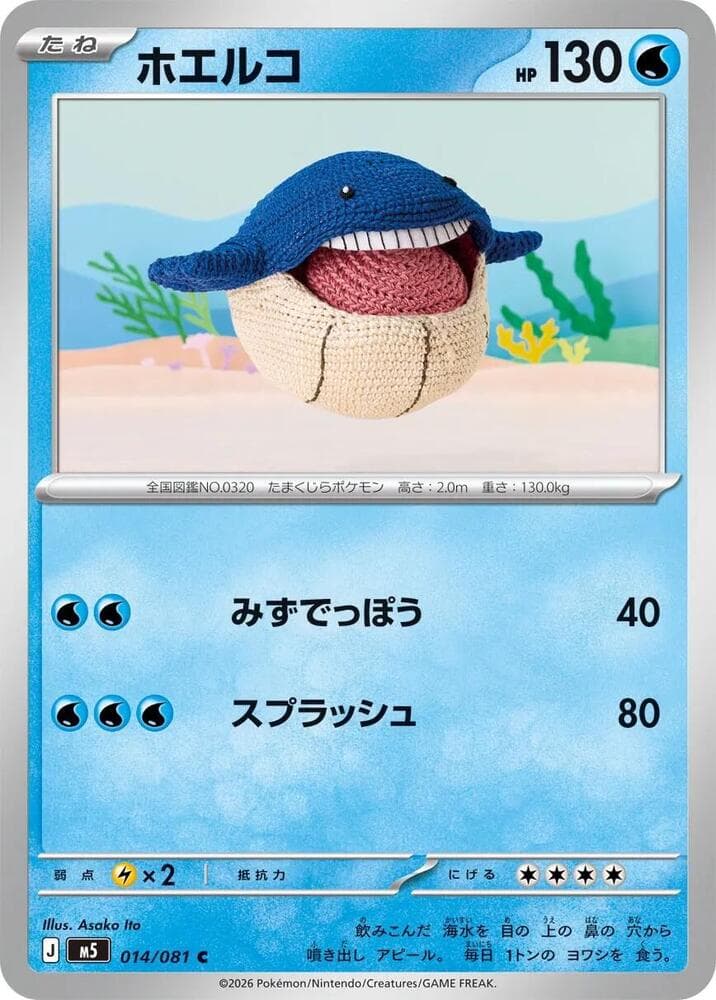
Wailmer, $0.32, is the roundest Pokémon in the set and the setup for its most physically enormous. The ball whale is pure Common filler by price, but Wailord evolution-line collectors are a real and dedicated demographic, and they always need Wailmers.
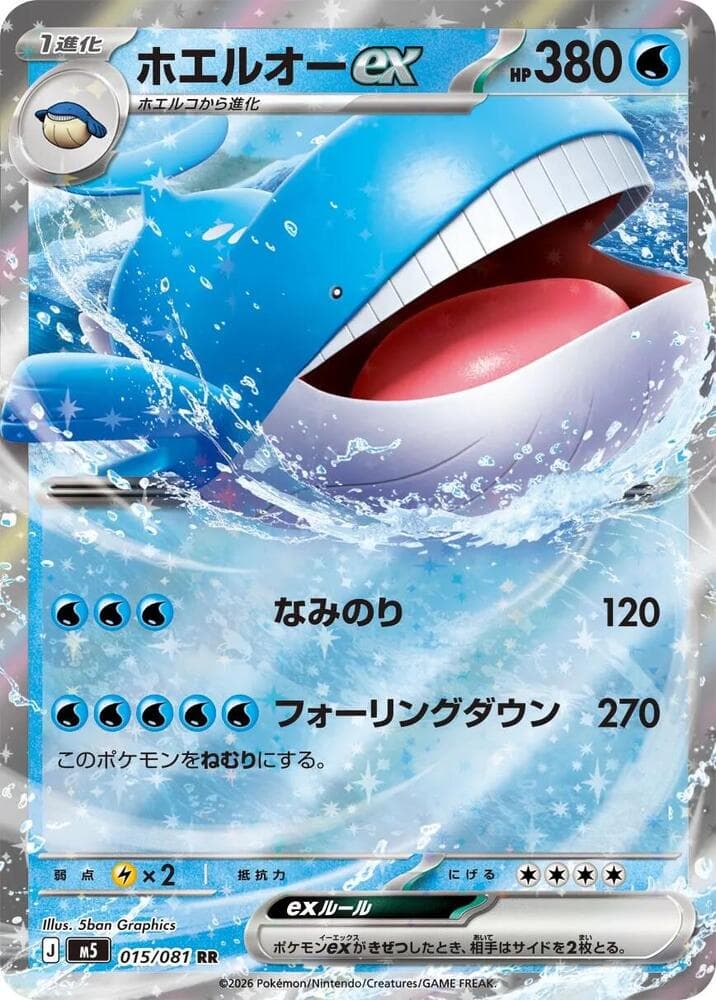
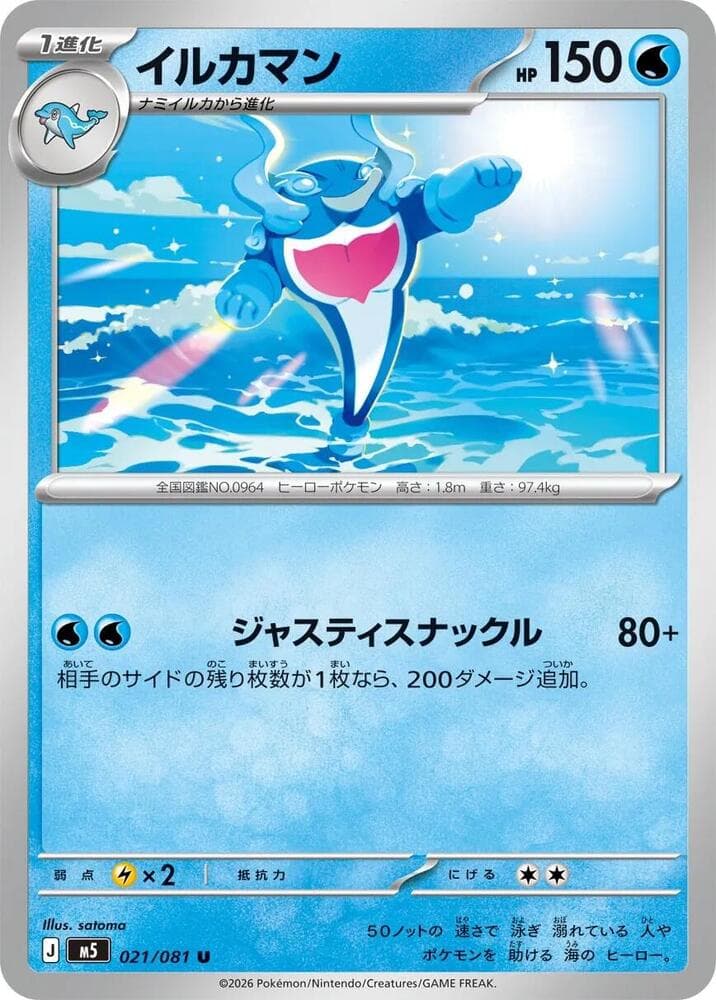
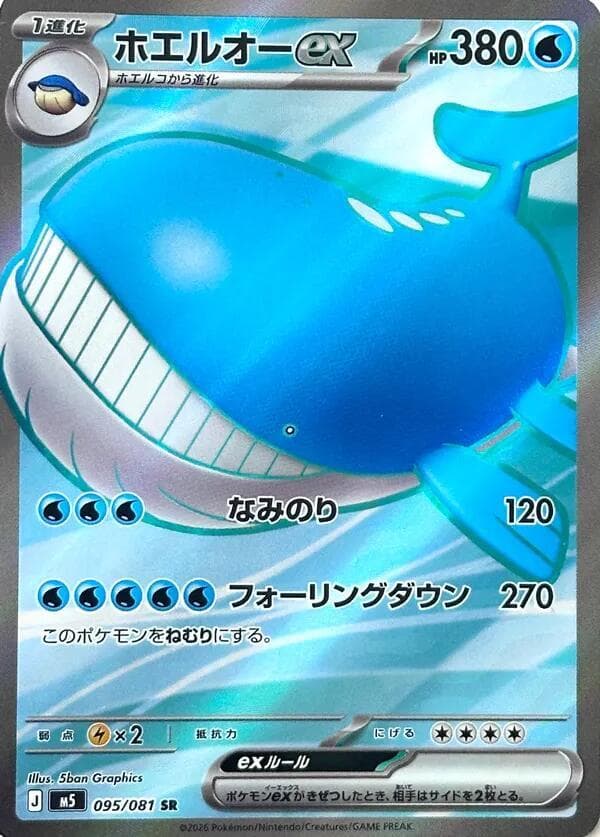
Wailord ex crashes in as a Double Rare at $0.52. The biggest Pokémon of them all as an ex is exactly the kind of card that casual collectors gravitate to on sight, and its gold SR version (095/081) is among the stronger non-Mega golds at $8.39. As base RRs go, this one has genuine table presence.
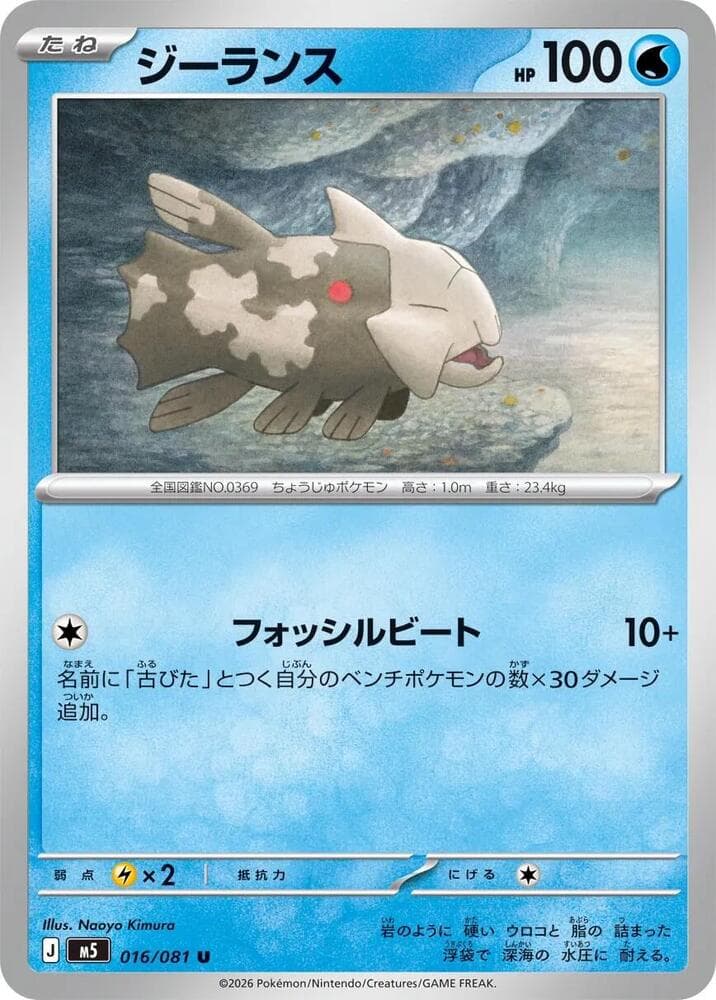
Relicanth is a sneaky-good inclusion at $0.39. The living-fossil fish predates the set's Antique Fossil items thematically — a species famously unchanged for a hundred million years, dropped into an expansion built around fossil excavation. Whoever assembled this checklist was paying attention. Uncommon, cheap, and thematically the most on-message Water card here.
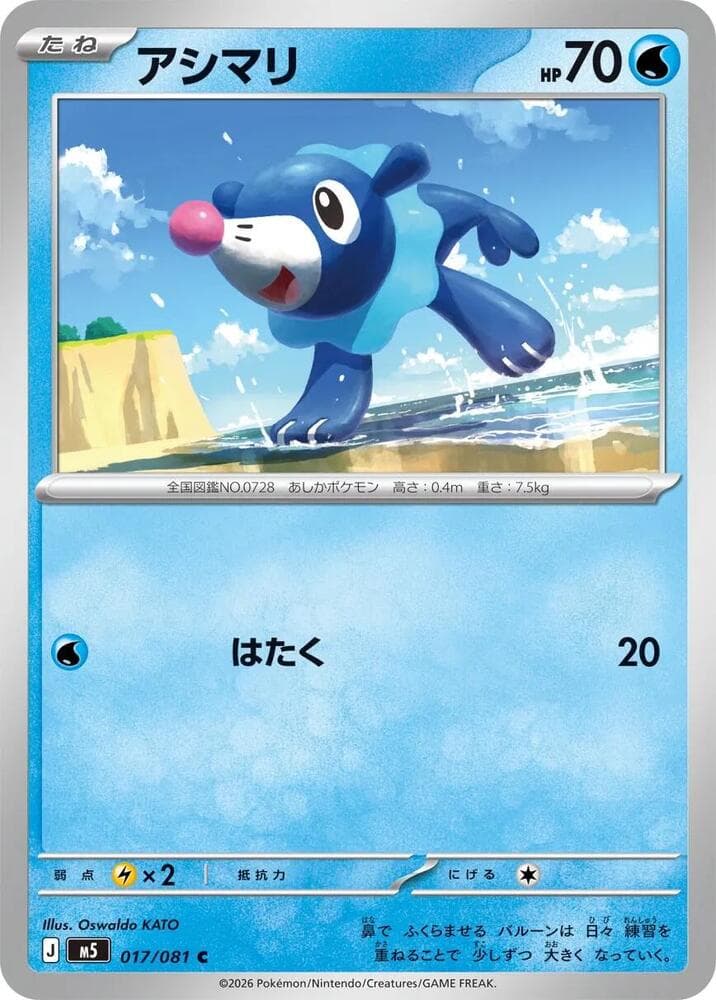
Popplio starts the Alolan starter line at $0.22. Sea-lion starters always pull their weight in pack-opening joy, and starter Commons are perennial favorites with younger collectors and gift-binder builders. Nothing to overthink at this price.
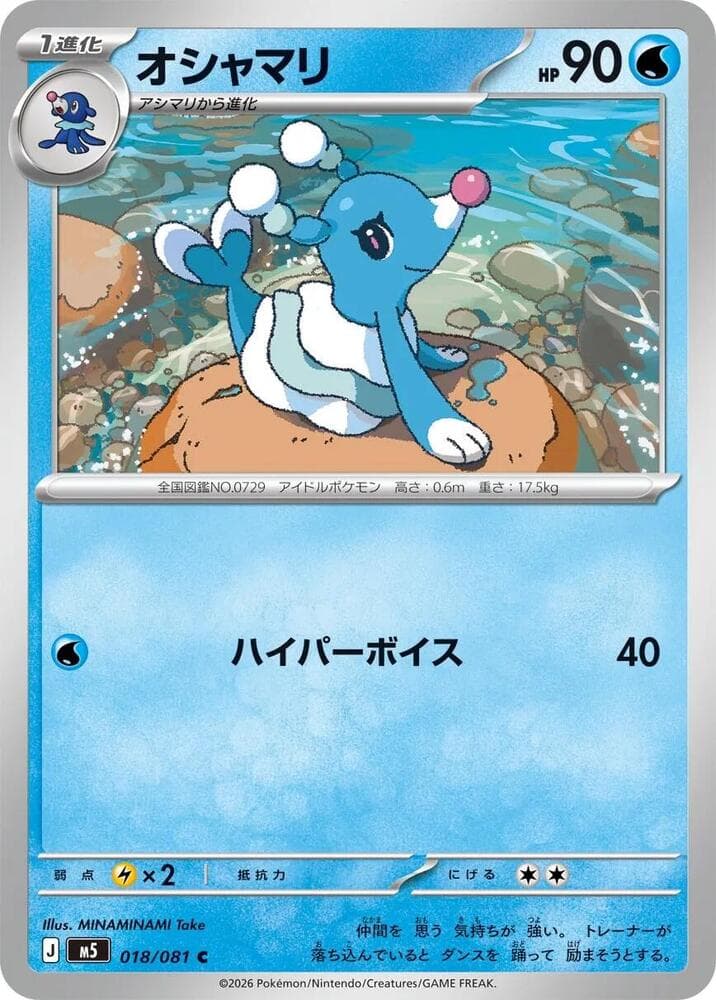
Brionne bridges to Primarina at $0.20, all pirouettes and sea foam. Middle-stage starters are historically the least-loved cards in any evolution line, which is precisely why completionists often find them missing when they need one. Grab it while it is a twenty-cent afterthought.
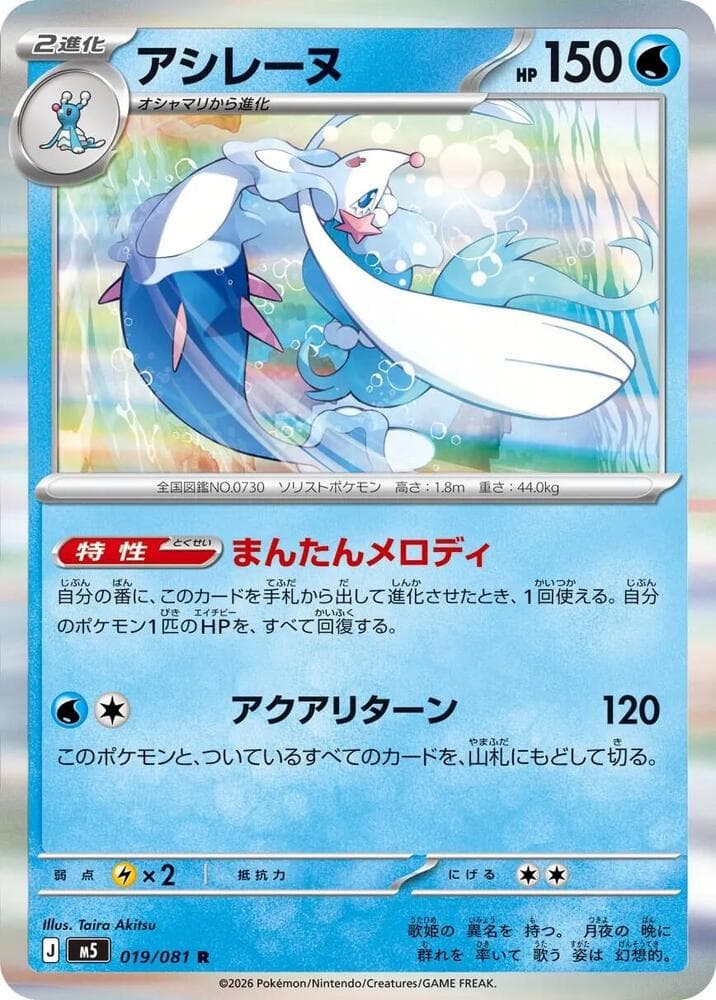
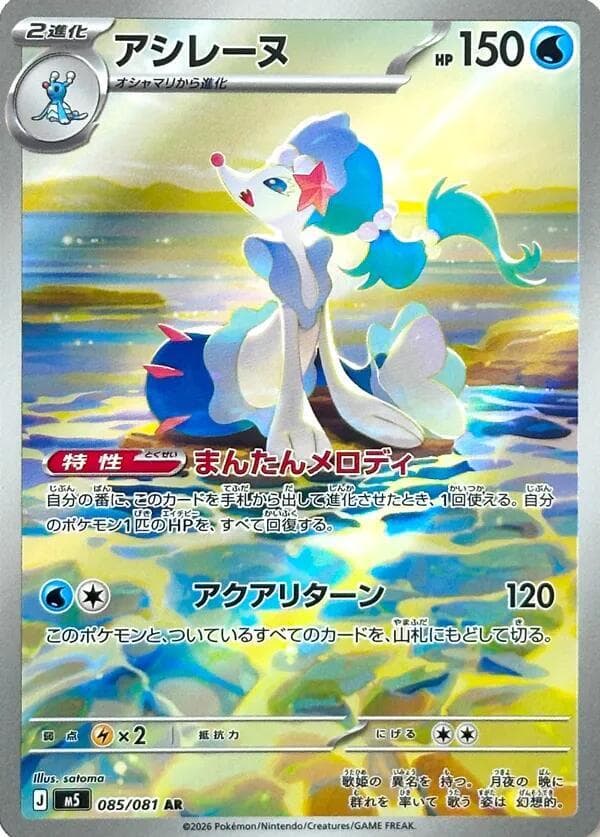
Primarina finishes the starter line as a Rare at $1.18 — quietly one of the most expensive cards in the base 81, ahead of even Mega Darkrai's RR on some days. The siren songstress is a top-tier fan favorite, and its Art Rare (085/081) doubles down on the elegance. Do not be surprised when this one is the missing slot in a trade binder.
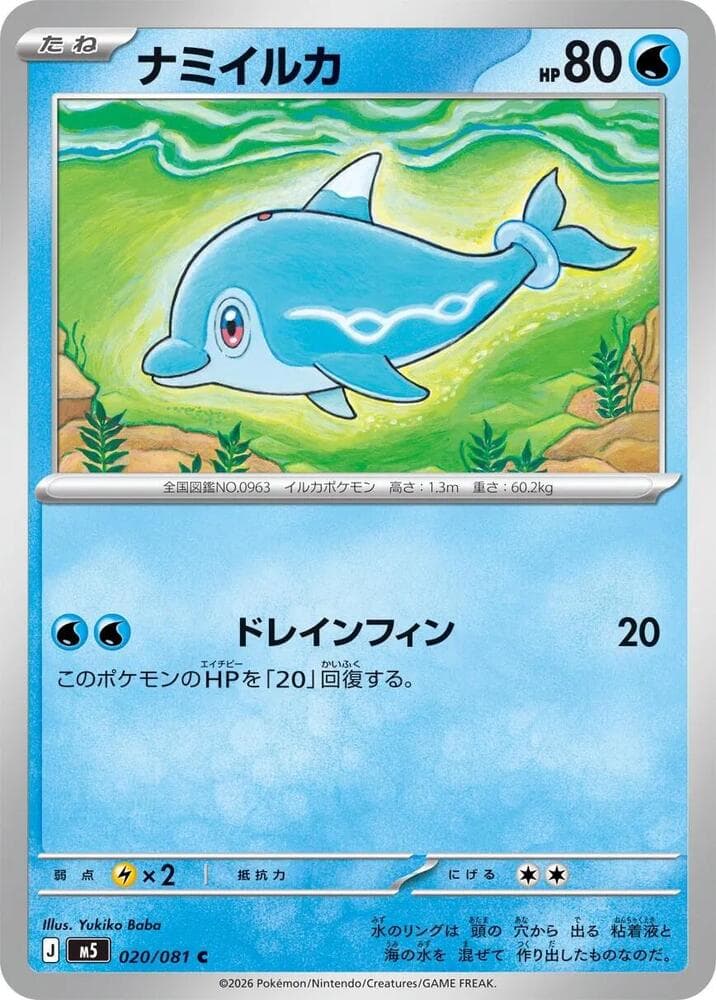
Finizen, $0.25, swims in as the unassuming half of one of Gen 9's oddest gimmick lines. On its own it is a plain dolphin Common; alongside its evolution it becomes the setup for a superhero transformation gag that made Palafin a cult favorite.
Palafin, Uncommon, $0.25. The hero-form dolphin — the Pokémon that insists on transforming off-screen — carries real video-game credentials and real meme energy. This printing costs a quarter, which feels like a bargain for one of the most personality-rich species in the set.
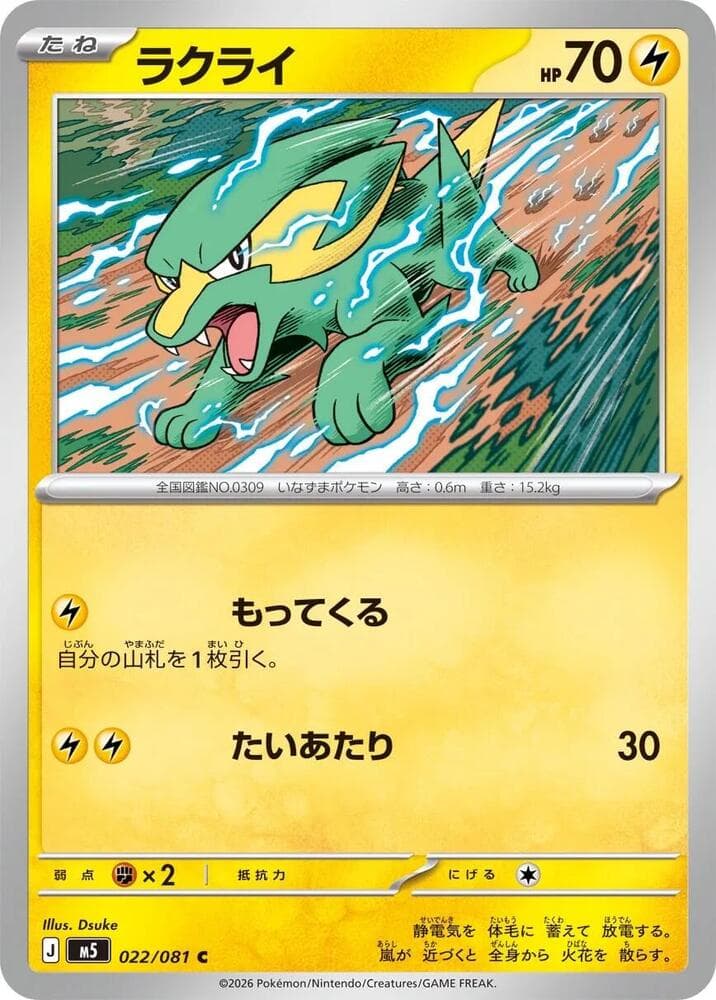
Electrike opens the Lightning block at $0.23. Hoenn's static-charged pup is standard Common fare, here to enable Manectric and to fill out a Lightning corner that builds toward Mega Zeraora ex. Evolution-line completeness is its entire job description.
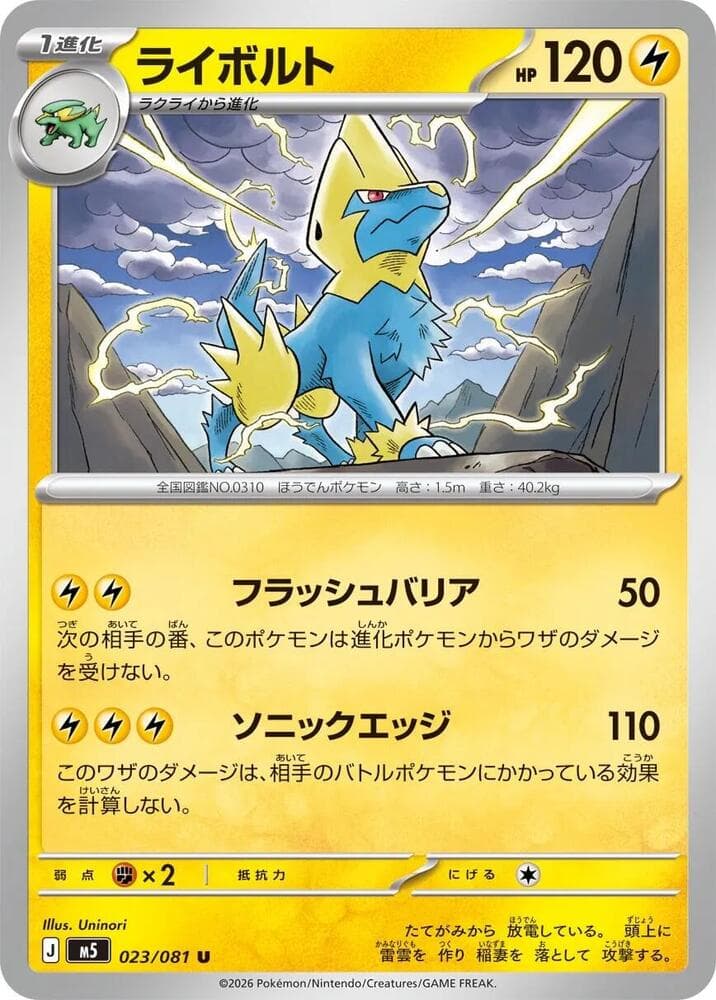
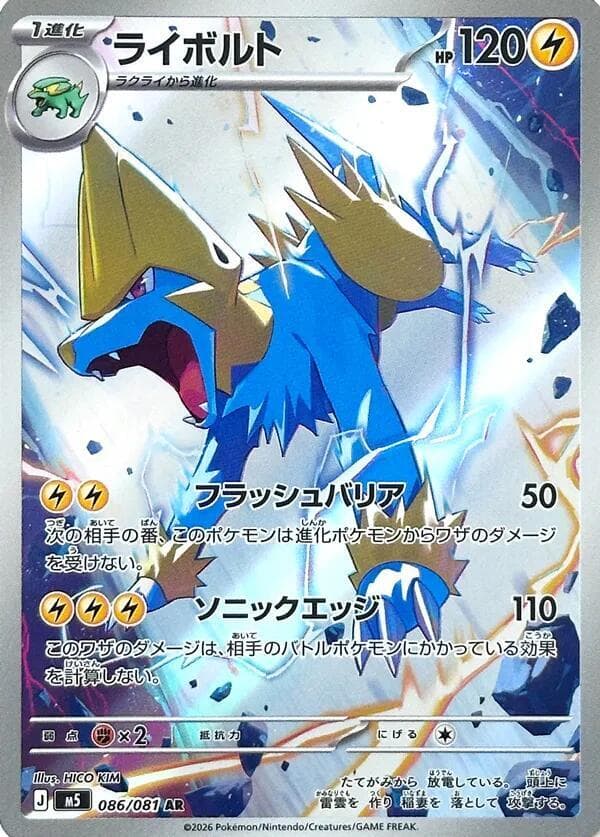
Manectric completes the line as an Uncommon at $0.31 — but the species' real moment this set is the Art Rare at 086/081. Base Manectric is the practical pickup; the AR is the display piece. Either way, a sleek design that has aged gracefully since 2003.
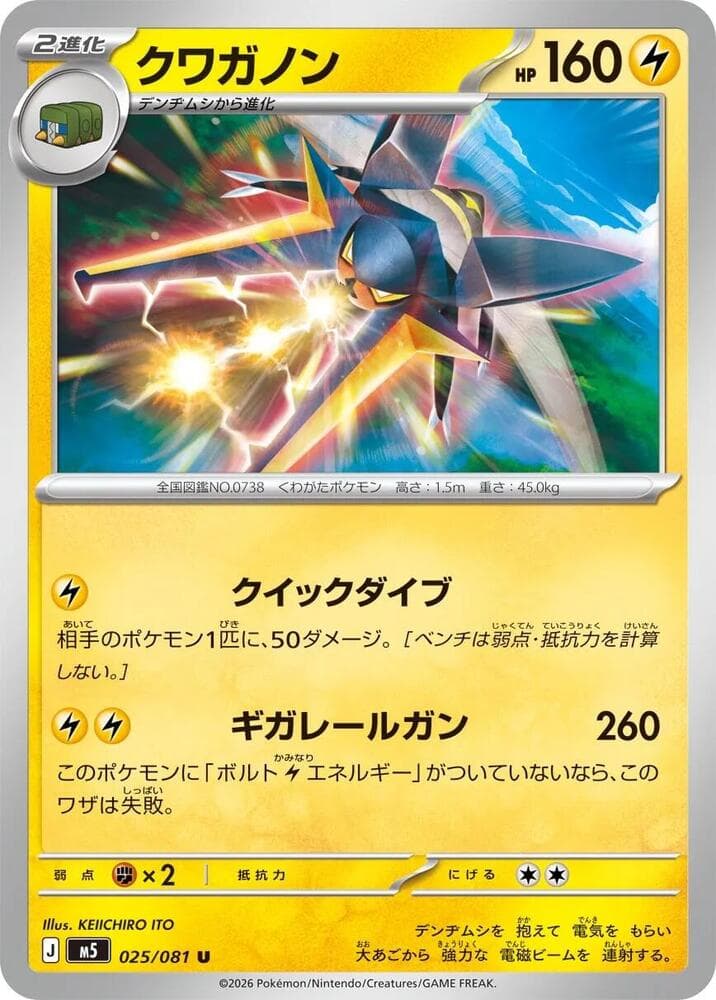
Charjabug — the battery bus — continues Grubbin's line at $0.25. It remains one of the most endearingly weird designs in the dex: a bug that is also a power cell. Common filler by market price, minor icon by shape.
Vikavolt lands the stag-beetle railgun at $0.18, closing a full three-stage line that Abyss Eye spreads across two types. Fully evolved Uncommons this cheap are the backbone of set completion; there is no reason this should ever hold up a master-set trade.
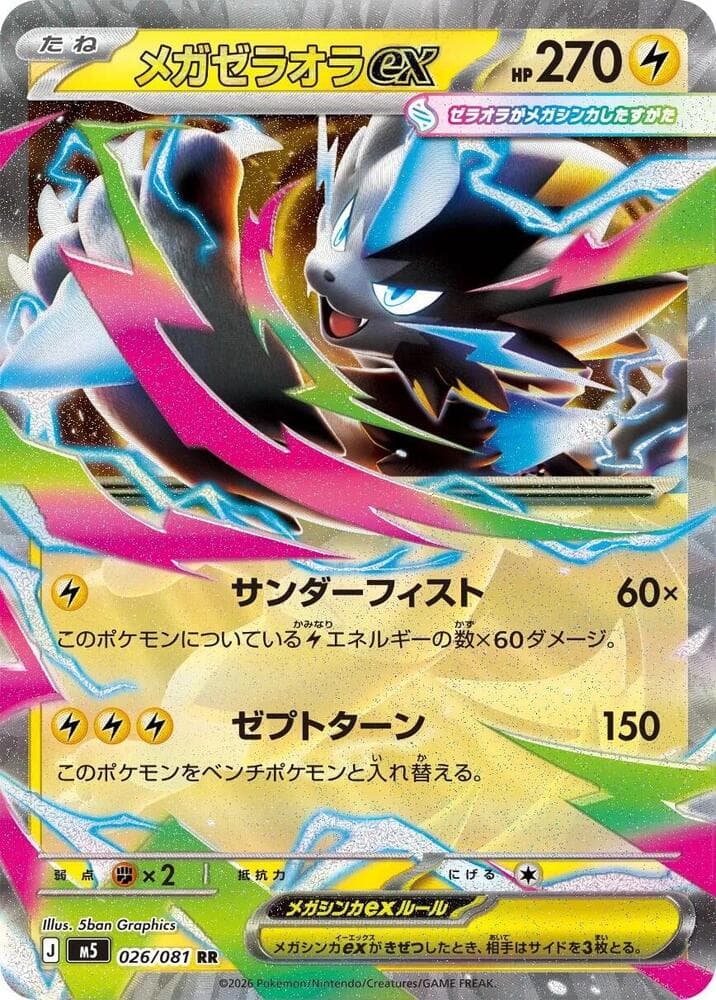
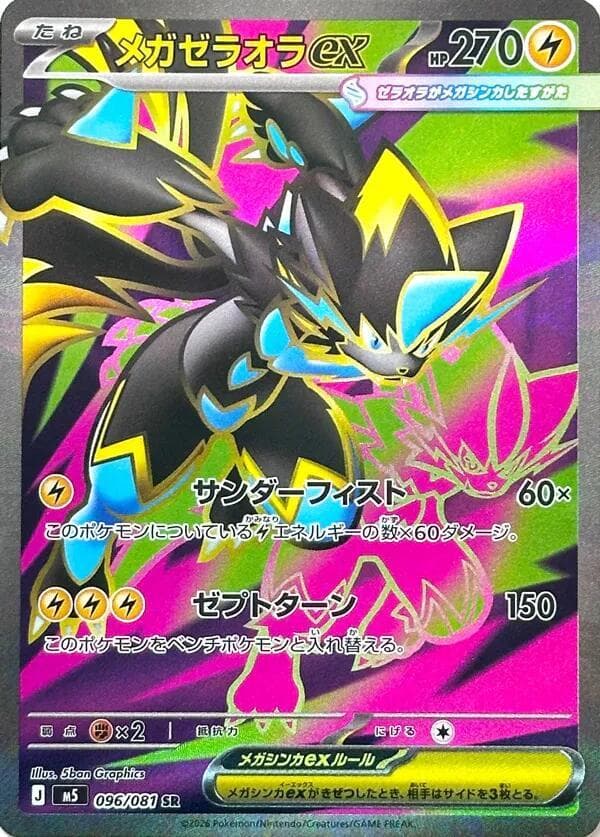
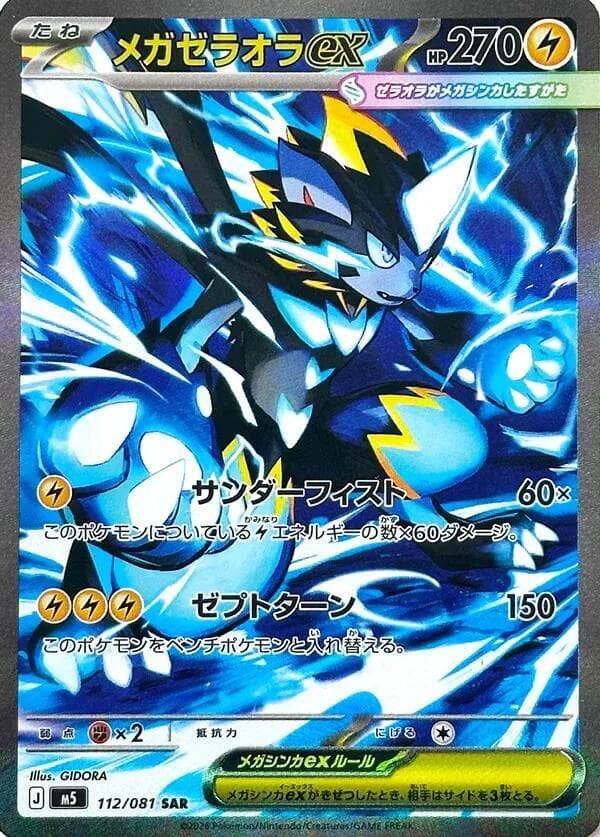
Mega Zeraora ex arrives as a Double Rare at $0.73, the base printing of one of the set's four Mega evolutions. The feral thunder-cat is a popular mythical, and this RR is the affordable way to own the debut — its SR (096/081) runs $9.19 and its SAR (112/081) $42.71. Pulled at roughly four RRs per box, base Megas like this are common enough that the real chase value concentrates entirely in the secret versions.
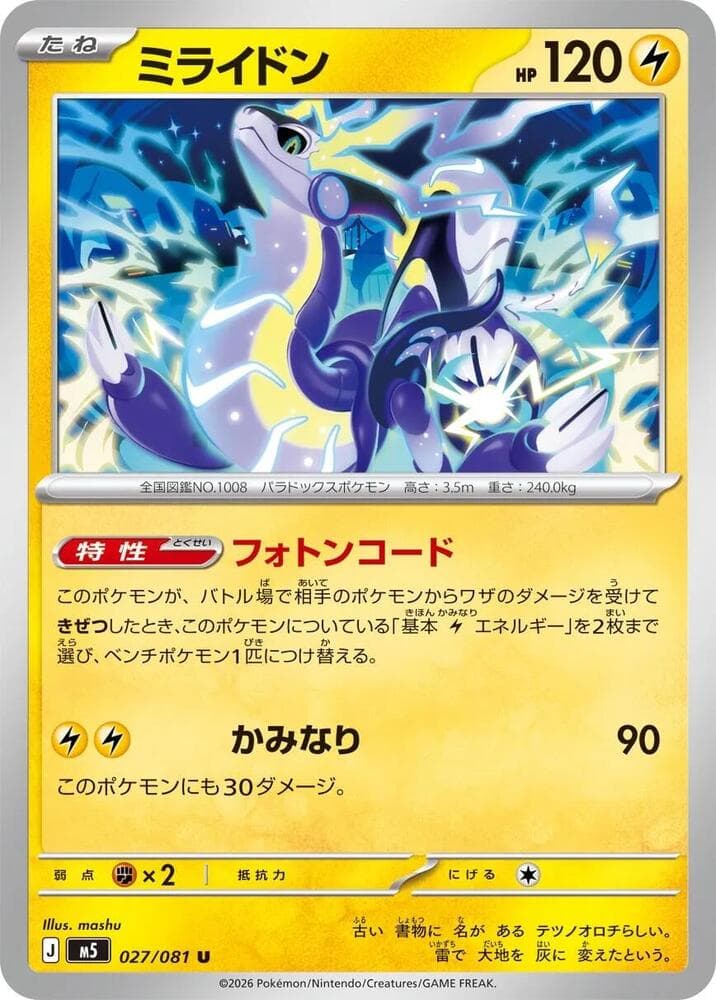
Miraidon, Uncommon, $0.36 — and a card with an interesting passport. In the English Pitch Black release, Miraidon is demoted to a standard Holo Rare slot, one of only three cards (with Koraidon and Zarude) treated differently across the two sets. Paradox-legendary collectors comparing JP and EN versions will care more about this one than the price implies.
This is the heart of Abyss Eye: a ghost-heavy Psychic block featuring Mega Chandelure ex, the fossil sub-theme's first pillar in Rampardos ex, and — at number 046 — the debut of Mega Darkrai ex itself, the card this entire expansion is named after.
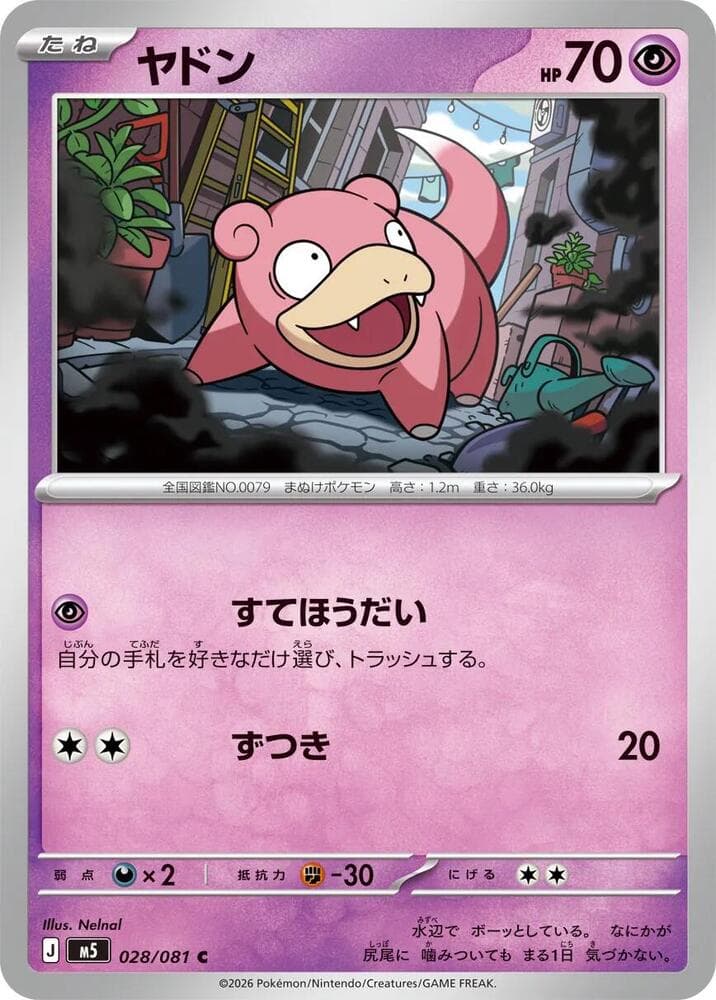
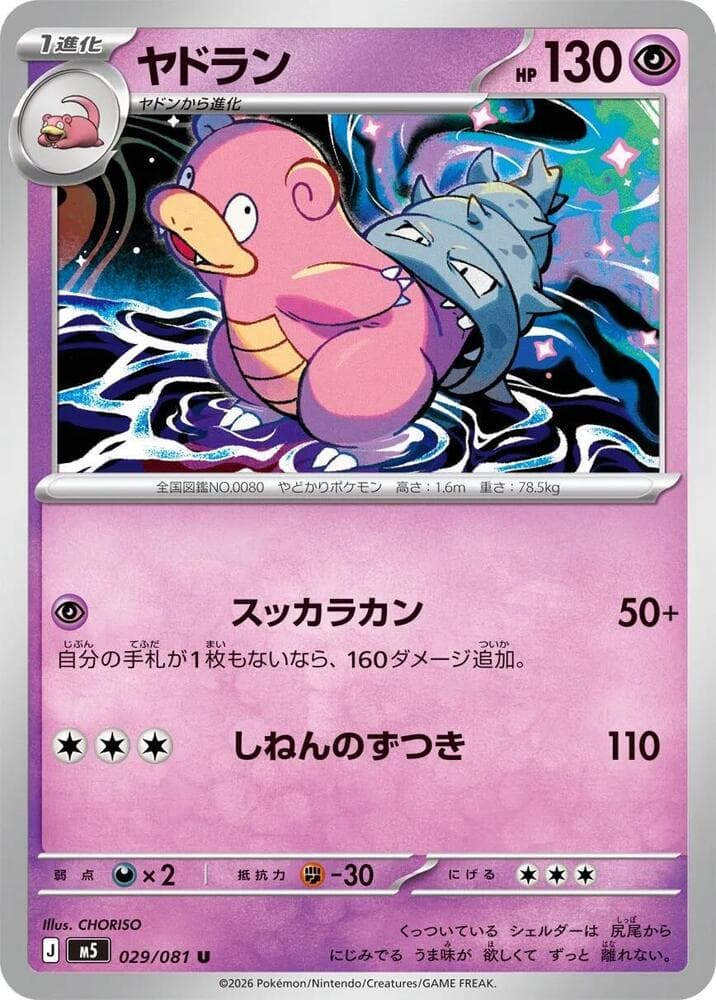
Slowpoke, $0.19, needs no introduction — arguably the most beloved slacker in the entire franchise. Its presence here is setup for a Slowbro that turns out to be one of Abyss Eye's biggest illustration stories, and a wink toward the Mega Slowbro ex promo added to the English Pitch Black release. Never skip a Slowpoke.
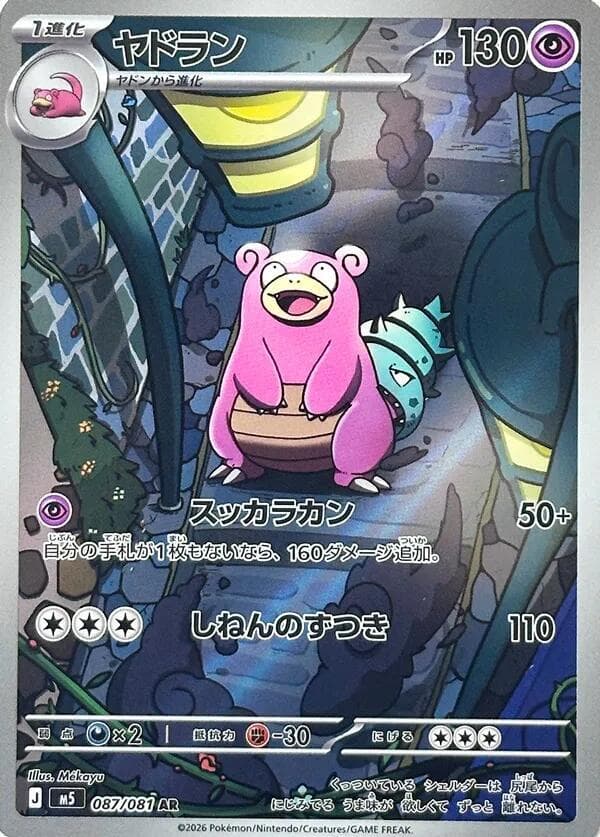
Slowbro, Uncommon, $0.27 — the sleeper species of the set. This base printing is pure pocket change, but its Art Rare (087/081) is the most expensive AR in Abyss Eye at $16.24 and PokeBeach's pick for the set's best illustration rare. Buy the Uncommon for the binder slot; chase the AR for the wall.
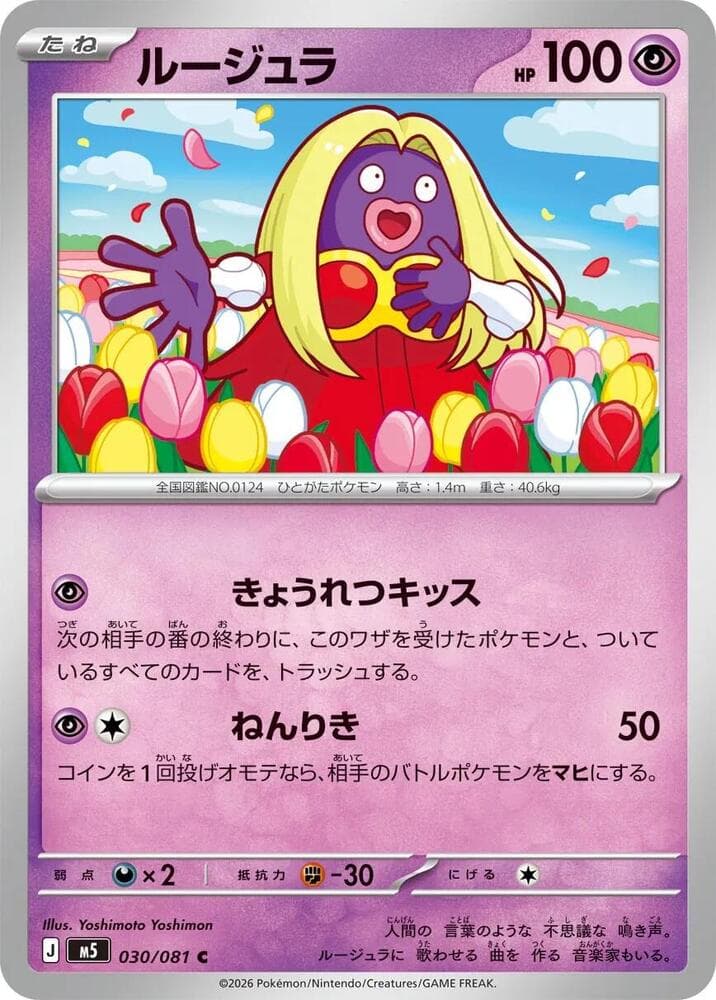
Jynx appears at $0.30, one of the set's handful of pure Gen 1 nostalgia inclusions. The psychic diva has been part of the TCG since its earliest days, and veteran collectors tend to smile when she turns up in a modern checklist. Common price, vintage pedigree.
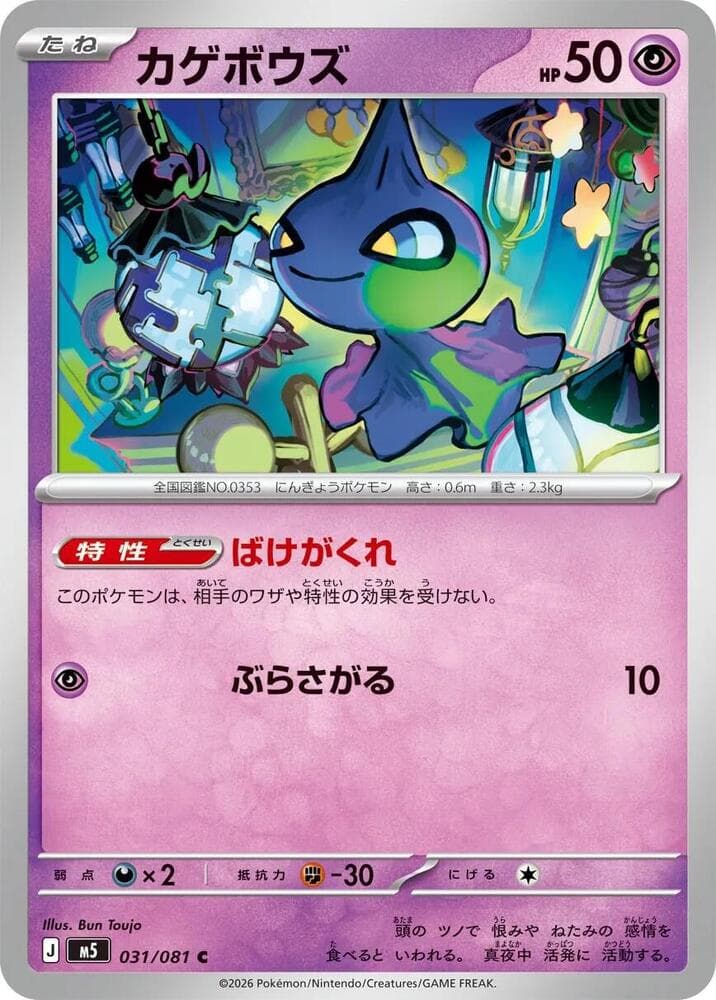
Shuppet floats in at $0.28 to kick off the set's ghost parade. Abyss Eye's Psychic block leans hard into spirits and shadows — fitting for an expansion named after Darkrai — and this vengeful little puppet is the opening act.
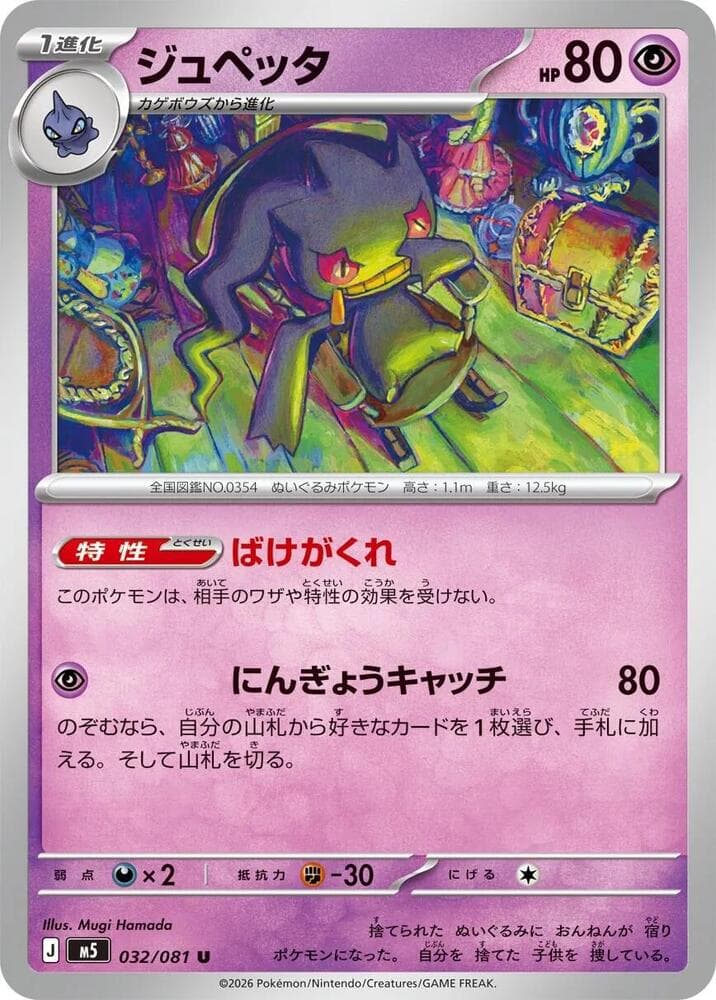
Banette, Uncommon, $0.38. The discarded doll seeking its former owner is one of the darkest backstories in the Pokédex, and it feels genuinely at home in this set's shadow theme. A strong flavor pick that costs less than the pack it came in.
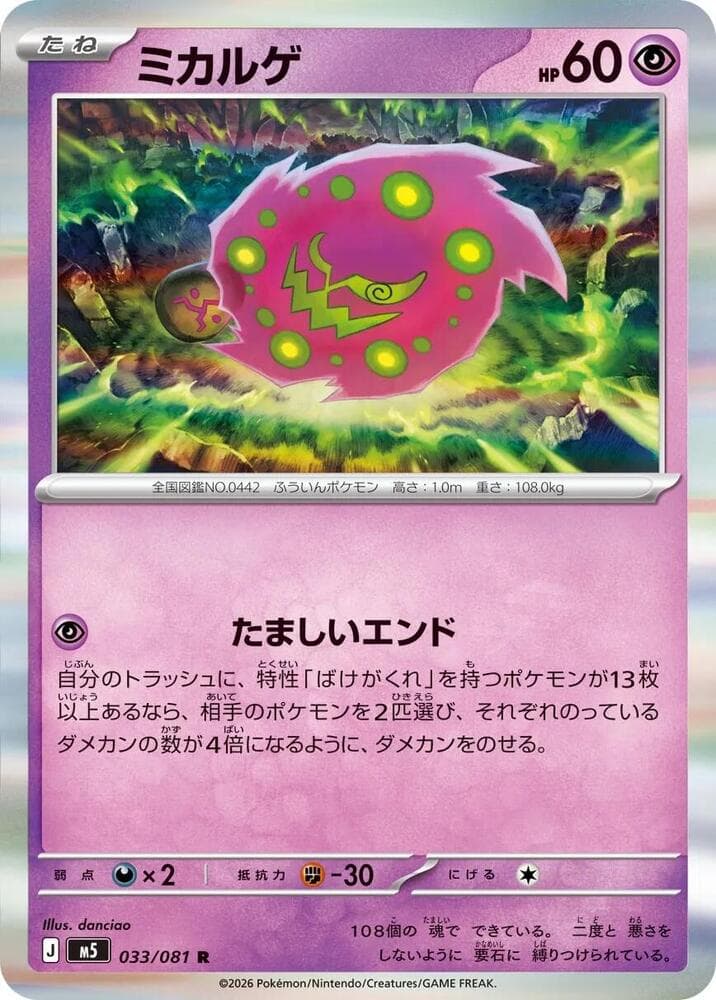
Spiritomb — 108 spirits bound to a keystone — lands as a Rare at $0.49. Few Pokémon match this set's abyss aesthetic better, and Spiritomb cards have a long history of cult collectibility across eras. As atmospheric filler goes, this is the good stuff.
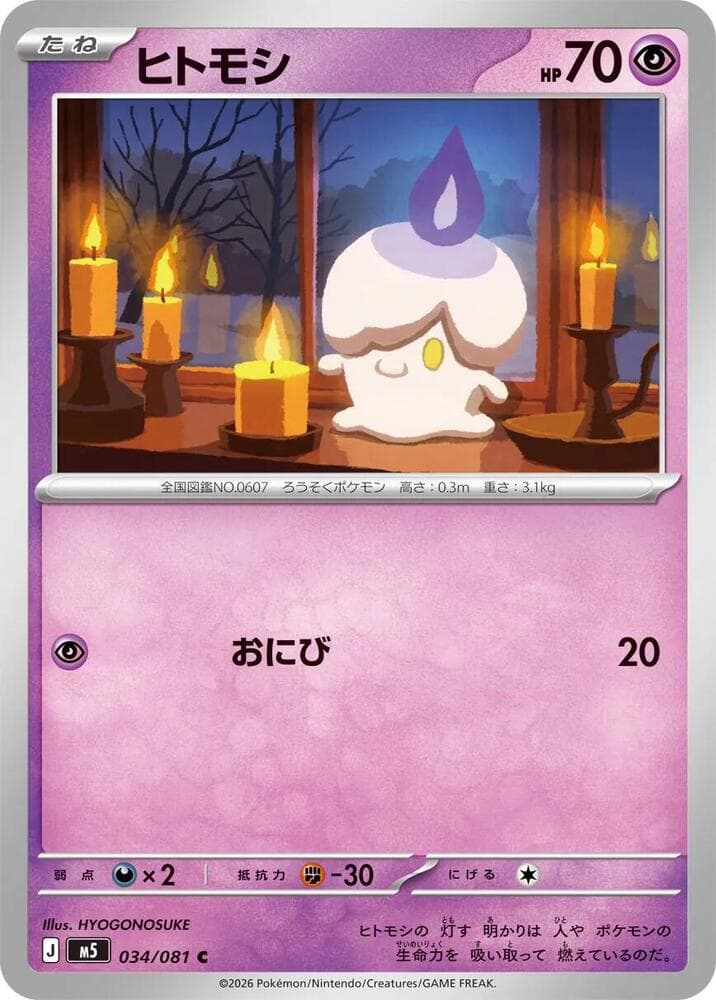
Litwick begins the candle line at $0.24, its flame famously fueled by life energy. It exists here to build toward Mega Chandelure ex, and ghost-line collectors will want all three stages together. A Common with a purpose.
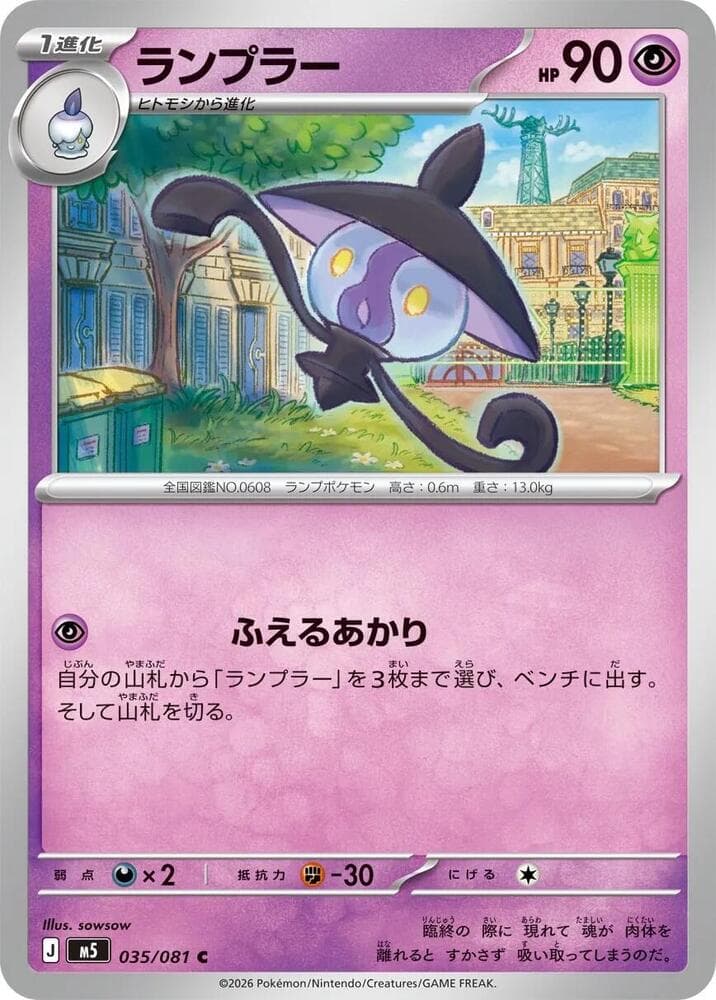
Lampent, $0.22, is the middle flame — the street lamp that leads spirits astray. Like most middle evolutions it commands no premium whatsoever, which is exactly why it will be the copy you cannot find when you finally need the full line for a trade.
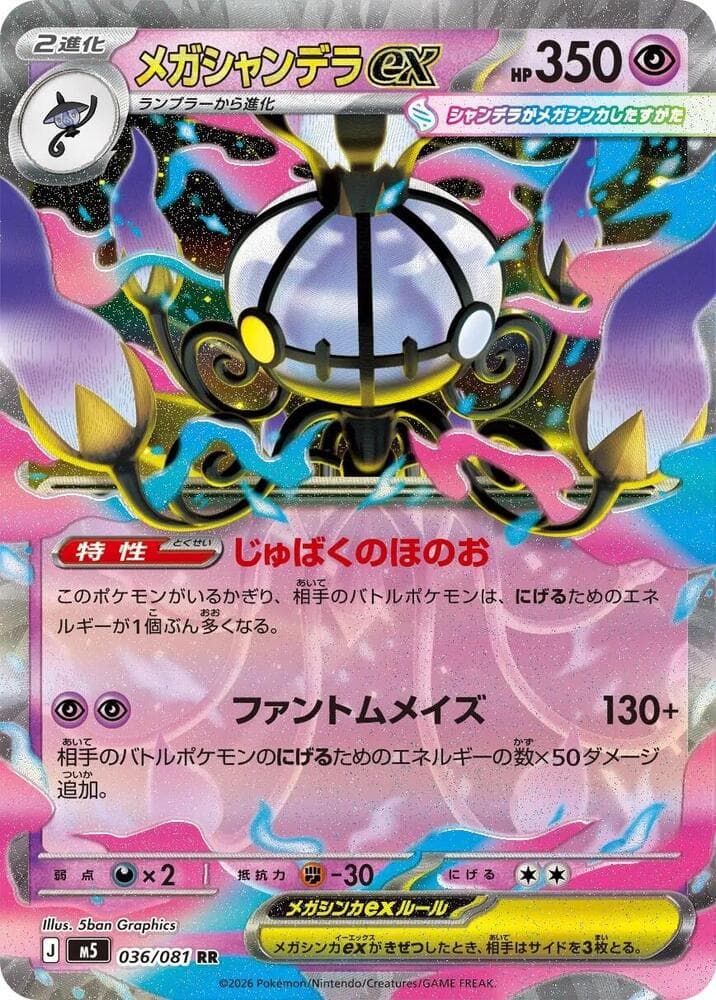
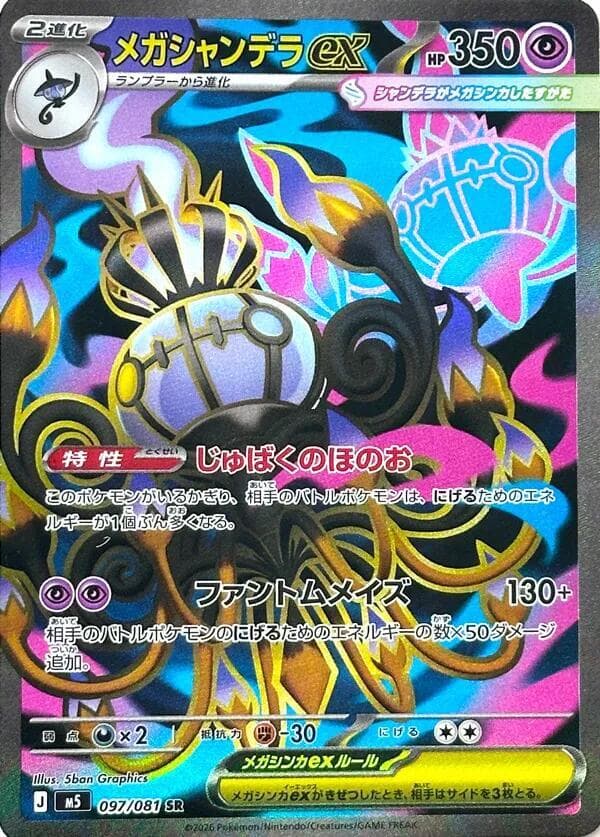
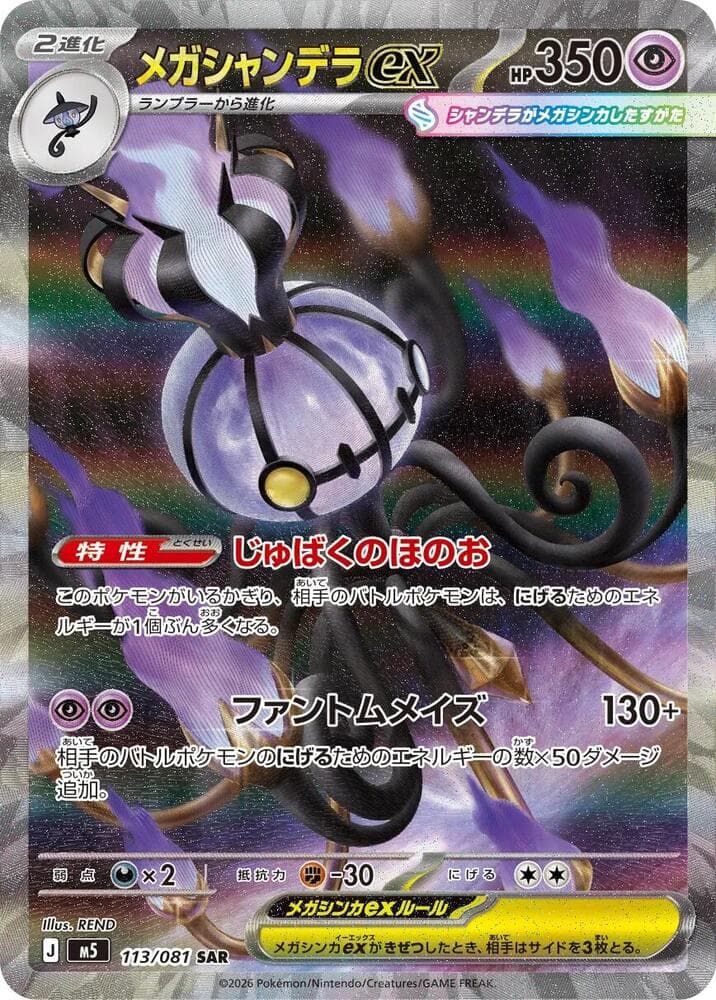
Mega Chandelure ex takes the Double Rare slot at $0.68, giving the ghost chandelier its Mega debut in this expansion. It is one of the four Megas anchoring Abyss Eye, and its secret versions scale steeply: $15.00 for the SR (097/081) and $34.52 for the SAR (113/081). The base RR is the everyman's copy — pulled in most boxes, priced accordingly, and still a genuinely striking card to open.
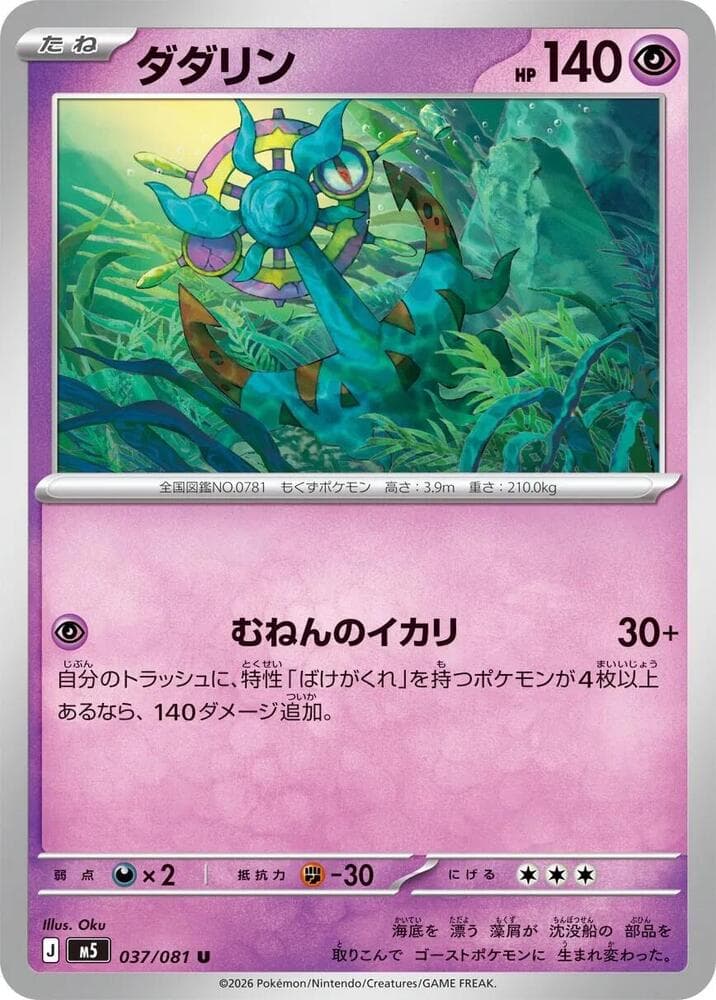
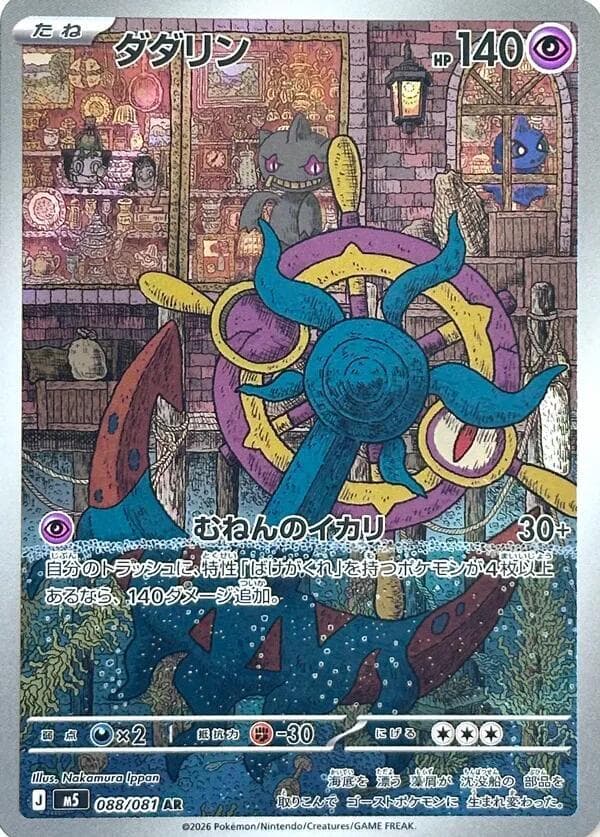
Dhelmise, the haunted anchor, drifts in as an Uncommon at $0.41. Shipwreck ghost, seaweed grip, deep-sea menace — it could not fit an abyss-themed set more literally if it tried. There is also an Art Rare (088/081) for those who want the full atmospheric treatment.
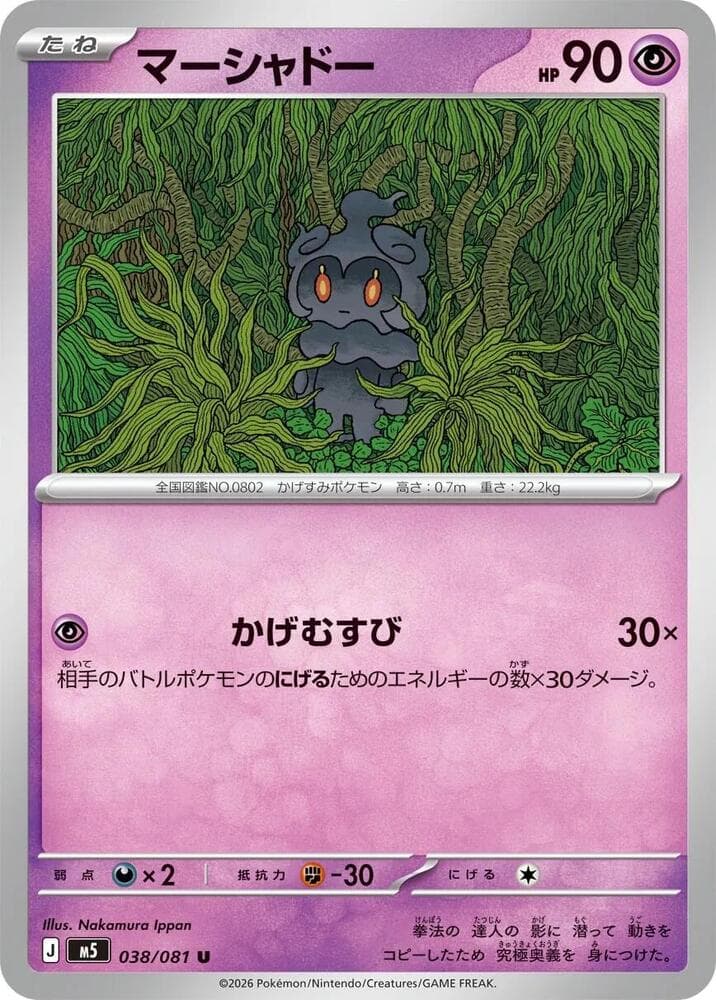
Marshadow, Uncommon, $0.27 — a mythical Pokémon at pocket-change prices. The gloomdweller that hides in shadows is thematically perfect for Abyss Eye, and mythicals at low rarities are always quiet favorites with species collectors. One of the best flavor-per-cent ratios in the set.
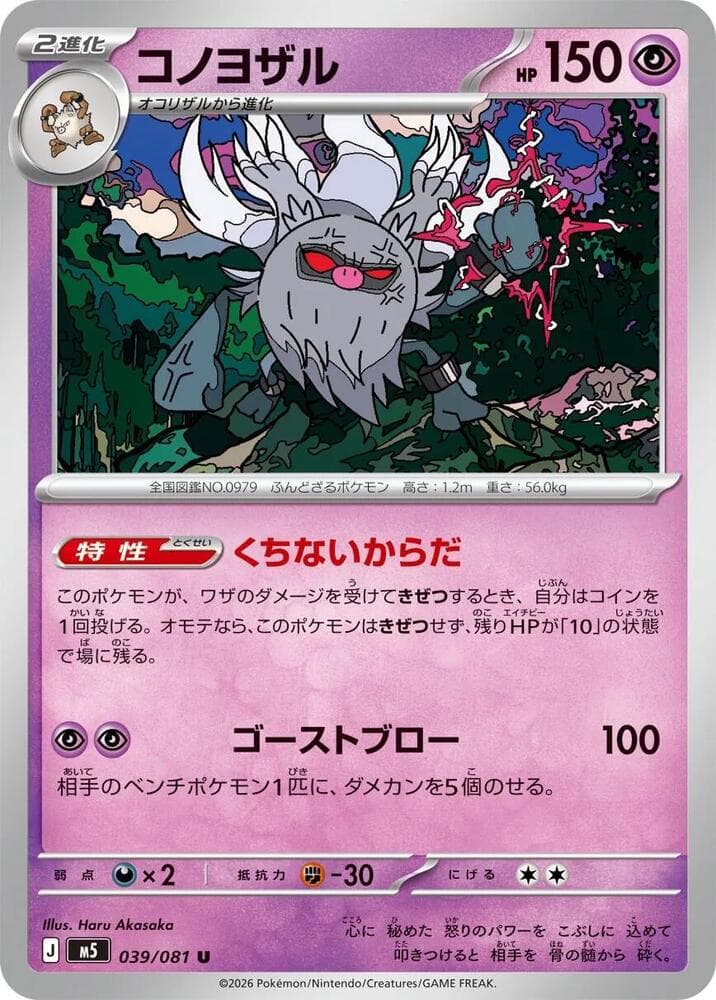
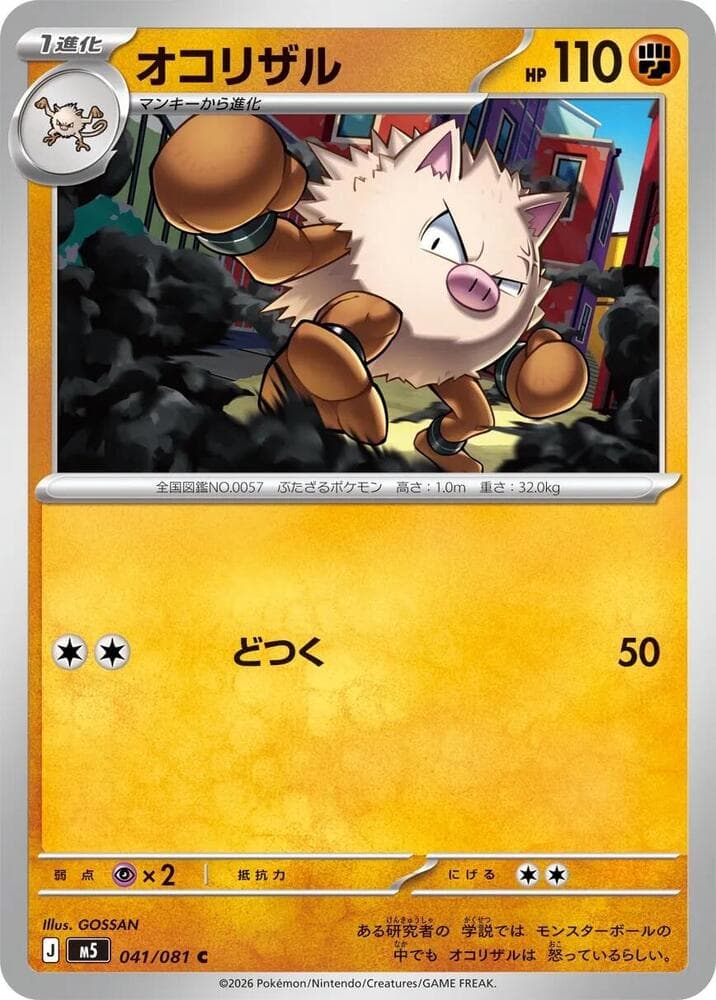
Annihilape brings its grudge-powered rage at $0.28. The evolved spirit of Primeape's endless anger became an instant fan favorite in Gen 9, and its placement here among the ghosts (with Mankey and Primeape following) is a neat bit of checklist storytelling. Uncommon, cheap, and cooler than its price.
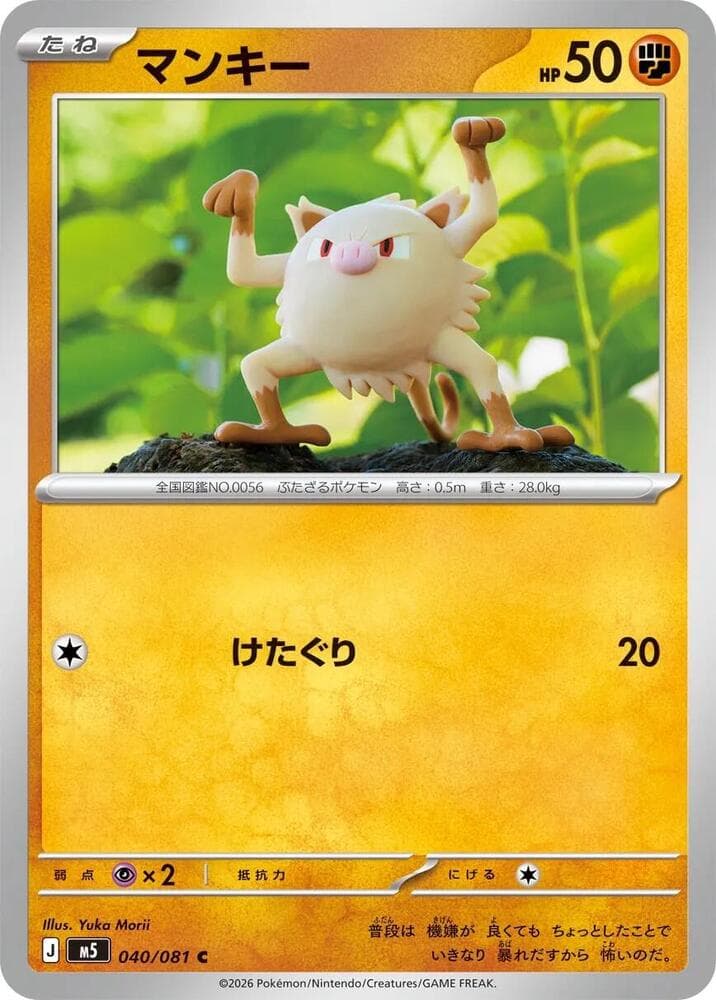
Mankey, $0.25, starts the angriest evolution line in the franchise. A Kanto Common doing Kanto Common things — but with Annihilape sitting two dex-slots away in this very set, the line finally has a payoff worthy of all that rage.
Primeape, $0.29, continues the tantrum. For decades this was a dead-end evolution; now it is the bridge to Annihilape, and collectors increasingly treat the three cards as an inseparable set. All three together cost well under a dollar here.
Cranidos revives the set's fossil sub-theme at $0.22 — hatched, in-universe, from the very Antique Skull Fossil that appears as an Item at 071/081. That kind of internal cross-reference is what makes themed blocks fun to collect, and it makes this humble Common the true starting point of the Rampardos chase.
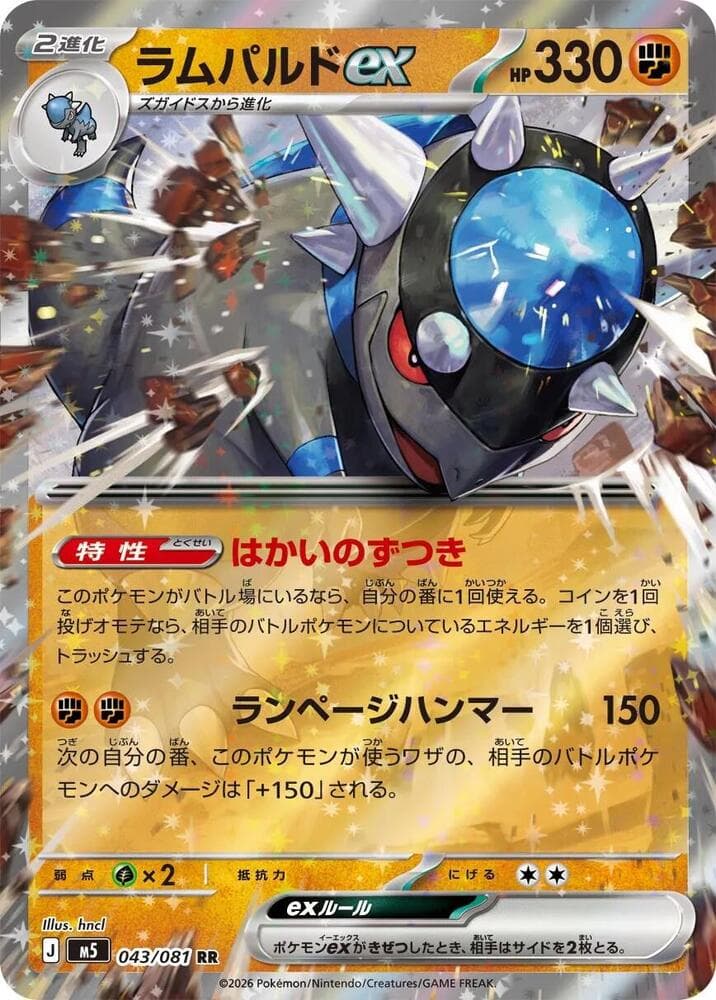
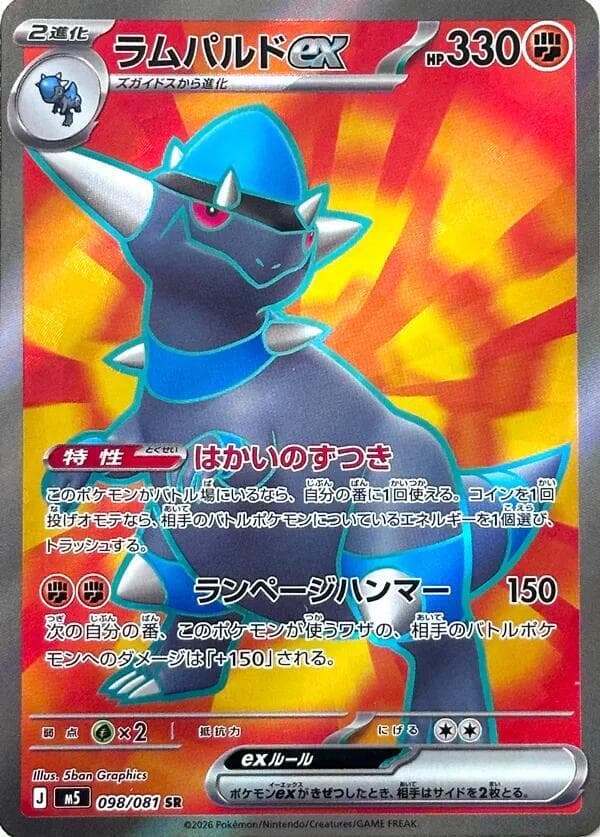
Rampardos ex headbutts in as a Double Rare at $0.64, co-headlining Abyss Eye's fossil block alongside Mega Excadrill ex. The thick-skulled Sinnoh fossil has one of the most straightforward identities in Pokémon — a battering ram with legs — and its gold SR (098/081) runs $5.56. As RR exes go, this one has outsized personality for the price.
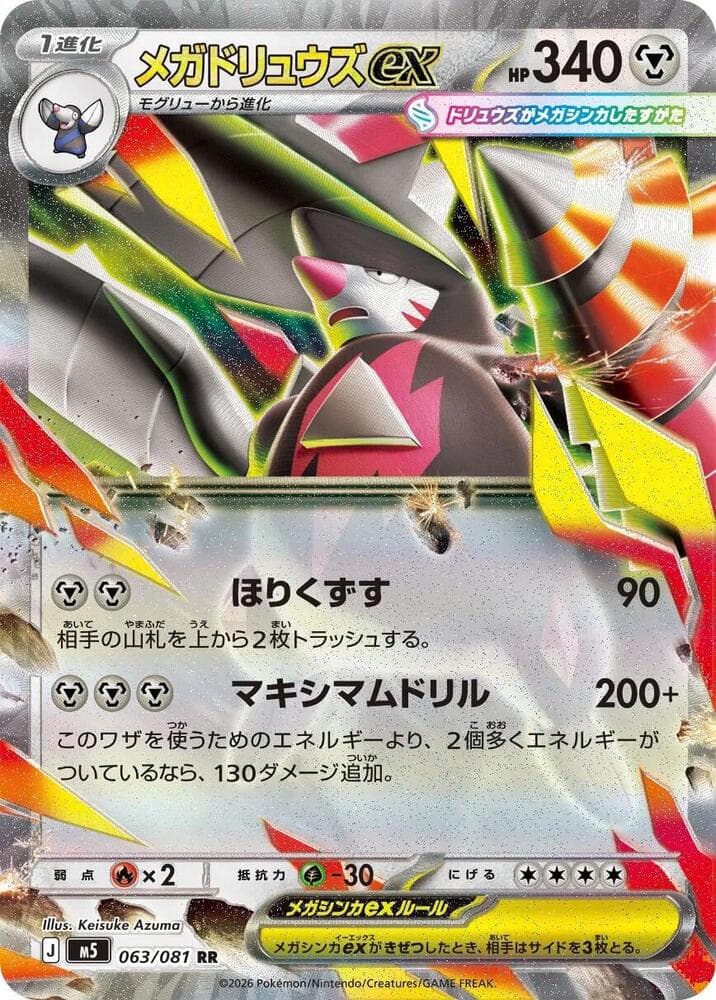
Drilbur, $0.30, tunnels in as the pre-evolution of the set's Metal-block headliner. The little mole is a Common with a big destiny two blocks later, where Mega Excadrill ex awaits. Fossil-and-excavation flavor runs right through this line.
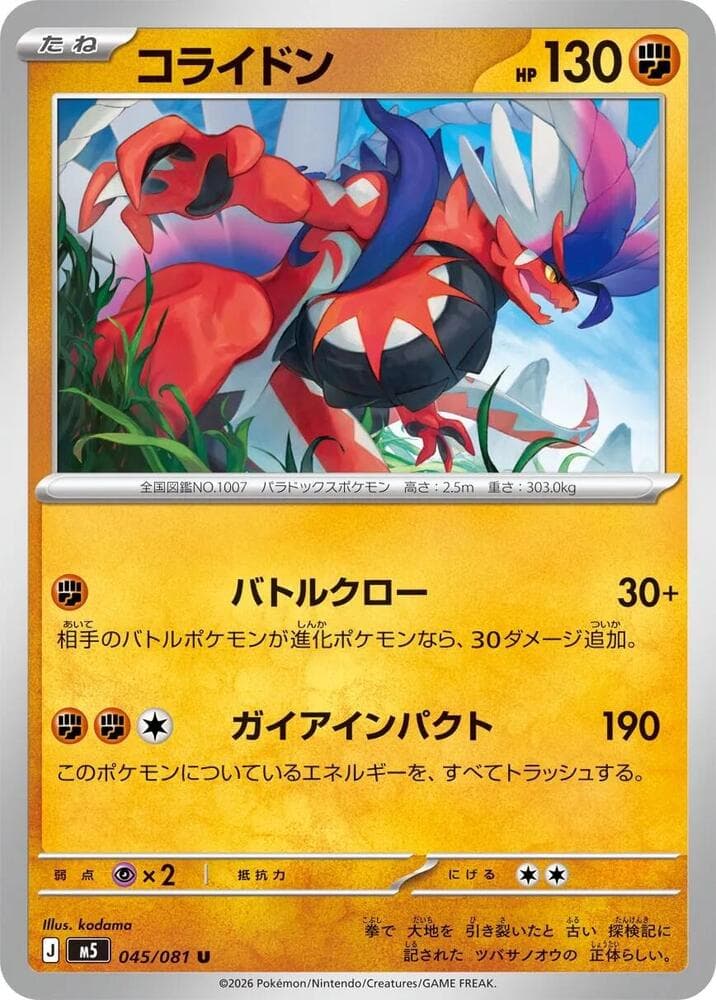
Koraidon, Uncommon, $0.30, mirrors its counterpart Miraidon across the type divide — and shares its fate in translation: in the English Pitch Black set, Koraidon is demoted to a standard Holo Rare. Cross-language collectors, take note; everyone else, enjoy a box-art legendary for thirty cents.
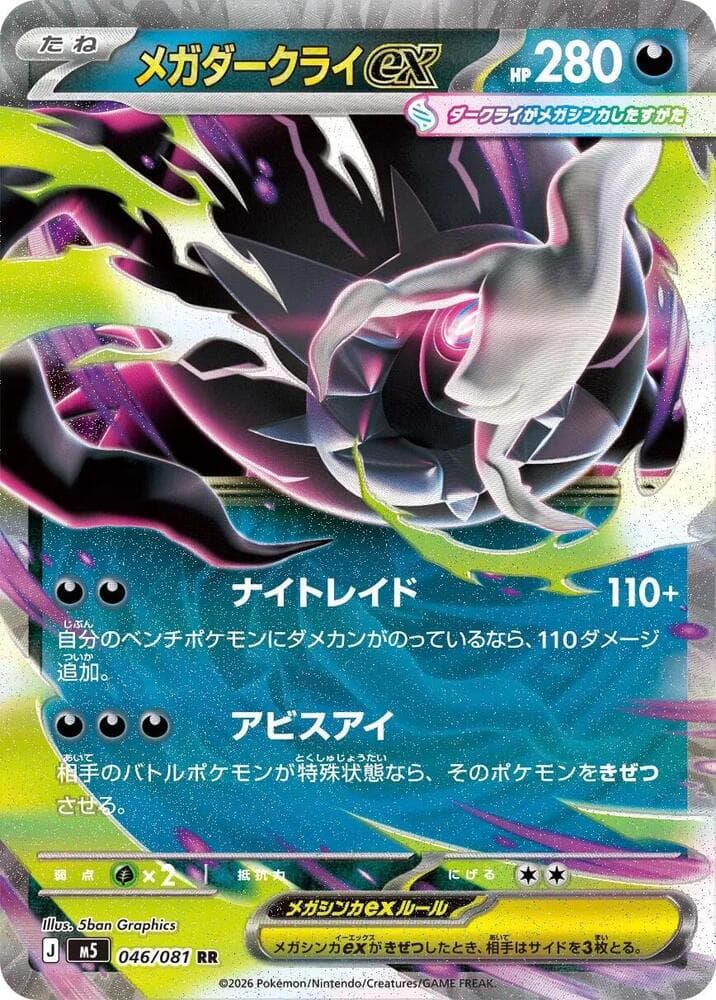
Here it is: Mega Darkrai ex, Double Rare, $1.03 — the most expensive base-set card in Abyss Eye and the debut printing of the Pokémon the entire expansion is named after. This is Mega Darkrai's first appearance in the TCG, ever, and its signature attack — literally called Abyss Eye — automatically Knocks Out any Pokémon affected by a Special Condition, a mechanic dramatic enough that The Pokémon Company named the whole set after it. What makes this specific printing interesting is accessibility: while the SAR (114/081) trades at $383.27 and the MUR (118/081) at $497.50 as of July 11, 2026, the RR shows up in most booster boxes. For players who want the card and collectors who want the debut without the drama, this dollar card is the honest entry point. Every Mega Darkrai in the set — RR, SR, SAR, MUR — is ultimately a version of this one, and it is the only version most collectors will ever pull.
Darkness & Metal (047–063): Thieves, Fossils, and Mega Excadrill ex
The shadow theme deepens with a parade of Dark-type schemers — Malamar, Thievul, Mabosstiff — plus Morpeko ex in its perpetually hangry glory. The Metal block then delivers the fossil sub-theme's second pillar, Bastiodon, before Mega Excadrill ex caps the run.
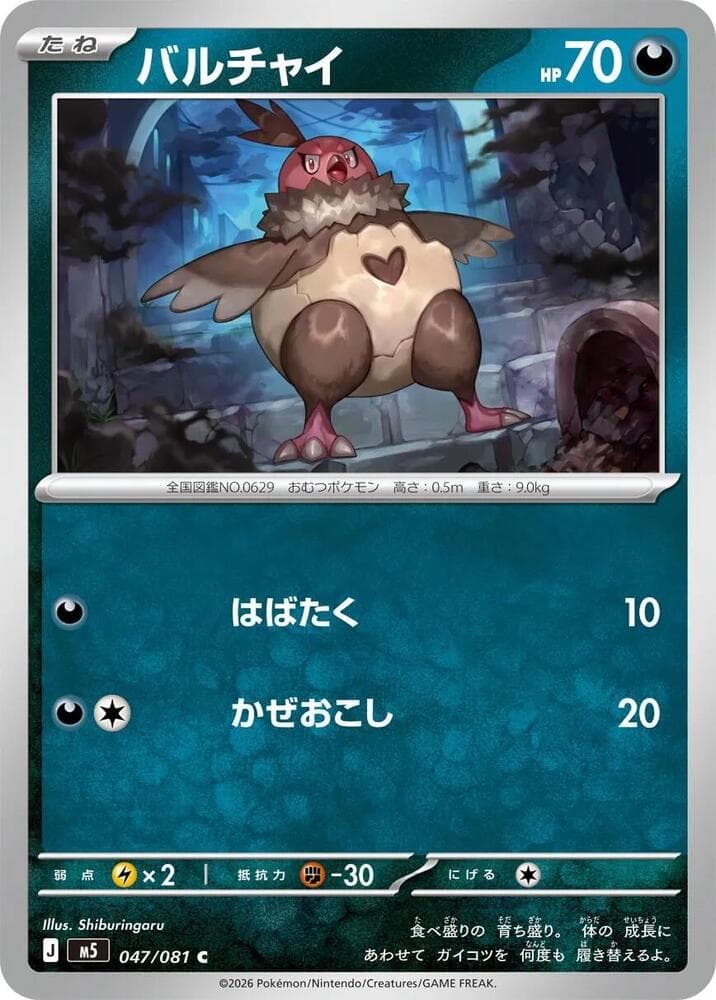
Vullaby opens the Darkness block at $0.19, waddling in with its protective skull-diaper intact. It is here to enable Mandibuzz and to deepen the set's carrion-and-shadow atmosphere. Standard Common economics apply.
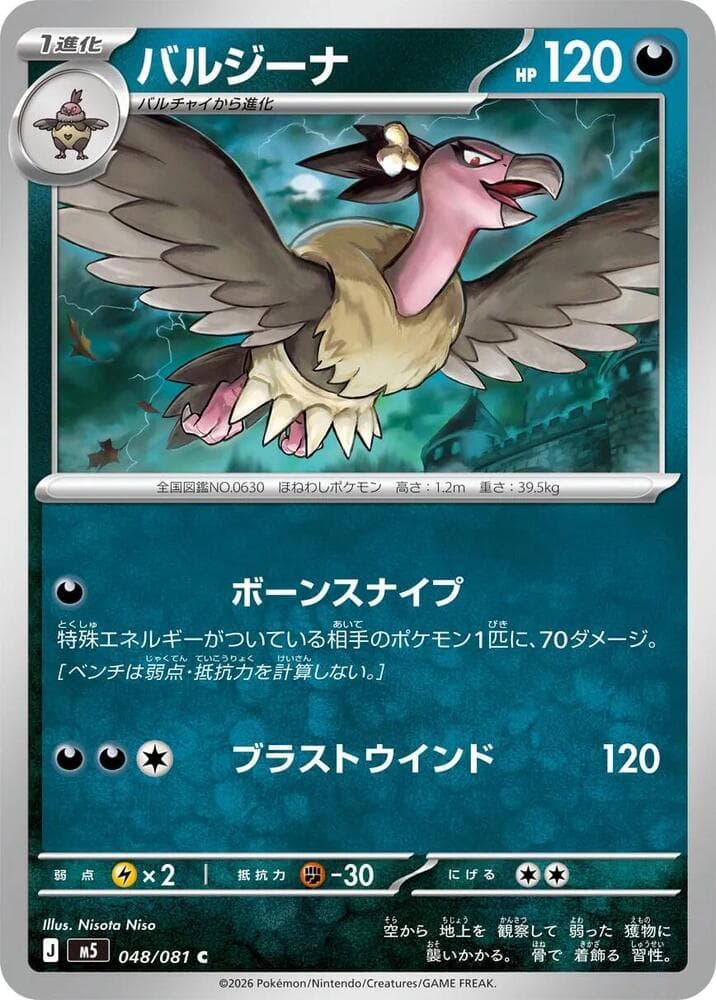
Mandibuzz circles overhead at $0.13, one of the cheapest cards in the set. The bone-decorated vulture is a fixture of Dark-type rosters, and its inclusion rounds out Abyss Eye's scavenger corner. A master-set checkbox, nothing more — and at this price, nothing less.
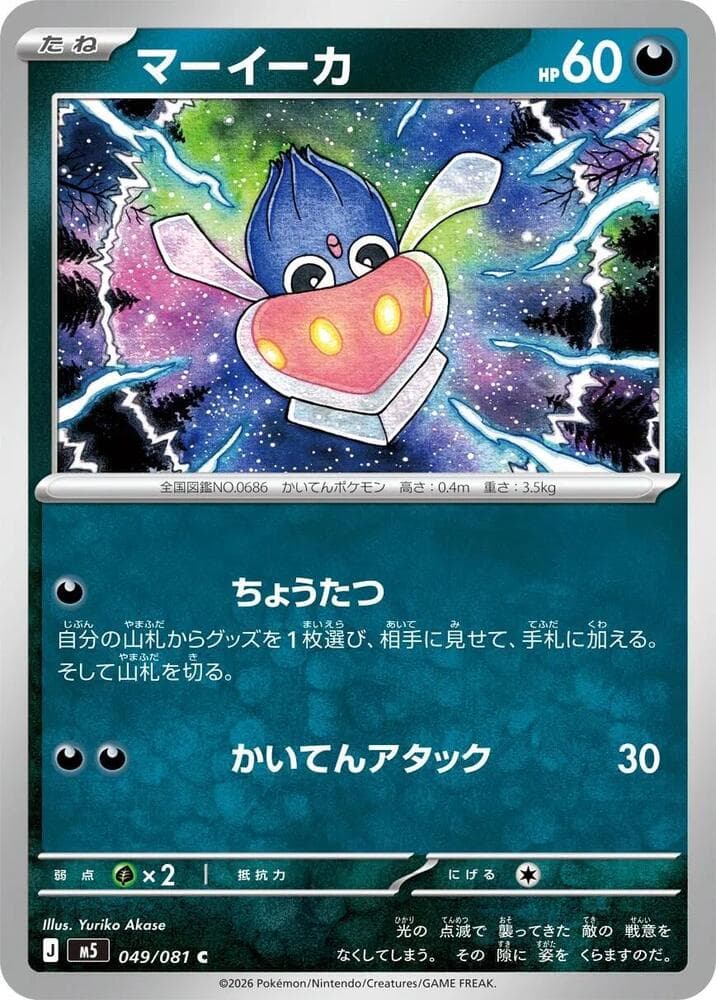
Inkay, $0.31, floats in upside down as usual. The revolving squid is the setup for Malamar, and its famously weird evolution method (flip your console upside down) still earns it affection well beyond its card value. Common filler with a great party trick.
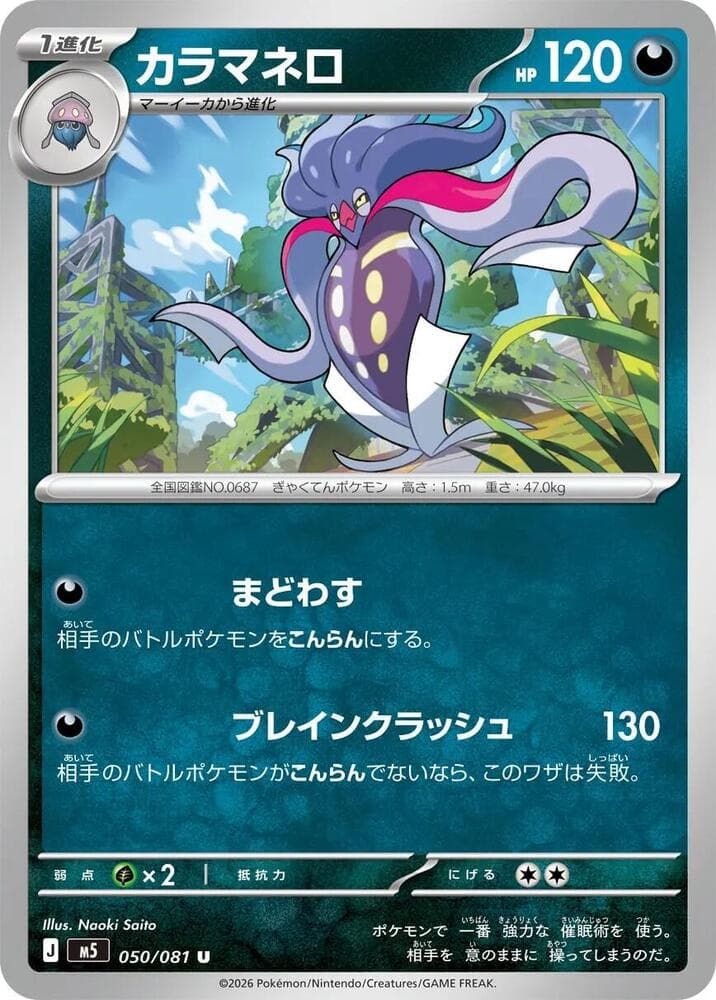
Malamar completes the hypno-squid at $0.17. Few Pokémon say sinister quite like this reverse-gravity manipulator, and it slots naturally into a set ruled by Darkrai. Uncommon rarity, single-espresso price.
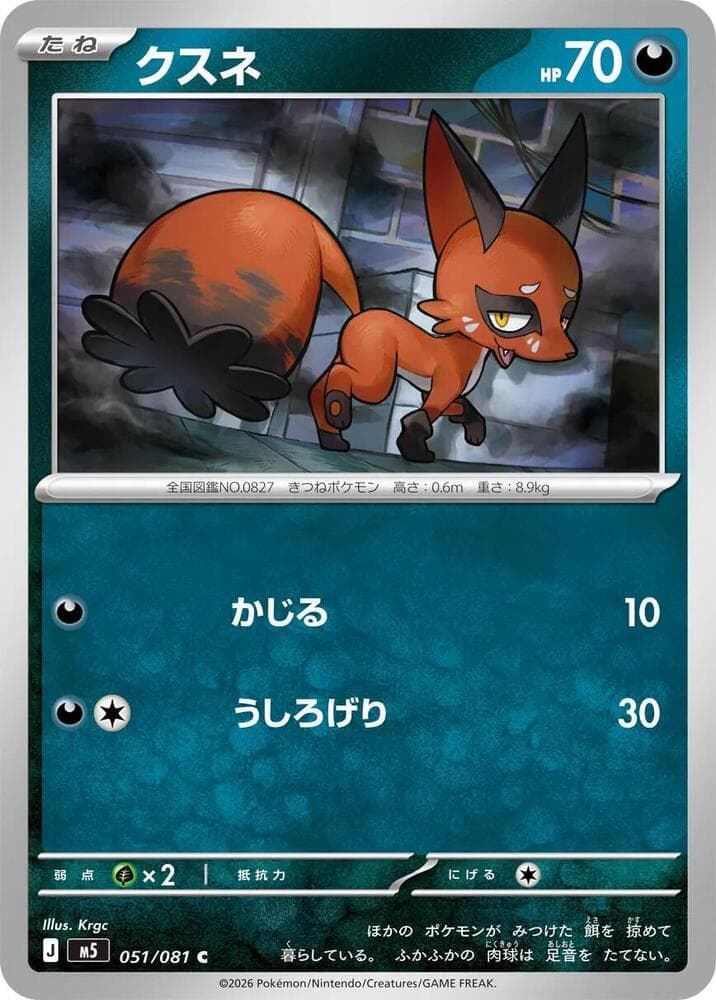
Nickit, $0.30, is the first half of the set's fox-thief duo — a Galarian pickpocket with sad eyes and no remorse. Its evolution Thievul gets an Art Rare later in the checklist, so this Common is worth setting aside for line collectors.
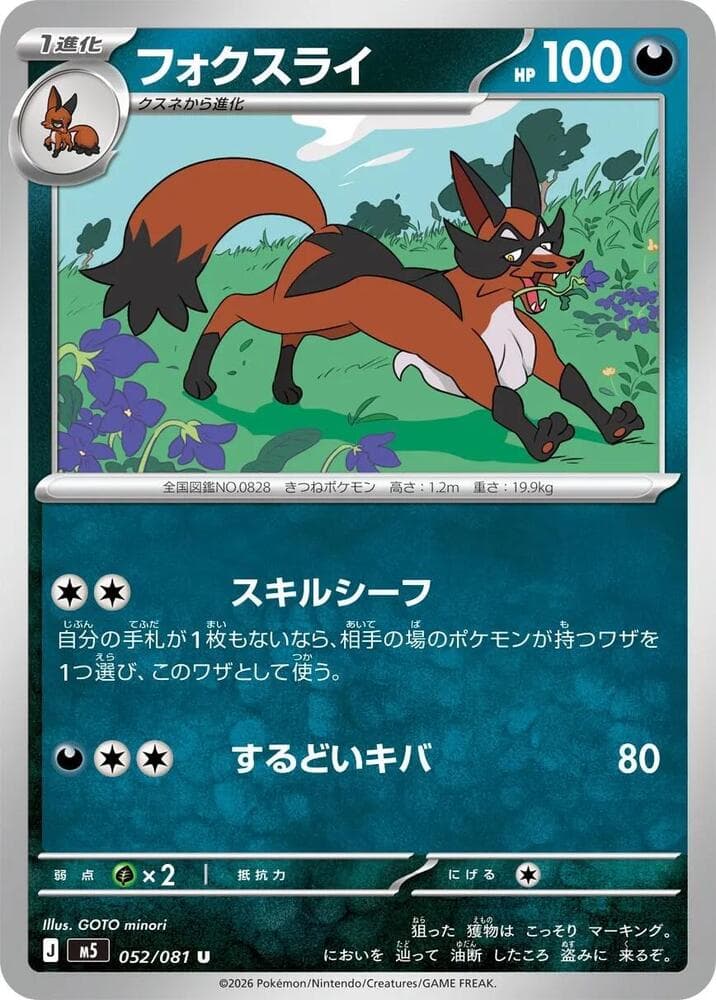
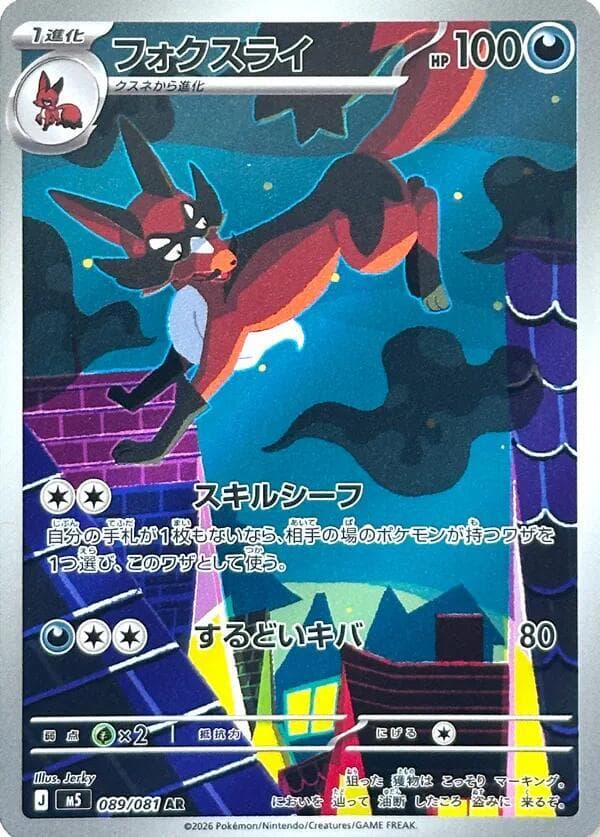
Thievul, Uncommon, $0.31, completes the heist. The gentleman-thief fox fits Abyss Eye's rogues gallery beautifully, and its AR treatment (089/081) at $3.15 is the version most collectors will actually chase. Base copy: for the binder. AR: for the aesthetic.
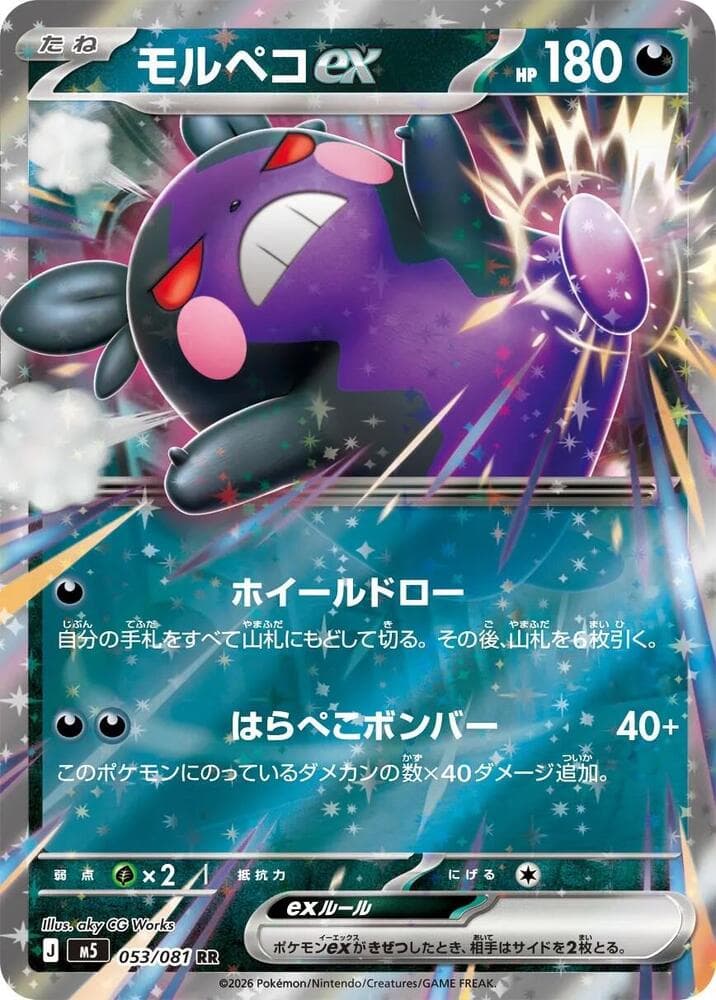
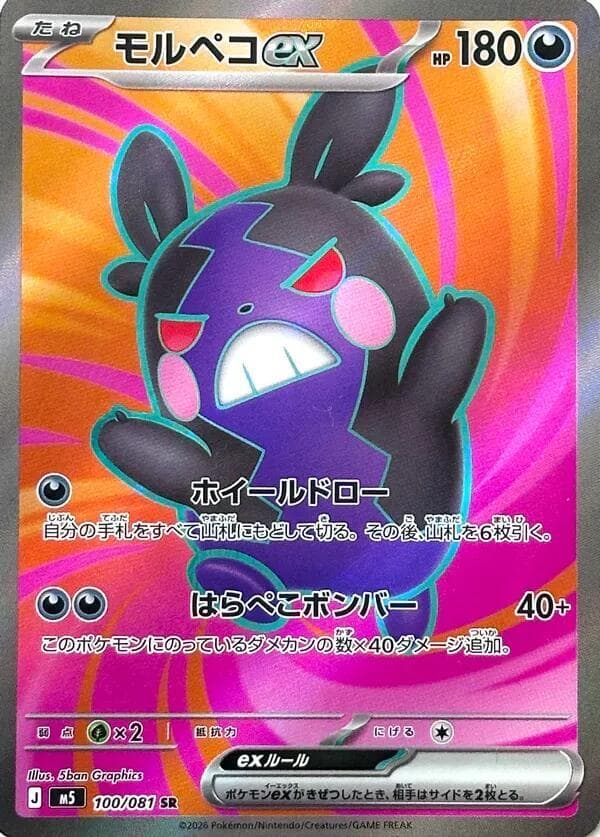
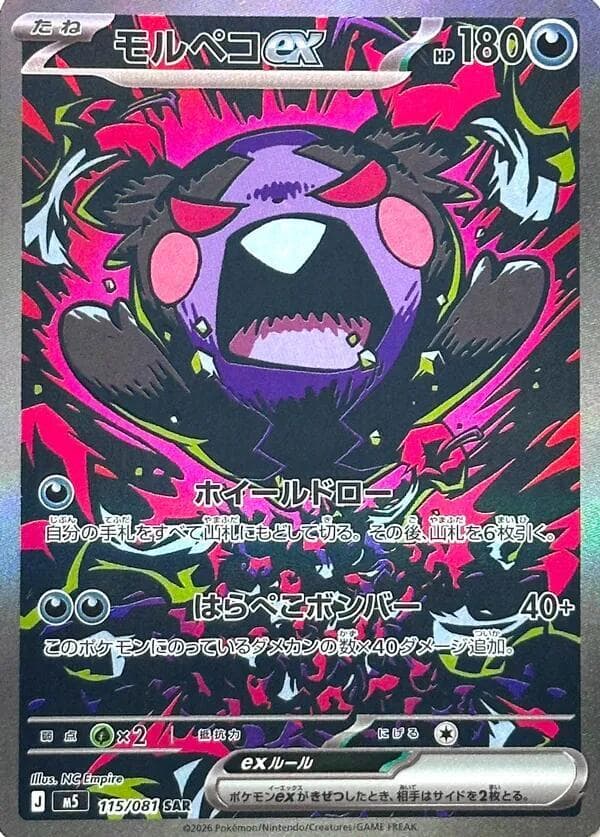
Morpeko ex, Double Rare, $0.49 — the hangry hamster gets the ex treatment, and the internet approves. Morpeko's two-faced Full Belly/Hangry gimmick has made it one of the most merchandised Galar species, and that popularity shows up the moment you climb this card's rarity ladder: the SR (100/081) trades at $12.24 and the SAR (115/081) at $62.63, third-highest in the entire set. The base RR at fifty cents is one of Abyss Eye's best cheap pickups purely on species demand.
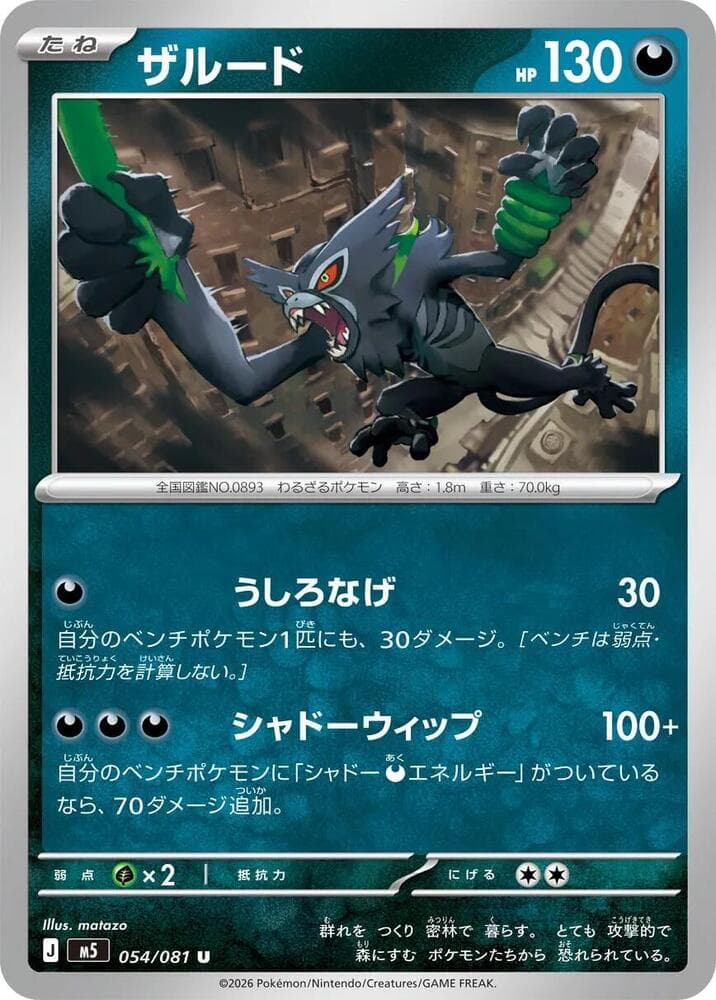
Zarude, Uncommon, $0.39 — the rogue monkey of the Jungle secrets, and the most travel-complicated card in the set. In English Pitch Black, Zarude is demoted to a Holo Rare, and its Art Rare version becomes an Elite Trainer Box promo rather than a pack pull. This modest Japanese Uncommon is part of the only card family that genuinely diverges between M5 and ME05.
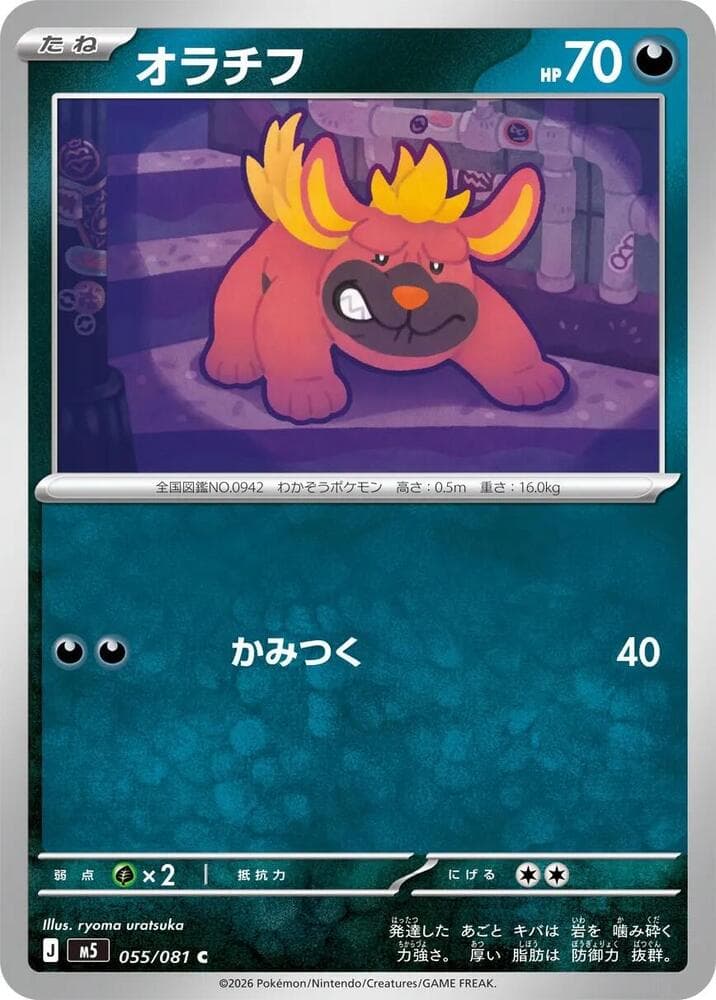
Maschiff, $0.13, scowls its way into the Darkness block. Paldea's perpetually grumpy pup is the pre-evolution of Mabosstiff and one of the set's cheapest cards. Its face alone justifies the binder slot.
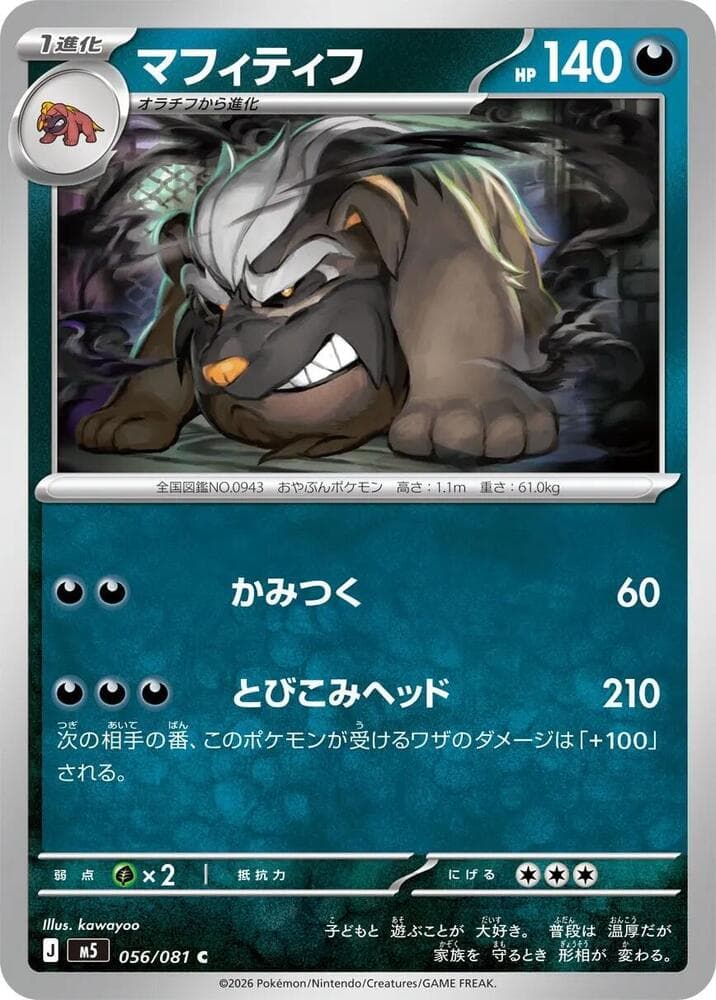
Mabosstiff, $0.15, is the payoff: the big-hearted boss dog whose fearsome look hides the loyalest soul in Paldea. A Common priced like one, but a species with genuine fan devotion thanks to its role in the Scarlet & Violet story.
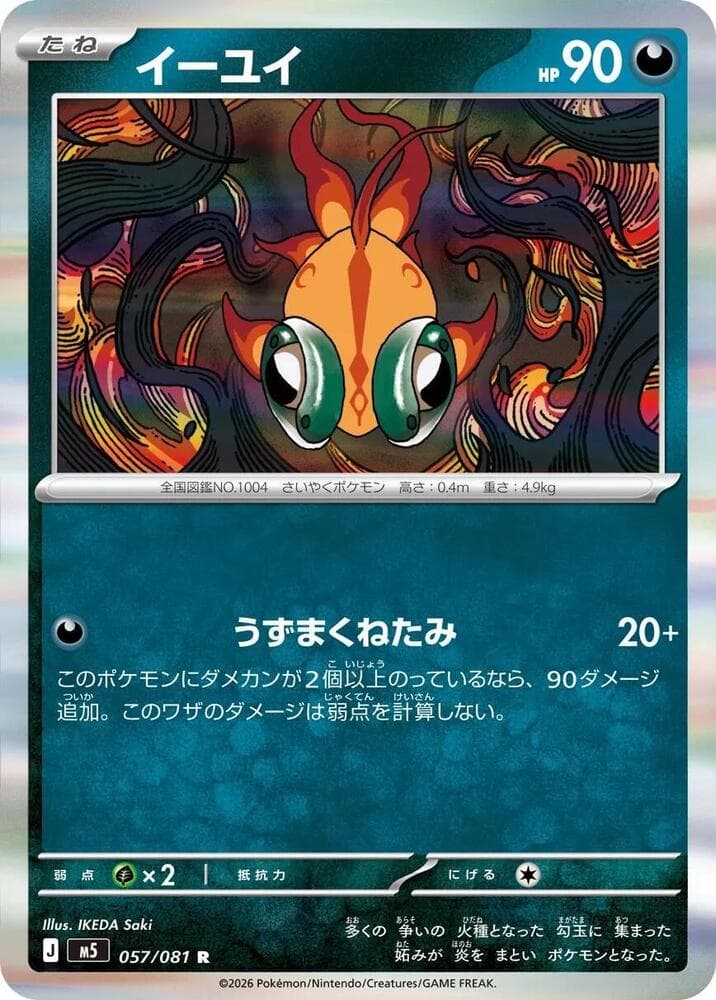
Chi-Yu, Rare, $0.46 — one of the four Treasures of Ruin, a vengeful spirit inhabiting fire and gold. Legendary status at sub-dollar prices is always worth flagging, and this fish of envy and flame is among the most distinctive designs in the modern dex. Quietly one of the base set's better rare slots.
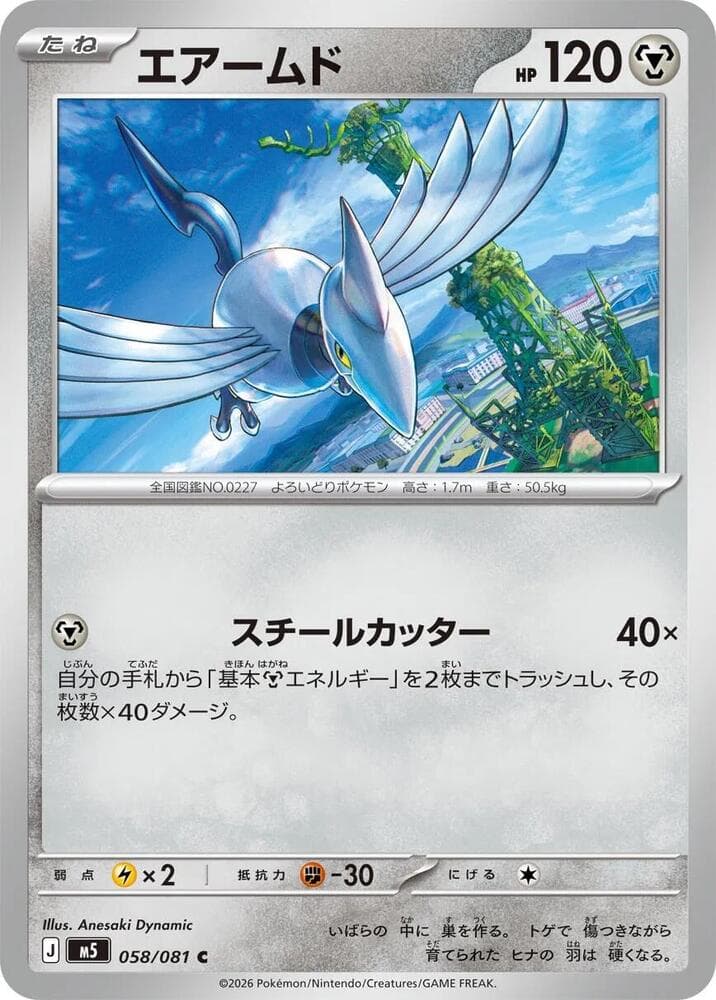
Skarmory, $0.30, opens the Metal block with its familiar steel wings. A dependable presence in checklists for twenty-five years, it plays its usual role here: sturdy, unglamorous, and always around. Common in every sense.
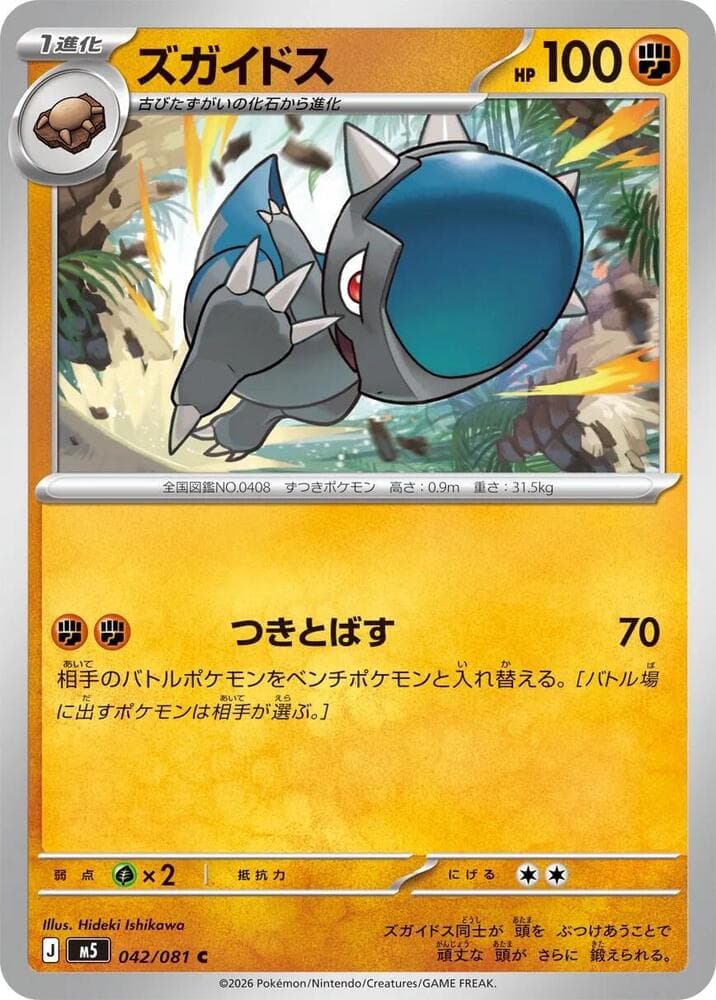
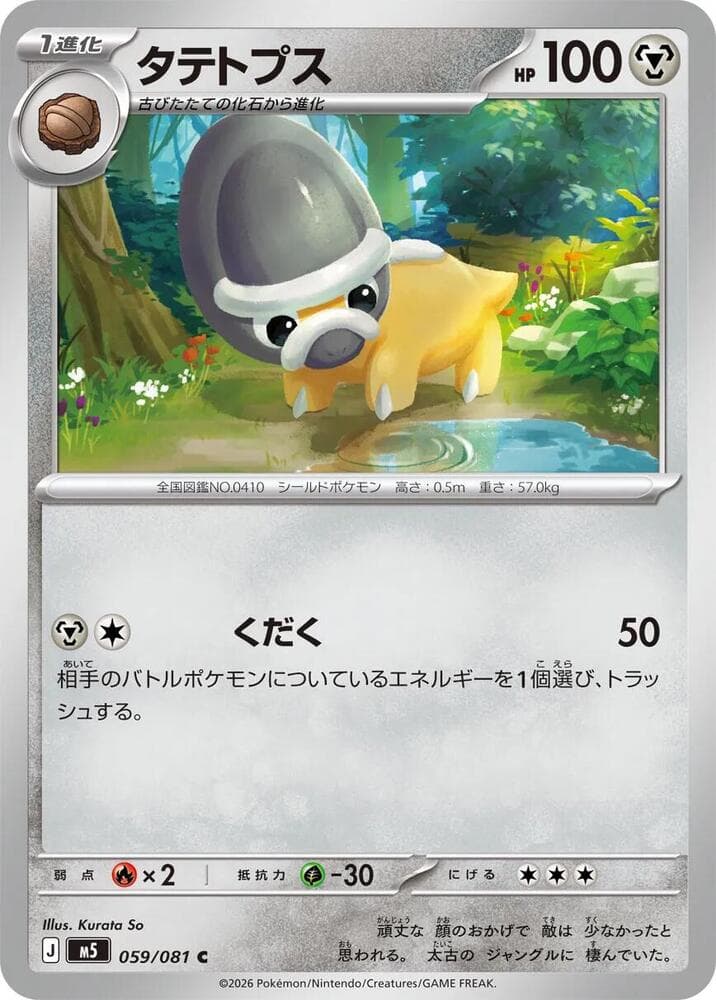
Shieldon, $0.21, hatches from the Antique Armor Fossil found at 072/081 — the second half of the set's fossil-revival pairing with Cranidos. The stubby armored herbivore is pure setup, but it is setup with a matching Item card, which is more narrative than most Commons ever get.
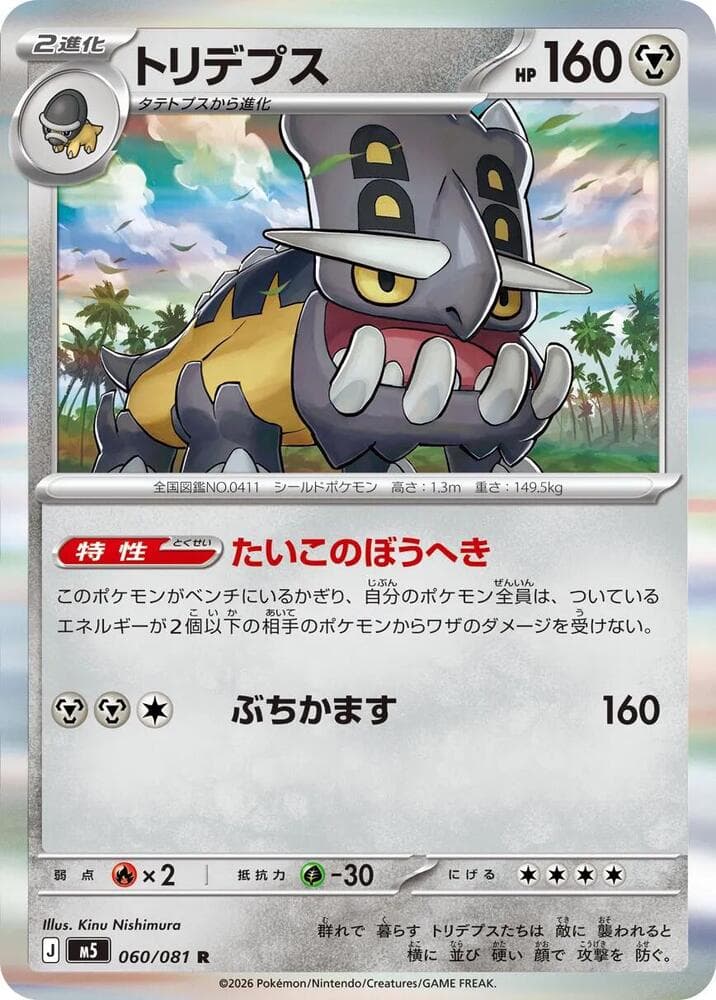
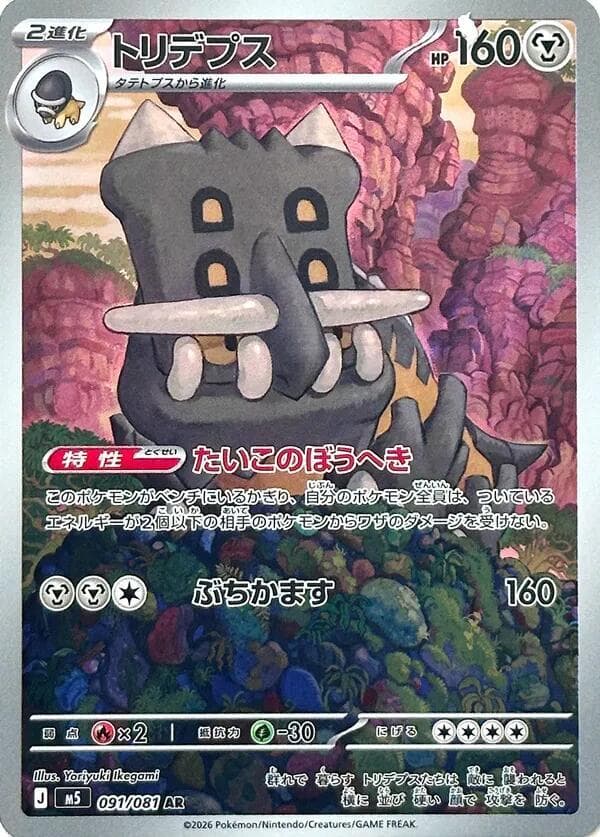
Bastiodon, Rare, $0.47, completes the fossil wall. The castle-faced defender is the counterpart to Rampardos in every way Sinnoh intended — shield to its spear — and it earns an Art Rare at 091/081 as well. Within the fossil sub-theme, this is the tank.
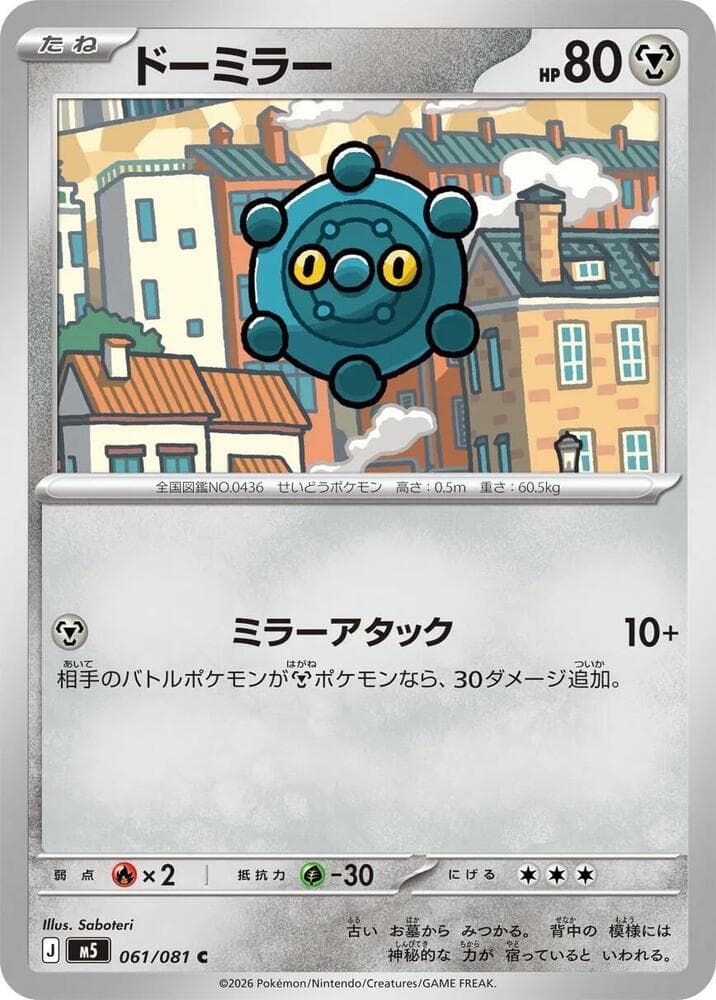
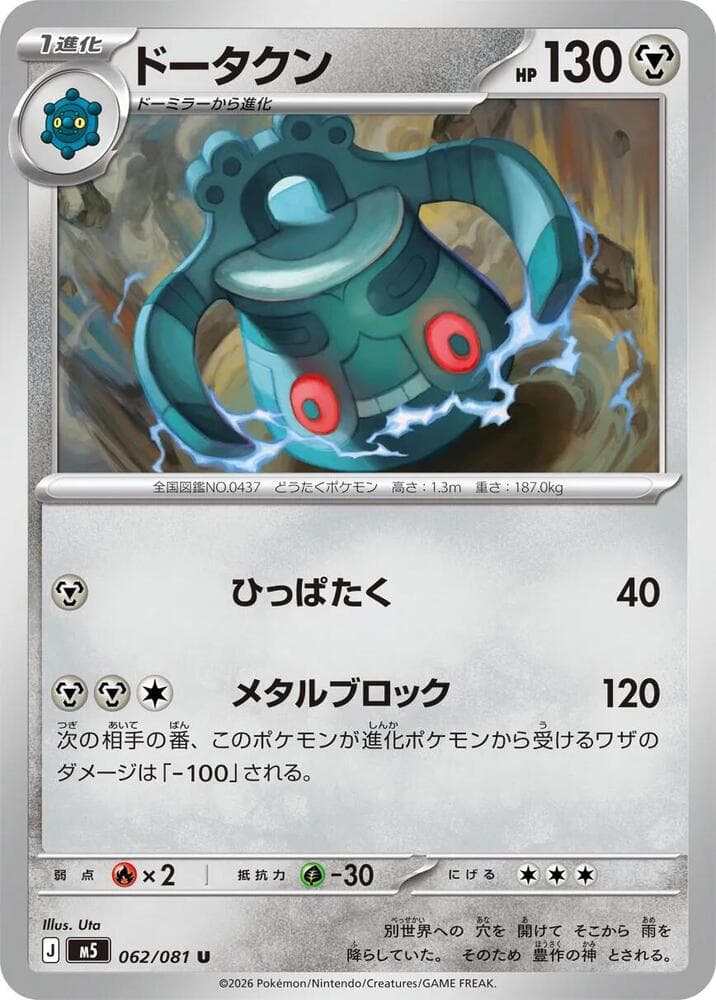
Bronzor, $0.24, brings ancient-artifact energy to the Metal block — a mirror-polished relic that fits a set full of excavation flavor. Common tier, archaeological vibes.
Bronzong follows at $0.24, the bell that was once worshipped for summoning rain. Between the fossils, the relics, and the shadow theme, Abyss Eye's middle numbers read like a natural-history museum after dark, and Bronzong is a fitting exhibit. Uncommon, inexpensive.
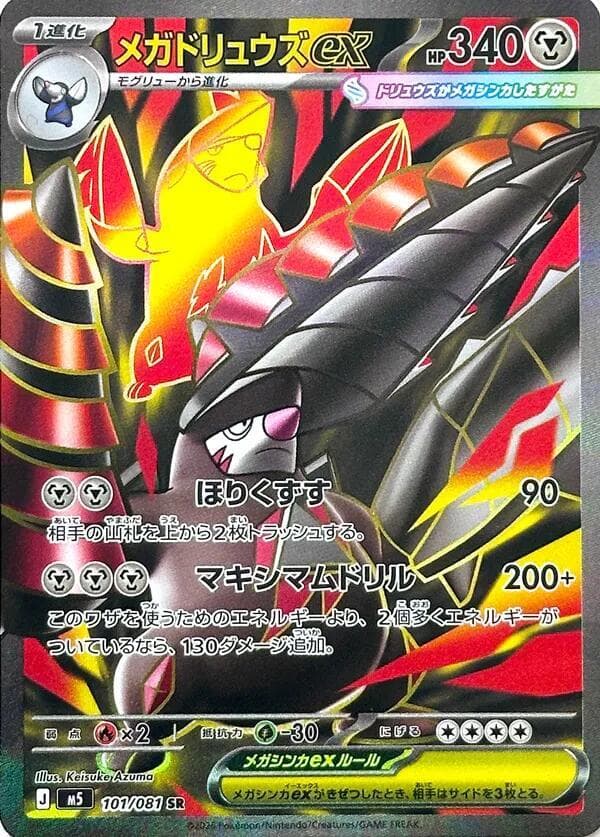
Mega Excadrill ex drills in as a Double Rare at $0.57, headlining the fossil-excavation sub-theme it shares with Rampardos ex. The steel mole's Mega form is the set's fourth and final Mega evolution line, and — a fun structural detail — the Fossil Excavation Site Trainer at 079/081 reads like it was written for this card's whole archaeology corner. The gold SR (101/081) trades at $8.35; the base RR is a most-boxes pull and priced like it.
Colorless (064–069): Toucans, Chimeras, and a Rock-Dropping Bird
A short but flavorful Colorless block. The Pikipek line brings Alolan charm, while Type: Null and Silvally set up the Gladion story that pays off in the Trainer lineup and its Super Rare chase.
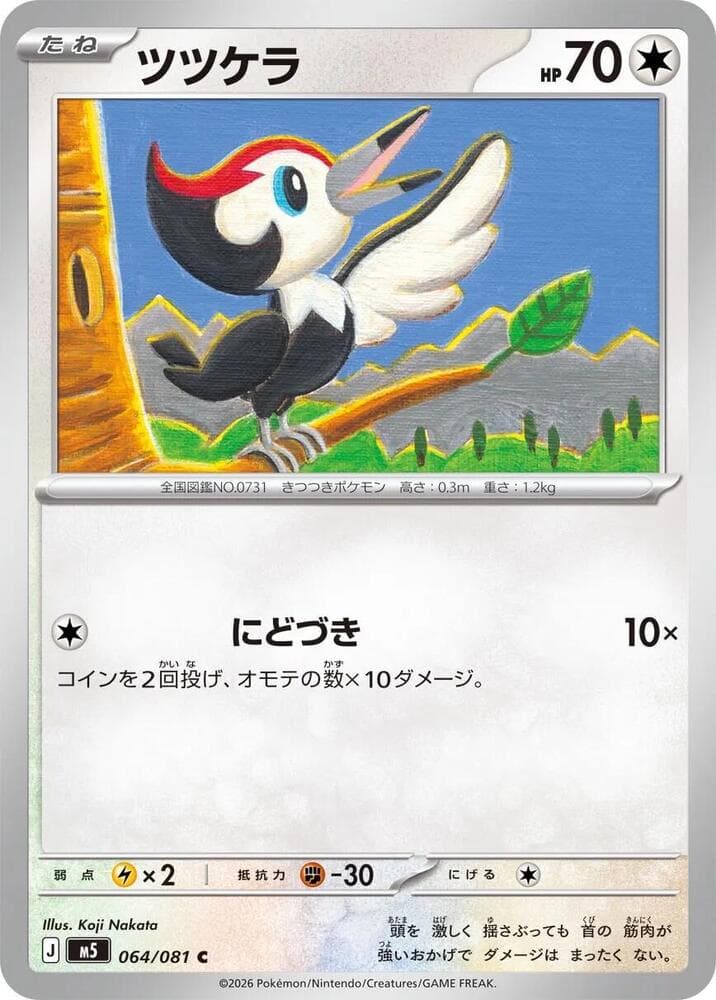
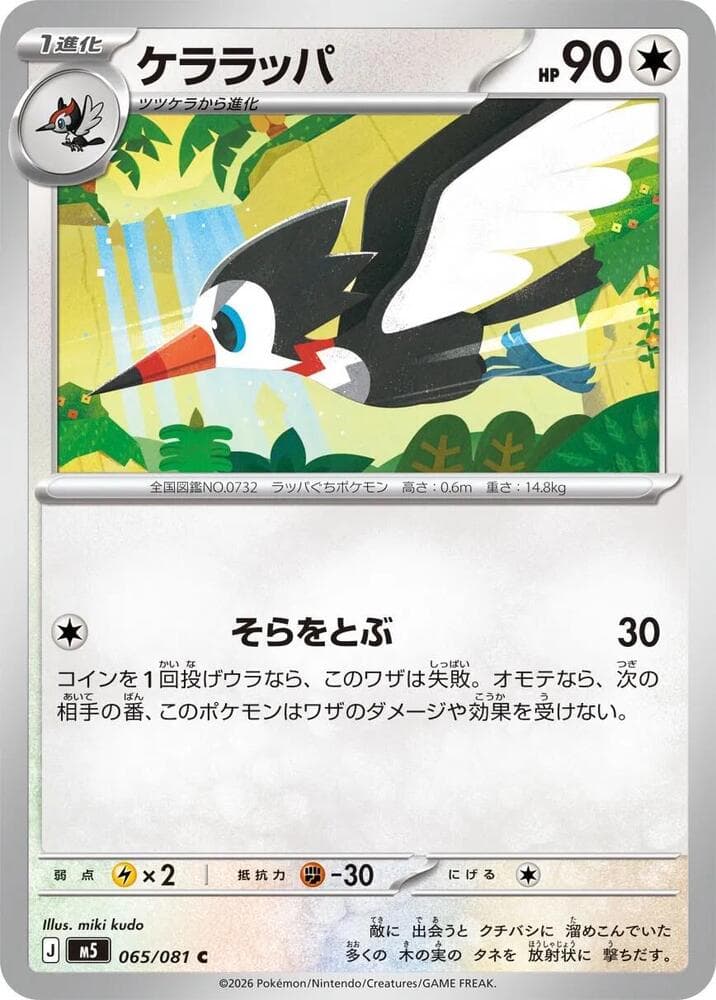
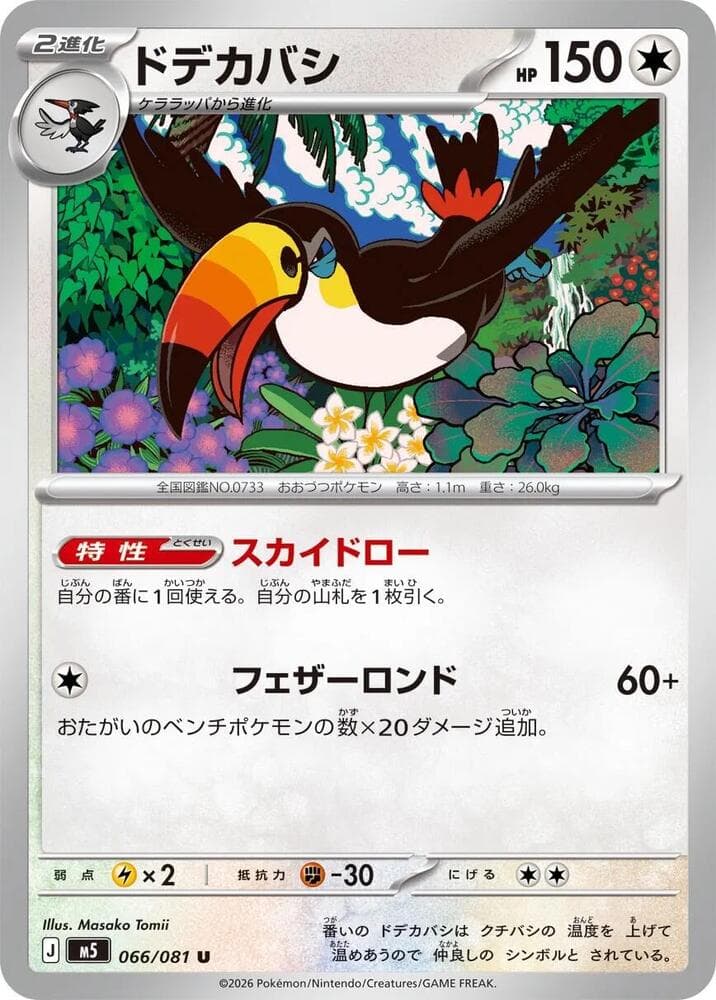
Pikipek, $0.26, taps in to start the Colorless block. Alola's woodpecker is the first stage of a full three-card line in this set, and starter-route birds like this are the connective tissue of every checklist ever printed.
Trumbeak, $0.27, continues the line, all beak and bravado. Middle-bird Commons are historically invisible to the market and indispensable to master-set builders. Both things are true at once here.
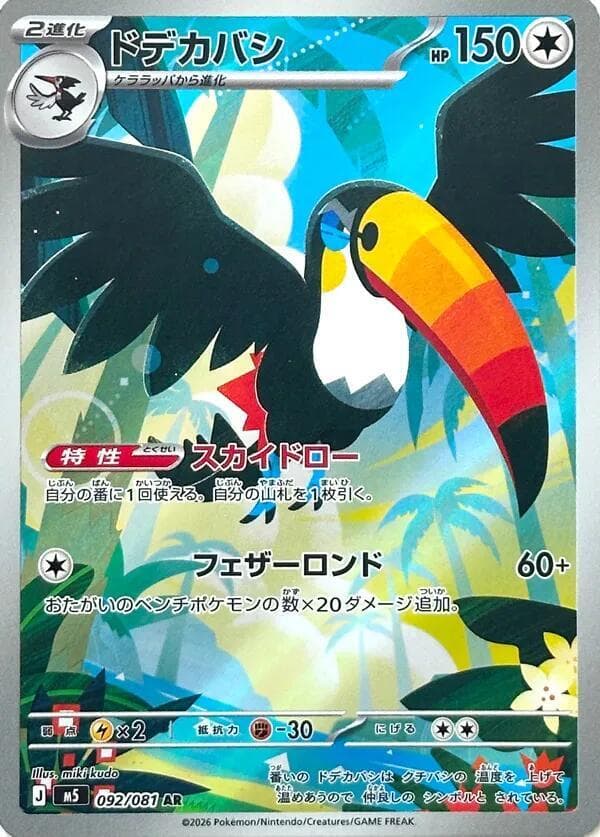
Toucannon, Uncommon, $0.28, lands the line with its explosive beak — and picks up an Art Rare at 092/081 for its trouble. Fully-evolved regional birds getting AR slots is a nice touch, and it makes the base version worth pairing with the illustration rare.
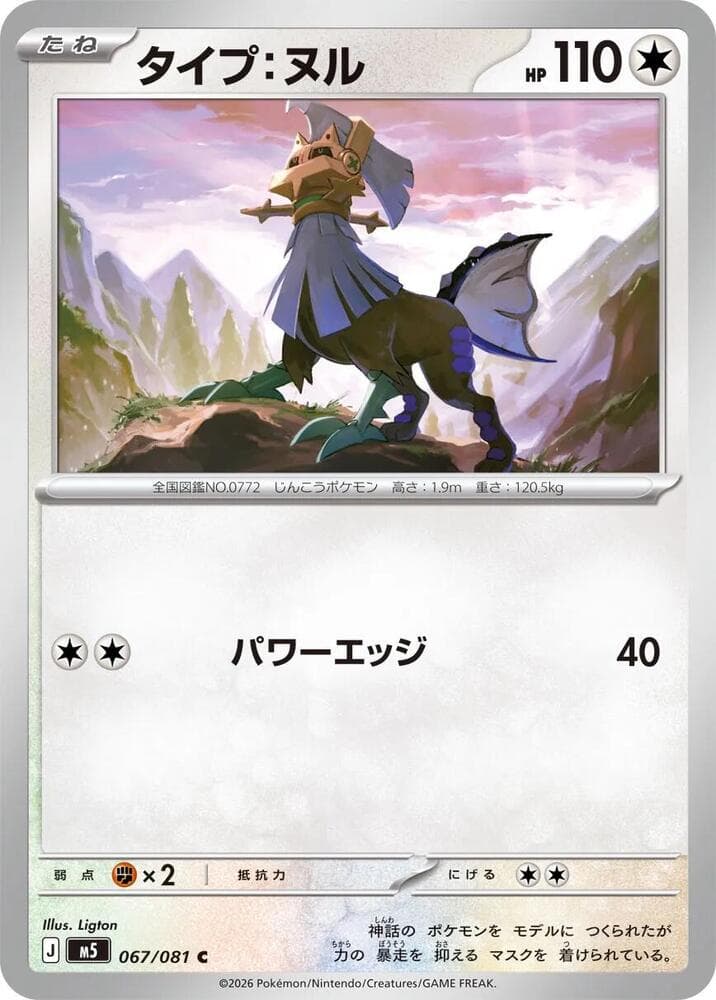
Type: Null, $0.31, is the tragic heart of the Colorless block — a synthetic chimera built to fight gods, masked and restrained. It is inseparable from Gladion, whose Showdown Trainer appears at 076/081, giving this Common a direct narrative link to one of the set's biggest Trainer chases.
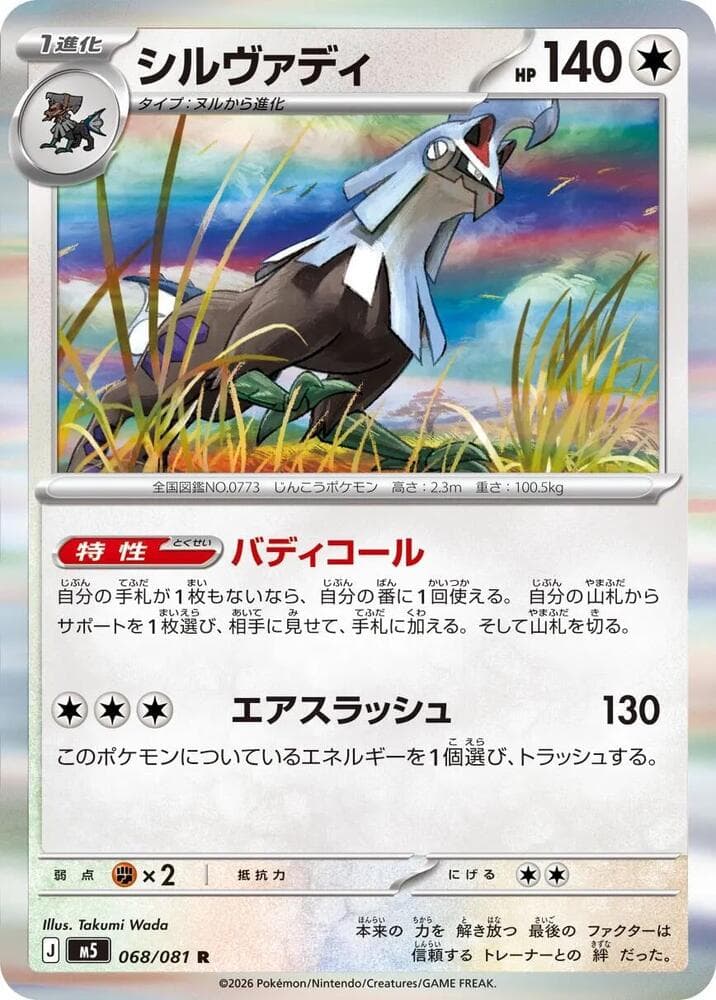
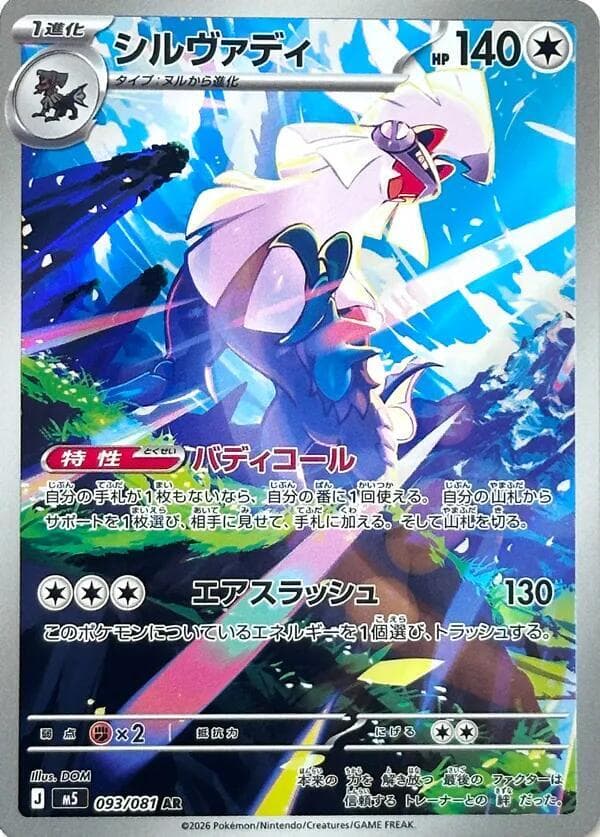
Silvally, Rare, $0.55, is Type: Null unmasked and set free — Gladion's partner in the games and one of the more emotionally loaded evolutions in the franchise. It gets an Art Rare at 093/081, and with Gladion's Showdown reaching SAR tier in this set, the whole Null/Silvally/Gladion triangle is one of Abyss Eye's best mini-collections.
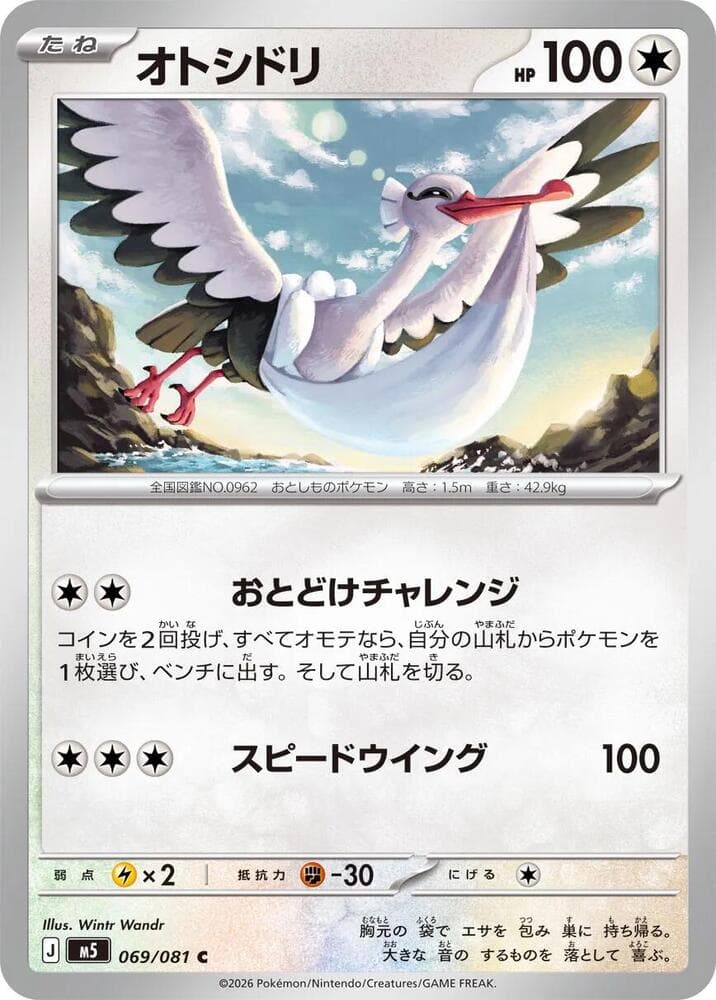
Bombirdier, $0.13, closes the Pokémon roster by dropping rocks on it — the stork that carries boulders in its chest apron. Tied for cheapest card in the set, it is the final Common before the Trainer block takes over.
Trainers & Special Energy (070–081): The Set's Secret Strength
Do not skim this block. Abyss Eye's Trainer roster — Misty's Spirit, Gladion's Showdown, Gwynn, the Rust Syndicate Grunt — produces several of the set's most valuable secret rares, and the two special Energy cards anchor its Lightning and Darkness strategies. The base printings here are cheap; their gold and SAR versions are anything but.
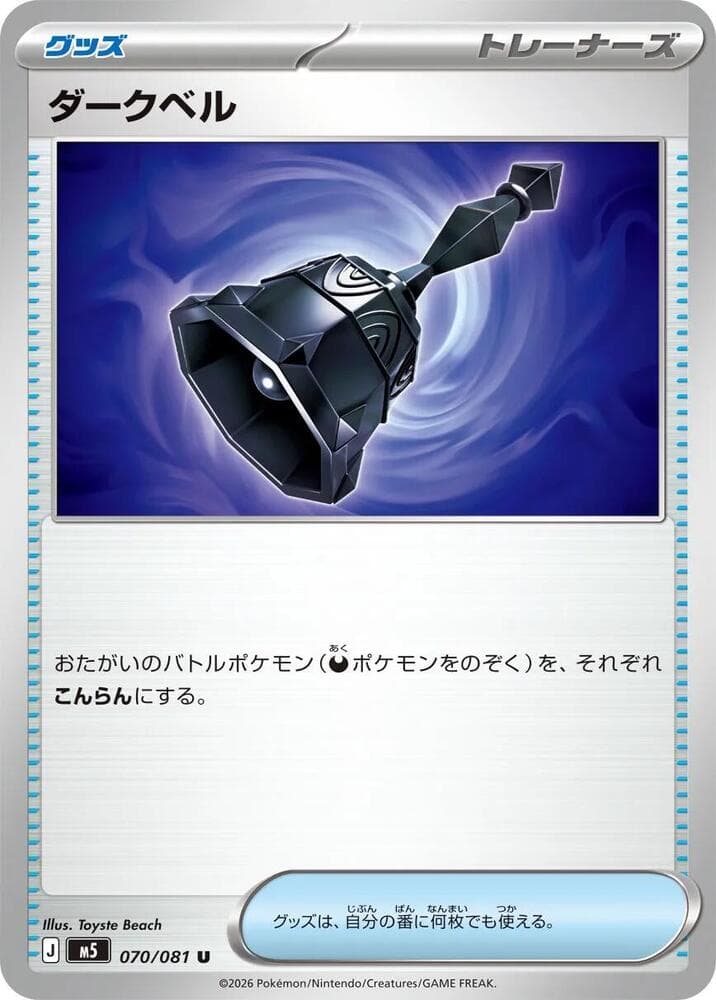
Dark Bell, Uncommon Item, $0.24. The name alone carries the set's whole aesthetic, and this unassuming Item is one of only a handful of cards in Abyss Eye to receive a gold Super Rare version (105/081). Base copies are throwaway cheap; the existence of a gold version tells you the designers considered it notable.
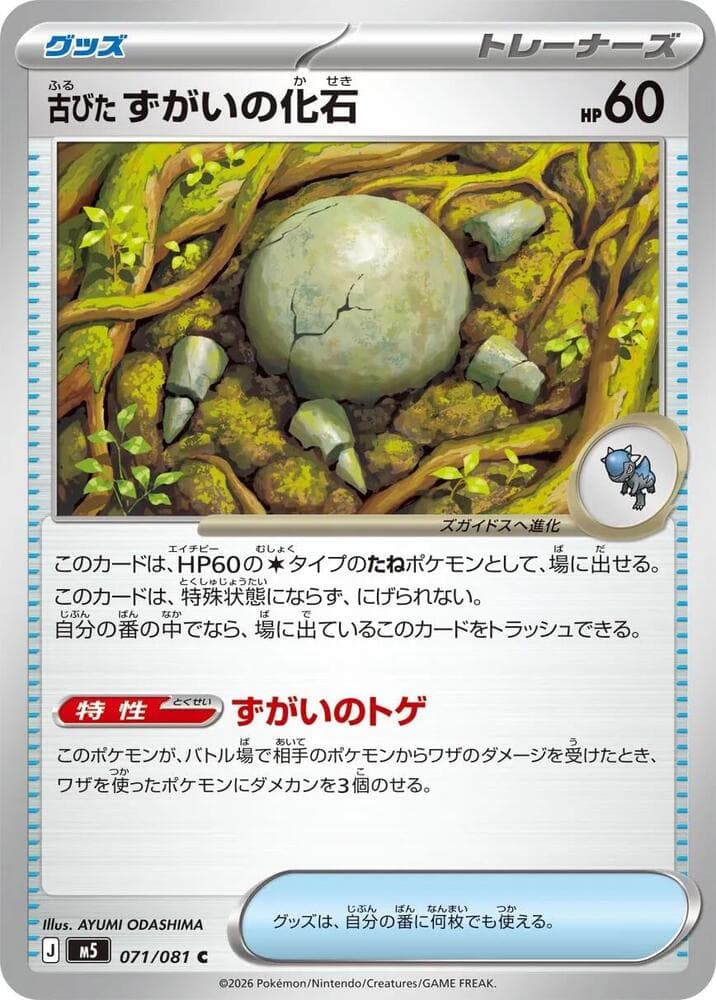
Antique Skull Fossil, $0.29, is the Item that hatches Cranidos — one half of the set's paired fossil-revival mechanic and a direct callback to Sinnoh's underground-mining days. Flavor-wise, this humble Common is a load-bearing card for the entire excavation sub-theme.
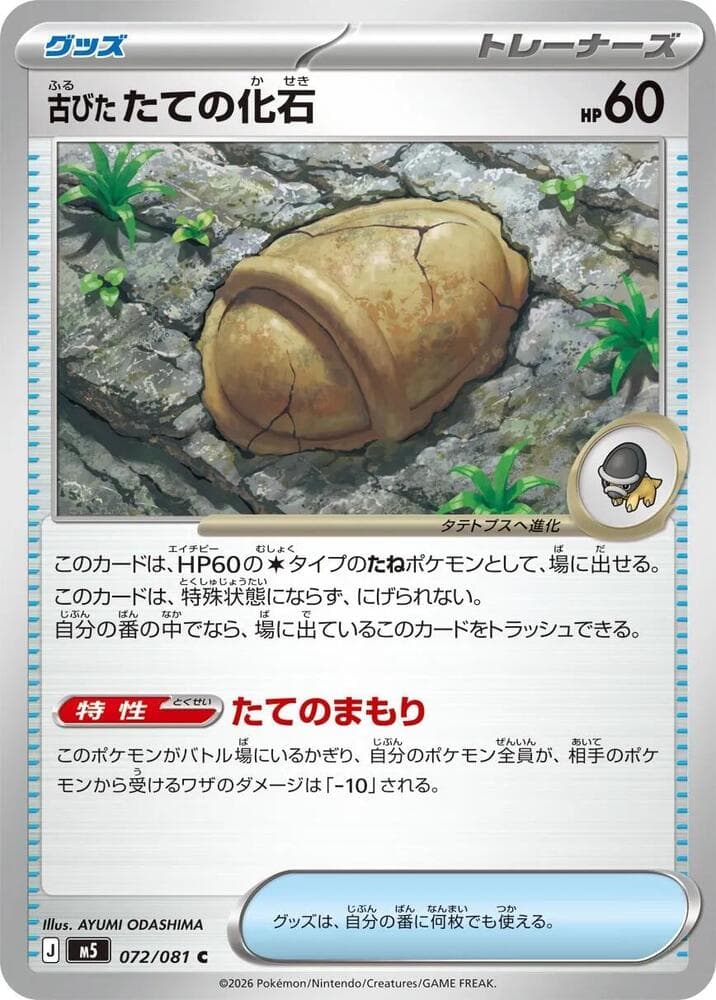
Antique Armor Fossil, $0.27, completes the pair: this is Shieldon's origin story in Item form. Together with the Skull Fossil, the Excavation Site, and two fossil ex lines, Abyss Eye quietly assembles the most coherent fossil package the TCG has shipped in years.
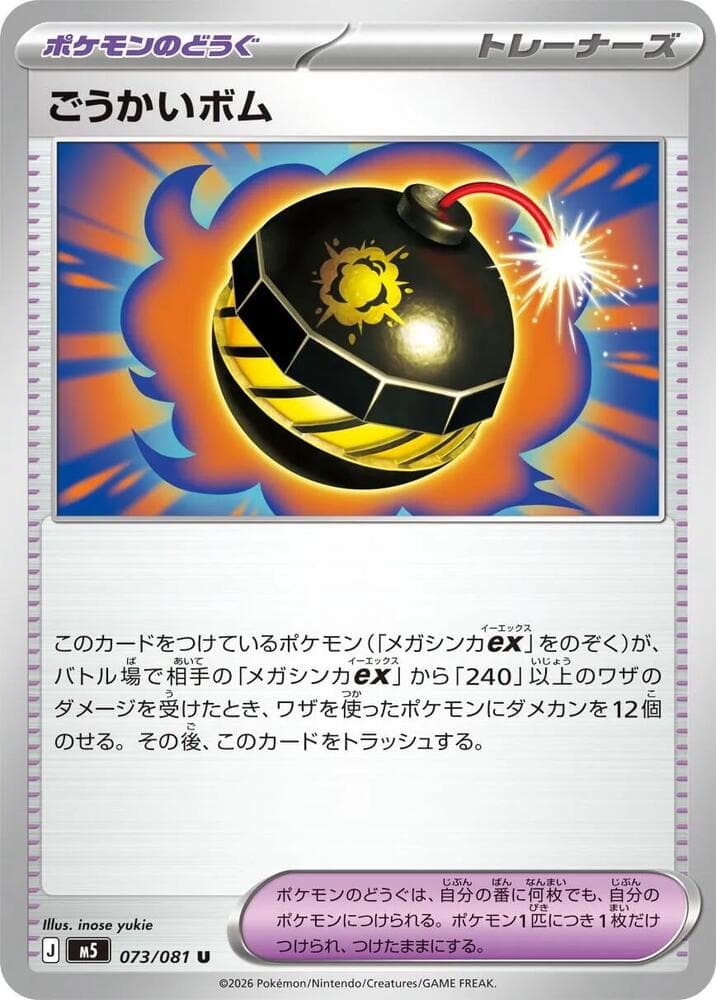
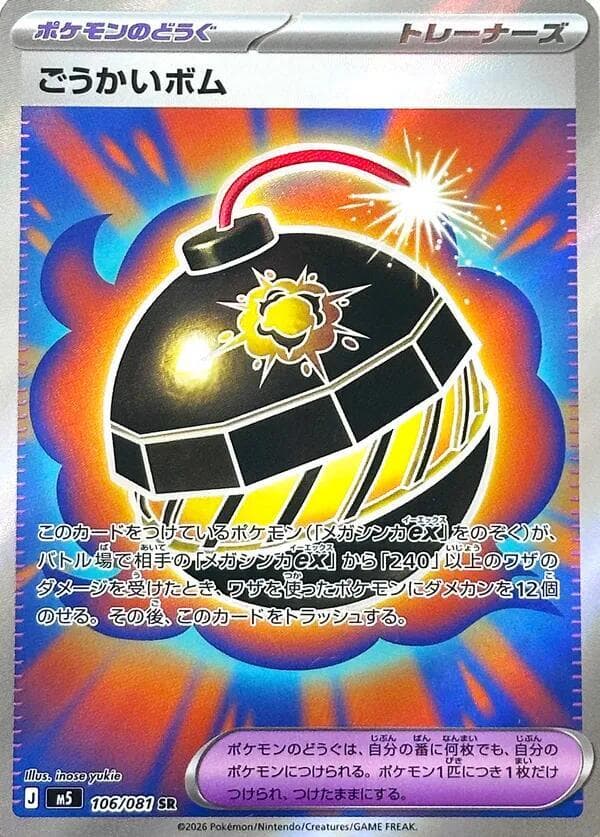
Terrific Bomb, Uncommon Item, $0.29 — a name that promises chaos and a card that earned a gold SR printing (106/081). Base copies cost less than thirty cents; as with most modern Items, the collectible action lives entirely in the gold version.
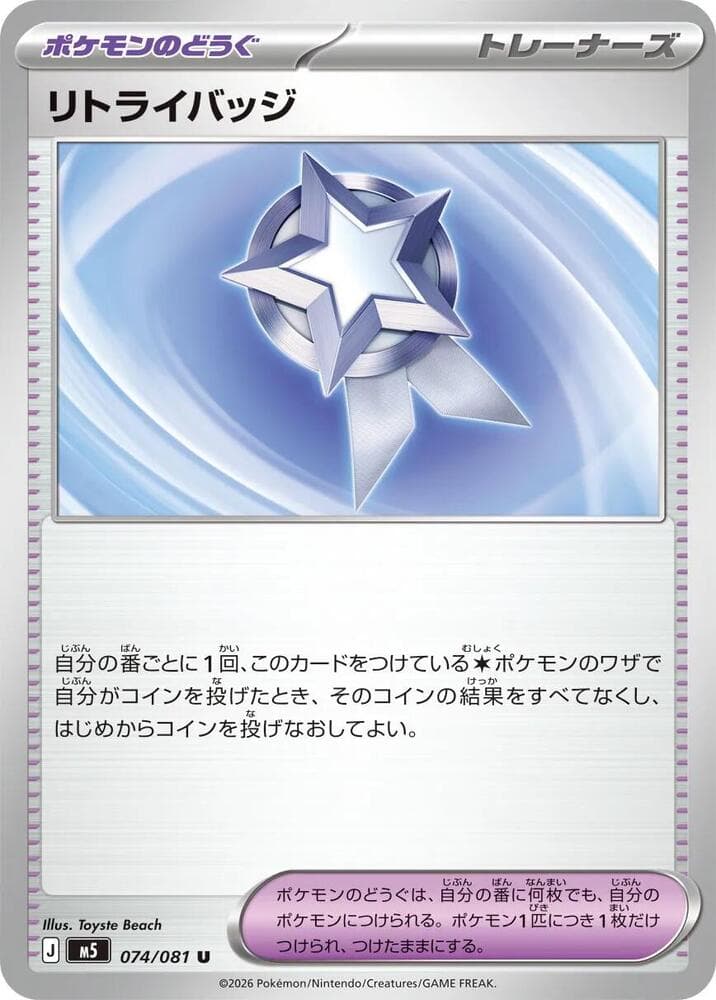
Retry Badge, $0.18, is the set's cheapest Trainer — an Uncommon Item with a second-chances name that will mean more to players than collectors. For master-set purposes it is a checkbox; there is no secret version to chase.
Misty's Spirit, Uncommon, $0.43 — do not let the base price fool you. This Trainer is the sleeper hit of Abyss Eye: its Super Rare version (108/081) trades at $49.24, more than any gold ex in the set. Misty is one of the most beloved characters in franchise history, and character-Trainer demand has become one of the strongest forces in modern Japanese-set pricing. The forty-cent copy is the smart player's version; the SR is the collector's prize.
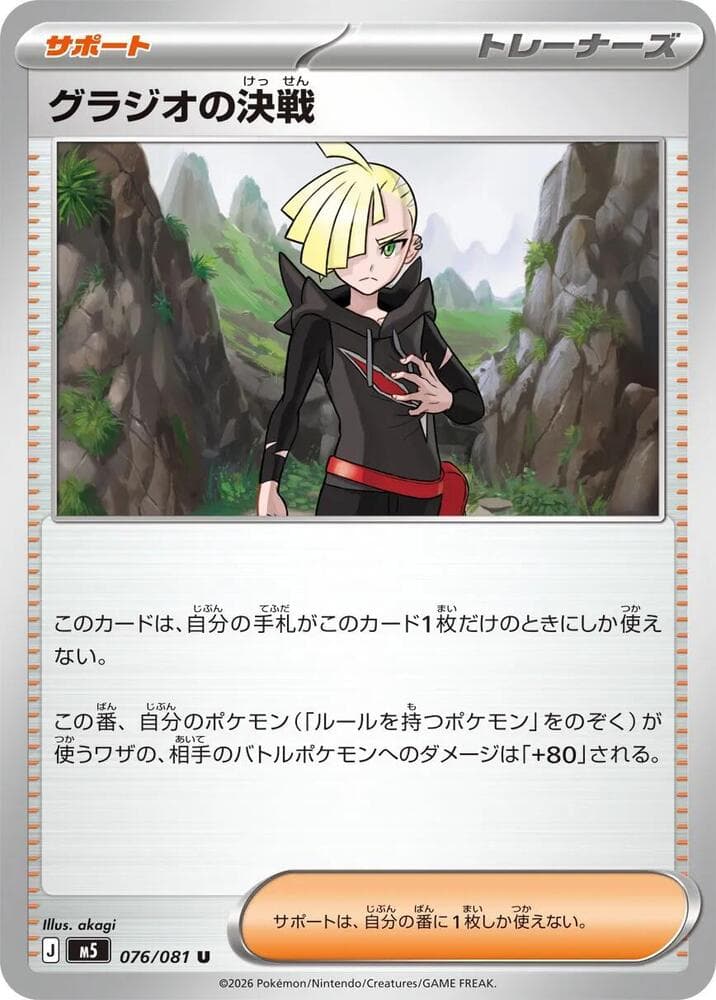
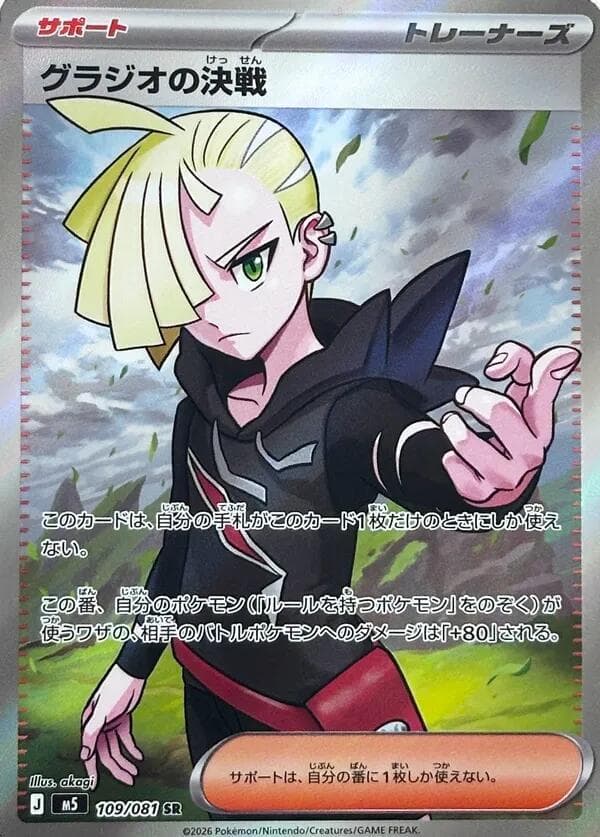
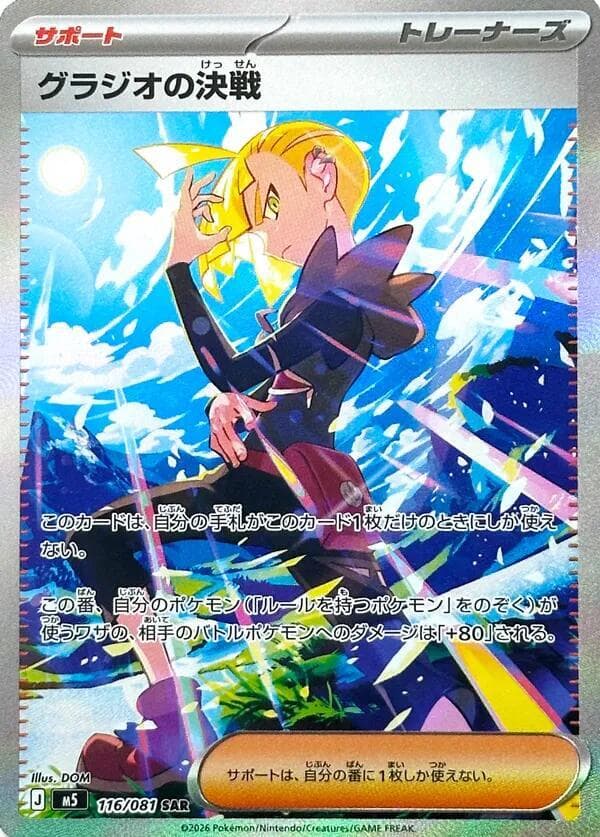
Gladion's Showdown, Uncommon, $0.31, is the base printing of a Trainer that climbs all the way to Special Art Rare (116/081, $33.18) — one of only two Trainers in the set to reach SAR tier. Gladion's edgelord-with-a-heart arc, plus his Type: Null and Silvally partners appearing in this very set, makes this a card family with real narrative glue.
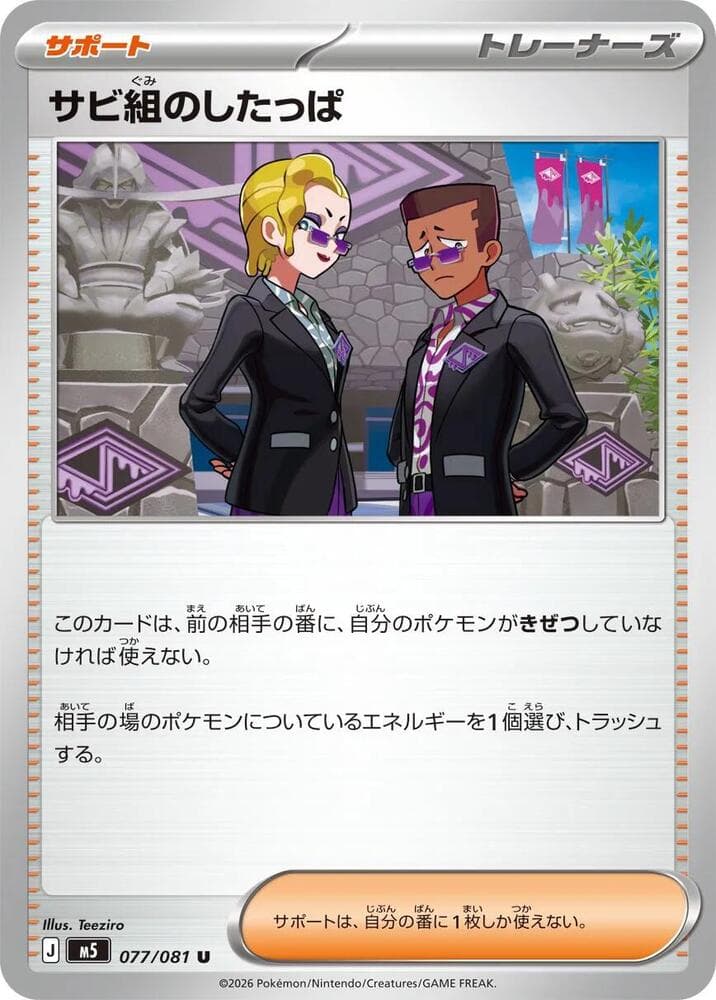
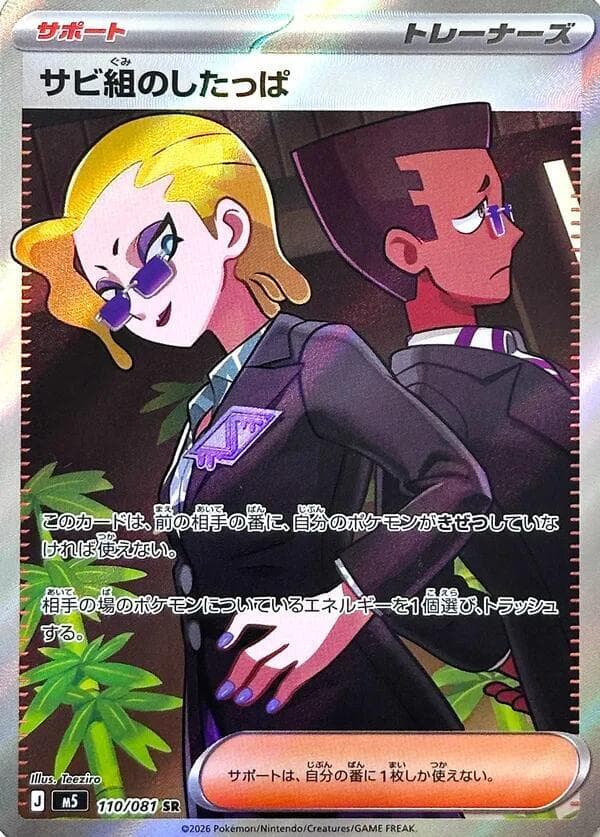
Rust Syndicate Grunt, Uncommon, $0.19, introduces the set's villainous faction in classic grunt form. Team grunts have a long collectible tradition in the TCG, and this one gets a full-art SR at 110/081. The base copy costs less than twenty cents and carries the whole shadow-organization flavor of the expansion.
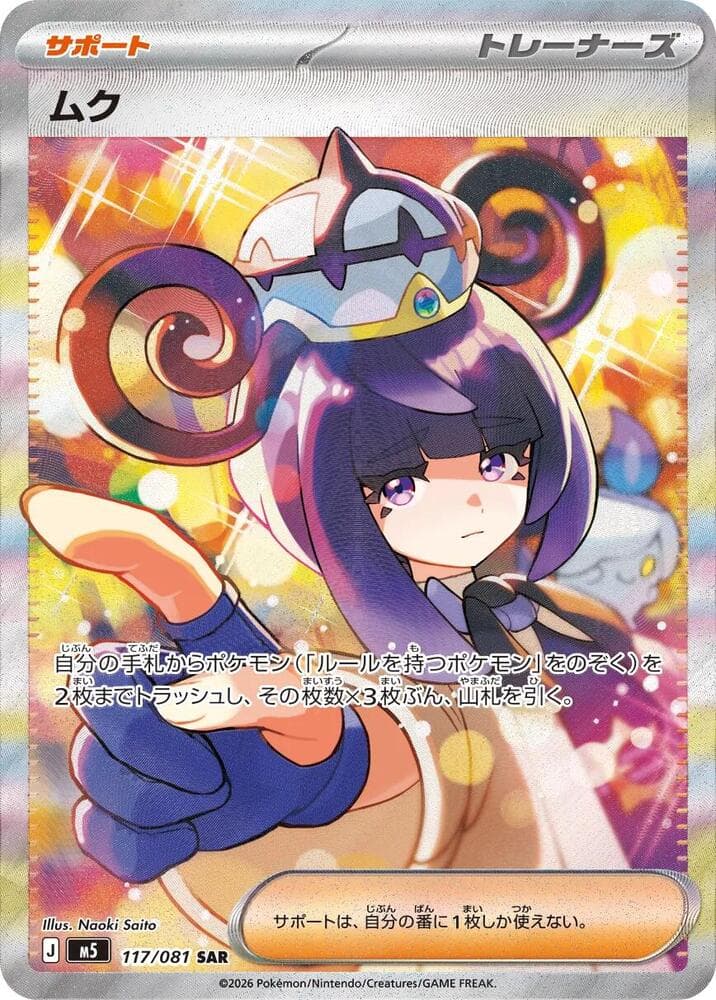
Gwynn, Uncommon, $0.26 — remember this name. Known as ムク (Muku) in Japanese, Gwynn is a character from Pokémon Legends: Z-A, and her secret-rare versions are the breakout story of Abyss Eye: the SR (111/081) trades at $18.06 and the Naoki Saito-illustrated SAR (117/081) at $66.44, outperforming the Mega Zeraora ex SAR. This quarter-priced Uncommon is the ground floor of the set's most surprising chase.
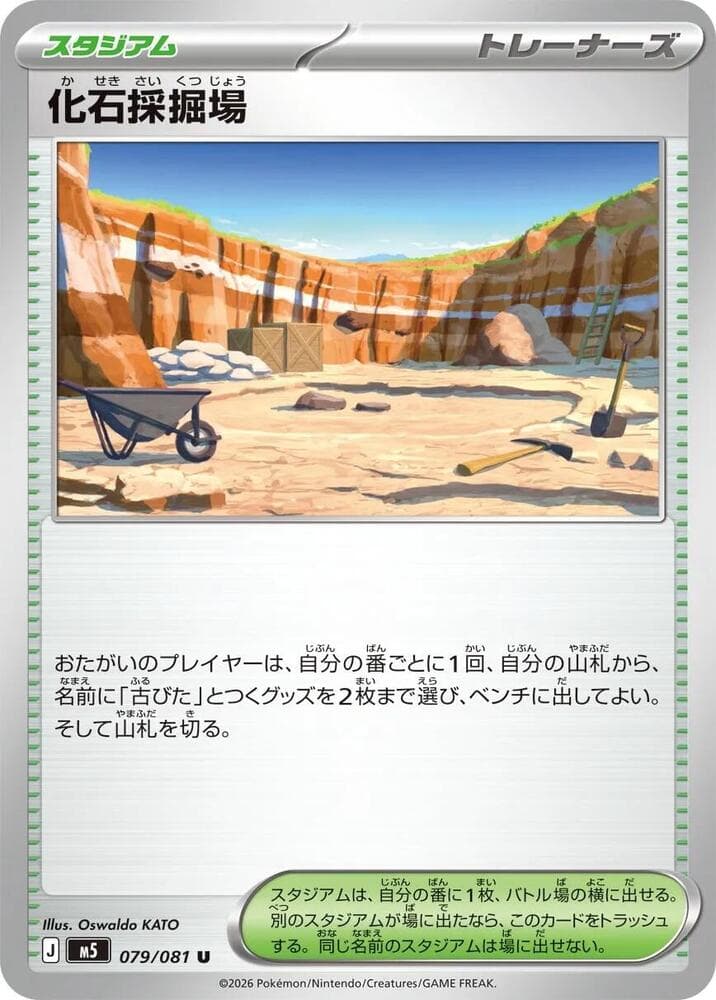
Fossil Excavation Site, Uncommon, $0.19, is the location card that ties the whole dig-site sub-theme together — Cranidos, Shieldon, their fossil Items, Rampardos ex, and Mega Excadrill ex all orbit around it thematically. As world-building Trainers go, this is a small card doing a lot of narrative work.
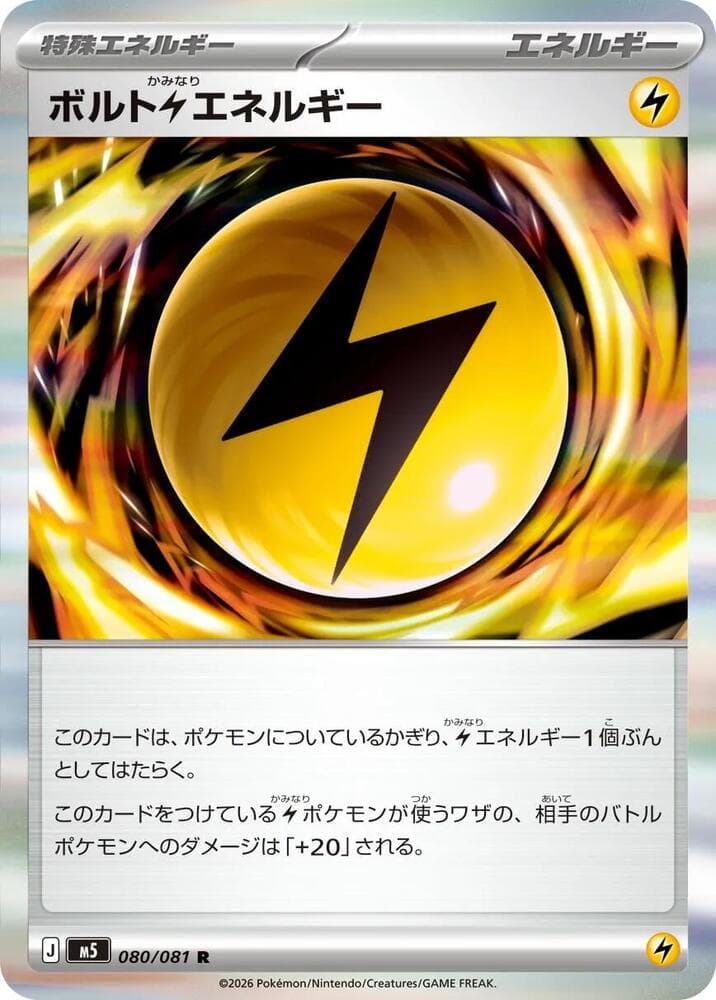
Volt L Energy, Rare, $0.50, is one of the set's two special Energy cards, powering the Lightning corner that Mega Zeraora ex headlines. Special Energies print at Rare here, so expect to pull several across a box. A playset staple more than a collectible.
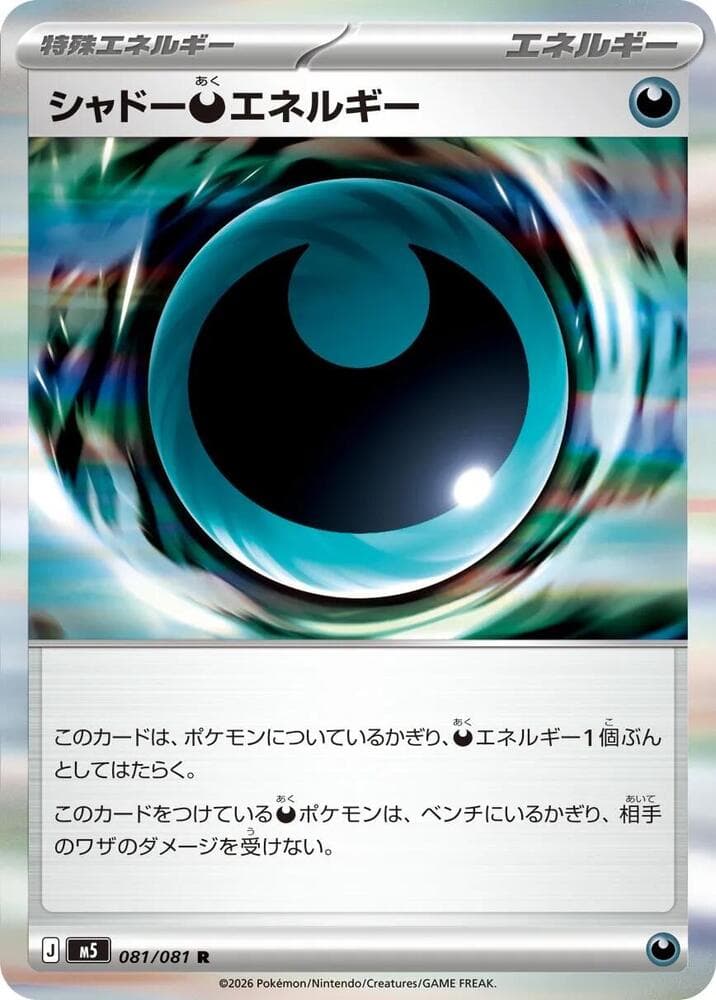
Shadowy D Energy, Rare, $0.48, closes the base set — and thematically, it might be its most important Trainer-block card. This is the Shadow Energy that anchors Abyss Eye's Darkness strategy and its entire visual identity. The set opens with Tropius and ends, fittingly, in shadow.
Art Rares (082–093): Twelve Illustration Cards, One Smug Slowbro
Every box averages about three of these twelve full-art illustration cards, which keeps individual prices gentle — most trade between $3 and $6. Two stand apart: the Goldeen AR at $9.27 and the Slowbro AR at $16.24, the latter singled out by PokeBeach as their favorite illustration rare of the entire set. ARs are the classic Japanese-set trading currency: easy to pull, easy to swap, and the fastest way to build trade credit on Swaptio's offer feed.
Fomantis AR, $5.18, kicks off the illustration-rare gallery by giving the tiny grass mantis a full-scene treatment. Art Rares like this run about three per box, and at roughly five dollars this is typical of the tier: affordable enough to trade freely, pretty enough to keep. A gentle start to a strong AR lineup.
Armarouge AR, $5.49, gives Paldea's psychic-flame knight the expanded canvas its design deserves. Mid-tier AR pricing as of July 11, 2026, and a natural pickup for anyone who grabbed the base Rare and wants the display version alongside it.
Goldeen AR, $9.27 — the second-most-expensive Art Rare in the set, which nobody had on their bingo card. A Kanto goldfish outpricing Megas' illustration slots is the kind of thing that happens when an artwork simply connects with collectors. Whatever this scene is doing, the market has noticed. One of Abyss Eye's genuine surprises.
Primarina AR, $5.59, pairs naturally with the base Rare's already-strong demand. The siren of Alola in full-illustration form was always going to find an audience, and mid-single-digit pricing makes it one of the easier fan-favorite ARs to trade into.
Manectric AR, $3.77, sits at the accessible end of the gallery. The electric hound's angular design translates well to the wide-frame treatment, and sub-$4 ARs like this are the small change of Japanese-set trading — perfect for evening out a bigger swap.
Slowbro AR, $16.24 — the most expensive Art Rare in Abyss Eye and PokeBeach's pick as their favorite illustration rare of the entire set. Slowbro's whole placid, oblivious charm is exactly what the AR format was invented for, and the market agrees: this card costs more than double the next AR down. With Mega Slowbro ex arriving as a promo in the English Pitch Black release, the species is having a moment across both languages. If you pull one AR from your box and it is this one, you beat the average — and if you are hunting it as a single, expect it to headline plenty of want-lists on Swaptio's search feed.
Dhelmise AR, $3.88, drags its haunted anchor into the gallery. The shipwreck ghost is thematically the most literal abyss-dweller in the whole set, and its illustration slot leans into that deep-sea menace. Affordable, atmospheric, and very on-brand for M5.
Thievul AR, $3.15, completes the gentleman-thief's arc from thirty-cent Uncommon to full-scene illustration. Rogue-gallery Pokémon suit the AR treatment, and this is the cheapest way into the set's Dark-type art. Trade filler with style.
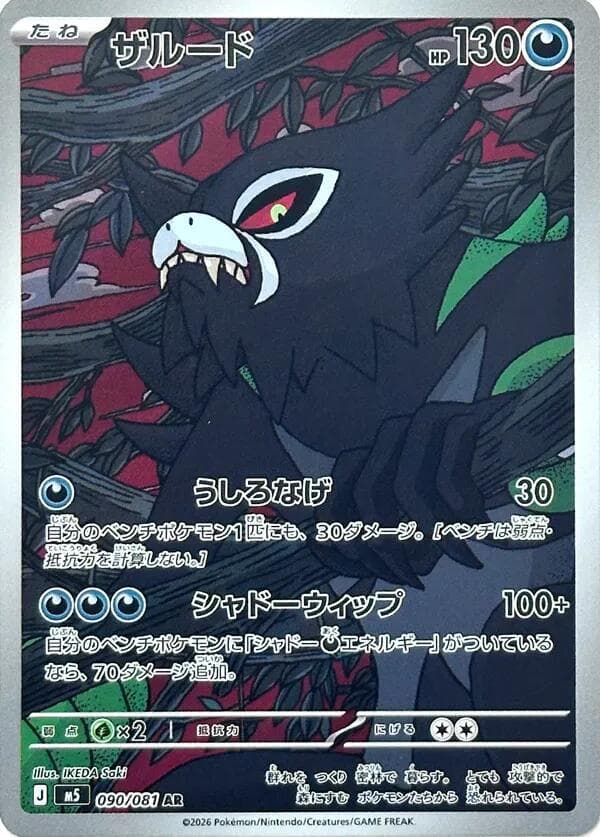
Zarude AR, $2.84 — the cheapest AR in the set by price, and the most interesting by circumstance. This is the card that does not survive translation: in English Pitch Black, the Zarude illustration rare leaves the packs entirely and becomes an Elite Trainer Box promo. That makes the Japanese pack-pulled version the only one of its kind, a distinction the sub-$3 price does not yet reflect. Cross-language collectors have been known to care about far less.
Bastiodon AR, $2.84, gives the fossil wall its illustration moment, tying the AR gallery back into the set's excavation theme. Priced at the very bottom of the tier alongside Zarude, it is an easy add-on to any Abyss Eye trade involving the fossil block.
Toucannon AR, $2.98, rounds out the Alolan bird's presence in the set with a full-art scene. Regional birds rarely get this treatment, which gives the card a quiet completionist appeal beyond its sub-$3 price.
Silvally AR, $3.34, closes the illustration gallery with Gladion's chimera partner unbound. Paired with the Type: Null Common and the Gladion's Showdown SAR, it forms the centerpiece of the set's best story-driven mini-collection. Modest price, maximum narrative.
Super Rares (094–111): Gold exes and the Trainer Sleepers
Eighteen Super Rares split into full-art ex Pokémon, gold-etched Item cards, and full-art Trainers. The Trainers are the story here: Misty's Spirit SR at $49.24 is worth more than any SR ex in the set, and Gwynn SR at $18.06 edges out even the gold Darkrai. Gold Item cards, by contrast, mostly sit near a dollar — pull tax, essentially.
Lurantis ex SR, $4.85, opens the gold gallery with the orchid mantis in full-art form. Non-Mega gold exes sit at the humble end of the SR tier this set, and at under five dollars this is a straightforward pickup for Grass collectors and gold-card completionists alike.
Wailord ex SR, $8.39, proves that scale sells: the full-art treatment of the TCG's most enormous subject is among the stronger non-Mega golds in Abyss Eye. There is something inherently funny about fitting Wailord in any frame, and collectors pay a modest premium for the attempt.
Mega Zeraora ex SR, $9.19, is the gold-tier version of the thunder cat's Mega debut. It sits mid-pack among the set's SR exes — comfortably above the non-Megas, well below the Trainer sleepers — and represents the sensible middle option between the $0.73 RR and the $42.71 SAR.
Mega Chandelure ex SR, $15.00, is the second-priciest gold ex in the set, behind only Darkrai itself. The ghost chandelier's fanbase runs deep — it has been a design-award favorite since 2010 — and this full-art Mega debut gives that fanbase a mid-tier target between the base RR and the $34.52 SAR.
Rampardos ex SR, $5.56, gives the fossil headbutter its gold moment. Fossil exes rarely lead a set's value charts, and this one does not either — but as the premium version of one of Abyss Eye's most thematically central cards, it earns its slot in any fossil-block collection.
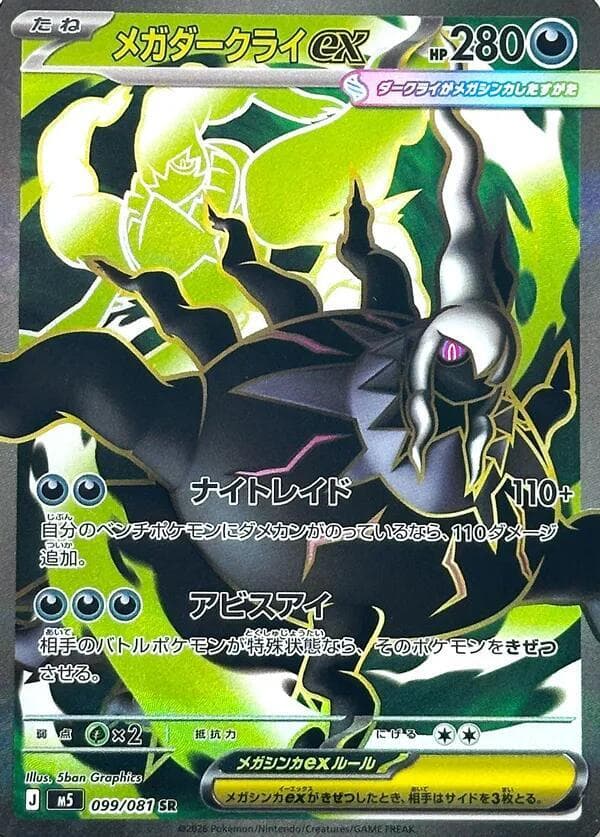
Mega Darkrai ex SR, $17.71 — the most affordable full-art version of the set's face card, and the price point where most collectors' Darkrai journey realistically ends. Think of the four Darkrai printings as a ladder: $1.03 for the RR, $17.71 here, $383.27 for the SAR, $497.50 for the MUR. This rung is where you get gold-etched full-art presentation of the debut Mega Darkrai — Abyss Eye attack and all — without the three-figure commitment. Notably, launch pricing for this card was around $16, meaning the SR has essentially held flat while the SAR above it lost more than half its value. Sometimes the boring middle option is the one that was priced correctly all along. As of July 11, 2026, this is arguably the best value-per-dollar Darkrai in the set.
Morpeko ex SR, $12.24, rides pure species charisma to a price above most of the set's Mega golds. The hangry hamster outearning Zeraora's and Excadrill's gold cards is exactly the kind of market quirk that makes Japanese sets fun to follow. Popular Pokémon beat powerful Pokémon in collecting, every time.
Mega Excadrill ex SR, $8.35, completes the gold quartet of Mega debuts at the accessible end. The steel mole's full-art excavator aesthetic ties the SR gallery back to the fossil theme, and its price keeps the complete fossil-block master set within reach of nearly any trade binder.
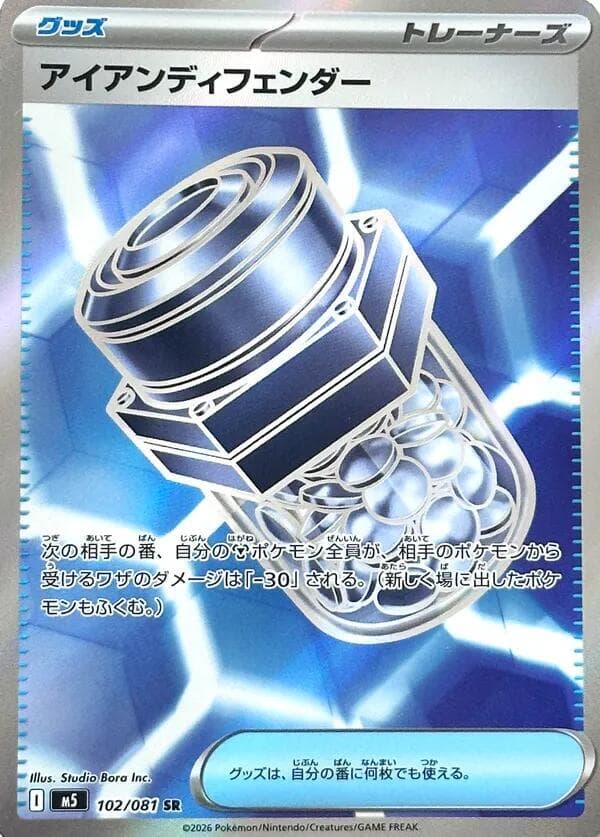
Iron Defender SR, $0.69 — a gold Item priced like a Common, and the cheapest Super Rare in Abyss Eye. Gold Item cards exist mainly as box-filler glitter for players, and the market treats them accordingly. Master-set builders need it; nobody else will fight you for it.
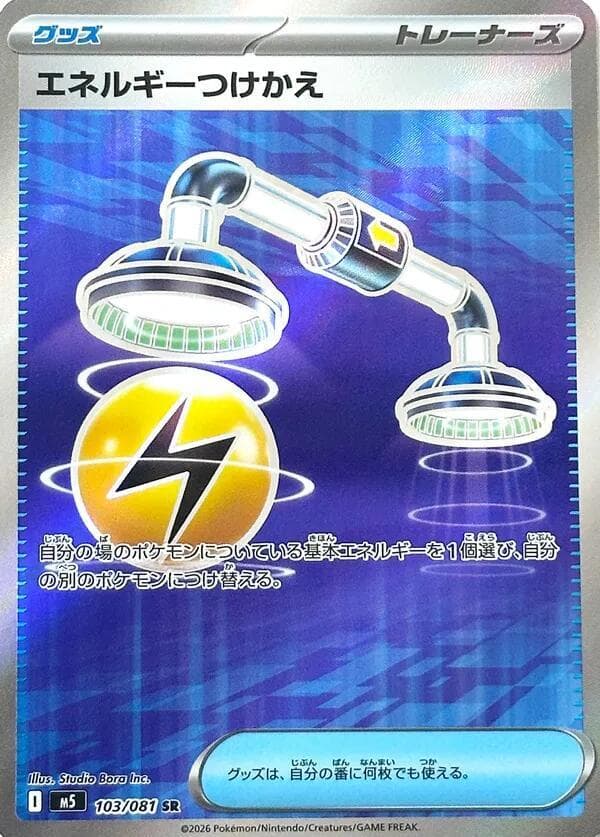
Energy Switch SR, $0.99. A gold-etched printing of one of the TCG's longest-serving utility Items — the kind of card everyone has played and nobody has ever chased. At under a dollar it is the definition of a throw-in card when balancing a larger Abyss Eye trade.
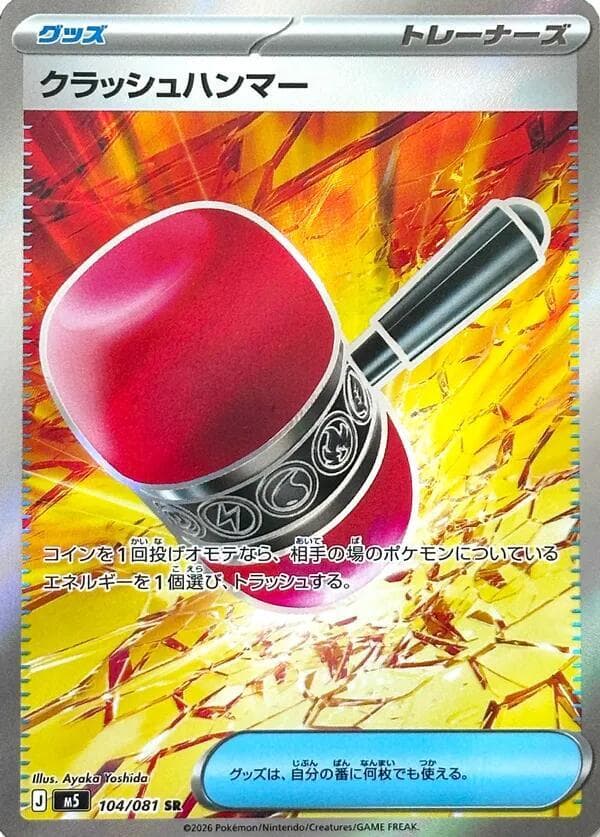
Crushing Hammer SR, $1.14, gives the ancient art of Energy denial a gold coat of paint. Hammers have annoyed opponents for over a decade, and this is the shiniest version yet of that proud tradition. Priced at a dollar because glitter alone does not make a chase card.
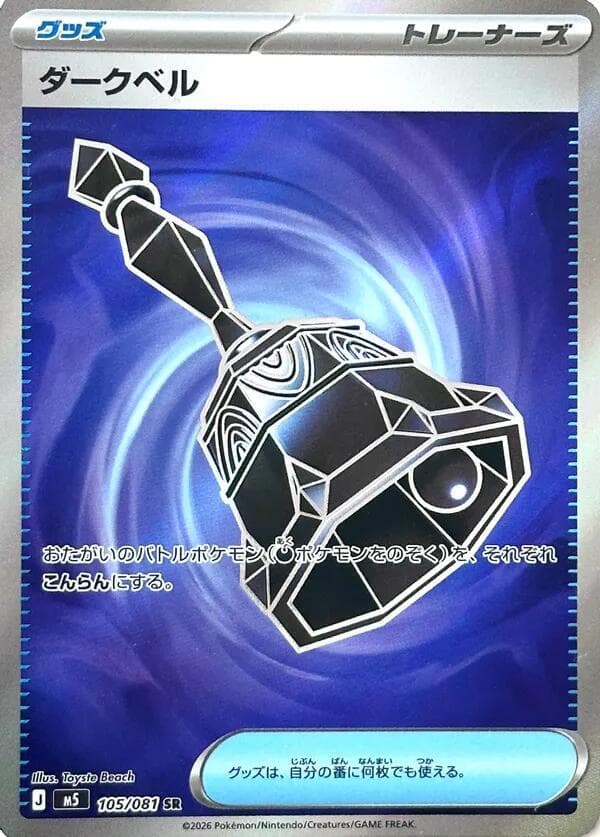
Dark Bell SR, $1.26, is the gold version of the set's most thematically named Item. Among the gold Trainer cluster it carries a slight edge — the abyss branding helps — but this remains a completionist pickup, not a chase. The set's real Trainer money lives a few slots up.
Terrific Bomb SR, $1.49, tops the gold Item cluster at just under a buck fifty. As with its neighbors, the value is in finishing the master set rather than the card itself. Pull it, sleeve it, move on to hoping the next gold is a Misty's Spirit.
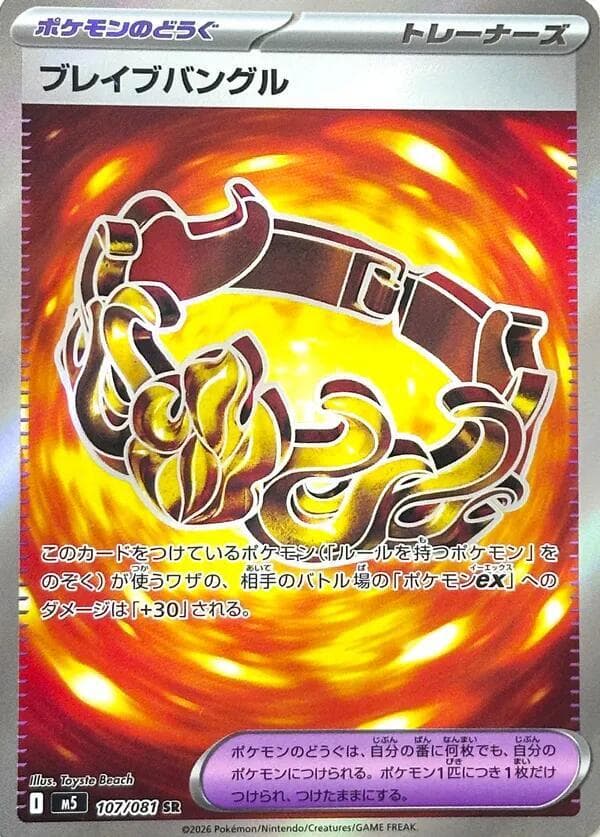
Brave Bangle SR, $1.01, rounds out the gold Item run at almost exactly one dollar. Six gold Items in one set is generous by pull-rate math and dilutive by value math — every Brave Bangle pulled is a gold slot that was not a $49 Misty's Spirit. Such is the box-opener's lament.
Misty's Spirit SR, $49.24 — the most valuable Super Rare in Abyss Eye, worth more than every gold ex in the set, Darkrai included. Read that again: a Trainer card outprices the gold version of the set's namesake Mega. This is the character-card era in one data point. Misty is franchise royalty — the original Cerulean Gym Leader, an anime co-lead for generations of fans — and full-art printings tied to her name reliably become the emotional chase of any set they appear in. Launch pricing had this around $54, and unlike the Darkrai SAR's 60%+ collapse, it has barely moved — evidence that character-driven demand holds value in ways hype-driven demand does not. If you pull one, it is the second-best gold outcome in the entire set, and singles buyers should not expect it to get much cheaper. As of July 11, 2026, it is the set's most trade-liquid card under $50.
Gladion's Showdown SR, $6.84, is the mid-rung of a three-version Trainer ladder that runs from the $0.31 Uncommon to the $33.18 SAR. Solid, unspectacular gold-Trainer pricing — Gladion's demand clearly concentrates in the SAR version, leaving this one as the affordable full-art alternative.
Rust Syndicate Grunt SR, $4.78, gives the set's villain faction its full-art moment. Grunt cards have a devoted collector niche — every era's evil team gets remembered through them — and at under five dollars this one is an easy add for anyone building the set's shadow-organization corner.
Gwynn SR, $18.06 — the higher-value of Gwynn's two full-art versions below the SAR, and a card that outprices the gold Mega Darkrai ex SR. Let that sink in: a Z-A supporting character's gold Trainer beats the set mascot's gold ex. Launch pricing was around $54 before the whole set corrected, so this card has cooled hard — yet it still leads the non-Misty Trainer SRs comfortably. Gwynn (Muku in Japanese) arrived with zero TCG history and immediately became one of Abyss Eye's defining chases, largely on the strength of the character and the Naoki Saito SAR one tier up. For collectors priced out of the $66 SAR, this is the sensible way to own the set's breakout character. Prices as of July 11, 2026, volatility very much included.
The six SARs are Abyss Eye's showcase tier — oversized artwork, roughly one copy per 3.4 booster boxes, and the widest price spread in the set: from $33 for Gladion's Showdown to $383 for the EGAWA Darkrai. Two of the six are Trainer cards, and both outperform half the Mega SARs — a very 2026 state of affairs.
Mega Zeraora ex SAR, $42.71 — the special-art version of the thunder cat's Mega debut, and a case study in launch-price gravity: it opened around $81 and has since settled to roughly half that as of July 11, 2026. That trajectory mirrors the whole set's correction rather than anything specific to this card. What remains is a legitimately dramatic piece of full-bleed artwork of a fan-favorite mythical in its new Mega form, at a price that no longer requires hype to justify. Here is the fact that stings for Zeraora fans, though: the market values this Mega's showcase card below Gwynn's SAR — a human character from Z-A outprices the electric Mega's best card. For SAR-tier collecting on a budget, that market snub makes this one of the more rationally priced special arts in Abyss Eye, and a frequent centerpiece in mid-value trades.
Mega Chandelure ex SAR, $34.52 — the cheapest Pokémon SAR in the set, which feels almost disrespectful for a design this beloved. Chandelure has been a fan-art darling since Gen 5, its soul-burning lore fits Abyss Eye's shadow theme perfectly, and the special-art canvas gives the ghost chandelier room to be genuinely eerie. Launch pricing sat around $60; the set-wide correction brought it to the mid-thirties as of July 11, 2026. At that level it is the value pick of the entire SAR tier: full special-art treatment of a top-twenty fan favorite for about a third of a Gwynn SAR and a tenth of the Darkrai. If you are assembling the six-card SAR run through trades rather than box-cracking, this is the one to acquire first — the downside feels limited and the artwork does not care what the market thinks.
Mega Darkrai ex SAR, $383.27 — the card that made Abyss Eye famous, then made it infamous. Illustrated by AKIRA EGAWA, this special-art rendition of Mega Darkrai's TCG debut launched at a staggering ¥99,800 in Japan and briefly sold around $570 on Western markets. Then reality arrived: by early July, Japanese market prices had collapsed to roughly ¥30,000 (about $200), a 70% drawdown in seven weeks, while TCGplayer's market price — which lags Japan and carries an import premium — stood at $383.27 as of July 11, 2026. That JP/US gap is worth respecting: when the domestic Japanese price of a Japanese card sits far below the Western price, the Western price historically tends to follow. None of this makes it a bad card — EGAWA's Darkrai is a genuinely spectacular piece, the set's visual signature, and the SAR most collectors picture when they hear the words Abyss Eye. It just makes it a card to acquire with eyes open, at post-correction prices, ideally via trade rather than a 1-in-3.4-boxes-then-1-in-6 lottery ticket.
Morpeko ex SAR, $62.63 — the set's third-most-expensive card, and the only major Abyss Eye chase that is worth more now than at launch. It opened around $54 and has climbed while everything above it fell, which tells you exactly where genuine, durable demand lives: with the two-faced hangry hamster, apparently. Morpeko's dual Full Belly/Hangry identity is tailor-made for a special-art canvas, and the card's post-launch resilience suggests collectors are buying it for love rather than speculation — the healthiest kind of price floor a modern card can have. As of July 11, 2026, it trades within a few dollars of the Gwynn SAR for the number-three slot in the set. For traders, that resilience makes it one of the safest high-value Abyss Eye cards to accept in a swap: it has already survived the crash that humbled its Mega neighbors.
Gladion's Showdown SAR, $33.18 — the cheapest card in the SAR tier, and one of only two Trainers to reach it. Interestingly, it is also a rare crash-era winner: launch pricing hovered around $30, so this card has actually held its ground (and then some) while the Megas around it lost half their value or more. Gladion's enduring popularity — the brooding rival with Type: Null and Silvally both appearing in this very set — gives the card a built-in story that pure Pokémon SARs lack. As special-art Trainers go it lives in the shadow of Gwynn's Saito-illustrated showstopper one slot up, but at half Gwynn's price it is the affordable entry into Abyss Eye's character-card tier. A sneaky-good target for mid-value trades as of July 11, 2026.
Gwynn SAR, $66.44 — the breakout card of Abyss Eye, illustrated by Naoki Saito, and the set's fourth-most-valuable card overall. Gwynn (ムク, Muku, in Japanese) is a character from Pokémon Legends: Z-A with no prior TCG history, yet her Saito special art launched in the $150–190 range and, even after the set-wide correction, still outprices the Mega Zeraora ex SAR by a comfortable margin. That is the modern Japanese market in miniature: illustrator name-power plus character appeal now routinely beats Mega Pokémon on the price charts. Saito's involvement matters enormously here — his card illustrations have a dedicated following that transcends individual sets. Down from launch but holding the number-four slot as of July 11, 2026, this is the Abyss Eye card most likely to be the one your trade partner refuses to let go of. Budget alternative: the $18.06 SR at 111/081.
One card sits alone at the top of the checklist — the metallic Mega Ultra Rare treatment of Mega Darkrai ex, pulled somewhere between once per 45 and once per 100 boxes.
Mega Darkrai ex MUR, $497.50 — the summit of Abyss Eye and the most valuable card in the set as of July 11, 2026. The Mega Ultra Rare treatment gives the debut Mega Darkrai its trophy-card form, pulled at a rate the community pegs somewhere between one per 45 and one per 100 booster boxes — a range, because nobody outside The Pokémon Company knows the true number. At launch, Japanese listings ran ¥158,000–198,000, comfortably north of $1,000; the set-wide correction has since cut that in half, though the MUR has held its value far better than the SAR below it, as extreme scarcity tends to ensure. Do the acquisition math honestly: at 1/45–1/100 boxes and ¥6,000 per box, opening your way to this card costs several times its market price. If you want it, buy or trade for the single — this is precisely the card the Swaptio wishlist exists for. The final card in the checklist, and the reason the checklist exists.
Trade for Abyss Eye Singles Instead of Gambling on Boxes
Everything about Abyss Eye's price history argues for the same strategy: acquire the specific cards you want, and let someone else pay the lottery tax. Importing sealed Japanese product means marked-up boxes (€99.95 at some European retailers against a ¥6,000 MSRP), international shipping, and pull rates that put the two headline Darkrai cards behind a 1-in-3.4-boxes and 1-in-45-to-100-boxes wall respectively. Meanwhile, the singles market has already crashed to rational levels — the correction did the negotiating for you.
This is exactly the scenario a P2P exchange handles well. Plenty of collectors cracked Abyss Eye boxes during the hype window and are now sitting on SARs, SRs, and stacks of Art Rares they would happily swap for cards they actually want. Post a wishlist of the Abyss Eye cards you are hunting, list your own spares on the offers feed, and let the correction work in your favor: a trade agreed at July 2026 prices is a very different deal from one struck at launch.
Trade-Value Tiers: What Your Abyss Eye Pulls Are Worth in a Swap
For practical trading, Abyss Eye sorts into five rough tiers as of July 11, 2026. Trophy tier ($350+): the MUR Darkrai ($497.50) and SAR Darkrai ($383.27) — cards you trade toward over multiple deals, not in one. Premium tier ($40–70): Gwynn SAR ($66.44), Morpeko ex SAR ($62.63), Misty's Spirit SR ($49.24), and Mega Zeraora ex SAR ($42.71) — clean one-for-one material against other sets' mid-chases. Mid tier ($12–35): the remaining SARs, Gwynn SR, Mega Darkrai ex SR, Slowbro AR, Mega Chandelure ex SR, and Morpeko ex SR — the workhorses of most Abyss Eye trades. Filler-plus ($3–10): the other ARs and gold exes, ideal for evening out lopsided deals. Bulk: everything else, best moved in playsets or as trade sweeteners.
Two honest caveats when valuing trades. First, this set's prices have moved 50–70% inside two months — always check current numbers on the day you trade, and expect your partner to do the same. Second, the crash punished hype cards and spared character cards: Misty's Spirit, Gladion's Showdown, and Morpeko held or gained while the Mega SARs fell. If you are trading Abyss Eye cards you plan to hold for a while, that pattern — durable character demand versus decaying hype — is worth more than any single price point in this article. These are observations, not investment advice; the only guaranteed return in this hobby is the collection itself.
Hunting Japanese Cards? Put Them on Your Swaptio Wishlist
Japanese singles have a discovery problem: the collector three neighborhoods away with a spare Gwynn SAR has no idea you want one. Swaptio closes that gap. Add the Abyss Eye cards you are missing to your wishlist on the Se busca feed, and when another collector lists them — or spots your want and has the card sleeved in a binder — you connect directly and settle the trade between yourselves, no middleman margin involved. You can even share your wishlist as a public link, which is a painless way to tell your trading circle exactly which M5 numbers you still need.
And if you are deciding between chasing this set in Japanese or waiting for English product, keep both guides handy: this page for M5 numbers and Japanese market context, and our Pitch Black (ME05) guide for the international release on July 17. Whichever language you collect in, the cards are better acquired from another collector's binder than from a €100 box with a 71% chance of containing zero SARs.
Frequently asked questions
When does Abyss Eye release in English?
The international equivalent, Pitch Black (set code ME05), releases worldwide on July 17, 2026 — about two months after the Japanese debut. The sets are nearly 1:1, but Pitch Black adds three promo-sourced cards (Mega Slowbro ex, Jett, and Mega Delphox ex), moves the Zarude Art Rare to an Elite Trainer Box promo, and demotes Miraidon, Koraidon, and Zarude to standard Holo Rares.
How many cards are in Abyss Eye (M5)?
118 in total: 81 base-set cards plus 37 secret rares. The secret lineup breaks down as 12 Art Rares, 18 Super Rares, 6 Special Art Rares, and 1 Mega Ultra Rare.
What is the most expensive card in Abyss Eye?
The Mega Darkrai ex Mega Ultra Rare (118/081), at $497.50 as of July 11, 2026, followed by the AKIRA EGAWA-illustrated Mega Darkrai ex SAR (114/081) at $383.27. Both are well below their launch prices — the SAR listed at ¥99,800 in Japan at release and has since fallen to roughly ¥30,000 domestically — so always check current prices before buying or trading.
Does Abyss Eye have god packs?
No god pack mechanic has been announced for Abyss Eye. The reliable numbers are the box averages: roughly 3 Art Rares and 4 Double Rares per 30-pack box, a Special Art Rare about once every 3.4 boxes, and the Mega Ultra Rare somewhere between 1 in 45 and 1 in 100 boxes based on community tracking.
What is the MSRP of an Abyss Eye booster box?
¥6,000 in Japan for a box of 30 packs with 5 cards each. Actual street prices vary — post-launch demand pushed many Japanese retailers to lottery sales, and import prices abroad run substantially higher (some European retailers listed boxes around €99.95).
What is the Abyss Eye set code and where does the name come from?
The set code is M5, the fifth Japanese MEGA-era expansion, released May 22, 2026. The name comes from Mega Darkrai ex's signature attack, Abyss Eye, which automatically Knocks Out any Pokémon affected by a Special Condition — the set is literally named after its mascot's move.
Why did Mega Darkrai ex prices crash, and will they recover?
Launch prices were driven by debut hype and early scarcity; once Japan's large print runs and reprints caught up, the SAR fell from ¥99,800 to roughly ¥30,000 in about seven weeks. Whether prices recover is unknowable — nobody can promise that — but note that Western market prices still sit above Japanese domestic prices, and character cards like Misty's Spirit and Morpeko ex held value far better than the hype-driven Megas.
Are the card names on Japanese Abyss Eye cards in English?
No — the physical Japanese cards are printed in Japanese. The English names used in this guide come from TCGplayer catalog data for the M5 set. A few names differ meaningfully across languages: the Trainer Gwynn, for example, is ムク (Muku) in Japanese.