Chaos Rising Set Guide: Card List, Prices & Chase Cards
Published July 11, 2026 · Updated July 21, 2026 · 51 min read
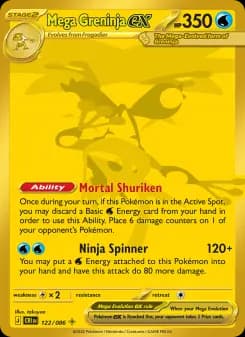
Price update — July 21, 2026. Every card in this guide now shows a live TCGplayer market price — a first for our Chaos Rising list — refreshed today. Two months past the May 22 release the set has settled: Mega Greninja ex's Special Illustration Rare (#116) sits around $237, the gold Mega Hyper Rare (#122) near $192, and Cinccino ex's SIR (#119) at about $66. The market price beside each card is current (July 21); the card-by-card commentary keeps its July 11 figures for context.
One artwork sold this entire set. Spread across three cards — a humble Froakie, a mid-stage Frogadier and a Special Illustration Rare Mega Greninja ex — illustrator Susumu Maeya painted a single connected panorama, and the finished triptych turned that SIR into a $270–580 card within weeks of release. Everything else in Mega Evolution — Chaos Rising orbits that one piece of art, for better and for worse.
Chaos Rising is the fourth set in the Mega Evolution block, released in the West on May 22, 2026 under the set code ME04 (abbreviation CRI). It adapts the Japanese set Ninja Spinner and clocks in at 86 numbered cards plus 36 secret rares, for 122 cards total. The flavor is unmistakably Kalos — three starter lines, Xerneas, Trainers name-dropping AZ and Prism Tower — and two ex cards, Mega Gallade ex and Krookodile ex, exist only in the Western release.
Here is the part most guides skip: the market has already spoken, and it said 'slow down.' Chaos Rising prices are down roughly 25% in the first 30 days after launch. If you bought heavily at release, that stings. If you trade cards peer-to-peer instead of buying them — which is the entire reason Swaptio exists — a correcting market is when the interesting deals happen, because sellers anchor to launch prices while traders reprice in real time.
This guide covers the whole set: quick facts, the top ten chase cards priced as of July 11, 2026, the Greninja panorama story, community pull rates, booster box versus Elite Trainer Box, the Western exclusives — then honest collector's notes on all 122 cards, and a trading playbook to finish. Working through the block set by set? See our Pitch Black set guide for an earlier chapter.
Chaos Rising at a Glance: ME04, CRI and the Set Symbol
The essentials first. Mega Evolution — Chaos Rising released internationally on May 22, 2026, with 86 cards in the main numbering plus 36 secret rares (087–122) for a total of 122. Sorting bulk? Look for the ME04 set code printed alongside the card number; the abbreviation in deck lists and databases is CRI. Spanish-language product calls the set Megaevolución: Caos Creciente and Portuguese uses Caos Ascendente — worth knowing when you trade across regions.
Know the secret-rare tiers before you open anything: 087–097 are Illustration Rares (alt-art Commons and Uncommons), 098–115 are Ultra Rares (premium ex Pokémon and Trainers), 116–121 are Special Illustration Rares, and 122 is the lone gold Mega Hyper Rare, reserved for Mega Greninja ex. Six SIRs and one gold card is a tight top end that concentrates value instead of spreading it thin.
The set adapts the Japanese Ninja Spinner and leans hard into Kalos: the Chespin, Fennekin and Froakie lines all appear, Xerneas anchors the legendary slot, and the Trainer lineup reads like an X and Y reunion. The Elite Trainer Box promo is a Fennekin, on theme. It is a coherent, story-driven set — a big part of why the connected artwork landed so well.
Chase Cards and Prices: The Top 10 as of July 2026
All prices below are market observations as of July 11, 2026, quoted as ranges because this set is genuinely volatile — down about a quarter since launch, with individual cards still moving week to week. Treat them as a snapshot, not a promise.
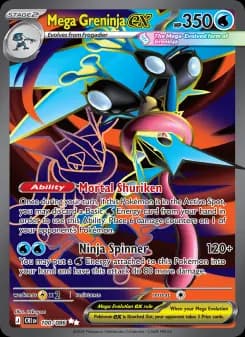
The undisputed king is Mega Greninja ex 116/086, the Special Illustration Rare completing Susumu Maeya's panorama: $270–580 raw, with PSA 10 sales between $1,200 and $3,000. That enormous spread tells you the market is still finding this card's floor. Behind it sits Mega Greninja ex 122/086, the gold Mega Hyper Rare, at $300–400 — rarer to pull, yet cheaper, because the panorama art is what people actually want.
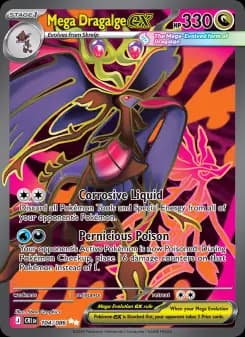
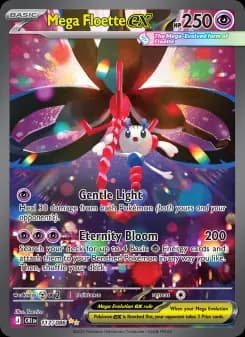
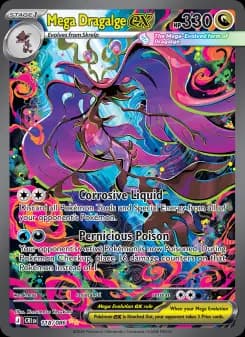
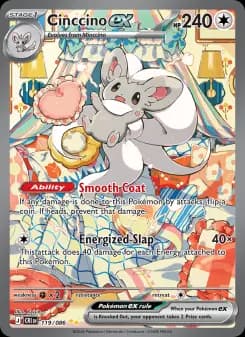
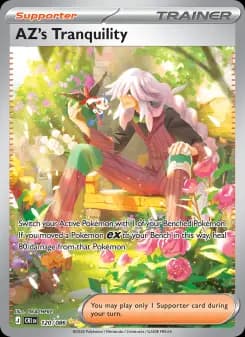
Cinccino ex 119/086 is the set's sleeper hit at $45–125 — a huge band reflecting genuine disagreement about where it settles. Mega Dragalge ex 118/086 holds $60–80, the SIR Trainer AZ's Tranquility 120/086 sits at $40–60, and Mega Floette ex 117/086 and Roxie's Performance 121/086 both occupy the $25–40 window. Best of the Ultra Rares: Mega Greninja ex 100/086, around $28.
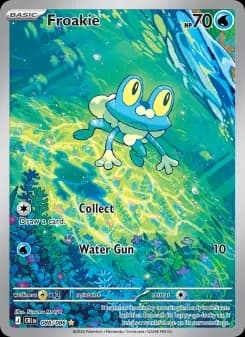
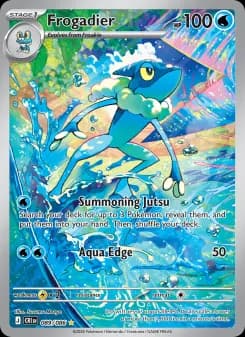
Finally, two Illustration Rares punch far above their tier: Froakie 088/086 and Frogadier 089/086 at $10–15 each, purely because they are the left and middle panels of the panorama. If any of these ten are targets, put them on your wishlist now and let trade offers come to you rather than chasing listings in a falling market.
One Painting, Three Cards: The Froakie, Frogadier and Mega Greninja Panorama
The defining collectible of Chaos Rising is not a single card — it is a sequence. Illustrator Susumu Maeya painted one continuous scene spanning Froakie 088/086, Frogadier 089/086 and Mega Greninja ex 116/086; side by side in a binder row, the three cards form a single panoramic artwork. It is the hook the set hangs on — and why the SIR out-prices even the gold Hyper Rare.
Connected artwork changes collecting behavior measurably. Nobody wants two-thirds of a painting, so the expensive panel props up the cheap ones: the Froakie and Frogadier IRs hold $10–15 each as of July 11, 2026, at a tier where most cards trade far lower. The trio is worth more assembled than scattered — which makes the two IR panels unusually smart trade targets. Cheap now, needed by every future SIR owner.
One practical note: condition consistency matters — a pristine SIR flanked by scuffed panels defeats the purpose. If you pulled one panel, trading duplicates toward the missing pieces is usually cheaper than buying all three outright.
Pull Rates: What the Community Data Suggests
No official pull rates exist, so everything here is a community estimate built from crowdsourced pack openings — useful for expectations, not gospel. As of early July 2026: a Special Illustration Rare roughly once every 496 packs, and the gold Mega Hyper Rare about once every 956 to 1,296 packs.
At 36 packs per box, one SIR is roughly a fourteen-box proposition and the gold Greninja works out to 26 to 36 boxes per copy. Some collectors hit an SIR in their first box and others open twenty dry — that is how thin odds behave — but as a planning number, nobody should open product expecting to hit 116 or 122.
The expected-value math follows. With six SIRs and only one carrying serious money, most hits will be Double Rares and Ultra Rares that currently trade low. Opening Chaos Rising is entertainment with a lottery ticket attached; acquiring specific chase cards through singles or trades is the efficient route.
Booster Box vs Elite Trainer Box: Which Should You Open?
The booster box is the volume play: more packs per dollar, and the only realistic (if still long-shot) route to the big pulls given SIR odds in the hundreds of packs. If your goal is raw pack count — panorama hunting, trade fodder, fun — the box wins on math. The ETB carries fewer packs at a higher per-pack cost; you are paying for accessories and the exclusive promo.
About that promo: the Chaos Rising ETB includes a promo Fennekin, on theme for a Kalos-starter set. ETB promos are historically hit-or-miss as collectibles, but starters hold casual appeal and Fennekin has an enduring fanbase. If the accessories and promo matter to you, the ETB is a fine one-time buy; for cards per dollar, it is not close.
The third option this guide would be dishonest to omit: open nothing. With the set down roughly 25% in a month and SIR odds near one in five hundred packs, trading for exact singles beats sealed on pure efficiency. The collectors doing best right now are converting duplicate pulls into targets while prices are soft — not buying a fifth box to chase four-digit odds.
Chaos Rising vs Ninja Spinner: The Western-Exclusive Cards
Chaos Rising is not a one-to-one translation of its Japanese source. Two ex Pokémon — Mega Gallade ex 048/086 and Krookodile ex 055/086 — appear in the Western release but not in Japanese Ninja Spinner. Mega Gallade ex arrived with real deck-building buzz; for collectors, the exclusivity creates a quirk worth understanding.
The quirk: neither Western exclusive received an Ultra Rare or SIR version — both exist only as Double Rares. The rarity ceiling is low, but these are also the two cards Japanese-market collectors cannot pull at all, giving Western copies a small cross-border audience most Double Rares never get.
East-West divergence is becoming a recurring feature of the Mega Evolution block — we covered related differences in the Abyss Eye set guide. If you trade internationally, Western exclusives are quiet leverage: unremarkable at home, mildly interesting abroad. And note the reverse implication — a completed Ninja Spinner binder is not a completed Chaos Rising binder.
Cards 001–015: Bugs, Starters and Fire Lines
The set opens the traditional way — Grass first, Fire close behind — with two Kalos starter lines (Chespin and Fennekin), a Gen 1 nostalgia ex in Beedrill, and the checklist's first Mega in Pyroar.
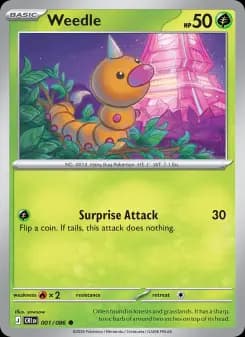
Weedle opens the checklist, as Gen 1 bugs so often do. A Common found in every bulk stack, its job is purely structural: first page of the binder, first step of the Beedrill ex line. Zero trade value on its own, but master-set collectors need one, and reverse-holo versions fill out the parallel set for those who chase it.
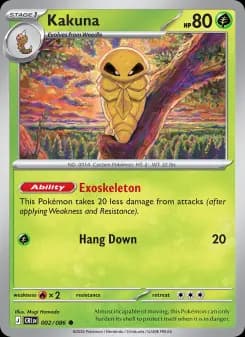
The cocoon stage. Kakuna exists so that Beedrill can exist, and as a Common it will accumulate in your trade box faster than anyone requests it. Complete lines present nicely in a binder, though — tossing the Weedle and Kakuna in with a Beedrill ex trade is the kind of courtesy that builds a trading reputation.
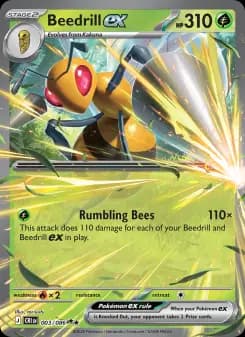
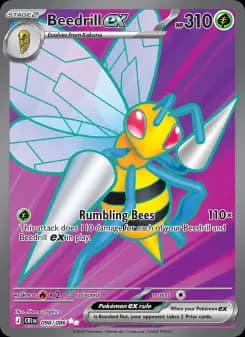
The first ex of the set, and a pure nostalgia pick — Beedrill was among the original 151, still pulled from packs to genuine smiles. As a Double Rare it appears regularly in boxes, so raw copies trade cheap. Its Ultra Rare counterpart lives at 098. A reasonable throw-in when balancing a bigger deal with a set collector.
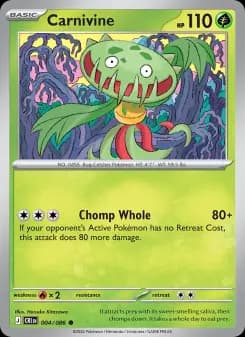
Carnivine, the Sinnoh flytrap, is one of those single-stage oddballs that appears in a set and evolves into nothing. For binder builders that makes it low-effort: one Common and the entry is done. It carries no market value to speak of, but no master set is complete without it, and somebody out there genuinely loves this Pokémon. Trade accordingly.
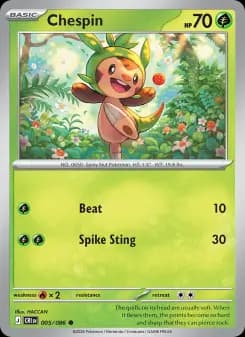
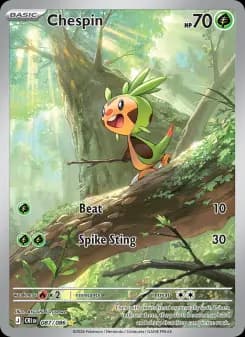
Here the Kalos theme announces itself: Chespin, the Grass starter of X and Y. Starters always outperform their rarity in casual demand — kids and starter-collectors ask for these long after the set rotates. The Common here is easy to find; the Illustration Rare version at 087 is the one with actual pull excitement attached. Keep spares for future trades.
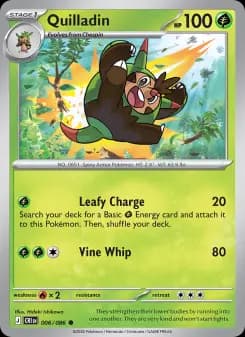
Quilladin has the classic middle-evolution problem: less iconic than Chespin, less impressive than Chesnaught. It is the piece people discover they are missing when assembling the full line. As a Common it costs nothing to acquire, so grab one when sorting bulk and save yourself the annoyance later. Line completists quietly need it more than they admit.
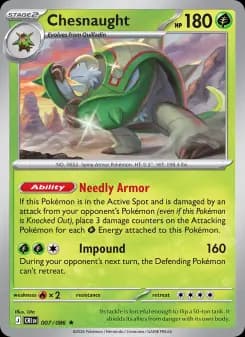
Chesnaught caps the Grass-starter line at Rare — notably without an ex form in this set, which keeps it affordable. Final-stage starters at plain Rare are solid binder cards: satisfying to finish the line, painless to obtain. If you are trading with a starter-line collector, the full Chespin-Quilladin-Chesnaught run makes a tidy package that costs you almost nothing.
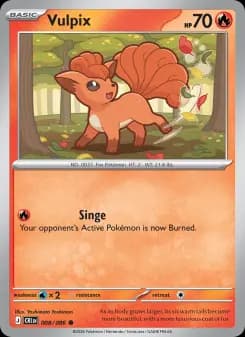
Vulpix needs no introduction — few Commons in any set carry this much cross-generational recognition. It is the kind of card that non-collectors recognize instantly, which gives it a soft demand floor among casual traders that its rarity does not suggest. Bulk in price, beloved in practice. An easy gift card when a trade needs a friendly finishing touch.
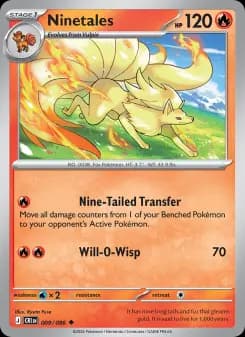
Ninetales at Uncommon completes a compact two-card line. The elegance of this Pokémon has carried it through three decades of card designs, and even modest printings find homes quickly. No meaningful market value here as of July 2026, but it is the sort of card that disappears from trade binders faster than its price implies. Popularity is its own currency.
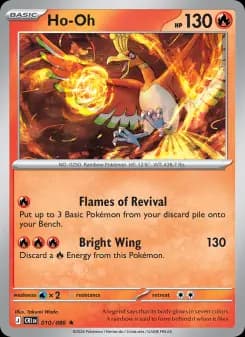
A legendary at plain Rare. Ho-Oh brings Johto gravitas to a Kalos-themed set, and legendary birds always enjoy steady binder demand regardless of rarity tier. Cards like this occupy a useful trading niche: too common to be valuable, too iconic to be bulk. Expect it to move one-for-one against other Rares with less name recognition — a small but real edge.
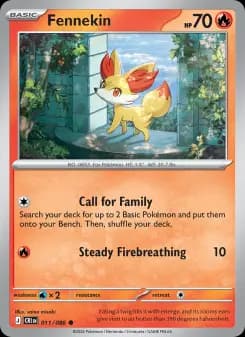
Fennekin matters more here than the average Common: it is the face of the Elite Trainer Box, whose exclusive promo card is also a Fennekin (a separate card — do not confuse the two). The Fire starter of Kalos has a devoted following, and this base version anchors the Braixen and Delphox line. Set-thematic, cheap, and always requested.
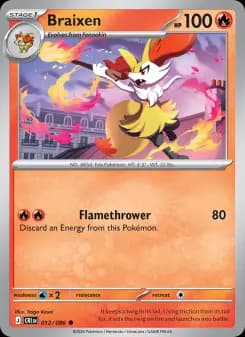
Braixen holds the middle of the Fire-starter line. Like most mid-stages it lives in the shadow of its neighbors, but the character's popularity — boosted over the years by its anime presence — keeps it from being anonymous bulk. A Common you should keep one of and trade the rest without hesitation. Line collectors will come asking eventually.
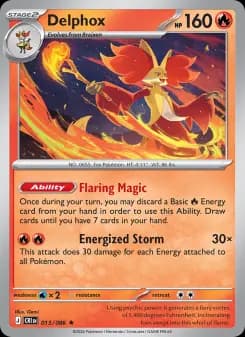
Delphox closes the Fennekin line at Rare, and like Chesnaught it skips the ex treatment in this set. That leaves a clean, affordable three-card line — one of the easiest satisfying completions in Chaos Rising. Fire-type final starters tend to hold mild trade interest with casual collectors, so a spare Delphox is never wasted binder space.
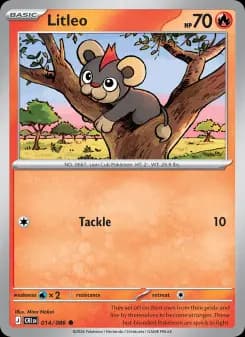
Litleo is the on-ramp to the set's first Mega. On its own it is an unremarkable Common, but cards that evolve into a Mega ex get a small utility bump: anyone building around Mega Pyroar ex needs the basic underneath it. Worth keeping a couple in the trade box for exactly that reason, and worthless enough that nobody will overpay you.
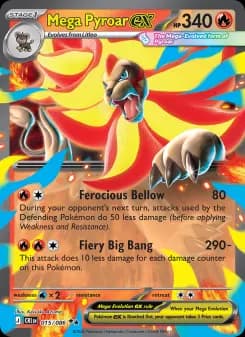
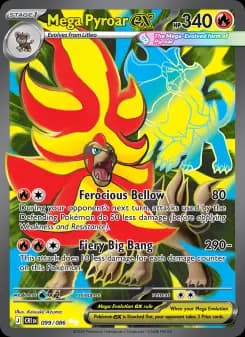
Mega Pyroar ex is the checklist's first Mega, printed at Double Rare with an Ultra Rare twin at 099. Neither version shows a notable price as of July 11, 2026 — the recurring fate of Megas sharing a set with a headline Greninja. For traders that reads as fodder: a flashy card to sweeten mid-sized deals.
Cards 016–034: Water Lines, Lightning and a Quartet of Deoxys
The heart of the main set: the regular Froakie line culminating in the base Mega Greninja ex, flanked by an ice corner, Mareep's ever-popular family, and an unusual run of four consecutive Deoxys cards.
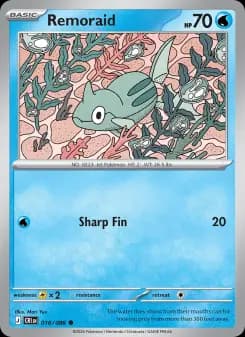
Remoraid begins one of the set's quieter Water lines. A Common with no pretensions, it exists for line completion and bulk boxes. Its one point of interest is the evolution it enables — Octillery has a long, odd history of being the useful one in this pairing across many TCG eras. Keep one, trade the rest, think about it never.
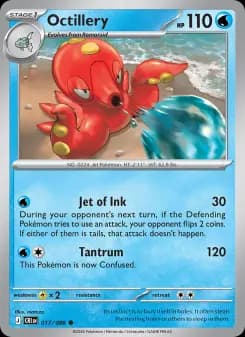
Octillery, the tank-turned-octopus, closes its two-card line as a Common. Veterans of older formats retain a soft spot for this Pokémon, which occasionally translates into someone specifically hunting it — the kind of tiny, sentimental demand that makes P2P trading more pleasant than selling. Market value: effectively nil. Binder value: complete the pair and move on.
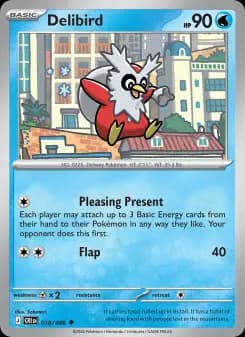
Delibird is a seasonal icon at Uncommon, and one of those cards whose demand spikes predictably every December — holiday-themed trades are real, and Delibird moves in winter. A cheerful nothing-card for ten months of the year with a genuine novelty window — stash one in the binder and thank yourself when the December trade requests arrive.
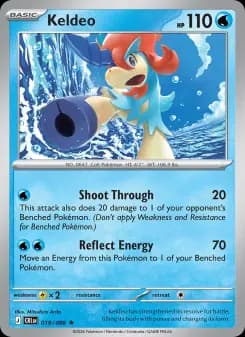
Keldeo gives this stretch its Mythical slot at Rare. As one of the Swords of Justice it pairs thematically with Cobalion ex at 064 — a nice cross-reference for binder curators. Mythicals at plain Rare rarely carry money but reliably carry interest; they are among the first non-chase cards set collectors ask about. Modest, steady, easy to trade.
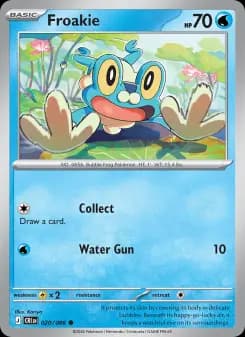
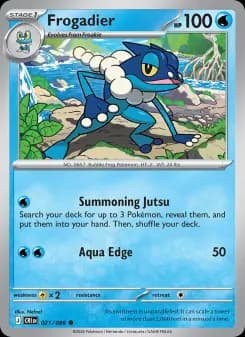
The regular Froakie — and suddenly a Common matters. This is the base-version starting point of the line that defines Chaos Rising, and while all the money lives in the Illustration Rare at 088, this printing benefits from spillover attention: Greninja collectors often want the plain line alongside the panorama. Still a Common in supply terms, so cost is zero. Demand, unusually, is not.
Frogadier continues the set's marquee line in its everyday Common form. It enjoys borrowed relevance: people assembling anything Greninja-related sweep these up as companions. The panorama panel at 089 is the collectible version; this one is the practical filler that makes a Greninja binder page feel complete. Keep duplicates — they get requested more than typical Commons.
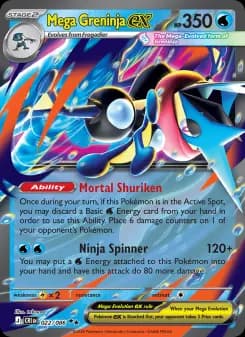
The base Mega Greninja ex at Double Rare — the most accessible of this card's four appearances (022, 100, 116, 122). Double Rares turn up steadily in packs, so no scarcity premium applies as of July 11, 2026. It is the cheap way to own the set's signature Pokémon, and quietly one of the better casual trade cards here: everyone recognizes it. The panorama premium belongs entirely to 116.
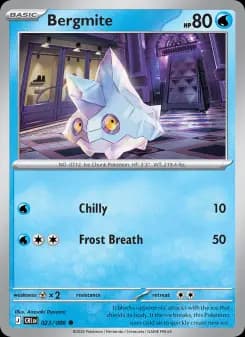
Bergmite starts the set's small ice corner as a Common. It is a humble entry whose main role is supporting Avalugg, and it will spend most of its life in bulk boxes. Ice-flavored cards enjoy a modest aesthetic following, which occasionally surfaces in trades, but expectations should stay low. One for the master set, spares for the mercy pile.
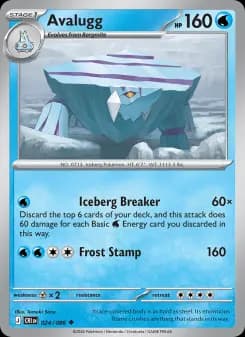
Avalugg at Uncommon completes the iceberg line. It is a satisfying visual endpoint — few Pokémon read as physically massive on a card the way Avalugg does — and Uncommons like this are frictionless trade material: nobody negotiates hard over them, they simply change hands. Master-set necessity, zero market drama, pleasant binder presence. Sometimes that is the whole review.
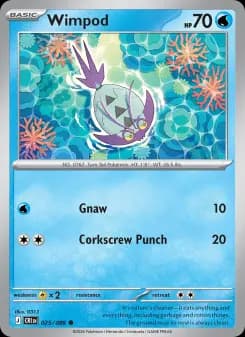
Wimpod, the famously skittish bug, is a Common that exists mostly as the price of admission to Golisopod. Its Alola-era fanbase is real, if niche. Cards like this are the connective tissue of a master set — unremarkable individually, essential collectively. Sort it, sleeve one, and let the rest pad out bulk trades without a second thought.
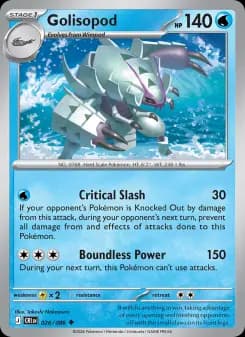
Golisopod carries genuine character-level popularity — its association with a certain Alolan team leader made it a fan favorite well beyond its stats in any game. At Uncommon it costs nothing, but do not be surprised if it is one of the first non-rare cards visitors flip to in your binder. Underpriced charisma is exactly what sharp traders keep on hand.
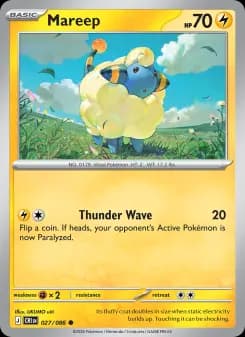
Mareep might be the most universally liked Common in the set. The electric sheep has multi-generational appeal, and its cards consistently vanish from trade boxes regardless of rarity or set. There is no money here, only goodwill — which, in peer-to-peer trading, is a real asset. Keep several; they make small trades feel complete and lopsided ones feel friendly.
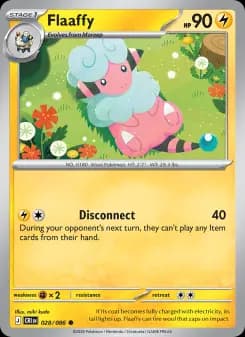
Flaaffy holds the awkward middle of a beloved line — pink, cheerful and perpetually overshadowed. As a Common its value is nominal, but Ampharos line collectors need it, and the line as a whole trades better assembled than as singles. A card you acquire by accident and trade away with mild satisfaction. Every set has twenty of these; this one has charm.
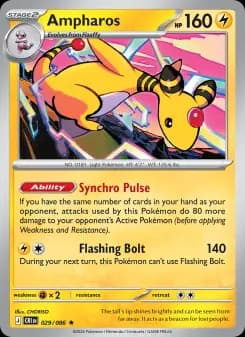
Ampharos lands at Rare and completes one of the set's most likable evolution lines. Collectors focus on its Illustration Rare twin at 090, but the same affection lifts this version: Ampharos is a perennial binder favorite that trades above its objective value. The full line is an easy, crowd-pleasing package; name recognition is its own small currency.
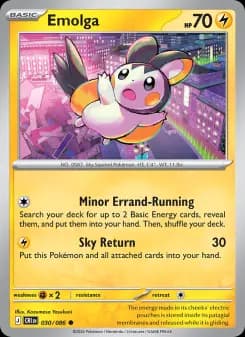
Emolga, the electric flying squirrel, fills the cute-Common quota with distinction. Cards like this are demand-stable in a way price guides never capture — there is always a collector, often young, who wants every Emolga in existence. No market value as of July 2026, no market value expected. Trade it with a smile; that is its function.
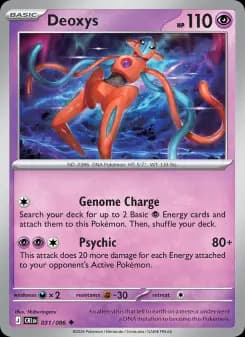
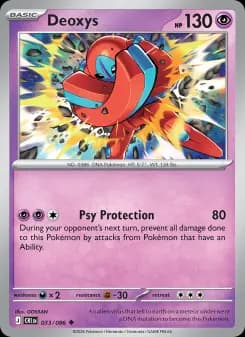
The first of four consecutive Deoxys cards — an unusual block of Uncommons that nods to the DNA Pokémon's multiple formes. As a run they make a striking binder page, and that is precisely how to think about them: the set rewards collecting all four, not cherry-picking one. Individually cheap, collectively a little conversation piece unique to this set.
Deoxys, second verse. Multi-version blocks like this quartet are a master-set collector's small headache — four separate checklist boxes for one Pokémon name — and a trader's small opportunity, since people frequently end up with three of four and need the exact one you happen to hold. Uncommon rarity keeps the stakes friendly. Match numbers carefully when trading.
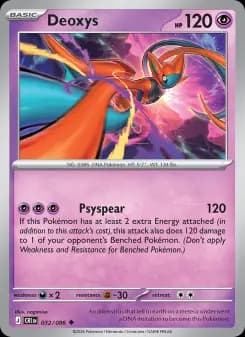
Third of the four Deoxys entries. By this point in a bulk sort you may suspect you are seeing double; you are not. The practical advice: keep the quartet together when you can, because a complete 031–034 run trades better as a unit than as scattered singles. Space-mythical fans are completionists almost by definition, and this block was designed for them.
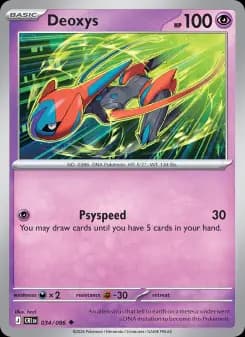
The final Deoxys closes the quartet at Uncommon. If you are the type who enjoys oddities, a full page of same-set Deoxys variants is one of Chaos Rising's genuinely distinctive features — most sets never print four versions of one non-chase Pokémon in a row. A cheap completionist pleasure, and cheap pleasures are underrated in a hobby full of $500 frogs.
Cards 035–048: Fairies, Ghosts and the Western-Exclusive Mega Gallade ex
A moodier middle chapter: Kalos ghosts, the Xerneas legendary slot, and two cards with stories attached — Mega Floette ex, whose SIR is a legitimate chase, and Mega Gallade ex, which does not exist in the Japanese set at all.
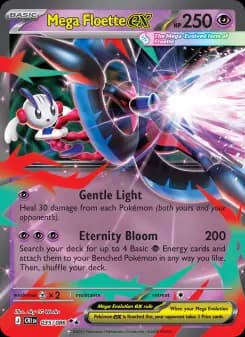
Mega Floette ex at Double Rare is one of the set's more story-laden cards — Floette is inseparable from the AZ narrative of Kalos, a thread this set pulls repeatedly (see 075 and 076). The base version is inexpensive; the SIR at 117 carries the $25–40 chase value. Binder curators can build a whole page around this line.
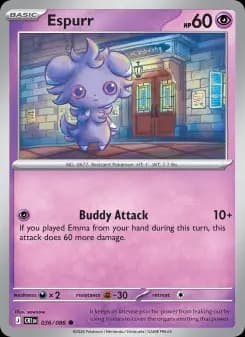
Espurr stares out from its Common slot with the unsettling intensity that made it an internet favorite. Meme-adjacent Pokémon enjoy small but persistent card demand, and Espurr is a reliable example — expect the occasional oddly enthusiastic trade request. Financially irrelevant, socially productive, and impossible to mistake for anything else. The best kind of Common to have three of.
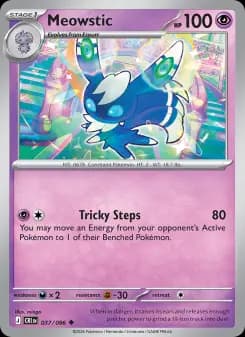
Meowstic completes the Espurr line at Uncommon. The species' two-form lore gives it more personality than the average mid-tier psychic cat, and it photographs well on a binder page beside its wide-eyed pre-evolution. Trade value is negligible as of July 2026; completion value is standard. One copy suffices unless a Meowstic devotee finds your binder.
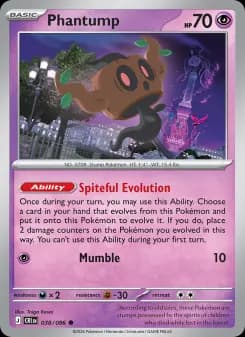
Phantump begins the set's ghost corner — a stump possessed by a spirit, per its famously dark lore. Kalos ghosts have a dedicated aesthetic following, and this Common is their entry point in Chaos Rising. Value: pure bulk. Vibe: excellent, frankly. It also feeds Trevenant at 039, giving the line collector a short and satisfying climb.
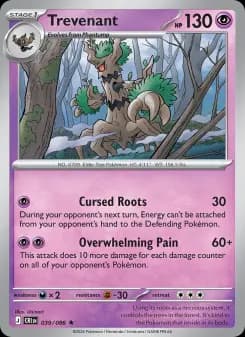
Trevenant lands at Rare, capping the haunted-tree line. Ghost-type finals at plain Rare occupy comfortable trade territory: enough presence to feel like a real pull, not enough scarcity to argue over. Horror-flavored binder pages are a real collecting niche, and Trevenant anchors one nicely alongside the Pumpkaboo line that follows. Steady, modest, thematic — the quiet kind of Rare.
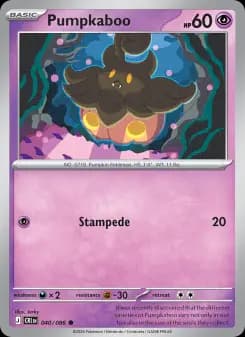
Pumpkaboo continues the spooky interlude as a Common. Its size-variant lore made it a collector curiosity in the games, and its jack-o'-lantern design gives it the same seasonal-demand quirk as Delibird — expect October interest the way Delibird gets December. A bulk card with a calendar. Keep one for the master set and one for Halloween trades.
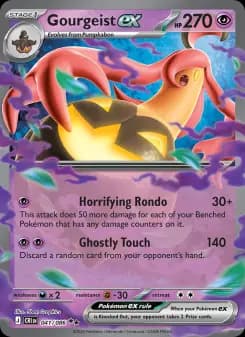
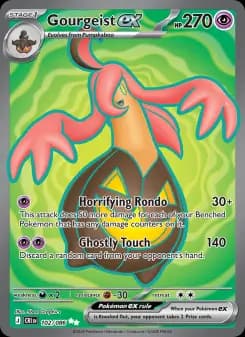
Gourgeist ex brings the ghost corner its ex card at Double Rare, with an Ultra Rare twin at 102. Neither version shows notable market value as of July 11, 2026 — a quintessential mid-set ex: exciting for eight seconds in a pack, trade ballast thereafter. If a ghost-page collector crosses your path, this is their centerpiece; price gently.
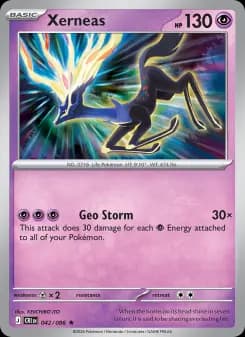
Xerneas at Rare is the set's legendary standard-bearer and its clearest Kalos signal — the life-tree deer presided over the very games this set romanticizes. Base-rare legendaries trade briskly on name alone; the Illustration Rare at 091 draws the tier's attention, lifting this version by association. An easy card to move in any trade, never for much money.
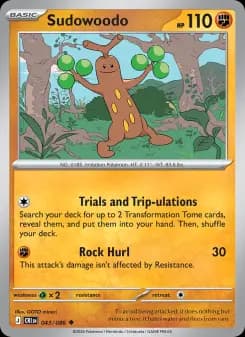
Sudowoodo, the tree that is not a tree, holds its Uncommon slot with thirty years of accumulated charm. It is filler by every objective measure and yet somehow never feels like it — the mark of a genuinely well-loved side character. No price movement here as of July 2026, nor ever, probably. Trade it freely; it will be appreciated.
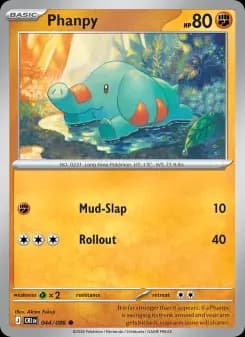
Phanpy opens a small Fighting-flavored line as a Common. The little elephant is quietly one of Johto's most endearing designs, and endearing translates to steady, tiny demand in P2P circles. It exists to become Donphan and to fill a checklist box, both of which it does without complaint. Standard bulk with above-average likability and a permanent soft spot among Johto fans.
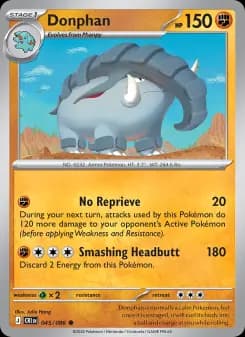
Donphan completes its line while remaining, unusually, a Common — no rarity jump for the final stage here. That makes the full Phanpy-Donphan pair one of the cheapest complete lines in Chaos Rising, a two-slot finish for the price of pocket lint. Veteran players remember Donphan's competitive glory days fondly, which occasionally sparks a nostalgic trade request.
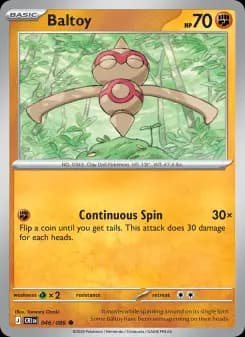
Baltoy spins into the set as a Common, the clay figurine that exists primarily to become Claydol. Ancient-artifact Pokémon have a niche archaeological charm, but there is no pretending this is anything other than master-set material. Its line partner at 047 gets an Illustration Rare nod at 092, which retroactively makes this Common feel slightly more relevant. Slightly.
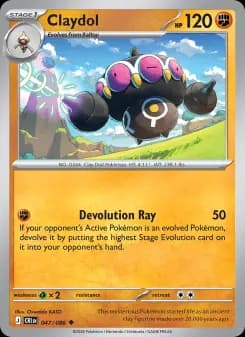
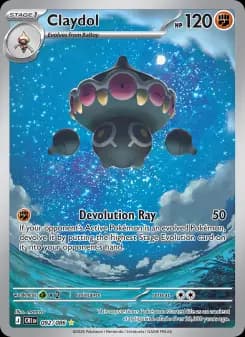
Claydol at Uncommon is more interesting than it looks: it received one of the set's eleven Illustration Rare slots (092), a curious honor for a mid-tier psychic artifact. That lifts this base version a notch — IR collectors sometimes back-fill their alt-art pulls. Still cheap, still easy, now with a footnote — a mid-tier artifact that quietly outgrew its slot.
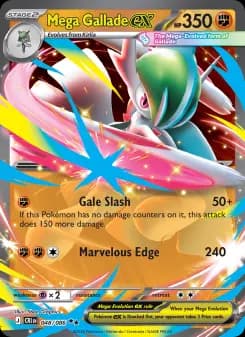
Mega Gallade ex is one of Chaos Rising's two Western-exclusive cards — it does not exist in Japanese Ninja Spinner — and it arrived carrying real competitive buzz, ranking among the set's most-searched deck names. Yet no Ultra Rare or SIR version exists — this Double Rare is the only printing, full stop. That low rarity ceiling keeps raw prices unremarkable as of July 11, 2026, but the exclusivity gives it an audience most Double Rares never find: Japanese-market collectors cannot pull this card at all, so English copies carry quiet cross-border trade appeal. Set it aside rather than bulking it out: player demand plus geographic scarcity is a combination that occasionally ages well — no promises, but the ingredients are there.
Cards 049–065: The Rogues' Gallery — Zubat to Mega Dragalge ex
Bats, skunks, garbage and battle-hardened steel, plus the second Western exclusive in Krookodile ex. The run closes with Mega Dragalge ex, whose Special Illustration Rare is a top-five card in the set.
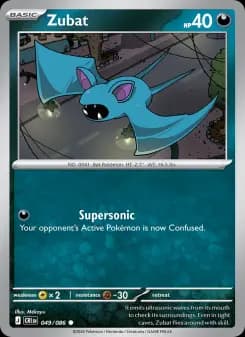
Zubat begins the rogues' stretch the way it begins every cave in every game: uninvited and numerous. As a Common it is pure line fodder for Crobat at 051, and its ubiquity across TCG history makes it almost a running joke among sorters. Master-set box checked, nothing further to report. Some cards are simply Zubat.
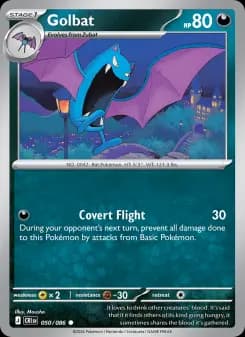
Golbat holds the middle of the bat line at Common. Its main function is bridging Zubat to Crobat, whose friendship-evolution lore gives the completed trio a nice narrative arc for binder builders. Individually forgettable, collectively worthwhile — the recurring theme of every well-constructed evolution run. Trade in threes when you can; the trio moves better than the parts.
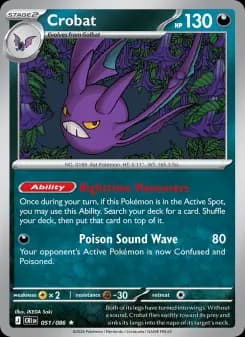
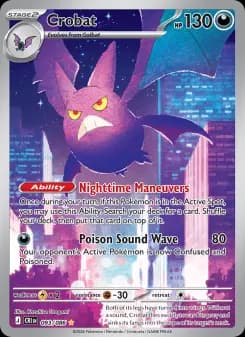
Crobat closes the bat line at Rare and claims an Illustration Rare slot at 093. It has aged into genuine fan-favorite territory, and base Rares of popular finals move easily in trades. The full Zubat-Golbat-Crobat run is a classic, cheap, satisfying package for line collectors — a dependable Rare that leaves binders faster than it enters them.
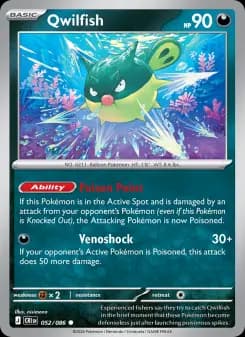
Qwilfish drifts through as a standalone Common — no evolution here, just the spiky pufferfish doing its own thing. One-off entries like this are the fastest checklist boxes to close, which is their entire appeal. Zero market presence as of July 2026, though a mild cult following among fans of weird Water types keeps it from total anonymity. File under: done.
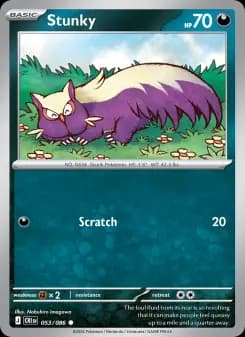
Stunky is a Common whose reputation precedes it — the skunk line has never been anyone's favorite, and that is precisely its niche: cards people need but never seek. Master-set collectors will take it off your hands without ceremony. It feeds Skuntank at 054, completing one of the set's least glamorous but entirely necessary pairs.
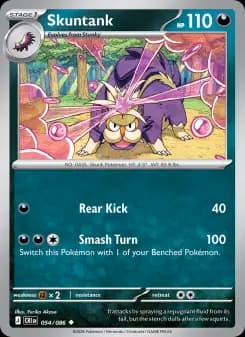
Skuntank finishes the skunk line at Uncommon. There is an honest dignity in cards like this: no chase value, no artwork discourse, no drama — just a checklist requirement fulfilled. In trade terms it is frictionless filler, the kind you add to even out a deal's edges. Every master set is one Skuntank short until it isn't.
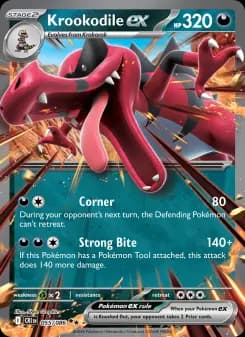
Krookodile ex, the set's other Western exclusive, shares Mega Gallade's odd profile: absent from Japanese Ninja Spinner, and printed here only as a Double Rare with no Ultra Rare or SIR version above it. The intimidating croc has a solid Unova-era fanbase, and the exclusivity gives English copies the same quiet cross-border relevance as its counterpart at 048 — Japanese collectors completing the international version of this block need it and cannot pull it. Prices show nothing notable as of July 11, 2026, so copies cost little to acquire. That is arguably the point: exclusivity plus popular design plus negligible cost is exactly the profile worth stashing in the trade binder and forgetting about. Worst case, it is a likable croc; best case, it is the answer to a very specific overseas want-list.
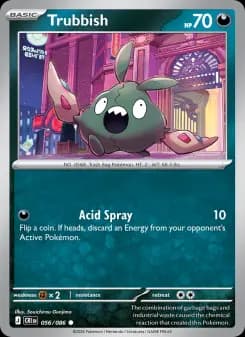
Trubbish, the literal trash bag, opens its line as a Common — a design that launched a thousand jokes and a surprisingly loyal fanbase. Ironic affection is still affection, and Trubbish cards trade with more smiles than their subject matter suggests. Bulk value, cult appeal, and a direct line to Garbodor at 057. The set's most self-aware entry.
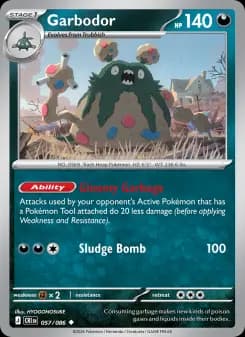
Garbodor completes the garbage line at Uncommon. Longtime players remember when this Pokémon warped entire competitive formats, a legacy that still earns it double-takes in binders. That history adds no dollars to this particular printing as of July 2026, but it adds conversation — and conversation is how P2P trades start. Cheap card, rich backstory.
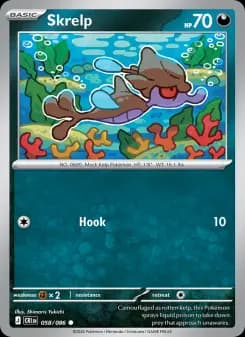
Skrelp is the sneaky-important Common of this stretch: it is the sole stepping stone to Mega Dragalge ex at 065, whose SIR is a $60–80 chase card. Chase-adjacent cards pick up residual demand — the Dragalge page needs the humble kelp fish that starts it. Still bulk-priced, but bulk with a purpose. Keep spares for the line builders.
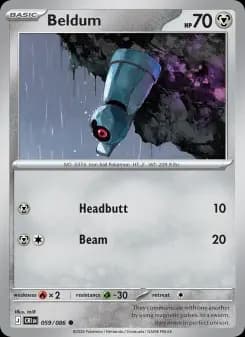
Beldum arrives as the traditional first piece of the Metagross line, a Common whose entire identity is potential energy. The pseudo-legendary steel line remains one of the franchise's most collected, and its base stages benefit accordingly: never valuable, always wanted. A card that leaves trade binders quickly and quietly. Stock more than one; demand outlasts the set.
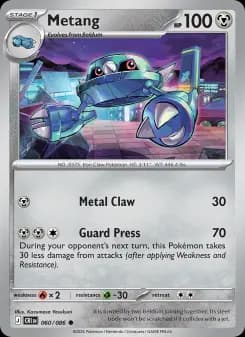
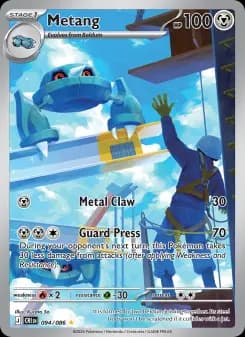
Metang holds the middle of the steel line at Common and — unusually for a mid-stage — earned an Illustration Rare slot at 094. Mid-evolutions rarely get alt-art honors, so line collectors treat the pairing as a small novelty, with this base version as the reference copy. Cheap, necessary, slightly elevated — line collectors treat base and IR as a matched pair.
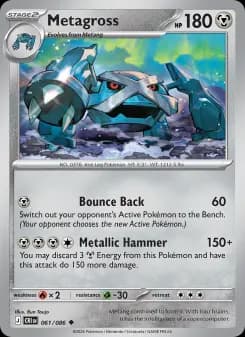
Metagross closes the pseudo-legendary steel line at Uncommon — a modest rarity for a Pokémon of this stature, which keeps the full three-card run refreshingly affordable. Pseudo-legendary finals are perennial binder anchors, trading on reputation rather than price. The complete line is among the most requested cheap packages in Chaos Rising — a reputation card rather than a price card.
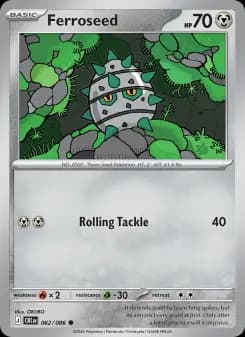
Ferroseed rolls in as a Common, all spikes and patience. It exists to become Ferrothorn and to fill the Metal corner of the master set, and it performs both duties without incident. Older players may recall its line's competitive pedigree; newer collectors will sort it into bulk within seconds. Both responses are entirely correct, and neither affects its checklist duty.
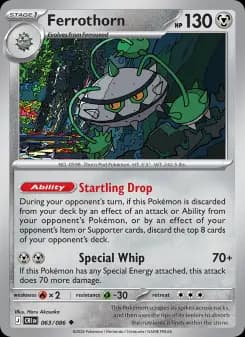
Ferrothorn hangs from its Uncommon slot to complete the thorny line. Like Garbodor, it carries faded competitive fame that occasionally earns a knowing nod during binder flips. Nothing in the July 2026 data suggests value, and nothing needs to — this is connective master-set tissue with a respectable resume. Trade it without ceremony, and expect none in return.
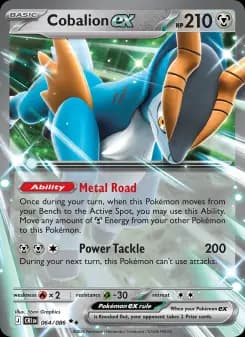
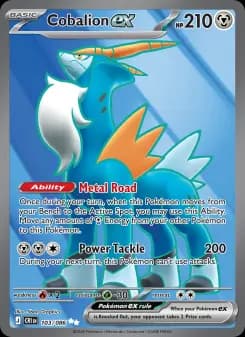
Cobalion ex gives the Swords of Justice a Double Rare presence, pairing narratively with Keldeo back at 019 — a cross-reference binder curators can have fun with. Its Ultra Rare version waits at 103. As with most of the set's non-Greninja ex cards, market value is unremarkable as of July 11, 2026, making it dependable trade ballast with legendary credentials.
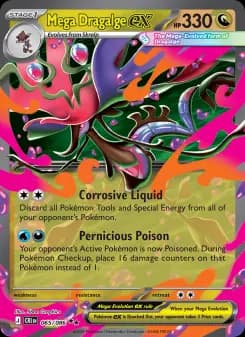
Mega Dragalge ex at Double Rare is the accessible version of a genuine chase line — its SIR at 118 trades at $60–80 as of July 11, 2026. Base versions of chase cards enjoy steady secondary demand — the Pokémon without the premium — and with Skrelp at 058 as the only pre-evolution, the full line is just two slots. Keep spares.
Cards 066–073: Goomy to Cinccino ex — Dragons and the Sleeper
A short but consequential block: the Goomy pseudo-legendary line gives the set its dragon credentials, and Cinccino ex — the final ex of the main numbering — turned out to be the sleeper of Chaos Rising.
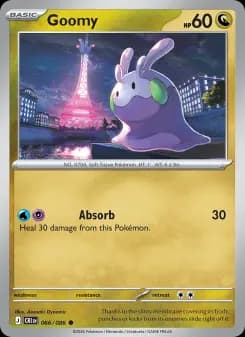
Goomy begins the set's pseudo-legendary dragon line in trademark soggy fashion. The friendliest and squishiest of dragons has an outsized fanbase for a Common, and dragon-line base stages always find takers. Its real significance is structural — the three-slot climb to Goodra starts here. Bulk-priced, warmly received, frequently requested alongside its evolutions — a future Goodra always needs its Goomy.
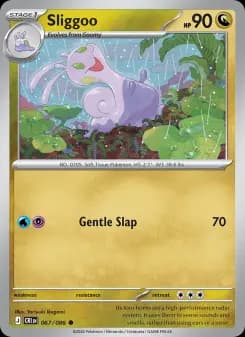
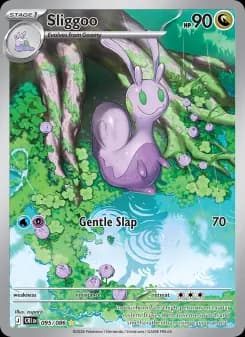
Sliggoo occupies the middle of the dragon line and, like Metang, snagged one of the set's Illustration Rare slots (095) — Chaos Rising clearly enjoys honoring mid-evolutions. This Common version is the everyday copy; keep it in mind when someone pulls the IR and wants the supporting line. Cheap, necessary, and part of the set's most huggable trio.
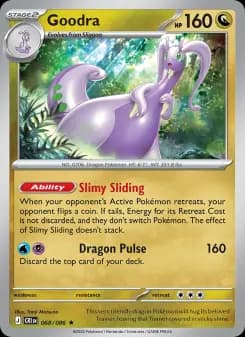
Goodra completes the pseudo-legendary line at Rare, with no ex version in this set — the gentle dragon stays humble. Full pseudo-legendary runs are reliable trade movers even at low rarities, and Goomy-Sliggoo-Goodra is a beloved one. As a plain Rare it asks little and gives a satisfying line completion. The kind of card that makes set collecting feel finished.
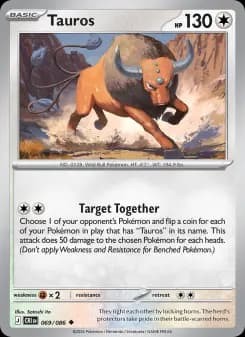
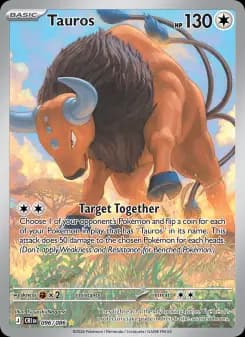
Tauros charges through at Uncommon and, somewhat unexpectedly, claims an Illustration Rare slot at 096. The original raging bull has Gen 1 pedigree and a certain rugged charm, but few predicted alt-art treatment. The base version here is standard master-set material; its main modern role is reference copy for the IR. Steady, cheap, mildly elevated by association.
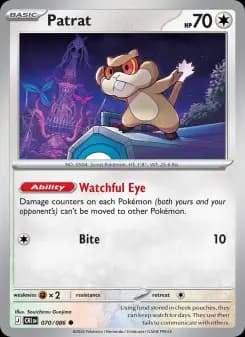
Patrat stands watch as a Common, the Unova sentinel nobody asked for and every master set requires. Its hypnotic stare has earned it minor meme status, which is more than many Commons can say. It feeds Watchog at 071 — a line whose IR treatment at 097 became one of the set's quiet running jokes. Bulk with a punchline.
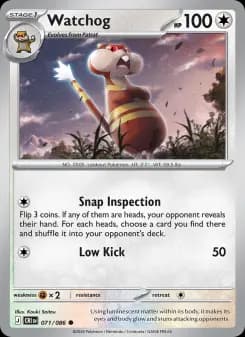
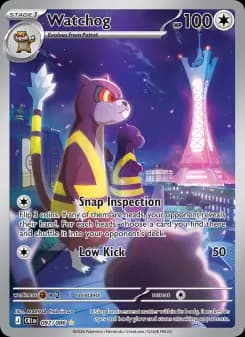
Watchog completes its line at Common and then, improbably, stars in Illustration Rare form at 097 — one of the set's most endearingly odd alt-art choices. That decision retroactively gives this base version a sliver of relevance: IR owners occasionally back-fill the plain copy for the pairing. Otherwise it is exactly what it appears to be: a vigilant rodent in a bulk box.
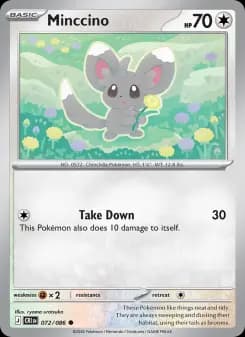
Minccino sweeps in as the Common gateway to the set's sleeper hit. With Cinccino ex at 073 and its $45–125 SIR at 119 drawing real attention, this little chinchilla enjoys the classic adjacent-to-a-chase bump — line collectors want the starting point. Add its standalone cuteness constituency and you get a Common worth keeping duplicates of. Cheap now, requested often.
Cinccino ex at Double Rare is the base form of Chaos Rising's biggest surprise — nobody projected the fluffy chinchilla as a top-three money card, yet its SIR at 119 trades at $45–125 as of July 11, 2026. The sleeper halo reaches the whole line: livelier trade traffic than most of the set's ex cards. Do not bulk it reflexively — modest price, above-average liquidity.
Thirteen cards close the main set: ten Kalos-steeped Trainers and three named Special Energy cards at Rare. Two Trainers here — AZ's Tranquility and Roxie's Performance — are the base versions of genuine SIR chase cards.
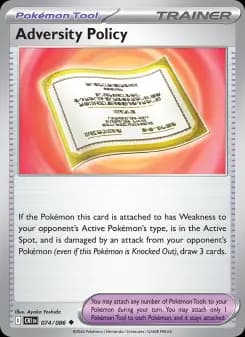
Adversity Policy opens the Trainer block at Uncommon. Whatever its table function, Trainer cards of this stripe are the workhorses of any set — the cards players burn through and set collectors need exactly one of. No secret-rare version exists, so this printing is the only checklist box to tick. Frictionless filler with a resilient-sounding name.
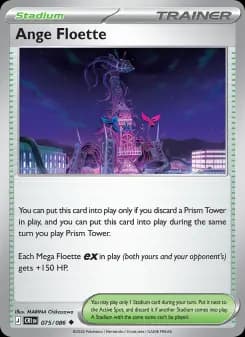
Ange Floette is one of the set's more evocative Trainer names, leaning into the Floette thread that runs through Chaos Rising alongside Mega Floette ex (035, 101, 117) and the AZ cards — Floette and AZ share one of the franchise's most bittersweet stories. An Uncommon with no premium version and a surprising amount of narrative weight.
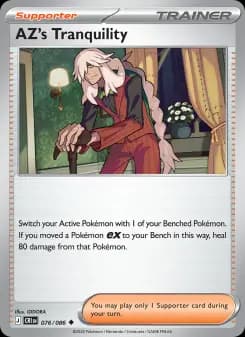
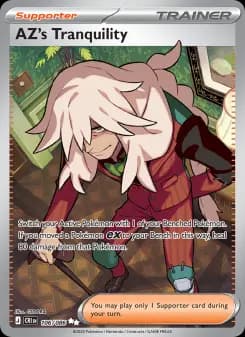
AZ's Tranquility at Uncommon is the affordable face of a genuine chase card — its SIR at 120 trades at $40–60 as of July 11, 2026, with an Ultra Rare at 106 between them. AZ, the wandering giant of Kalos legend, accrues exactly the kind of sentimental demand that sustains Trainer chases. A card that costs pennies and carries a three-thousand-year backstory.
Emma brings another deep-cut Kalos character to the Trainer lineup at Uncommon, with an Ultra Rare version at 107. Character Trainers live and die on fan attachment, and Emma's storyline gave her a devoted following among X and Y players. The base copy is standard set filler; the demand, where it exists, is pure nostalgia. Easy to acquire, pleasant to trade.
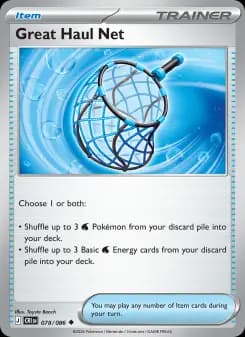
Great Haul Net is an Uncommon Trainer whose fishing-net name suits a set fronted by a water-ninja frog. Utility Trainers like this circulate heavily among players and barely at all among collectors — one copy closes the checklist box, and no premium version exists to complicate matters. The definition of a card you acquire without noticing.
Philippe joins the set's named-character Trainers at Uncommon, with an Ultra Rare counterpart at 110. Lesser-known character cards are a quiet subgenre of collecting — someone, somewhere, considers Philippe essential. For everyone else this is standard Trainer filler: cheap, necessary once, and untroubled by market forces as of July 2026. The UR version is where any real interest concentrates.
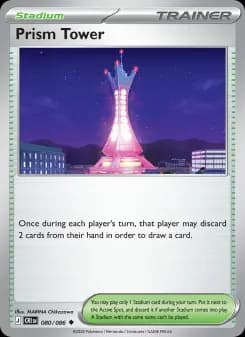
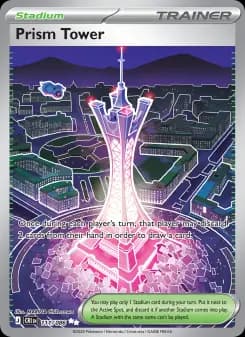
Prism Tower puts Lumiose City's iconic landmark on a card at Uncommon, with an Ultra Rare version at 111. Location cards punch above their weight with regional-nostalgia collectors, and nothing says Kalos like this tower. The base version is inexpensive and thematic — a natural inclusion in any Kalos-themed binder page, which this set practically begs you to build.
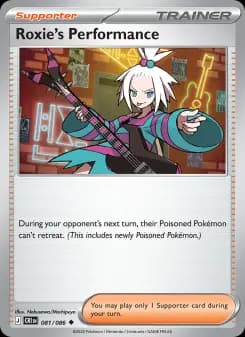
Roxie's Performance at Uncommon is the entry-level version of a legitimate chase: the SIR at 121 trades at $25–40 as of July 11, 2026, with an Ultra Rare at 112 between them. Roxie's punk-rocker design is among the franchise's most distinctive, and character-driven Trainer chases are increasingly where SIR value concentrates. This base copy is the cheap seat at that show.
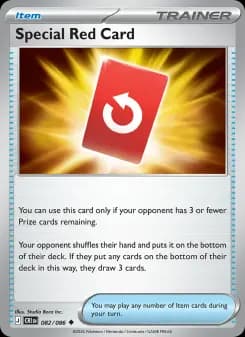
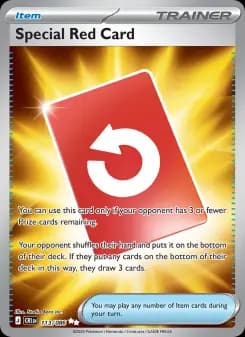
Special Red Card is an Uncommon Trainer whose name riffs on a classic disruption item from the game's history, with an Ultra Rare version at 113. Trainers with recognizable lineage get a small awareness bump among longtime players. As a collectible, this base printing is routine; as a checklist item, mandatory; as a market force, dormant. One copy and done.
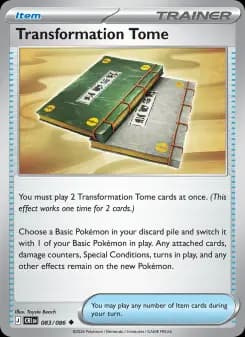
Transformation Tome closes out a very on-theme Trainer name for a Mega Evolution block set. It sits at Uncommon with no premium version, making it a single-box checklist entry. Item-style Trainers like this are the cards you find twelve of when sorting a booster box and need exactly once. Sleeve one for the master set; the rest are trade-box padding.
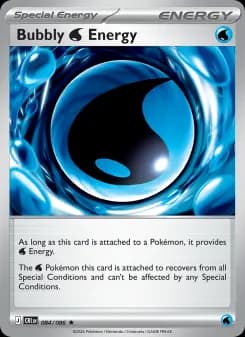
Bubbly Water Energy is the first of three named Special Energy cards closing the main set, printed at Rare — a tier bump that catches bulk-sorters off guard. Special Energy occupies a odd collecting niche: players may want multiples, while set collectors need just one. Its watery branding suits the set's Greninja identity. Rare slot, modest presence, mandatory checklist box.
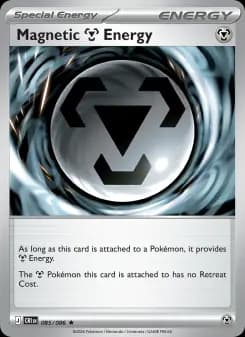
Magnetic Metal Energy continues the Special Energy trio at Rare. Cards like this rarely star in anyone's binder, but their Rare printing means they occupy real pull slots — you will open fewer of these than of any Uncommon Trainer, a scarcity quirk master-set builders learn to respect. Metal-deck players provide whatever ongoing demand exists. Utilitarian, slightly elusive, necessary.
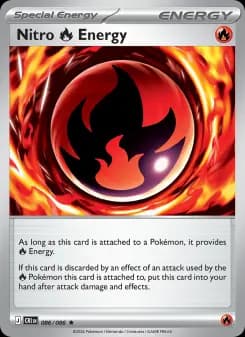
Nitro Fire Energy completes both the Special Energy trio and the main set's numbering at 086. There is something fitting about a checklist that opens with Weedle closing with rocket fuel. As with its siblings, the Rare printing makes it marginally harder to pull than its glamour suggests. Tick the box — everything after this number is secret-rare territory.
Eleven alternate-art versions of the set's Commons and Uncommons — attainable pulls that mostly trade modestly, with two deliberate exceptions: Froakie 088 and Frogadier 089, the first two panels of the Maeya panorama, priced like pieces of a $500 painting because that is what they are.
The Illustration Rare Chespin kicks off the secret-rare numbering with alternate art for the Kalos Grass starter's base version at 005. Starter IRs typically sit near the top of their tier's casual demand — starters plus alt-art is a dependable formula — though no notable price shows in our July 2026 data. A warm, attainable pull that makes an ETB feel justified.
Froakie 088/086 — the left panel. This Illustration Rare trades at $10–15 as of July 11, 2026, an eyebrow-raising figure for a first-stage IR until you understand what it is: the opening third of Susumu Maeya's connected panorama, which continues through Frogadier 089 and culminates in the $270–580 Mega Greninja ex at 116. Every collector who lands the SIR — now or years from now — needs this panel, and there is exactly one printing of it. As trade targets go: affordable today, tethered to the crown jewel tomorrow. If you pull one, resist bulk-binning it with ordinary IRs. And if you are hunting the full panorama, community wisdom says acquire the cheap panels first; add it to your wishlist and let the frog come to you.
Frogadier 089/086 — the middle panel. The second piece of the Maeya panorama holds the same $10–15 range as Froakie as of July 11, 2026, and for the same structural reason: no completed triptych exists without it. Middle panels carry a subtle scarcity psychology — they are the piece collectors most often discover they skipped, having grabbed the flashy SIR and the cheap opener first. Without the panorama link, a mid-stage IR like this would trade near the bottom of its block. The play here mirrors its pre-evolution: acquire before the SIR, not after, because panel demand moves in lockstep with Greninja demand. A genuinely rare case of a Frogadier card mattering this much — savor the oddity, and keep any duplicates for future panorama-hunters, who are a renewable resource.
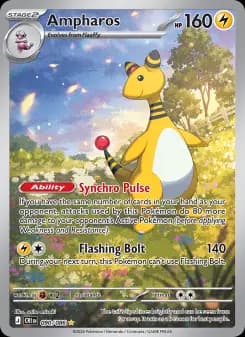
Ampharos in Illustration Rare form gives one of the set's most beloved lines its premium moment. Fan-favorite Pokémon plus alt-art is the recipe for steady tier-internal demand, and Ampharos IRs move well even without headline prices — nothing notable in our July 2026 data, which means opportunity for patient traders. A Mareep-line binder page ends here, happily.
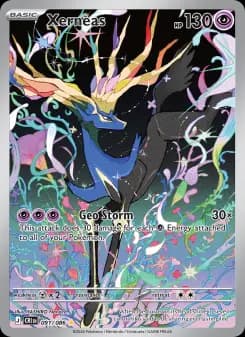
The Xerneas Illustration Rare is the tier's legendary entry, pairing the set's Kalos figurehead with alternate art. Legendary IRs typically anchor casual want-lists, and Xerneas carries this set's regional identity. No standout price appears in our data as of July 2026 — a sensible target while the set trades soft. Displays beautifully beside the base Rare at 042.
Claydol's Illustration Rare is one of the tier's genuine curiosities — alt-art slots are precious, and this set spent one on a spinning clay artifact. Choices like this age unpredictably: most fade, some become cult favorites precisely for their oddness. Its price is unremarkable as of July 2026. One for collectors who enjoy the road less traveled.
Crobat lands the Illustration Rare treatment at 093, rewarding a fan favorite whose friendship lore makes it more than another poison bat. Crobat alt-arts are quietly popular across sets, and this one caps the 049–051 line properly. Nothing notable in the price data as of July 2026 — file under likable, attainable, easy to trade at fair value.
The Metang Illustration Rare is the tier's second mid-evolution honoree. Mid-stage IRs tend to be the tier's most affordable cards, prized mainly by line completists — useful trade material: cheap to acquire, welcome in any Metagross-themed package. A modest card that exists because some illustrator saw poetry in a floating steel crab. Line completists know exactly why it matters.
Sliggoo's Illustration Rare gives the dragon line's middle child its moment. The gentle pseudo-legendary family has collectors who want every version of every stage, and mid-stage IRs like this are their bread and butter. Within-tier value is typically bottom-half, and our July 2026 data shows nothing to contradict that. An affable, affordable pull — the IR you keep because it makes you smile.
Tauros charging through an Illustration Rare frame is one of the tier's more rugged offerings — a Gen 1 icon that rarely receives premium treatment. First-generation nostalgia gives cards like this a durable, low-intensity demand floor among older collectors. No notable price as of July 2026. Not chased, not ignored, reliably traded at friendly rates.
The Watchog Illustration Rare became a minor community talking point on reveal — of all the set's Pokémon, the vigilant rodent got alt-art? Cards like this develop cult followings precisely because they are absurd, and ironic demand is still demand. No notable price as of July 2026, but it may be the tier's most conversation-starting card. Never underestimate a meme with a print run.
Eighteen premium treatments of the set's ex Pokémon and Trainers. Master-set builders, note the trap: four Trainer URs (Energy Retrieval, Jumbo Ice Cream, Surfing Beach, Tool Scrapper) have no base-set counterpart — they exist only in this tier. Value-wise, only Mega Greninja ex 100 carries a meaningful price (around $28 as of July 11, 2026); the rest is classic trade fodder.
Beedrill ex opens the Ultra Rare block with a premium version of the Gen 1 bug from 003. Ultra Rares of non-chase ex Pokémon are the workhorse hits of modern sets — flashy enough to feel like something, common enough to trade modestly. No standout price as of July 2026. Nostalgia gives it a slight edge over tier-mates in casual trades.
The Ultra Rare Mega Pyroar ex upgrades the set's first Mega from 015. The July 2026 data shows nothing remarkable — Mega URs in a set ruled by one Greninja trade in its shadow. For lion enthusiasts and Mega completists it is a handsome, attainable target; for everyone else, quality trade ballast that photographs well in an offer.
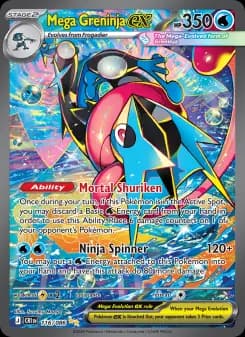
Mega Greninja ex 100/086 is the Ultra Rare tier's one genuine money card, holding around $28 as of July 11, 2026 while its tier-mates trade for a fraction of that. The reason is straightforward: this is the affordable premium version of the set's signature Pokémon, the natural landing spot for collectors who want a special Greninja without committing to the $270+ SIR at 116 or the $300+ gold at 122. Cards in this position are liquidity champions — cheap enough to change hands constantly, iconic enough that demand never dries up. Treat it as the set's most dependable mid-value piece and a fair centerpiece for bundles of smaller cards. If the set's 25% slide continues, this card also has the least distance to fall. A sensible frog for sensible collectors.
Mega Floette ex in Ultra Rare form sits between the base Double Rare at 035 and the $25–40 SIR at 117, serving collectors who want the premium feel without SIR pricing. Its July 2026 market presence is quiet; the fairy's AZ-adjacent lore does its heavy lifting at the SIR tier. Attainable and pleasant, if rarely requested by name.
The Gourgeist ex Ultra Rare gives the ghost-pumpkin its most elaborate printing, upgrading the Double Rare from 041. Spooky-seasonal collectors are this card's natural constituency, and tier-standard pricing (nothing notable as of July 2026) keeps it within easy reach. As with Delibird and Pumpkaboo, expect its trade traffic to tick upward every October. A niche card with a reliable calendar.
Cobalion ex at Ultra Rare gives the Swords of Justice legend its premium form, above the Double Rare at 064. Legendary URs hold a mild edge within the tier — legendary names simply move faster in trade conversations — though our data shows no standout price as of July 2026. Pairs thematically with Keldeo at 019 for anyone building a justice-themed binder page.
The Ultra Rare Mega Dragalge ex is the middle rung of the set's third-most-valuable card line — below the $60–80 SIR at 118, above the Double Rare at 065. Chase-line URs inherit residual demand from their SIR siblings, and this one benefits accordingly: unremarkable in isolation, consistently relevant in Dragalge-focused trades. A solid mid-tier hold while the set finds its price floor.
Cinccino ex in Ultra Rare rides the coattails of the set's sleeper story — the SIR at 119 commanding $45–125 lifts every version of this improbable chinchilla. Sleeper halos reach middle tiers unevenly: above tier expectations, well below headline numbers. If Cinccino demand persists, this is affordable exposure; if it fades, it is a cute card. Both outcomes are survivable.
AZ's Tranquility at Ultra Rare occupies the middle of the set's most emotionally resonant Trainer line, between the Uncommon at 076 and the $40–60 SIR at 120. Full-ladder Trainer runs give completionists a clean climb, and the UR is traditionally the overlooked rung — cheaper than the SIR, fancier than the base. Quiet value for AZ devotees, standard fare for everyone else.
The Emma Ultra Rare elevates one of Kalos's most beloved side characters from her Uncommon at 077. Character URs live on fan attachment, and Emma's X and Y following is genuine if niche. No notable price as of July 2026, which suits her story's underdog spirit. The kind of card that means little to markets and a lot to the right trader.
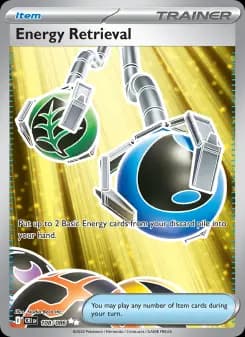
Energy Retrieval at Ultra Rare is a master-set landmine: it has no base version in Chaos Rising, existing only in this premium tier. Miss that detail and your 'complete' binder is one card short. The name itself is franchise history, dating to the game's earliest days, which gives this printing a pleasant old-meets-new charm. Tier-standard value, above-standard importance to completionists.
Jumbo Ice Cream is the Ultra Rare tier's whimsy quotient — and another UR-only Trainer with no base-set counterpart, a trap for checklist skimmers. Novelty food Trainers have a devoted micro-audience across sets. Value is tier-standard as of July 2026; smiles per dollar, considerably higher. Do not forget it exists, because your master set will.
Philippe's Ultra Rare rounds out the set's least famous character Trainer, above the Uncommon at 079. Obscure-character URs are the deep cuts of any master set — pulled with mild confusion, filed dutifully, occasionally sought by a collector with very specific tastes. Nothing in the July 2026 data suggests market interest. Its purpose is completeness, and completeness needs no justification.
Prism Tower at Ultra Rare gives the Lumiose landmark a premium printing worthy of its skyline status. Location URs are quietly popular with regional-nostalgia collectors — a Kalos binder page with Prism Tower, AZ and Emma is exactly the curation this set enables. Standard tier pricing as of July 2026 keeps that project affordable. Architecture fans, this is your card.
Roxie's Performance in Ultra Rare form is the middle step of a genuine chase ladder — the SIR above it at 121 trades at $25–40 as of July 11, 2026. Chase-adjacent Trainer URs pick up steady secondary interest from collectors priced out of the top version, and Roxie's punk-rock design gives this one broader appeal than most mid-tier Trainers. A sensible, affordable target.
The Special Red Card Ultra Rare dresses up the disruption-flavored Trainer from 082. Trainers with recognizable naming lineage attract mild veteran interest, but URs of utility cards rarely develop independent value, and July 2026 data shows none. Its role is master-set completeness and the occasional player who wants their deck's tools looking sharp. Attainable, functional, forgettable — in the least insulting sense.
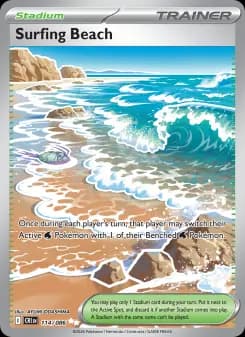
Surfing Beach is another UR-only Trainer — no base version exists in this set, making it the third of four such traps for master-set builders. The seaside theme suits a Water-fronted set; location cards always find their small audience. Value is tier-standard as of July 2026. Mostly it is a checklist test: catch all four UR-only Trainers and you were paying attention.
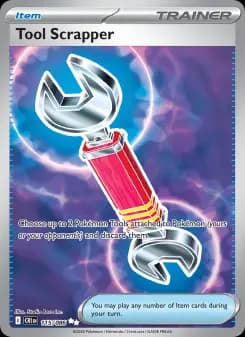
Tool Scrapper closes the Ultra Rare block as the fourth and final UR-only Trainer, a returning name that veterans of older formats will recognize immediately. Legacy names carry cross-generational demand — players who remember the original want the reprint on principle. No notable July 2026 price. Completes the tier's hidden quartet; count them twice when finalizing a master set.
The showcase tier: six cards, roughly one per 496 packs by community estimates, and every one holds real trade value as of July 2026 — from the $25 floor of Mega Floette ex to the $270–580 Mega Greninja that defines the set.
Mega Greninja ex 116/086 is the card of the set — full stop. The final panel of Susumu Maeya's three-card panorama trades at $270–580 raw as of July 11, 2026, with PSA 10 copies realizing $1,200–3,000. Those enormous ranges are the honest story: six weeks after launch, in a set down roughly 25%, the market still cannot agree what this card is worth. What is not in dispute is the demand driver — the connected artwork with Froakie 088 and Frogadier 089 is the most talked-about illustration project of the Mega Evolution block, and completed panoramas are already the set's defining flex. At roughly 1-in-496 packs by community estimates, plan around trades and singles instead. And condition is everything given the raw-to-graded spread: check corners and surfaces, and price trades against recent comps, not launch hype. The frog is magnificent; the market around it is still finding its feet.
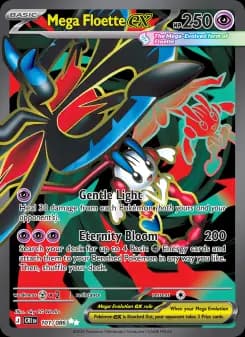
Mega Floette ex 117/086 occupies the gentle end of the SIR spectrum at $25–40 as of July 11, 2026 — chase-tier art at approachable prices, and many collectors' first Chaos Rising SIR — entry to the 116–121 club without Greninja money. Floette's deep ties to the AZ storyline give it more narrative resonance than its price suggests, and the set reinforces the connection with Ange Floette at 075 and the AZ's Tranquility line — a curated Kalos-lore binder page practically assembles itself around this card. In a market down 25% from launch, entry-tier SIRs like this are where patient traders do well: the downside is shallow, the art is permanent, and demand from set collectors is steady. A modest chase with an outsized story.
Mega Dragalge ex 118/086 is the set's third-most-valuable card at $60–80 as of July 11, 2026 — a Special Illustration Rare that earned its position without panorama assistance or sleeper hype, just a striking take on the kelp dragon. Cards in this band are substantial enough to anchor a serious offer yet affordable enough that deals actually close. Its supporting line is unusually short — Skrelp at 058 is the only step below the ex — which makes a complete Dragalge page one of the cheaper chase-line builds in the set. The $60–80 band has held more firmly than the headline cards during the post-launch slide — mid-tier SIRs often stabilize first. If you are consolidating bulk and Double Rares into something durable, this is a prime target to trade toward.
Cinccino ex 119/086 is the sleeper hit of Chaos Rising — a chinchilla outperforming Megas, trading at $45–125 as of July 11, 2026. That yawning range is the tell: nobody planned for this card, and the market is actively arguing about where it settles. The demand appears genuinely organic, which is both the bull and bear case in one. Organic chases can keep climbing after analysts shrug, or deflate once the novelty cools; anyone who claims to know which is guessing. Practical guidance: if you pull it, you hold the set's most debate-worthy trade chip, so get several value opinions before dealing it cheaply. If you want it, trading toward it beats buying at the top of a $45–125 spread. It is the set's most interesting price chart — a chase card with a plot twist.
AZ's Tranquility 120/086 is the set's premier Trainer chase at $40–60 as of July 11, 2026 — and one of the more emotionally loaded SIRs in recent memory, given AZ's status as the tragic heart of the Kalos games. Character-driven Trainer SIRs have become dependable value holders across modern sets: their audience is story-attached rather than speculation-driven, which tends to mean shallower crashes and stickier demand. It crowns a full three-version ladder (076, 106) — a clean climb for completionists. In a set whose Pokémon chases are still violently repricing, a $40–60 Trainer with a devoted fanbase is almost a safe haven — as safe as anything gets in a market down 25% in a month, which is to say: no guarantees, but better company than most. The thinking collector's chase card.
Roxie's Performance 121/086 rounds out the SIR tier at $25–40 as of July 11, 2026, running on pure character magnetism — the poison-rocker gym leader has one of the franchise's most distinctive designs, and performance-themed Trainer art is a proven crowd-pleaser. Two of this set's six SIR slots went to Trainers, and both hold value better than several of the Pokémon Megas. At the affordable end of the chase tier, this card competes directly with Mega Floette ex 117 for easiest SIR entry point — a coin flip of taste between Kalos melancholy and Virbank punk. Its ladder (081, 112) makes a tidy subcollection. For traders, a stable, likable $25–40 card is exactly the denomination that makes bigger deals divisible. Underrated in every sense except price.
One card sits alone at the top of the checklist — the gold Mega Hyper Rare Mega Greninja ex, the rarest pull in Chaos Rising at an estimated one per 26 to 36 booster boxes.
Mega Greninja ex 122/086, the gold Mega Hyper Rare, is the rarest card in Chaos Rising — community estimates put it at one per 956 to 1,296 packs, roughly 26 to 36 booster boxes — yet it trades at $300–400 as of July 11, 2026, below the $270–580 SIR it shares a Pokémon with. That inversion is the set's clearest lesson in modern collecting: scarcity sets the floor, but artwork sets the ceiling, and the panorama at 116 is the art everyone wants. Still, gold-card collectors are a devoted tribe, MHR populations are genuinely tiny, and a sub-$400 price on a 30-box pull is a line future collectors will either laugh at or envy — no one knows which. If one lands in your pulls, price it against fresh comps, not the SIR. Trading it for a 116 plus panels is the panorama-hunter's classic move, and honestly, a defensible one.
A set down roughly 25% in its first month changes the playbook. Buying singles means catching a falling knife — you might pay this week's price for next week's discount. Trading sidesteps the problem, because both sides reprice together: your duplicate SIR fell in dollar terms, but so did the chase card you want, and the ratio between them is far more stable than either price alone.
The practical split: trade for the volatile chase cards — Mega Greninja ex 116, the gold 122, and especially Cinccino ex 119, whose $45–125 spread makes any cash purchase a coin flip. Buy, or simply pull, the stable bottom — commons, uncommons, base Double Rares and most Ultra Rares cost so little that negotiating trades for them wastes everyone's time.
The middle band — $25–80 cards like Mega Dragalge ex 118, AZ's Tranquility 120, Mega Floette ex 117 and Roxie's Performance 121 — is genuinely either-or, and the decider is what already sits in your binder. If your pulls include duplicate hits gathering dust, converting them toward mid-tier SIRs beats selling low to buy elsewhere. Take stock of what you can offer before spending a cent; most collectors hold more trade capital than they realize.
Trade-Value Tiers: Premium Bait, Solid Fodder and Bulk
Premium bait — cards that open doors alone: Mega Greninja ex 116 ($270–580), the gold MHR 122 ($300–400), Cinccino ex 119 ($45–125) and Mega Dragalge ex 118 ($60–80), all as of July 11, 2026. Any of these can headline a trade toward big cards from other sets — think chase pieces from Abyss Eye. Never bundle premium bait casually; these cards negotiate alone.
Solid fodder — the middle class that makes deals divisible: AZ's Tranquility 120 ($40–60), Mega Floette ex 117 and Roxie's Performance 121 ($25–40 each), the Greninja UR 100 (~$28), and the panorama panels Froakie 088 and Frogadier 089 ($10–15 each, trading better than their price implies because panel demand is structural). A binder rich in this tier closes more trades than a binder with one crown jewel.
Bulk with a pulse — everything else, with footnotes. The Western exclusives 048 and 055 deserve a separate pocket for their cross-border angle; chase-line commons (Froakie 020, Skrelp 058, Minccino 072) get requested more than ordinary bulk; the four UR-only Trainers (108, 109, 114, 115) matter to master-set builders. The remaining ninety-odd cards are completion material: worthless individually, indispensable collectively, and the cheapest goodwill in trading.
Working Chaos Rising on Swaptio
This set was practically designed for peer-to-peer trading: one grail everyone wants, a fat middle tier of $10–80 cards that combine into fair deals, and thousands of duplicate pulls looking for homes. The Swaptio workflow is simple: list your Chaos Rising duplicates — spare Double Rares, extra IRs, the panorama panel you pulled twice — in your offers, and put targets on your wishlist. The collector who needs your spare Frogadier may be holding the Dragalge SIR you want.
Two habits help. First, list duplicates promptly — chase-adjacent cards move best while a set is in the conversation, and Chaos Rising very much is. Second, wishlist the whole ladder, not just the grail: collectors seeking Mega Greninja 116 alongside the UR at 100 and the panels at 088–089 close trades at whatever tier the market brings. Card-for-card trades between collectors mean nobody has to time the bottom of this market to do well in it.
Market Timing: Reading the Post-Launch Dip
The headline number once more: Chaos Rising is down roughly 25% across the board in its first 30 days, as of July 11, 2026. That is not unusual — launch prices run on scarcity and hype, and both fade as product saturates. Nobody can tell you whether this is the floor: sets have bottomed at minus 25% and rebounded, and sets have kept sliding for a year. Anyone selling certainty is selling something else too.
What the dip concretely changes is behavior. Sellers holding chase cards anchor to launch prices and list reluctantly; traders reprice in real time because ratios matter more than dollars. That asymmetry is why the weeks after a hard dip are historically active trading windows. None of this is investment advice, and no card is a guaranteed store of value — but if Chaos Rising cards are on your want list anyway, a soft, undecided market full of motivated traders beats a hot one — and this market, right now, is exactly that.
Frequently asked questions
What is the Chaos Rising set symbol and set code?
Chaos Rising cards carry the set code ME04 printed alongside the collector number (out of 086), and the official abbreviation CRI in deck lists and databases — the fastest way to identify the set when sorting bulk.
How many cards are in Chaos Rising?
122 in total: 86 in the main numbering plus 36 secret rares — 11 Illustration Rares (087–097), 18 Ultra Rares (098–115), 6 Special Illustration Rares (116–121) and 1 gold Mega Hyper Rare (122).
What is the most expensive card in Chaos Rising?
Mega Greninja ex 116/086, the Special Illustration Rare completing the panorama with Froakie 088 and Frogadier 089: $270–580 raw as of July 11, 2026, with PSA 10 copies at $1,200–3,000. The gold Mega Hyper Rare (122/086) is rarer but cheaper at $300–400. All prices are volatile — the set is down about 25% since launch.
What promo card comes in the Chaos Rising Elite Trainer Box?
An exclusive Fennekin promo, in keeping with the set's Kalos-starter theme. Note it is a separate card from the Fennekin at 011/086 in the regular checklist.
When was Chaos Rising released?
May 22, 2026 in Western markets, as the fourth set of the Mega Evolution block. It adapts the Japanese set Ninja Spinner, with one notable difference: Mega Gallade ex and Krookodile ex appear only in the Western release.
Is Chaos Rising worth buying right now?
Buying sealed to chase hits is a poor bet — SIR odds run about 1 in 496 packs by community estimates, and the gold Mega Hyper Rare about 1 per 26–36 booster boxes. With prices down roughly 25% since launch, acquiring specific singles through trades is more efficient than opening product. Open packs for fun; trade for targets.
What are the pull rates for Chaos Rising secret rares?
No official rates exist; community estimates as of July 2026 put a Special Illustration Rare at roughly 1 in 496 packs and the gold Mega Hyper Rare at 1 in 956–1,296 packs — about one per 26–36 booster boxes. Individual results vary enormously; treat these as planning numbers, not promises.
Which Chaos Rising cards are not in the Japanese Ninja Spinner set?
Mega Gallade ex 048/086 and Krookodile ex 055/086 are Western-exclusive. Both exist only as Double Rares — neither received an Ultra Rare or SIR version — making them modest cards at home but genuinely interesting to Japanese-market collectors, who cannot pull them at all.