Pokémon Pitch Black Set Guide: Card List & Best Cards
Published July 11, 2026 · Updated July 21, 2026 · 50 min read
Price update — July 21, 2026. We refreshed every market price in this guide today, and the story is exactly the one it warned about at launch. Pitch Black released on July 17, and the presale peaks have cooled hard: the Mega Darkrai ex Special Illustration Rare (#116) has slid from roughly $600 to $293.88, the gold Mega Hyper Rare (#120) from near four figures to $199.60, and the actually-playable Double Rare (#048) from $12.49 to $0.92. The market price shown beside each card below is the live July 21 figure; the card-by-card commentary still quotes July 11 presale levels for historical context. If a card tempted you at launch, this is the cooldown we told you to wait for — now is the moment to trade into it.
Six days until Mega Evolution — Pitch Black hits shelves on July 17, 2026. Prerelease events are running right now — the window closes July 12 — presale prices are swinging daily, and one gold card is already flirting with four figures before a single booster box has been opened at retail.
Pitch Black (set code ME05, regulation mark PBL) is the international release of the Japanese set Abyss Eye (M5), built on the Mega Dimension DLC of Pokémon Legends: Z-A. The face of the set is Mega Darkrai ex, backed by Mega Zeraora ex, Mega Chandelure ex and Mega Excadrill ex — a darker cast than recent expansions, and collectors have noticed.
Below you will find the full 120-card list with real presale market prices as of July 11, 2026, the chase hierarchy, early pull-rate estimates, the product lineup with the stamped Zarude ETB promo, every prerelease and store promo, and a frank look at Mega Darkrai ex's competitive prospects.
One thing first, because it is the whole reason Swaptio exists: launch week is when prices peak and patience pays. Every number here is a presale price, and history says most of them come down. If a card below makes your heart race, the smart play is usually to trade duplicates for it — not to panic-buy at the top.
Pitch Black at a glance
Mega Evolution — Pitch Black releases worldwide on July 17, 2026, carrying set code ME05 and regulation mark PBL. It contains 84 main-set cards plus 36 secret rares — 120 in total, a count confirmed against the full database. Thematically it adapts the Mega Dimension DLC of Pokémon Legends: Z-A, which is why brand-new Mega Evolutions share space with DLC characters like Gwynn and Jett.
It is also the international version of Japan's Abyss Eye (M5) — we broke that set down card by card in our Abyss Eye (M5) set guide, and we compare the two lists near the end of this article. Catching up on the wider Mega Evolution era? Our Chaos Rising set guide is the companion read.
Timing matters more than usual: prereleases run July 4–12, so the final prerelease weekend is happening as you read this. Every price here was captured July 11, 2026 — six days before street date. A snapshot of peak-hype pricing, not gospel.
The chase cards: Mega Darkrai ex and friends
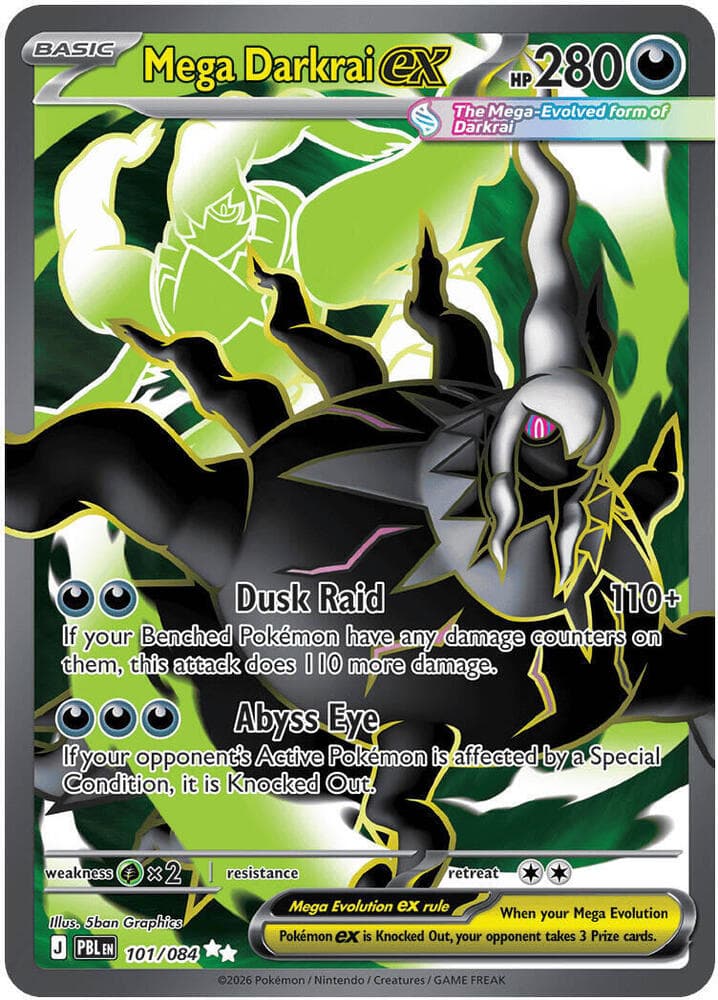
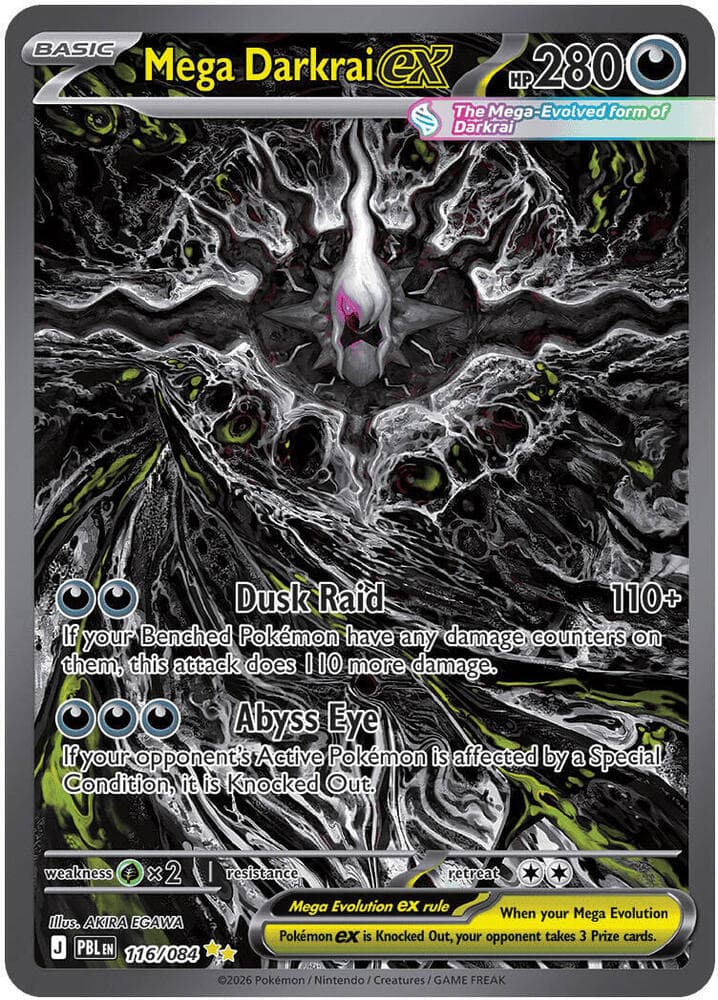
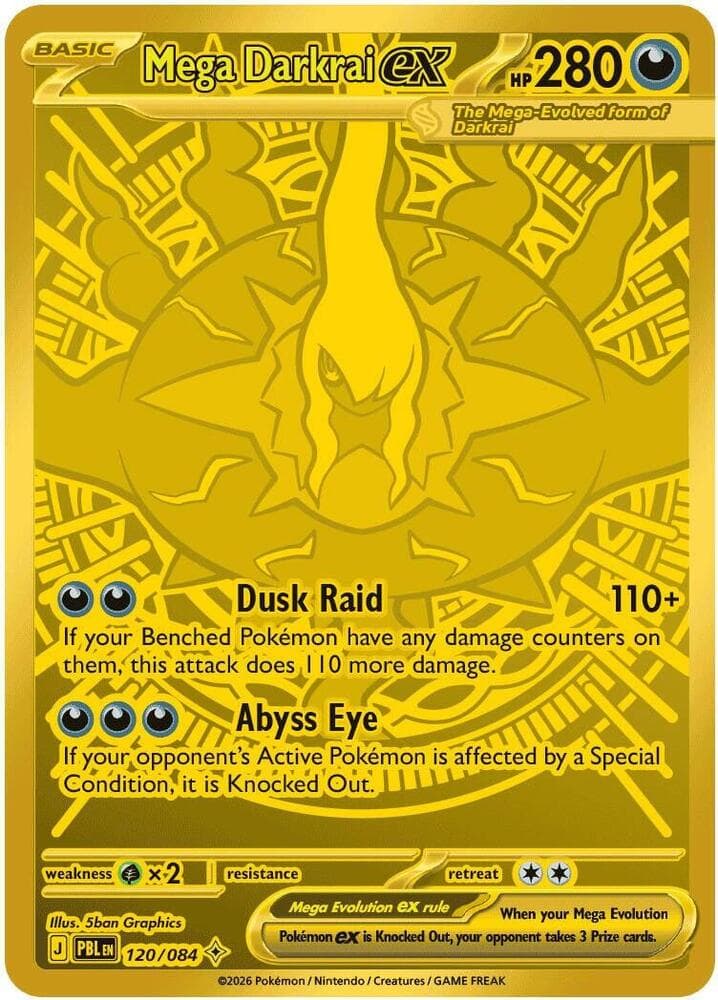
Mega Darkrai ex appears four times — Double Rare #048, Ultra Rare #101, Special Illustration Rare #116 and the gold Mega Hyper Rare #120. The SIR #116, illustrated by Akira Egawa, commands $400–600 in presales ($599.69 on July 11; European copies at €280–330). The gold #120 lists just under $1,000, and its Japanese equivalent has already cleared that mark.
Behind Darkrai, the SIR block holds the money: Mega Chandelure ex #115 (~$224), Mega Zeraora ex #114 (~$171), Gladion's Final Battle #118 (~$120) and Gwynn #119 (~$100). Watch Gwynn — in Japan her SIR has been outperforming the Mega Zeraora SIR, and the English market has not priced that in yet. Morpeko ex SIR #117 had no settled presale price as of July 11: the wild card of the block.
Two more radar items: the Mega Darkrai ex Double Rare #048 (~$12.49) is the copy players actually need, and the stamped Zarude Illustration Rare never appears in boosters — Elite Trainer Box only. Add your targets to your Swaptio wishlist now so trade matches find you when launch-week duplicates start circulating.
Pull rates: early estimates, handle with care
Every pull rate below is an early estimate built from prerelease openings and the Japanese print run; the numbers firm up in the weeks after July 17.
Illustration Rares are landing at roughly 3 per booster box (about 1 in 9 packs). Special Illustration Rares run about 1 per 5–6 boxes — and a specific SIR more like 1 in 20–30 boxes. The gold Mega Hyper Rare is the cruelest of all at an estimated 1 in 45 boxes.
Do the math before buying a case: at presale box prices, one SIR costs roughly $800–900 of sealed product on average — even the $600 Darkrai SIR is cheaper as a single, and cheaper still as a trade. Ripping packs is entertainment, and that is a fine reason to buy a box. It is not an acquisition strategy.
Product lineup and prices
The Elite Trainer Box ($49.99 MSRP) wears Mega Darkrai ex art and is the only place to get the stamped Zarude Illustration Rare promo — an in-set IR in Japan, cut from English boosters entirely and moved here. The promo has no booster-pull equivalent, which makes this ETB more interesting than most.
The Pokémon Center ETB ($59.99) ups the ante with 11 packs and two Zarude promos. It sold out on day one of presales, and secondary listings sat near $185 on July 11 — roughly triple MSRP. Our advice: let it cool. Sold-out-day-one products almost always resurface cheaper after restock waves.
Booster boxes hold the standard 36 packs. The Japanese Abyss Eye box runs about ¥13,500 (~$86); English presale boxes list meaningfully higher — the usual English premium amplified by launch hype. For specific cards, the singles-versus-sealed math above applies double.
Prerelease events: happening right now (July 4–12)
This is literally your last weekend to play Pitch Black before street date — prereleases run July 4–12 at local game stores, and each Build & Battle Box carries one of four stamped promos: Miraidon, Slowbro, Dhelmise or Bastiodon.
None of the four is a money card today, but prerelease promos have a history of quiet appreciation — their print window is a single week. Miraidon has the name recognition; Dhelmise and Bastiodon are the oddballs collectors hunt years later. Duplicates are classic trade bait and move fast on Swaptio's offers feed during launch windows.
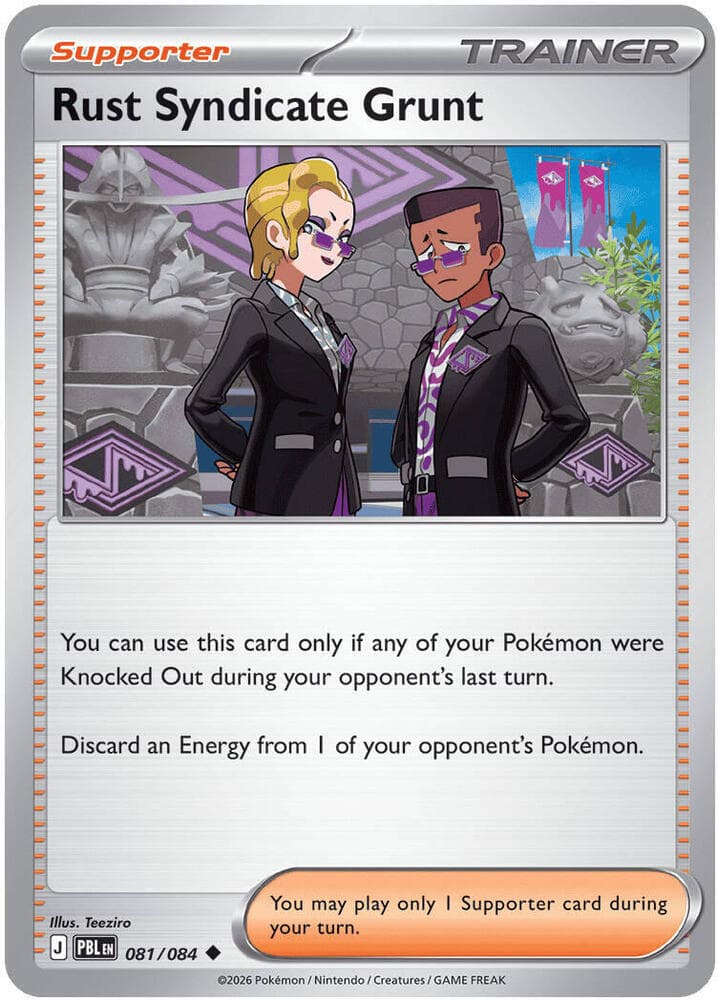
One practical note: prerelease attendees hold the first legal copies in circulation — partly why playable uncommons like Rust Syndicate Grunt ($2.99) already price above their rarity.
Store promos and the 30th-anniversary stamp
Every retail promo this launch wears a cosmos holo treatment with a 30th-anniversary stamp: Primarina at Hot Topic, Barnes & Noble and BoxLunch; Zarude at GameStop and EB Games; Armarouge at Best Buy and JB Hi-Fi — each with a qualifying purchase of $15 or more.
Anniversary-stamped promos are an interesting long hold: the stamp costs nothing beyond a purchase you might make anyway, scattered distribution suppresses complete-run supply, and 30th-anniversary memorabilia will have an obvious story in a decade. Primarina is the standout — her Illustration Rare is already the set's most expensive IR.
Near only one of these retailers? Grab your local promo, list the spares, and trade toward the other two — low-cost, regionally scattered cards are exactly what peer-to-peer swapping was made for.
Is Mega Darkrai ex actually playable?
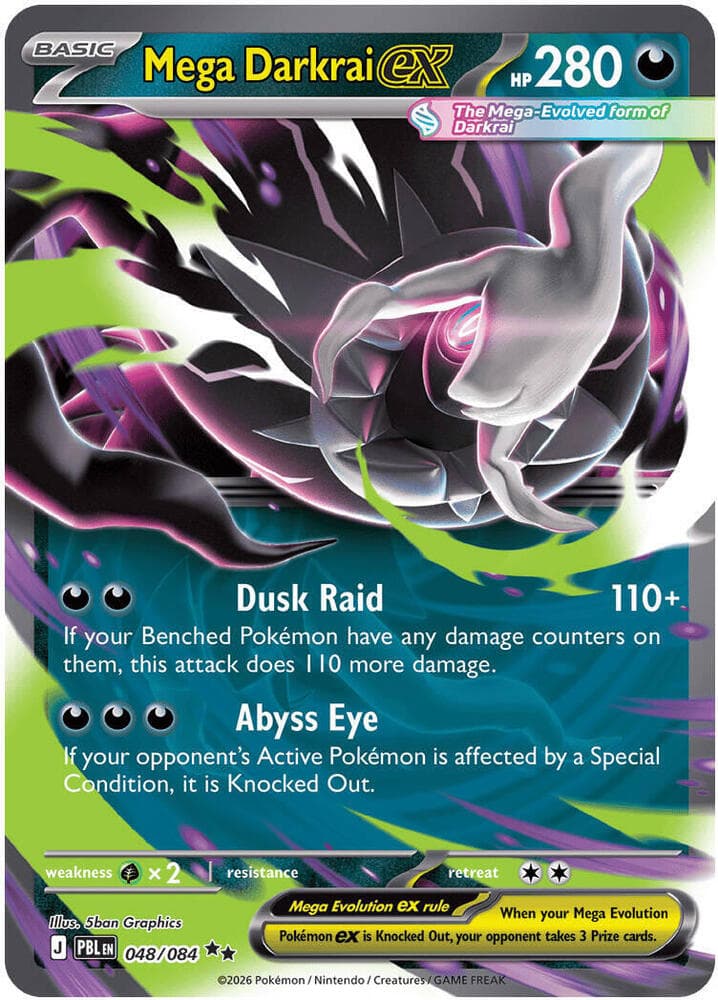
The hype is not just Akira Egawa's artwork. Mega Darkrai ex's signature attack, Abyss Eye, automatically Knocks Out Pokémon affected by Special Conditions — no damage math, no HP checks, just an instant KO if the condition sticks. That turns every sleep, poison and burn enabler in the format into a potential execution tool.
Auto-KO effects warp deckbuilding in both directions. Expect early lists built entirely around landing a Special Condition and pulling the trigger — and expect counterplay, because it has already started: Hydrapple ex is being discussed as the format's answer. That duel decides whether Mega Darkrai ex is a tier-one engine or a scary-looking trap.
For your wallet: the competitively relevant copy is the Double Rare #048 at ~$12.49 presale, not the $600 art piece. If Darkrai delivers, #048 climbs and the SIR follows; if Hydrapple ex smothers it, the art cards keep a collector floor while the base rare drifts. One more reason to trade into position rather than buy the top.
Grass and Fire: the opening stretch (001–012)
The set opens with Grass and Fire, headlined by Lurantis ex and the new Mega Delphox ex. All prices below were captured July 11, 2026, six days before launch — expect movement.
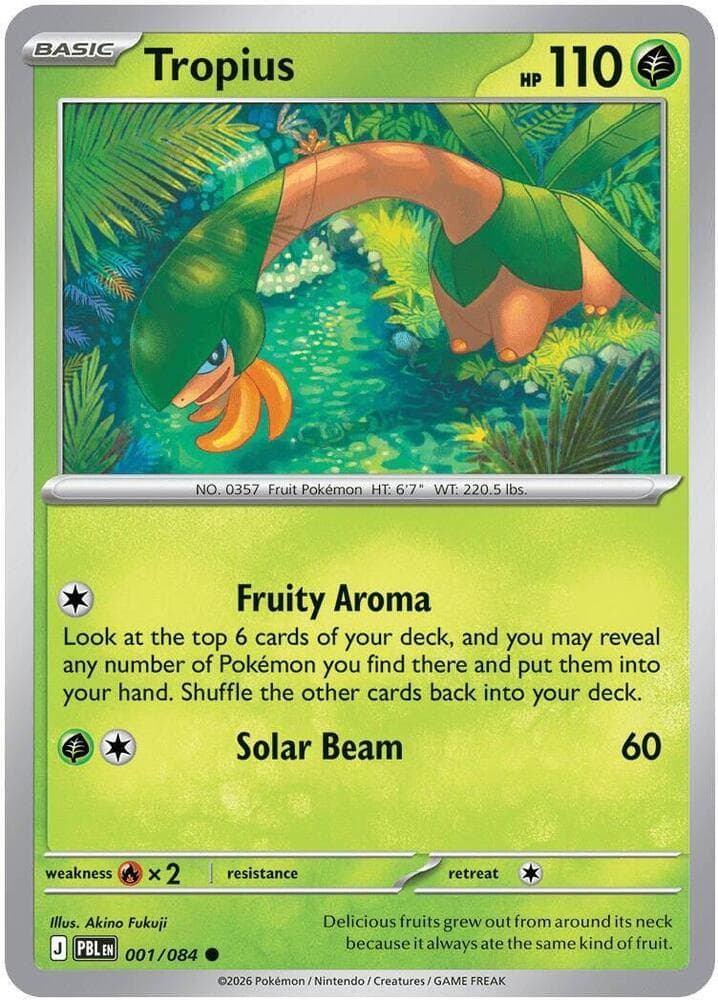
The Fruit Pokémon opens the set, bananas and all. Tropius has been a binder-filler common for two decades and this printing will not change that — presales sit at $0.84 as of July 11, 2026. Still, set builders need four copies like everyone else, and commons from hyped sets are the cheapest trade throw-ins you will ever move.
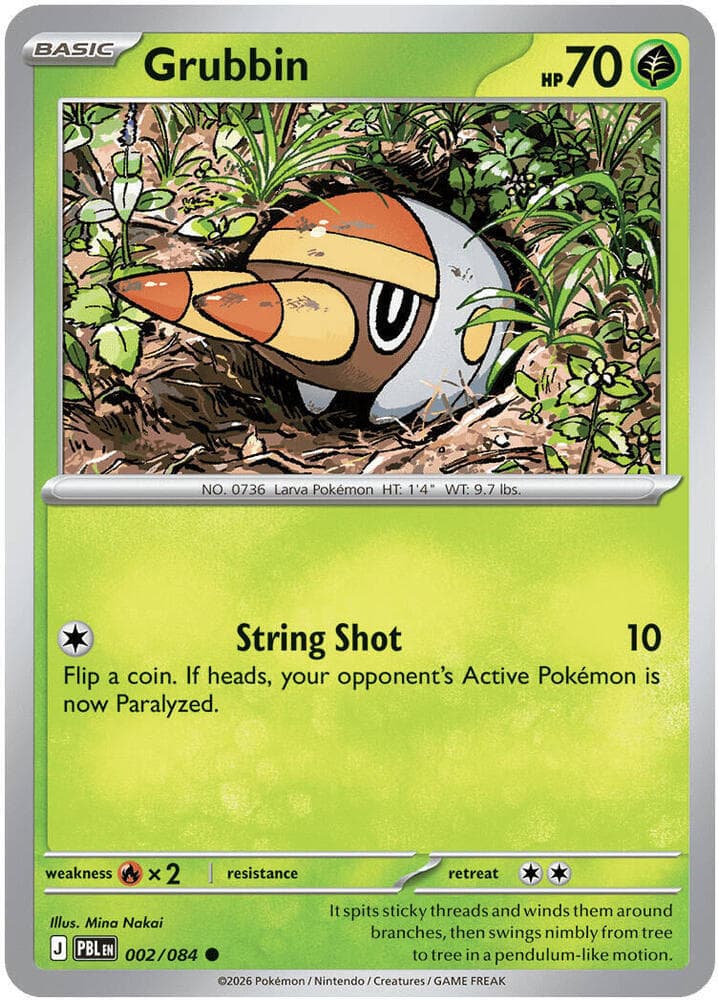
Grubbin kicks off the Vikavolt line — though the payoff sits over in Lightning at #025–026, a quirk of Grubbin's pure-Bug typing in the games. At $0.75 presale it is pure bulk, worth exactly what a trade partner will toss in to balance a deal. Every hyped set moves mountains of commons in week one; this will be one of them.
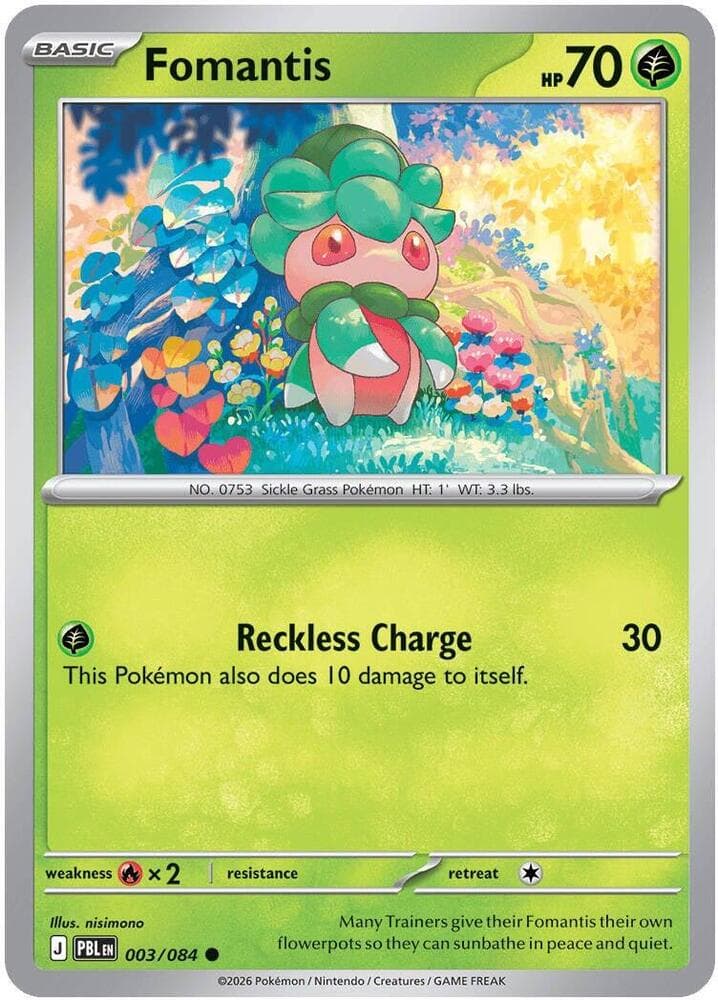
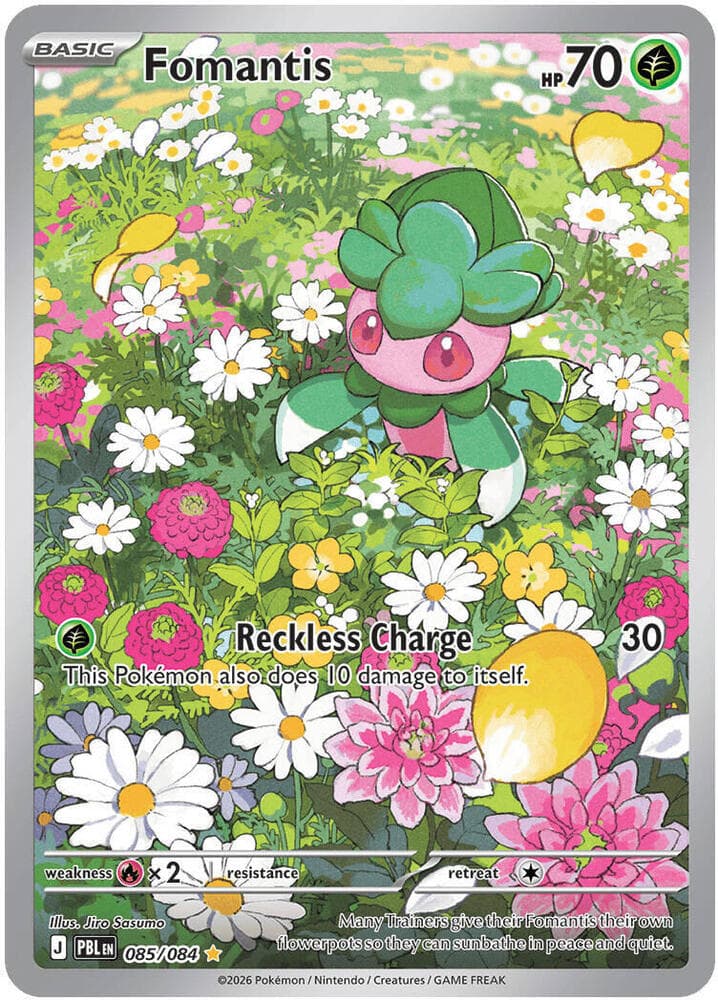
Keep an eye on this one relative to other commons: Fomantis is one of only two basics in the set whose evolution is a Double Rare ex, and it also gets its own Illustration Rare at #085. The regular copy is $0.75 presale; the IR is where the actual demand lives. Bulk-box basics attached to valuable evolutions are always worth sorting out early.
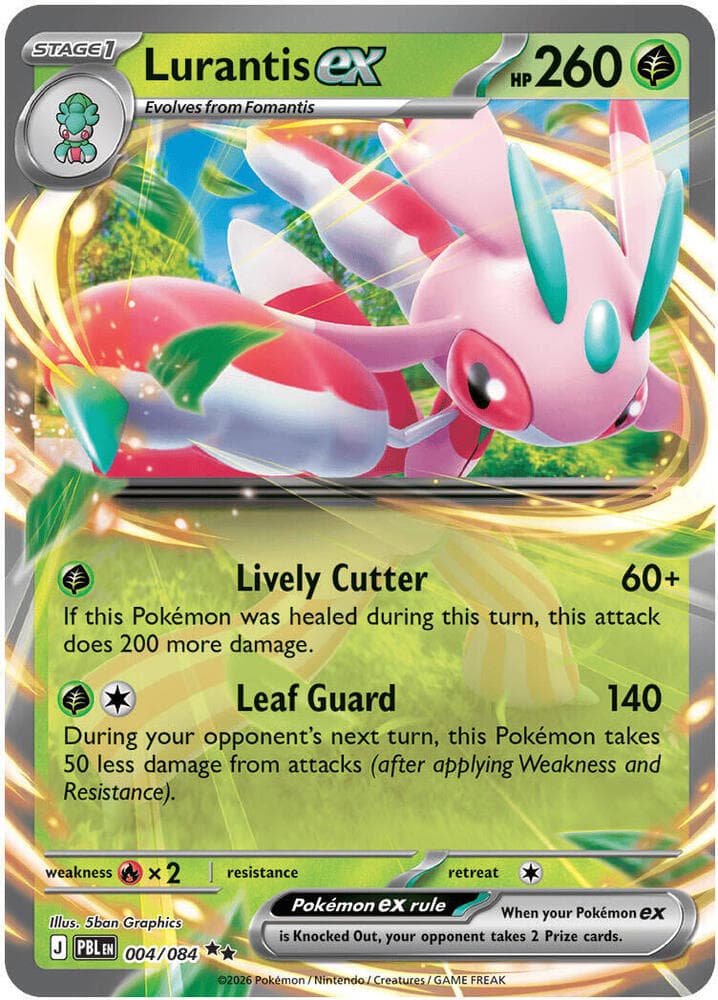
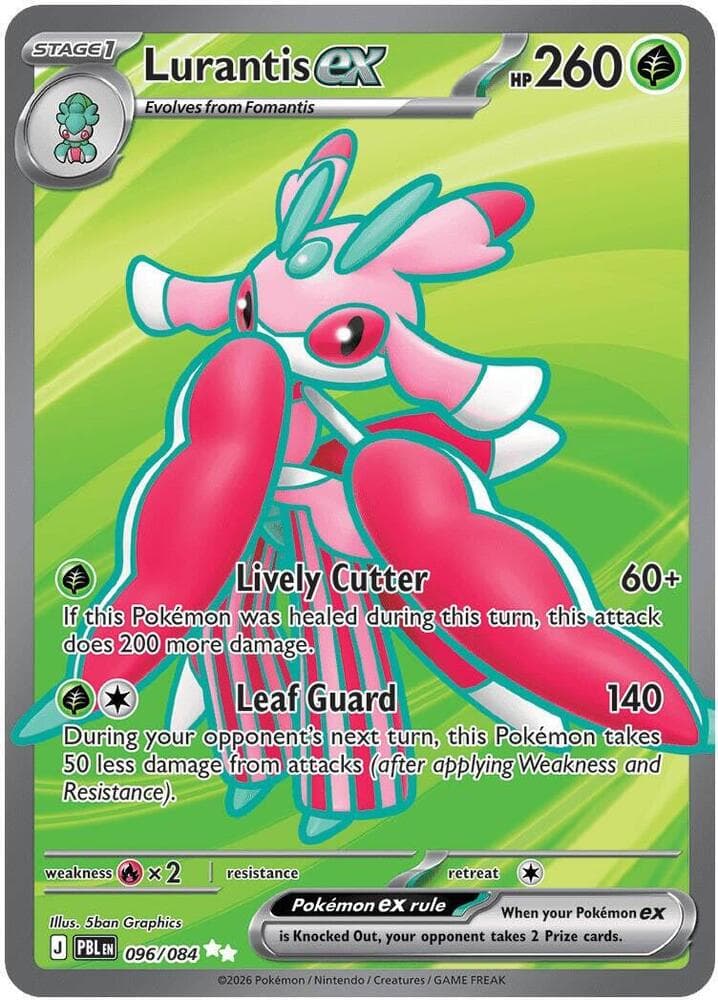
Lurantis ex lands at $5.00 presale — the floor price for a Double Rare in this set, which tells you the market's early read on its competitive prospects. The orchid-mantis has a devoted collector following, though, and its Ultra Rare (#096) is the cheapest full-art ex in Pitch Black. A reasonable budget pickup if you like the Pokémon; not a spec target.
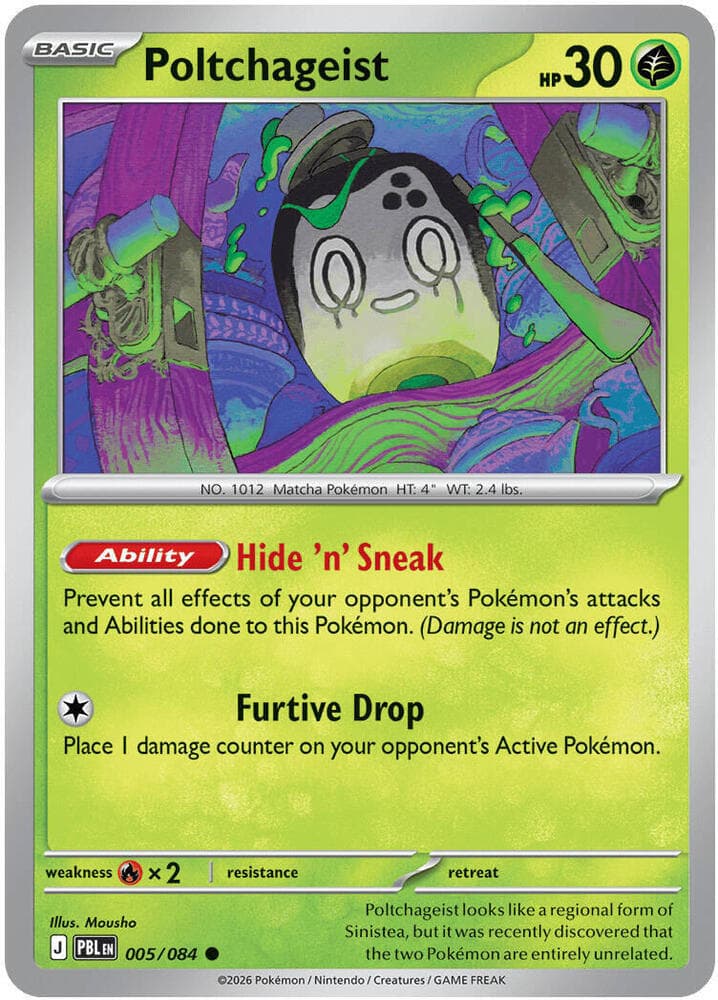
A $1.66 presale price on a common is a small anomaly worth noticing. Poltchageist, the possessed-matcha ghost from the Teal Mask, has been a fan darling since its debut, and cute Ghost-types consistently outperform their rarity. If you open a stack, hold them a few weeks rather than bulking them out. The Sinistcha line's popularity gives it a second tailwind.
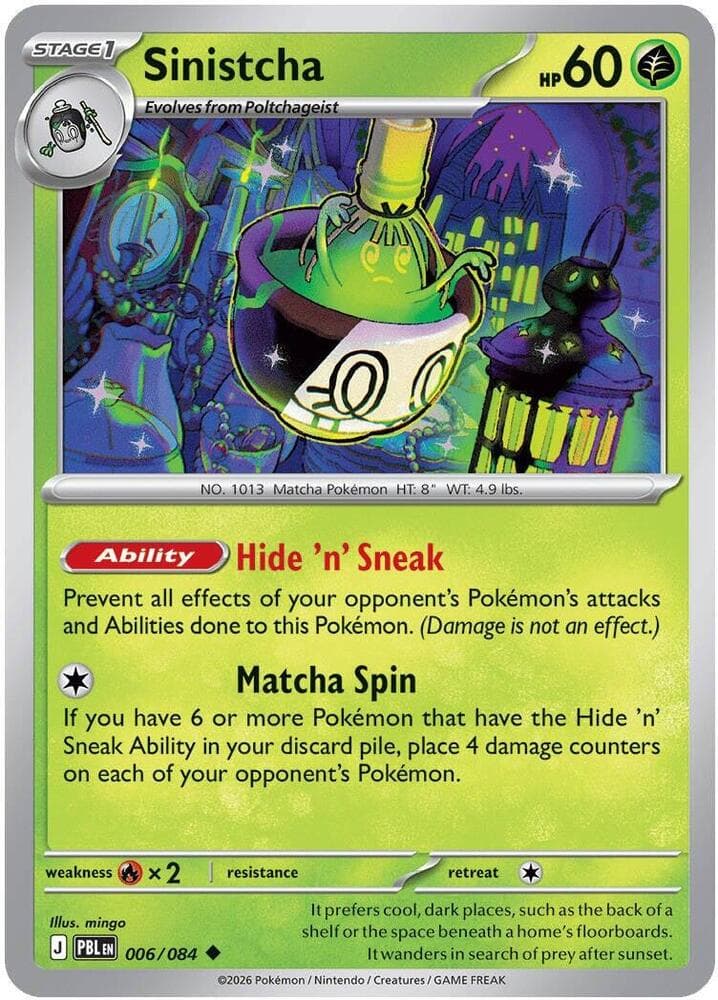
Sinistcha continues the tea-ceremony line and, at $1.56 presale, prices well above the usual uncommon. Whether that is playability speculation or pure matcha appeal will become clear after the first tournament weekend — either way, it is the rare uncommon that is genuinely worth listing rather than binder-stuffing. A playset costs less than a sleeve pack; the downside is nonexistent.
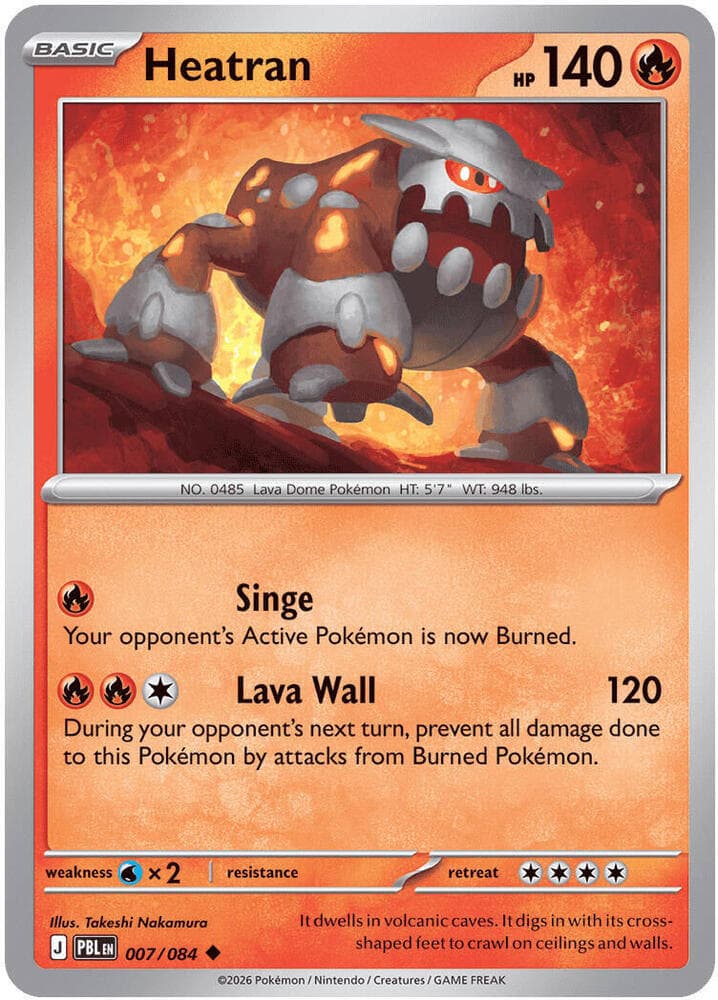
A Legendary at uncommon rarity is always a little jarring. Heatran, Sinnoh's molten cave-dweller, gets a workmanlike printing here at $0.74 presale. Legendaries without a hit version in the same set tend to stay flat, so treat this as set-completion material. There is a certain charm in pulling a Legendary from the uncommon slot, but charm does not move markets. Trade filler with a famous name.
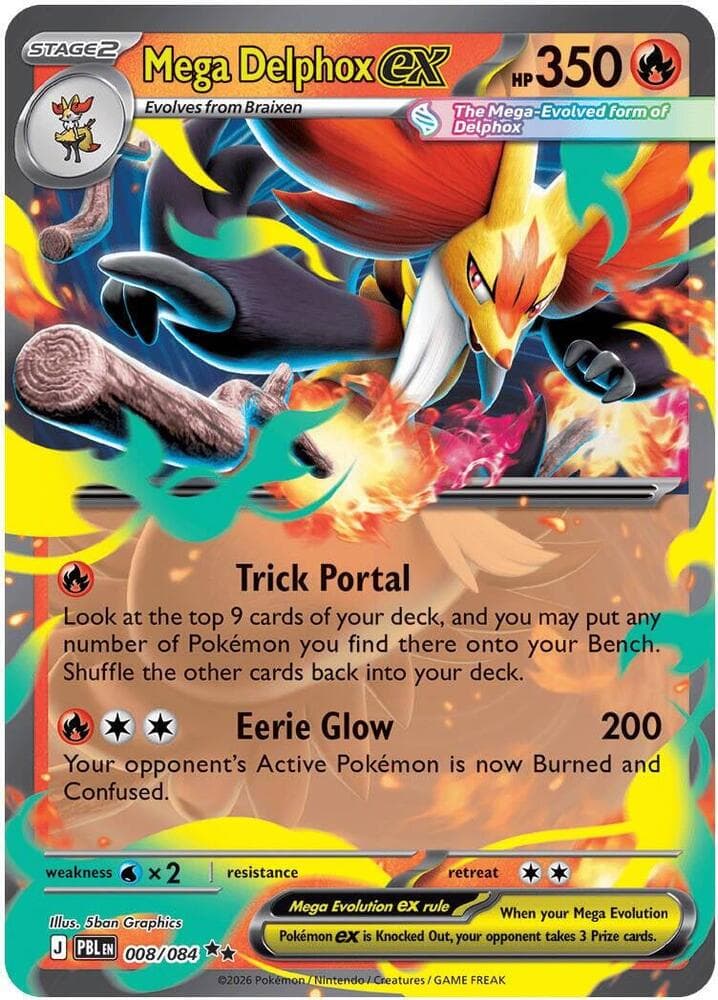
Here is a genuine curiosity: Mega Delphox ex at $9.97 presale, the third-priciest Double Rare in the set behind only Darkrai and Zeraora. The Kalos fire-fox finally gets a Mega form via the Legends: Z-A era, and this card is one of the differences worth noting when you compare Pitch Black against the Japanese Abyss Eye list. Kalos starters have deep fanbases; do not be shocked if this holds its price better than most DRs.
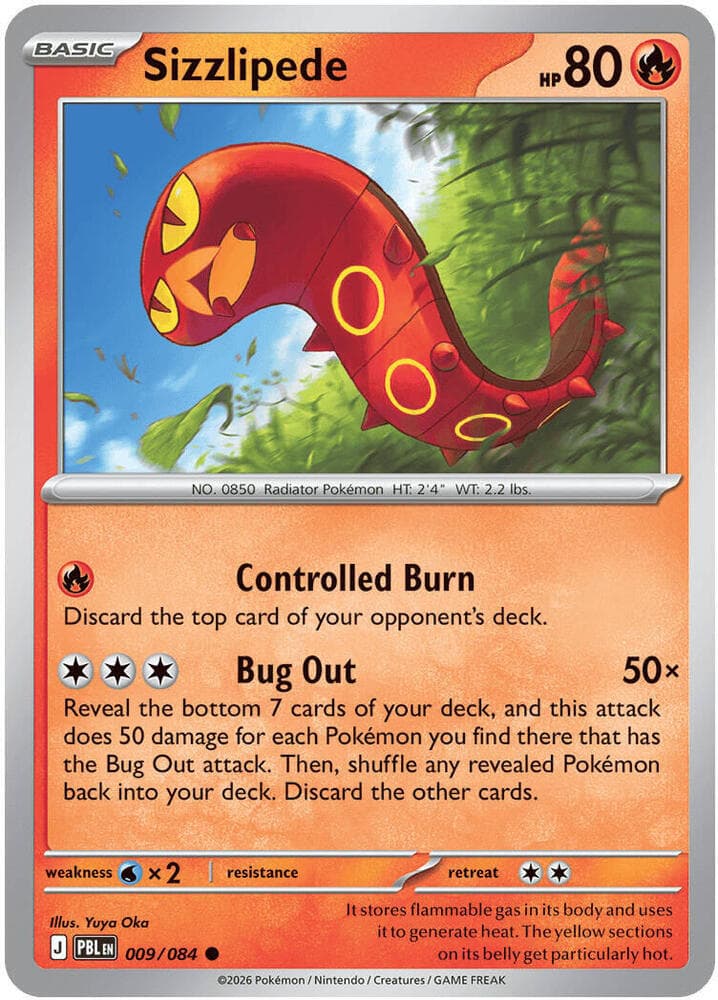
Sizzlipede is bulk at $0.85 presale, but it is bulk with a job: it bottoms the Centiskorch line for anyone chasing the master set. Galar's radiator centipede has never had a breakout card, and this is not the one either. Still, hyped sets lift all boats slightly in week one — even centipede-shaped ones. Move it while attention is high.
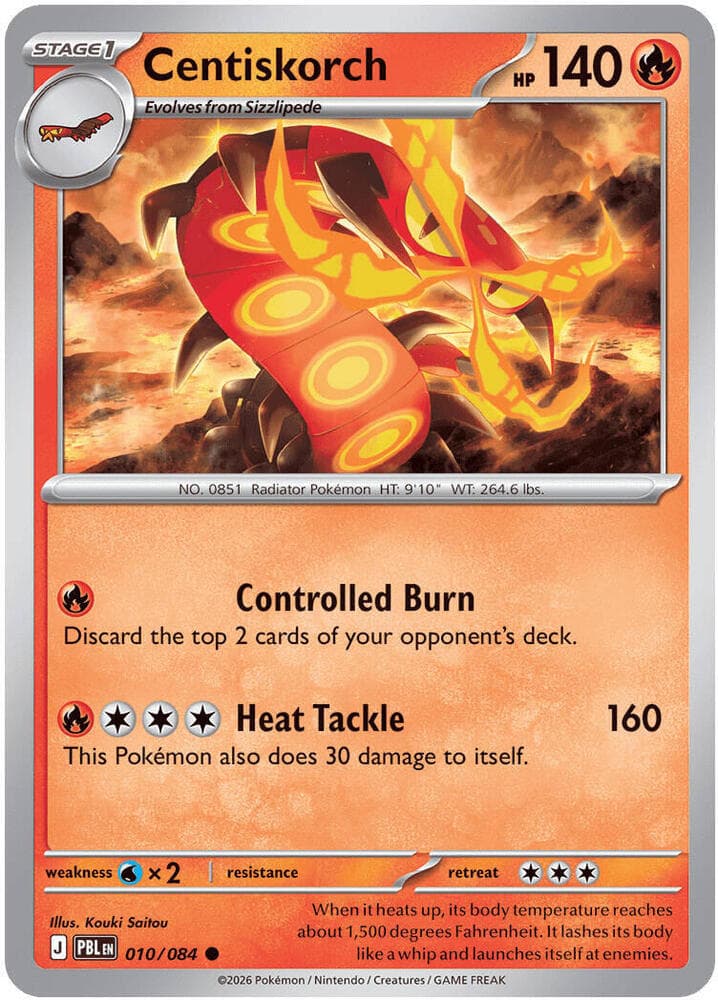
Centiskorch closes its line quietly at $0.75 presale — notable mostly because it is a common here, a humble printing for a Pokémon that once headlined ex cards. The line's ex era feels a long time ago now. For master-set builders it is a checkbox; for everyone else, a pass — and that is a perfectly acceptable thing for a card to be.
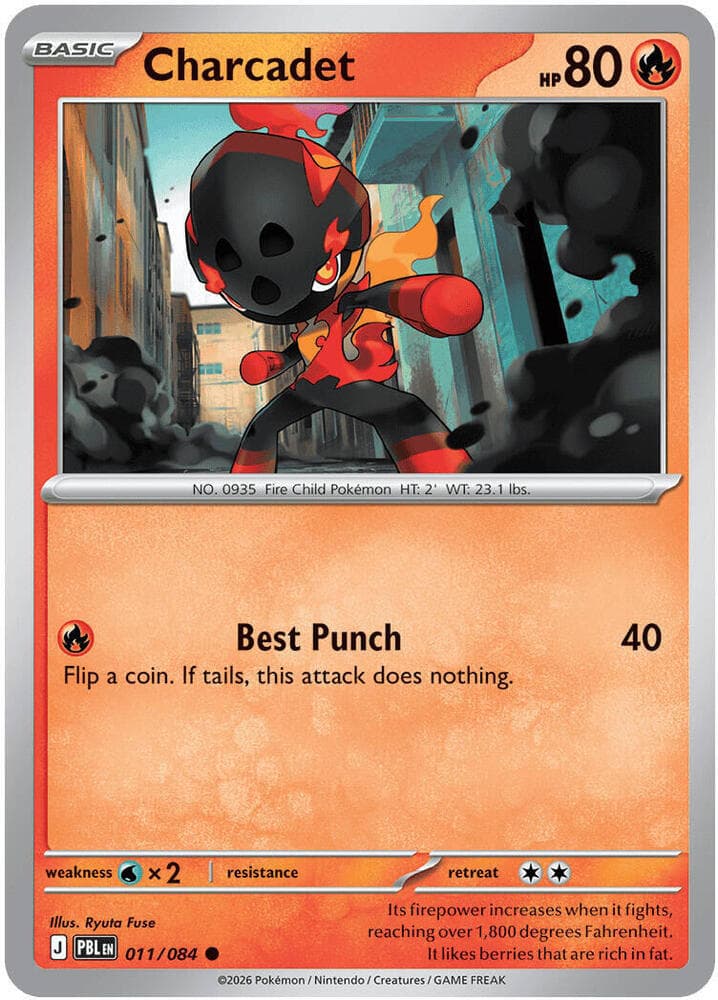
Charcadet matters slightly more than the average common because of who it becomes. With Armarouge pulling store-promo duty this launch and an Illustration Rare at #086, the little soldier's $0.74 base copy will get swept up in evolution-line collecting. Cheap now, cheap later, but never hard to trade away. Costs nothing to set a stack aside now.
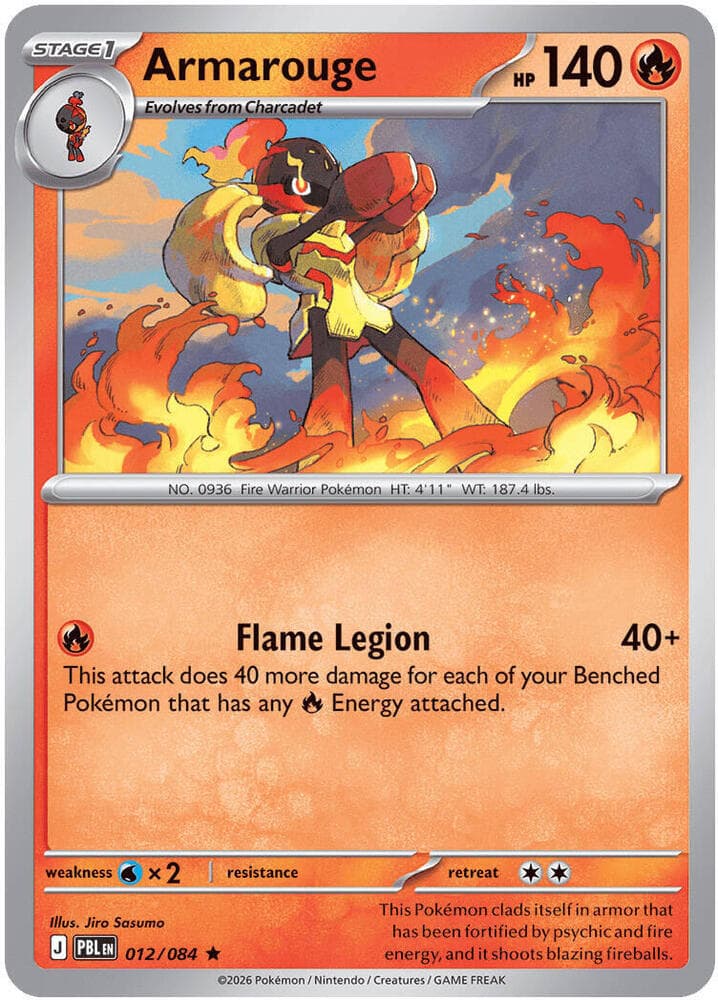
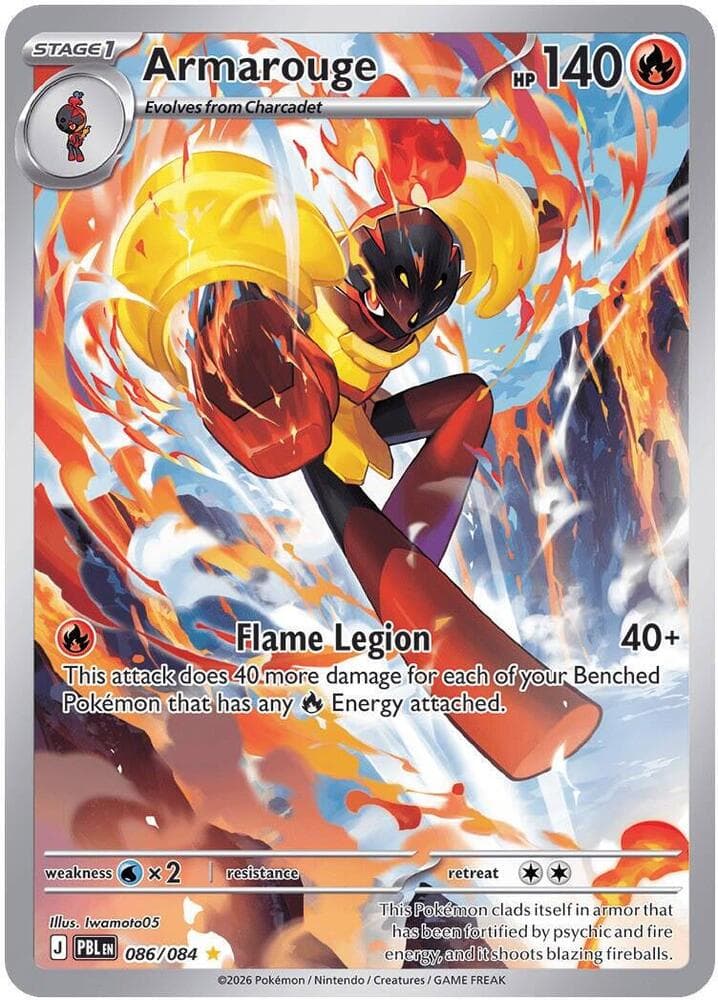
Armarouge is having a moment this launch: a Rare here at $1.24, an Illustration Rare at #086 pricing near $58, and a cosmos-holo 30th-anniversary promo waiting at Best Buy and JB Hi-Fi. When one Pokémon appears in three different treatments in the same launch window, the base rare is always the cheapest way to join the party.
Water and Lightning: from Wailord to Mega Zeraora (013–028)
Water carries Primarina — whose Illustration Rare is the priciest IR in the set — while Lightning delivers the first true headliner, Mega Zeraora ex, alongside a freshly demoted Miraidon.
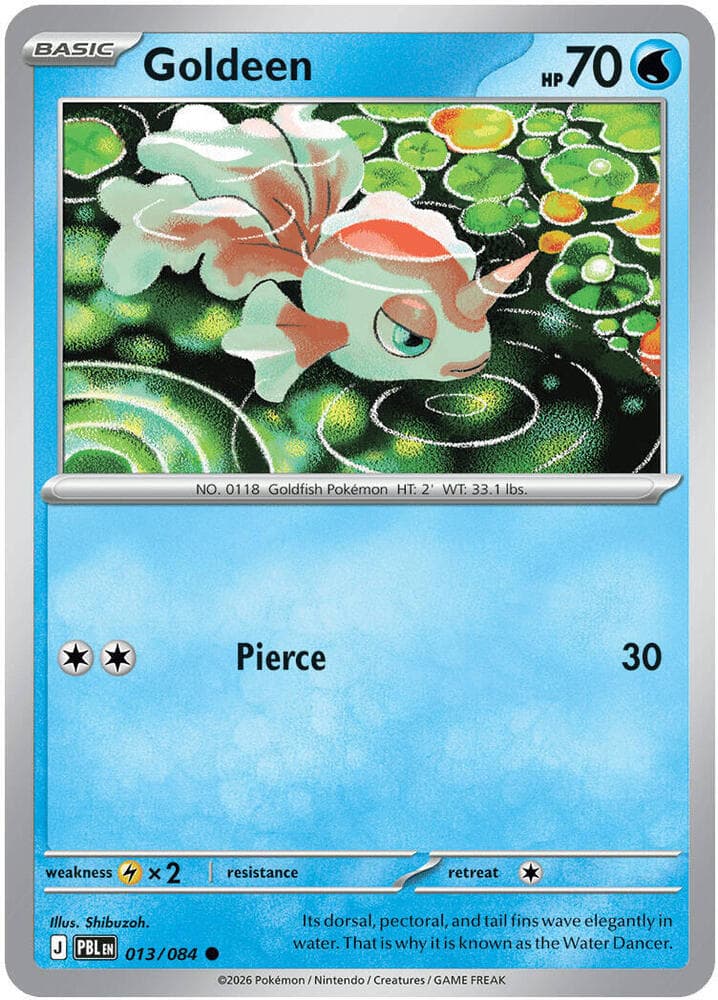
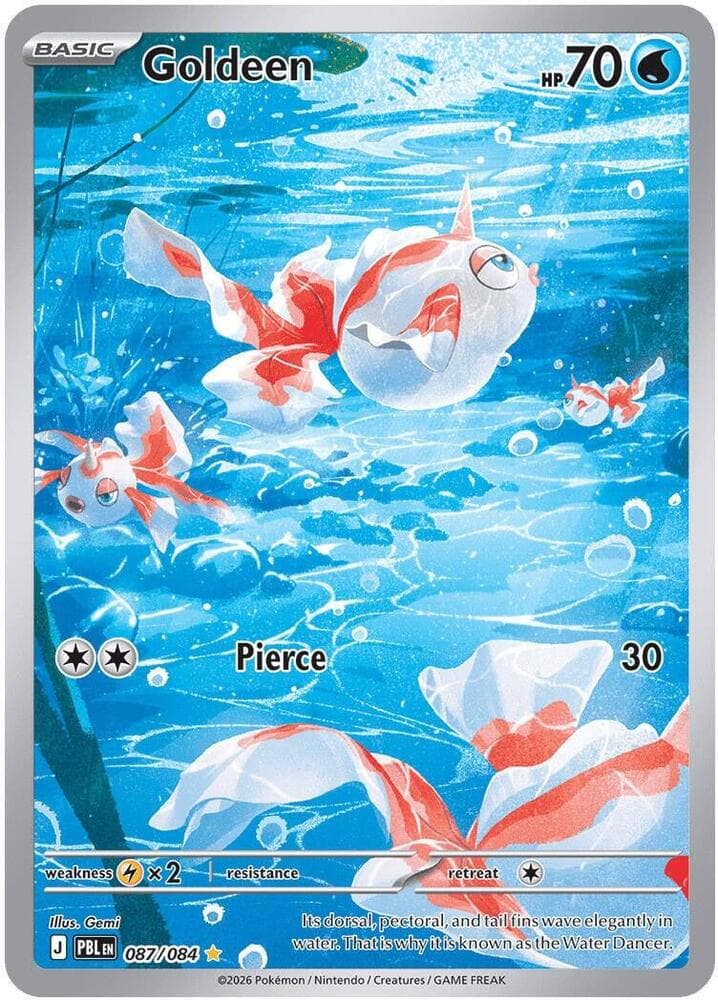
Goldeen at $0.74 would be the least interesting card in the set — except its Illustration Rare (#087) is presaling at $32.50, one of the odder results in Pitch Black. The base common is a reminder that in modern Pokémon, the art tier makes the card, not the name. Sort accordingly before you bulk out your launch-week pulls.
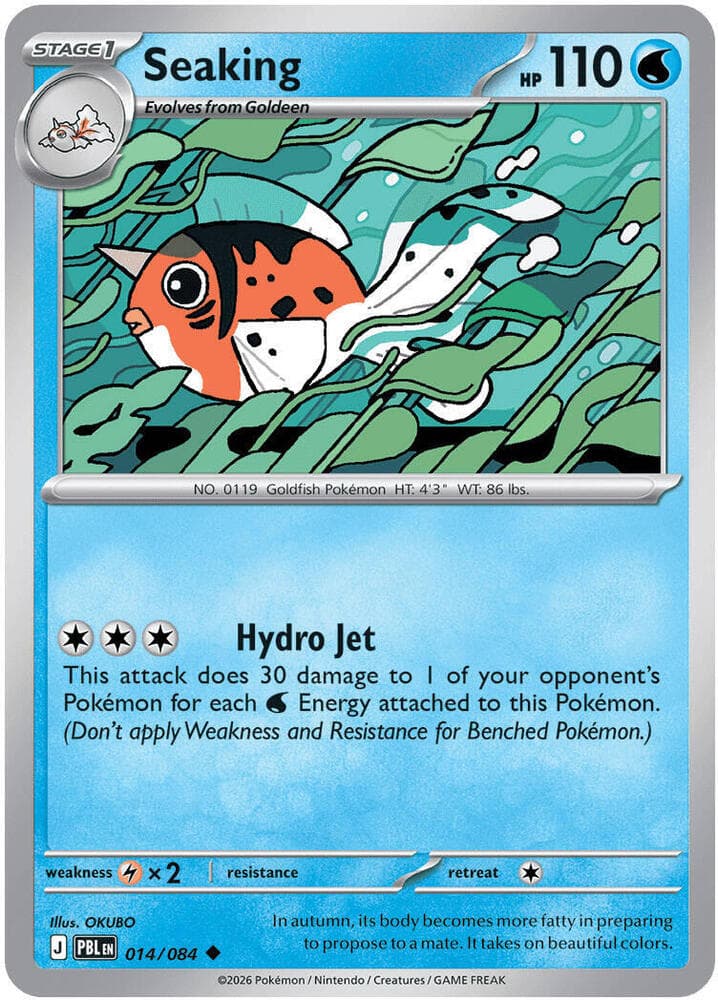
Seaking follows its pre-evolution at $0.84 presale. The horned goldfish has been quietly appearing in sets since 1999 and has never once been a chase card; there is something almost comforting about that consistency. No hit version, no promo duty, no speculation angle whatsoever — which, in a set this noisy, is almost refreshing. Master-set material, toss it into trades freely.
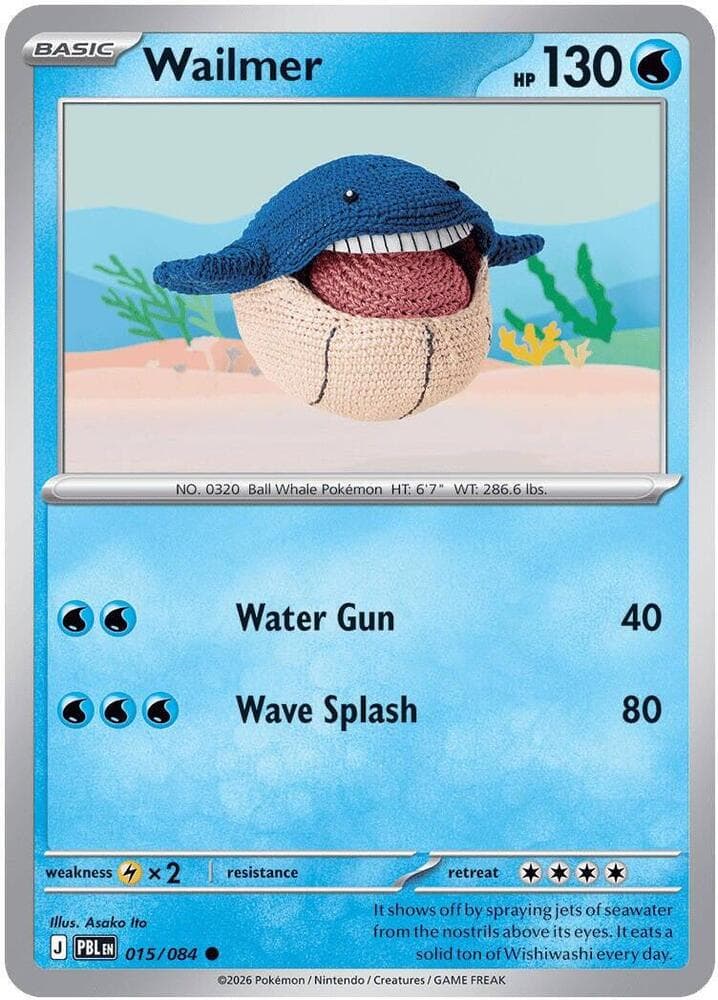
Wailmer exists to become Wailord, and at $0.99 presale the market prices it accordingly — a small premium over true bulk because ex-line basics always see playset demand in week one. Trade it while that demand is warm. Once Wailord decks are either real or dead, this snaps back to a quarter. Timing is everything with evolution-line basics.
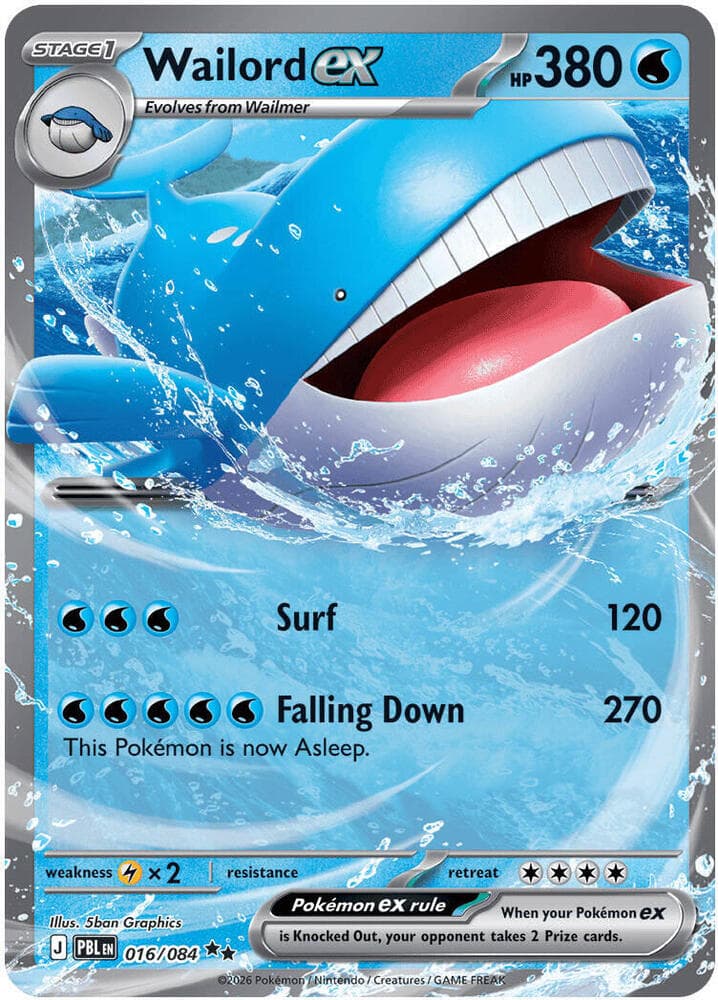
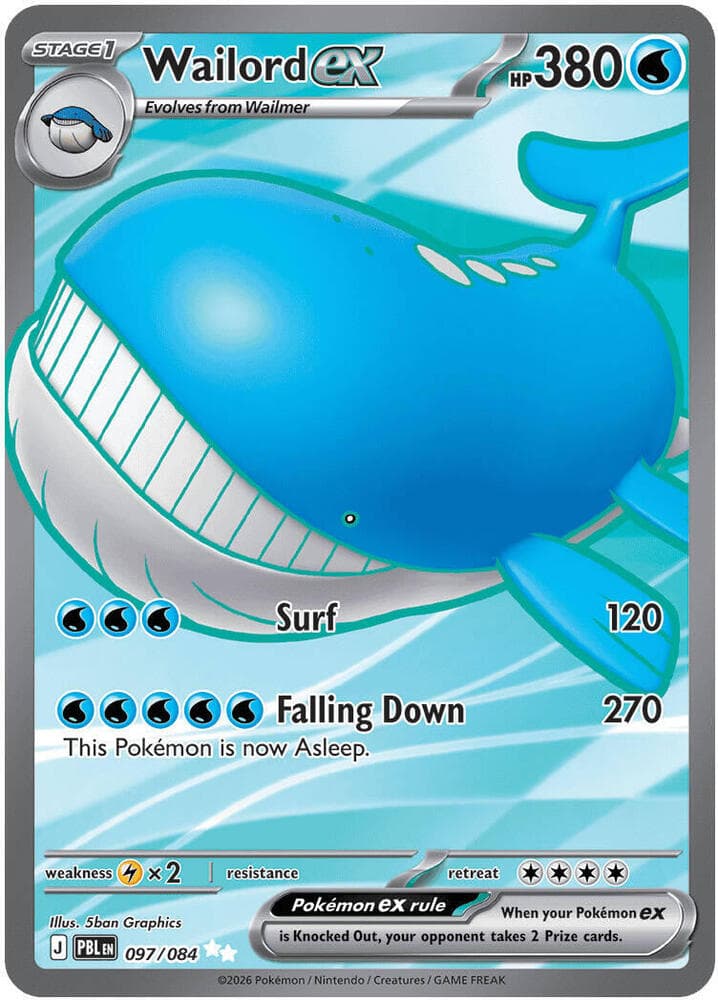
Wailord ex, the biggest Pokémon in the ocean, lands at $4.99 presale — bottom-tier pricing for a Double Rare. Big-HP walls are perennial casual favorites even when competitive players shrug, and Wailord cards historically hold a small nostalgia floor. Its $13.75 Ultra Rare (#097) is arguably the better collector buy of the two. Cheap enough to gamble on either way.
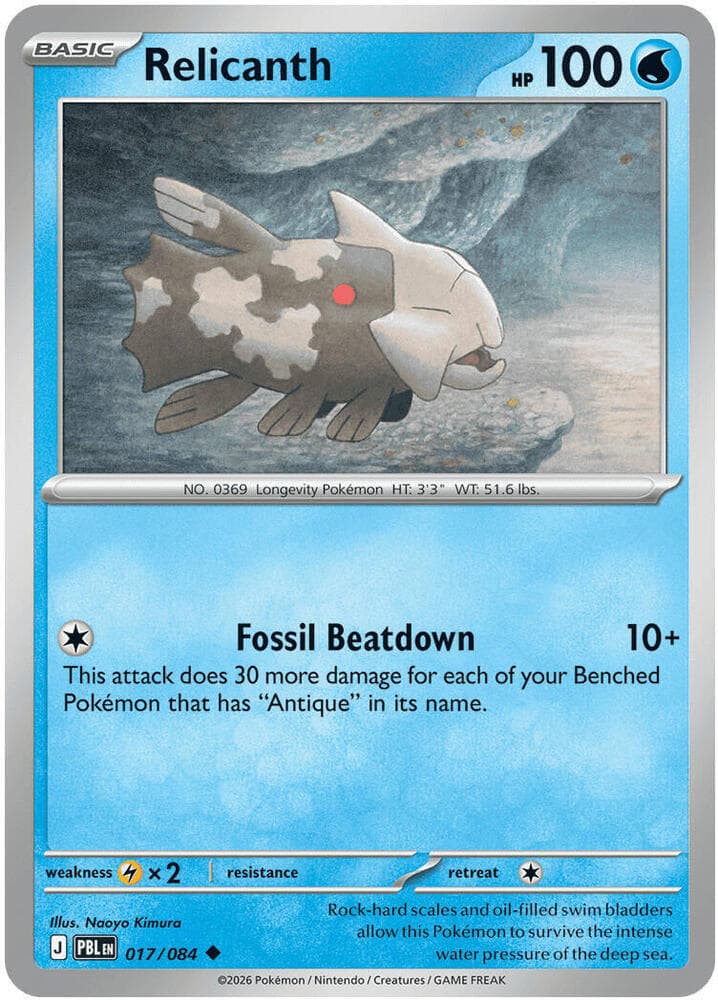
Relicanth, the living fossil, fits Pitch Black's fossil subtheme in spirit if not in mechanics. At $1.00 presale for an uncommon, someone out there expects it to see play alongside the Rampardos and Bastiodon packages — a hunch worth monitoring after the first events rather than buying into now. Penny speculation, but the fun kind — the downside is literally zero.
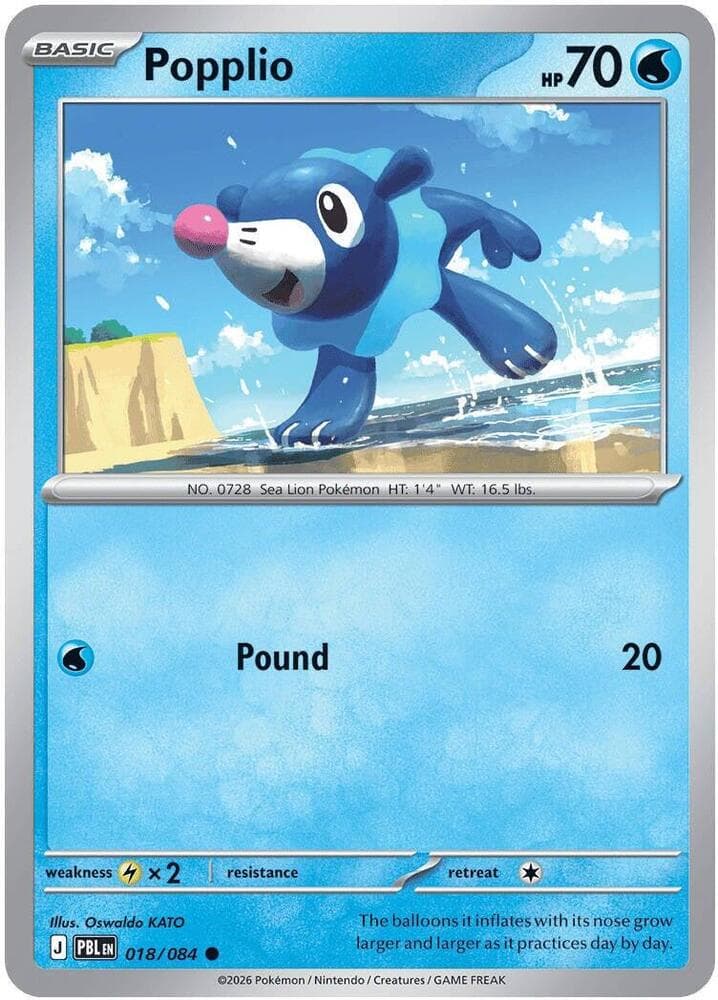
Popplio starts the set's most valuable non-ex line. With Primarina's Illustration Rare topping that entire tier at $79.99, expect evolution-line collectors to want clean copies of this $0.84 common — the classic case of a basic worth pulling out of your bulk pile before you trade it blind. Ten minutes of sorting now beats regret in August.
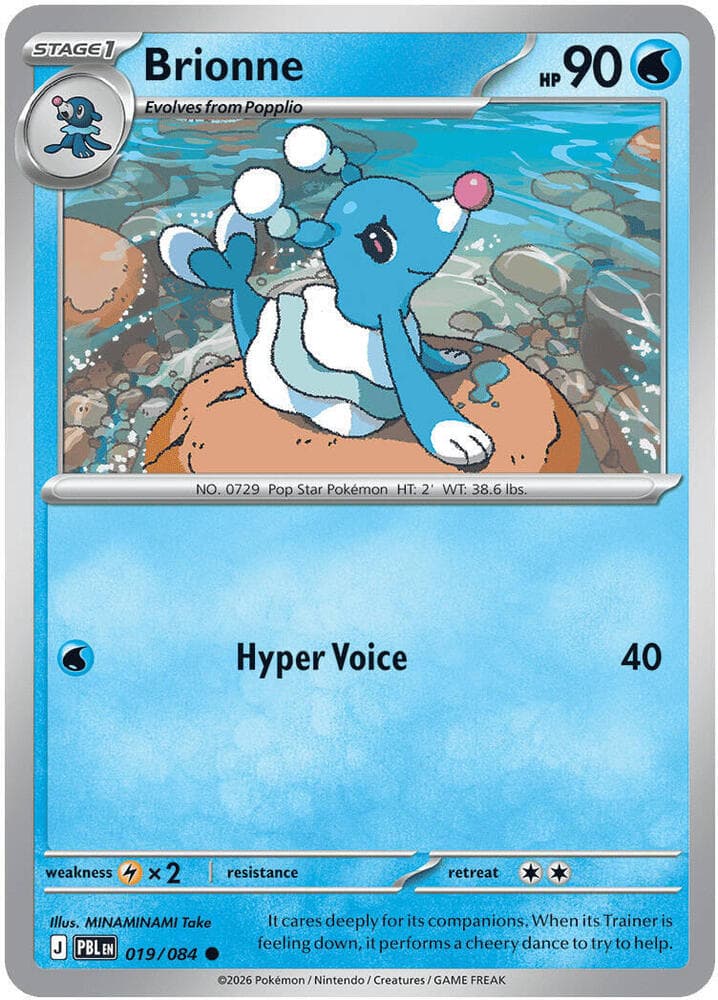
Brionne is the middle stage nobody remembers at $0.75 presale, but master-set builders and Primarina line collectors will need it all the same. There is real demand for complete Popplio-to-Primarina pages this launch, given where the IR is pricing. That makes this the rare middle evolution worth pulling aside — the quietest good trade filler in the set.
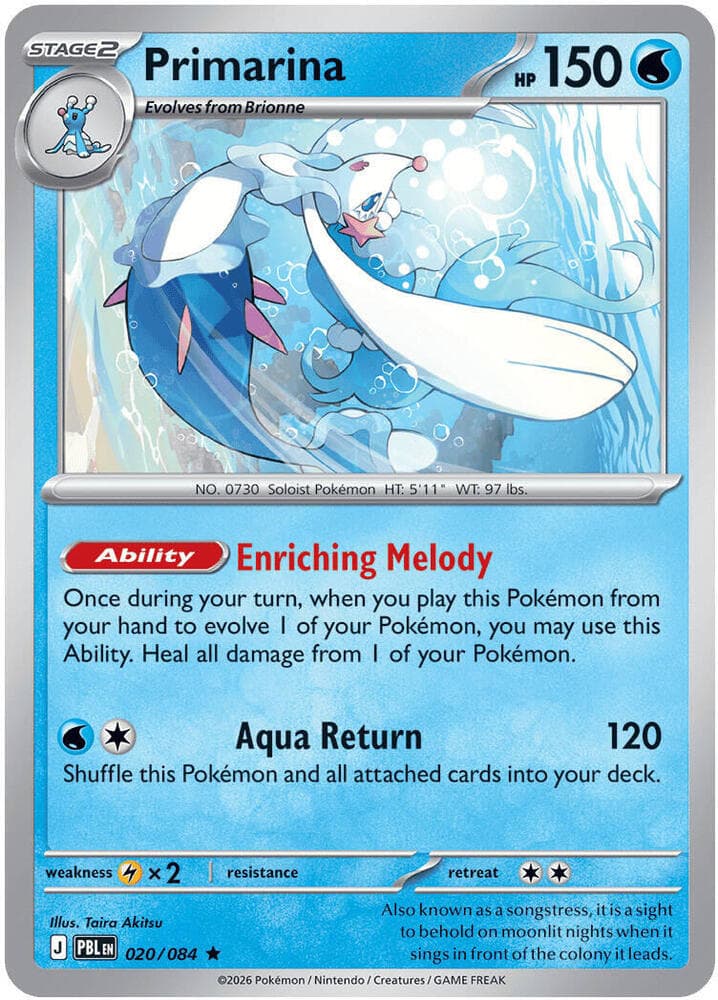
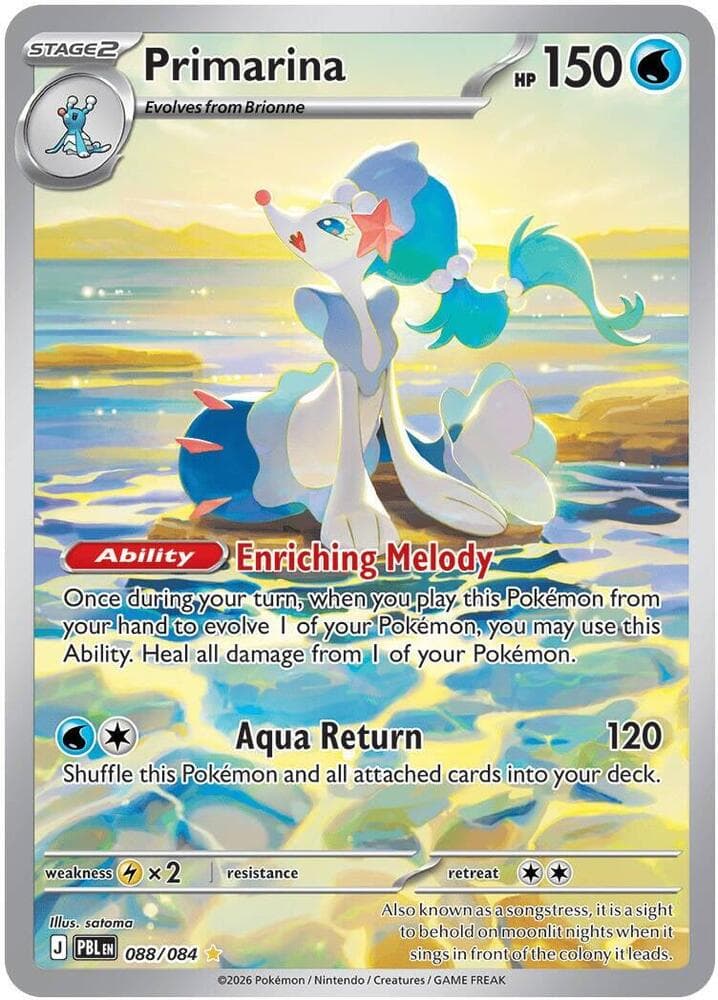
Primarina is the sleeper story of Pitch Black's early market. The base Rare is $1.99, the Illustration Rare (#088) leads the whole IR tier at $79.99, and a 30th-anniversary cosmos promo waits at Hot Topic, Barnes & Noble and BoxLunch. Alola's songstress has one of the strongest adult-collector followings of any starter — this is what that looks like in prices.
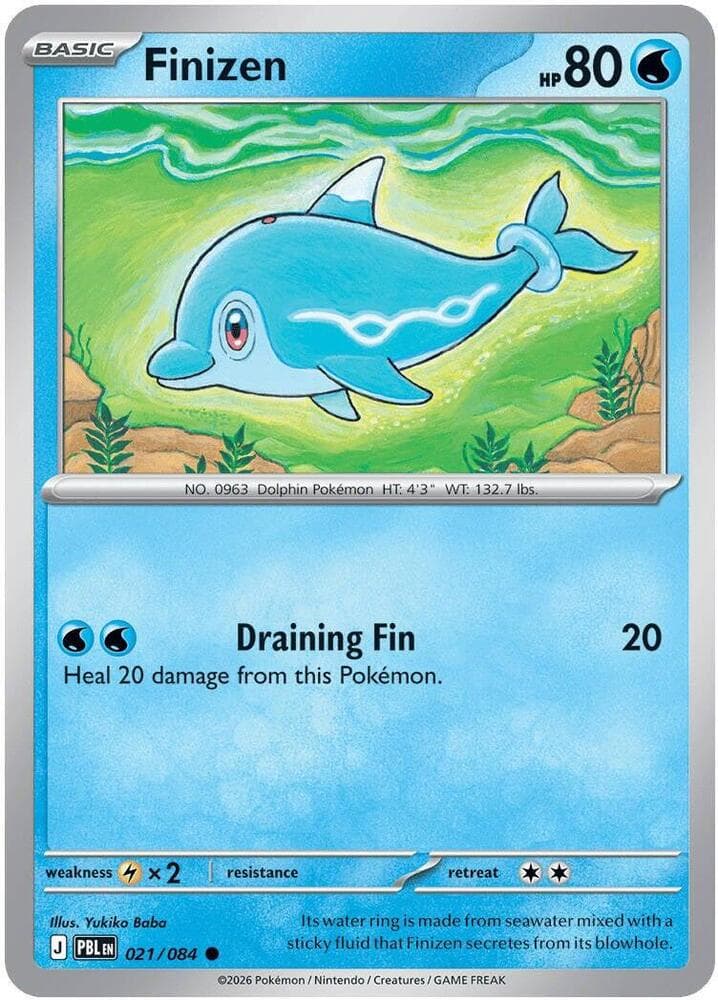
Finizen at $0.74 presale is standard bulk with one asterisk: hero-transformation lore made Palafin one of the most talked-about Pokémon of its generation, and line collectors are a real constituency. A common, but a common from a line people actually finish. At worst it balances a trade; at best the line's collectors come knocking for clean copies.
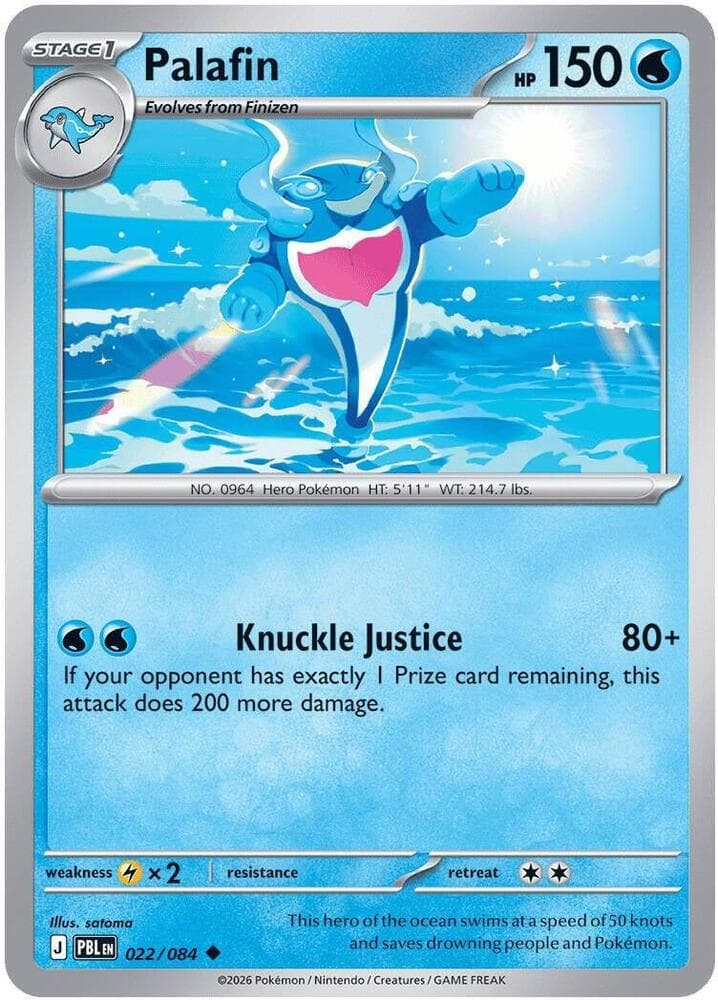
Palafin lands as an uncommon at $0.84 — modest for a Pokémon whose previous ex printings saw genuine competitive play. Without a hit rarity in this set, the heroic dolphin stays affordable, which suits anyone building casual decks around it just fine. Sometimes a quiet printing is exactly what a fanbase needs to finish its decks cheaply.
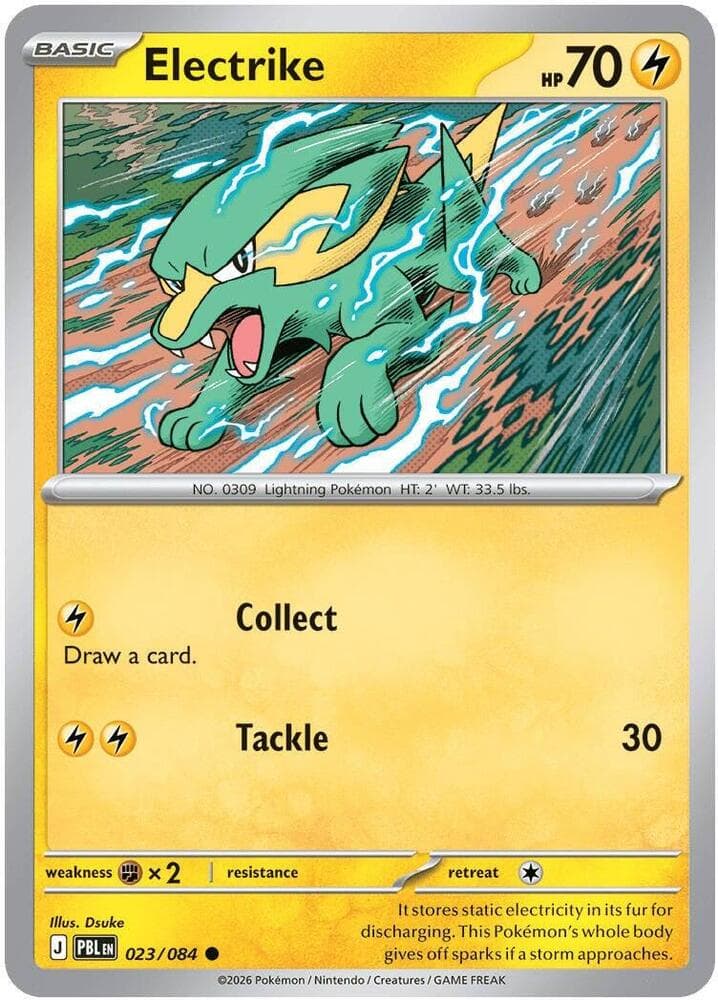
Electrike is $0.74 of pure set-completion material. Hoenn's static-charged pup starts a line that peaks with a surprisingly pricey Illustration Rare, so the usual advice applies: sort, sleeve the clean ones, and use the rest as trade ballast. The 32x gap between this line's cheapest and priciest cards happens entirely above this slot. Somebody has to be the floor.
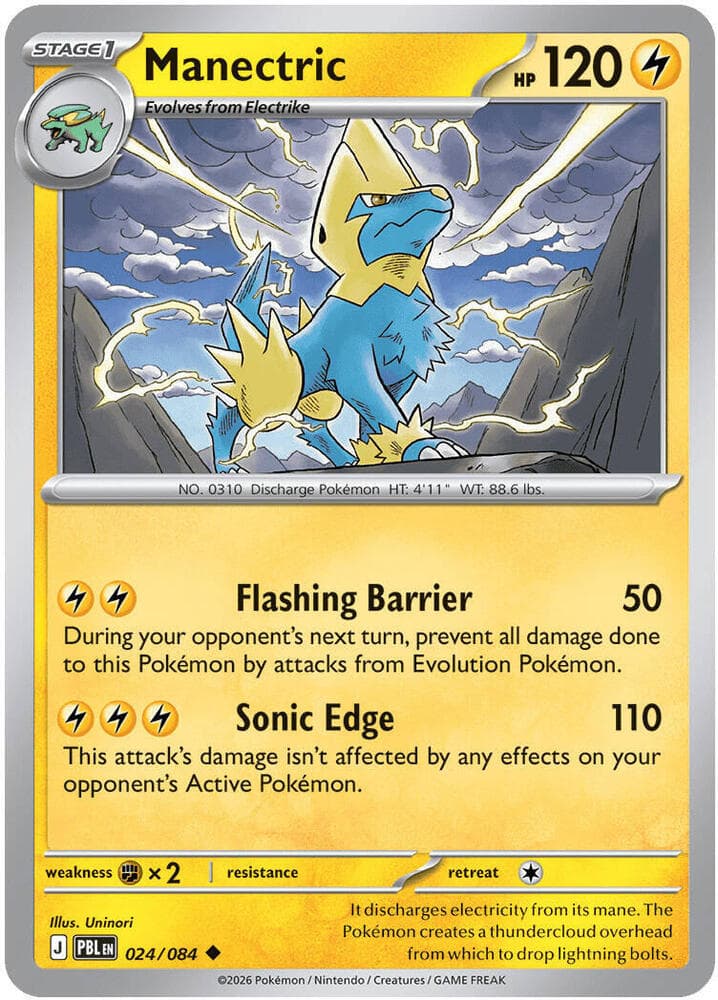
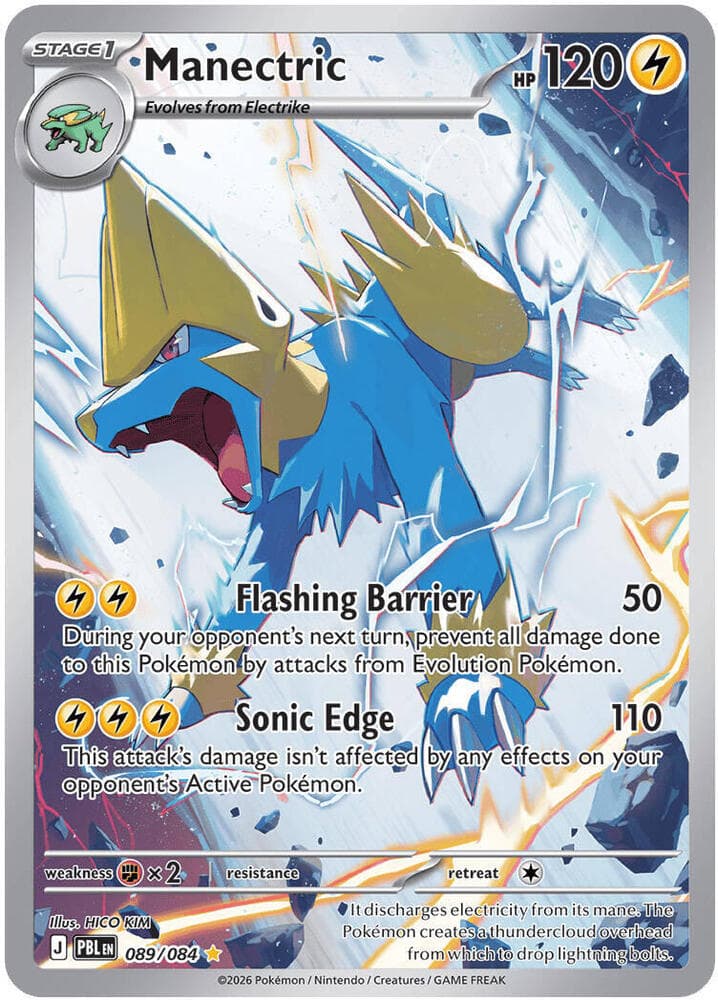
Manectric's base uncommon at $0.59 presale is the cheapest card in the entire set right now, which is amusing given its Illustration Rare (#089) presales near $19. That 32x multiplier between treatments of the same Pokémon is the modern TCG economy in a single data point. Floor-priced cards in hyped sets are the safest throw-ins in any launch trade.
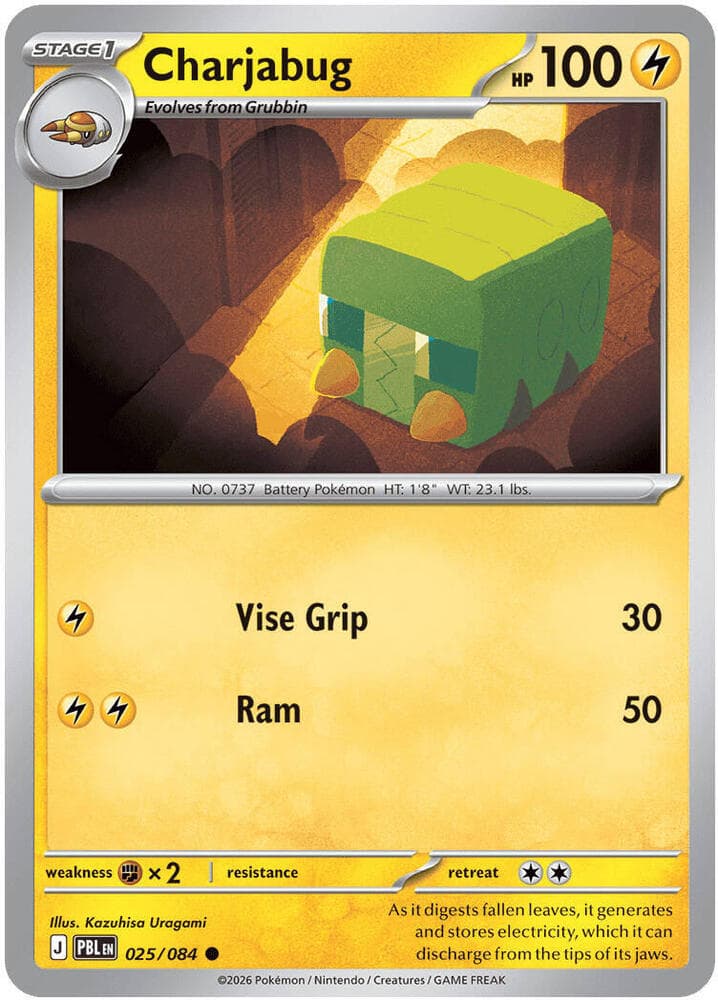
Charjabug — the battery bus — bridges Grubbin to Vikavolt at $0.75 presale. Nothing to see here financially, but three-stage Lightning lines are rarer than you would think in modern sets, and completionists will quietly need four. Middle stages never headline anything, but they gate every completed line — and completed lines are what binders are for. Reliable filler.
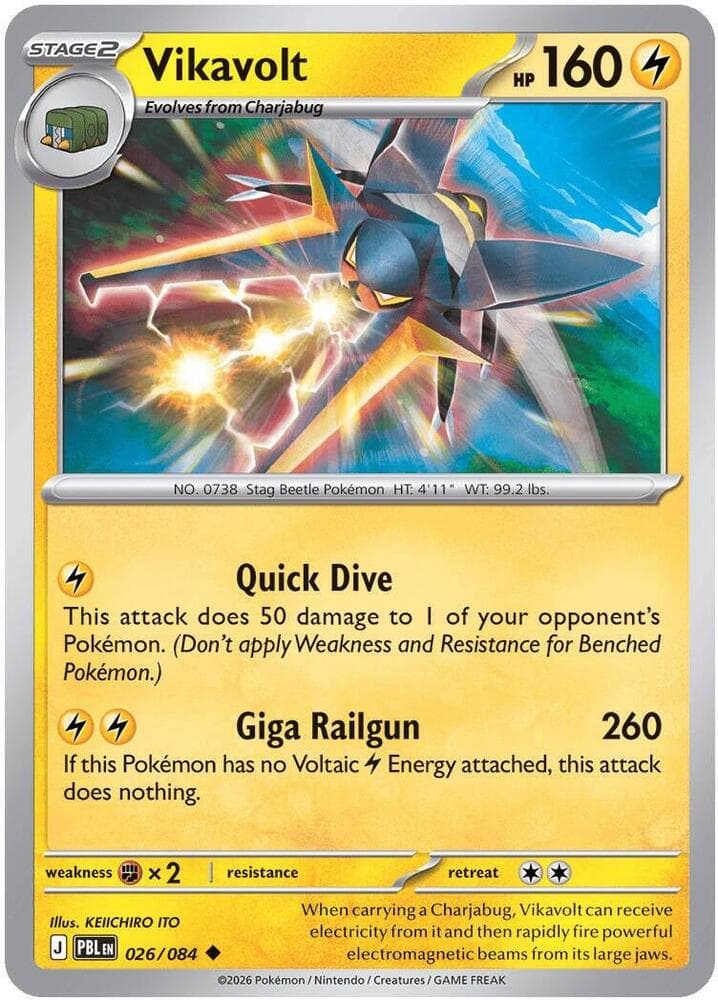
Vikavolt caps its line at $0.99 presale. The stag-beetle railgun has flirted with playability in past eras without a breakout; this uncommon printing does not scream tournament tables, but its price is padded slightly by early playset buyers hedging their bets. If a Vikavolt list ever tops an event, remember the basics were free this week.
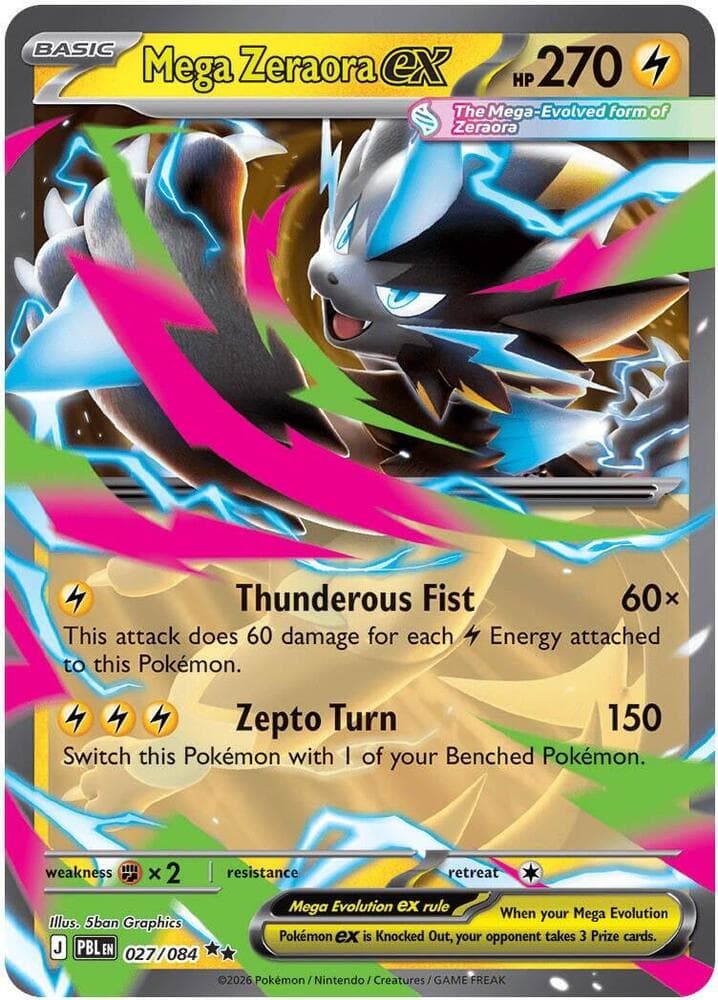
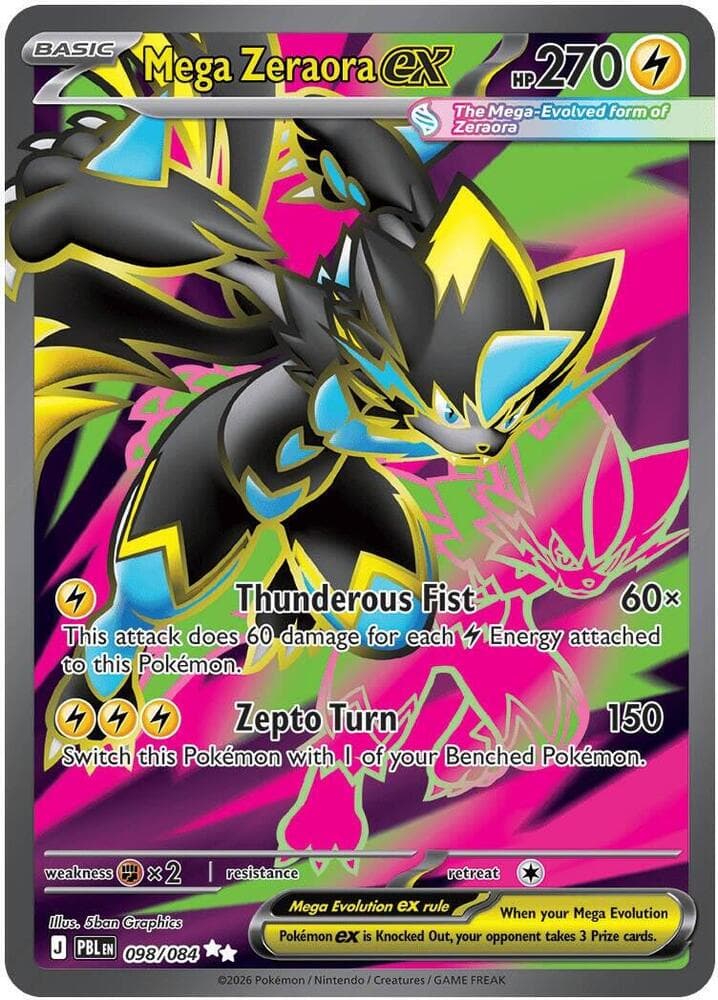
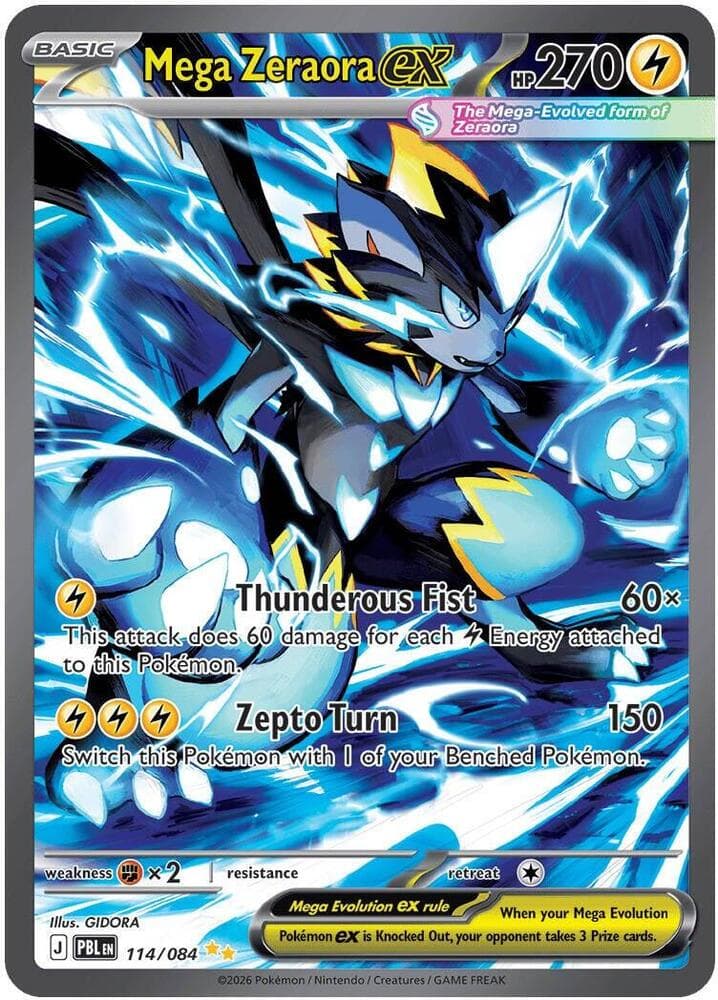
The set's second-priciest Double Rare at $11.33 presale, and the first true headliner in the list. Mega Zeraora ex is one of the era's new Mega Evolutions, with an Ultra Rare at #098 ($35) and a Special Illustration Rare at #114 ($171). If Zeraora finds a deck after launch, this $11 copy moves first; if not, all the printings deflate together. Classic launch-window binary — exactly the situation where trading duplicates beats buying at peak presale.
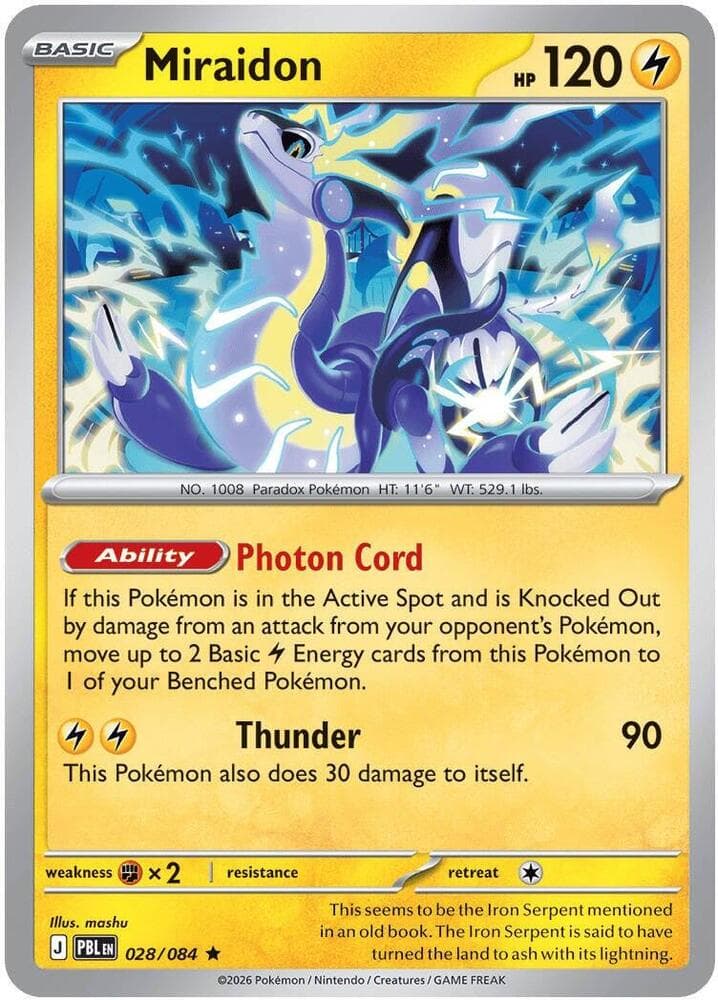
Miraidon is one of Pitch Black's quiet downgrades: the future paradox legend was a higher rarity in the Japanese Abyss Eye and arrives here as a $0.99 Rare. It pulls double duty as one of the four stamped Build & Battle prerelease promos, so early copies are circulating right now. The demotion makes the master set cheaper — take the win.
Psychic and Fighting: ghosts, fossils and rage (029–047)
The Psychic run leans into ghosts — Banette, Spiritomb, the Chandelure line — before Fighting brings the Rampardos fossil package and a demoted Koraidon. Two of the four prerelease promos come from this stretch.
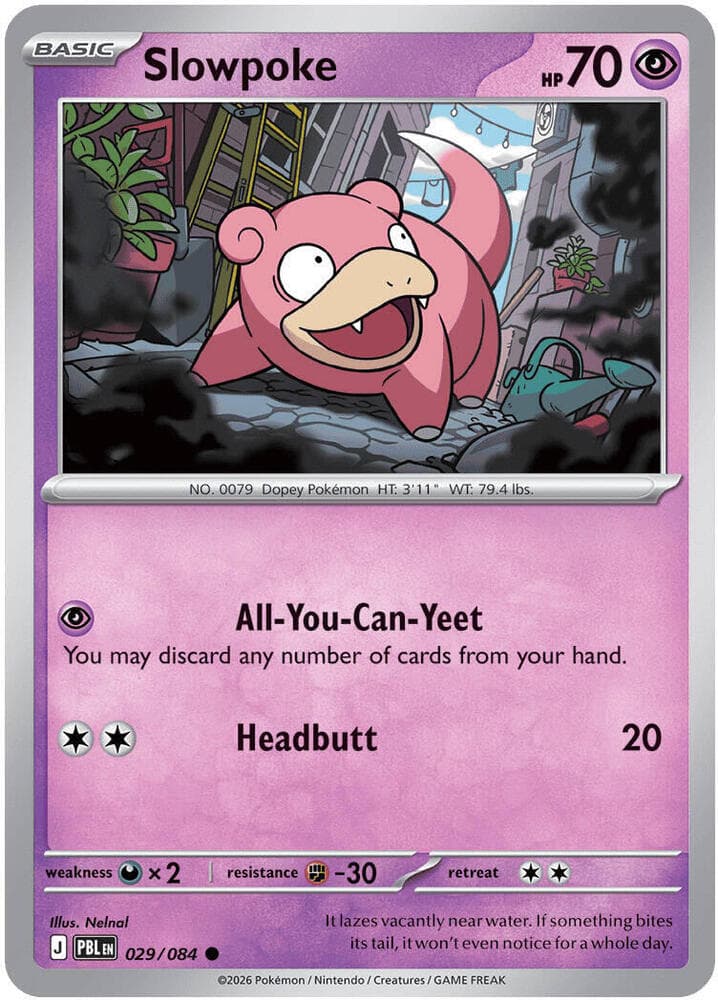
Slowpoke does what Slowpoke does: exists pleasantly at $0.85 presale. It anchors a line with unusual reach this launch — a prerelease promo Slowbro, a returning Mega, and an Illustration Rare — so this common will get swept into more binders than its price suggests. Never underestimate the Slowpoke tax: clean copies always find takers eventually.
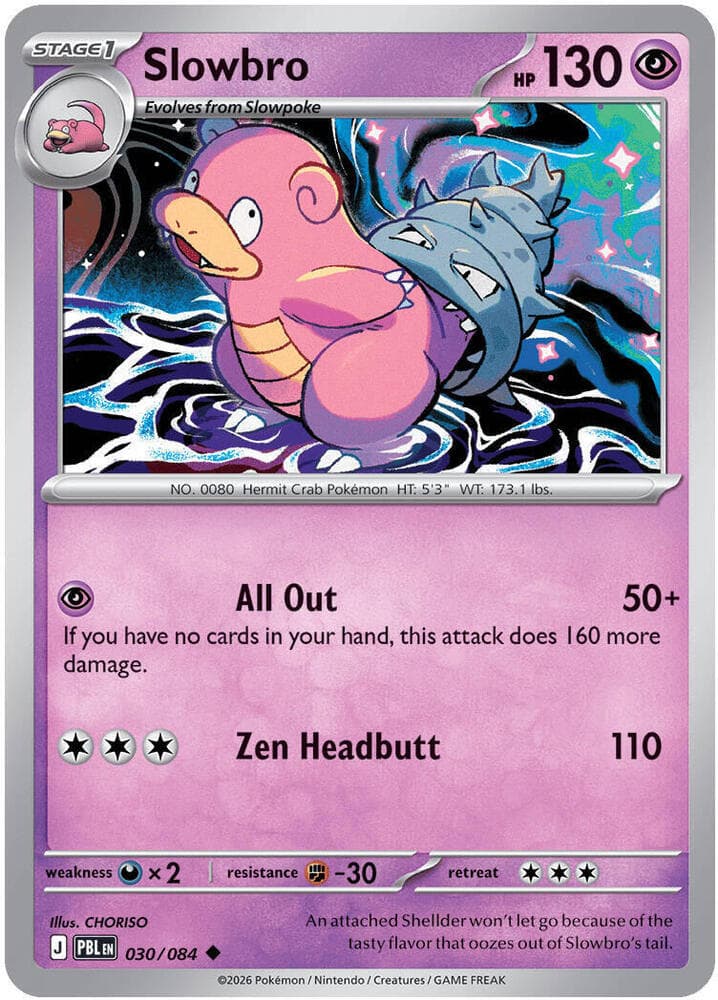
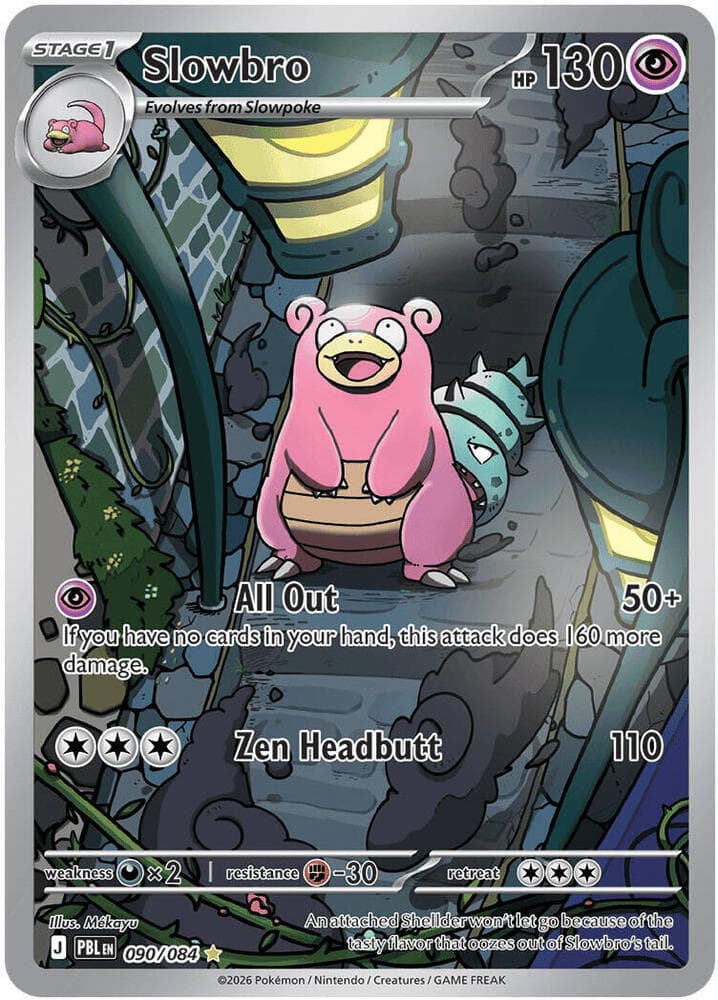
Slowbro is worth a second look for one reason: it is one of the four stamped Build & Battle prerelease promos, so the $0.84 set copy has a fancier sibling floating around this weekend only. Prerelease stamps on goofy fan favorites age surprisingly well; the set version is for the master-set page. Cheap either way, honestly.
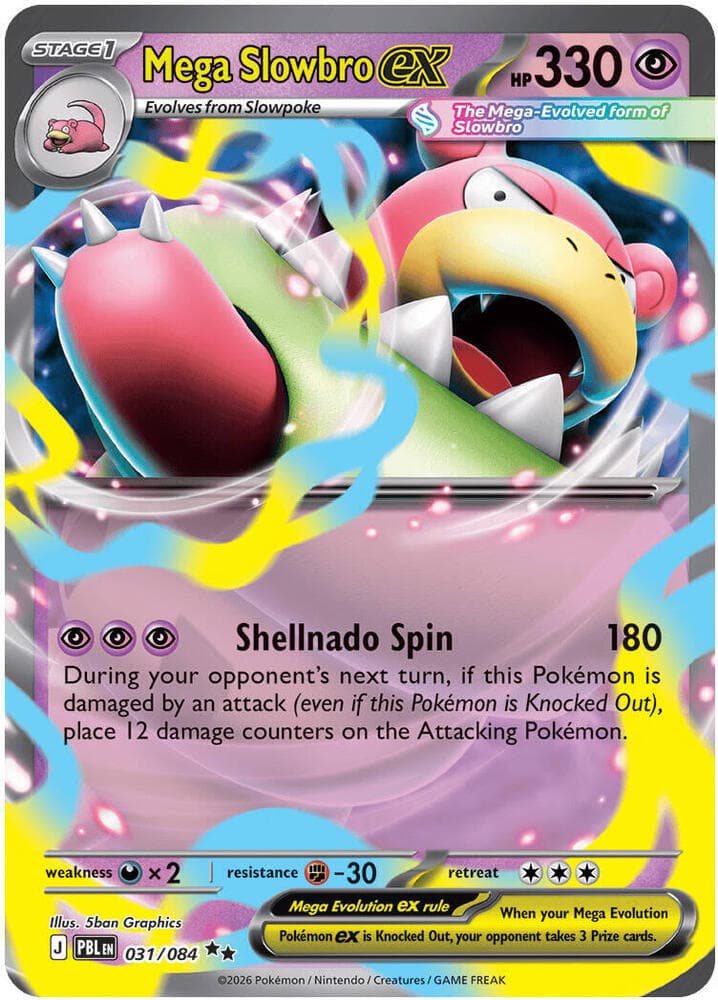
Unlike most Megas in this set, Mega Slowbro is a returning classic — the Shellder-chomped absurdity first seen in the Hoenn remakes. At $5.75 presale for the Double Rare, the market rates it as a novelty rather than a contender. That is probably fair, but returning Megas carry nostalgia that new ones have to earn, and its $24 neighbor Morpeko UR shows how this set rewards personality.
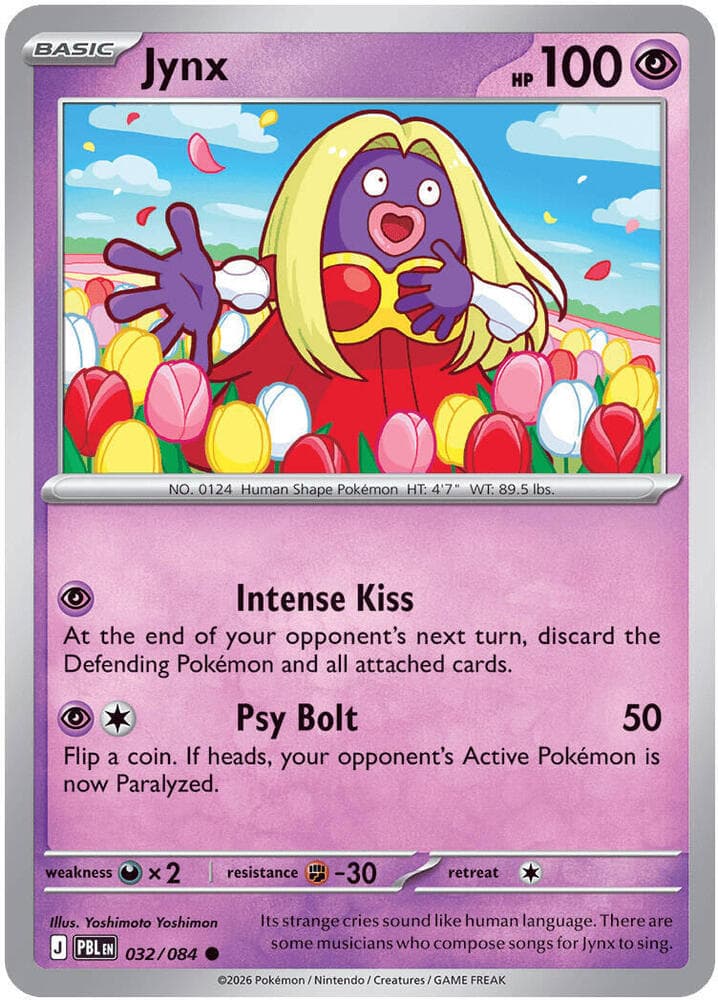
Jynx at $0.84 is a Kanto original making a routine appearance. No hit versions, no promo duty, no drama — the kind of card whose entire market is master-set builders and the occasional devoted fan of Gen 1 deep cuts. Every set needs its unbothered veterans, and Jynx has been unbothered since 1999. Bulk with seniority.
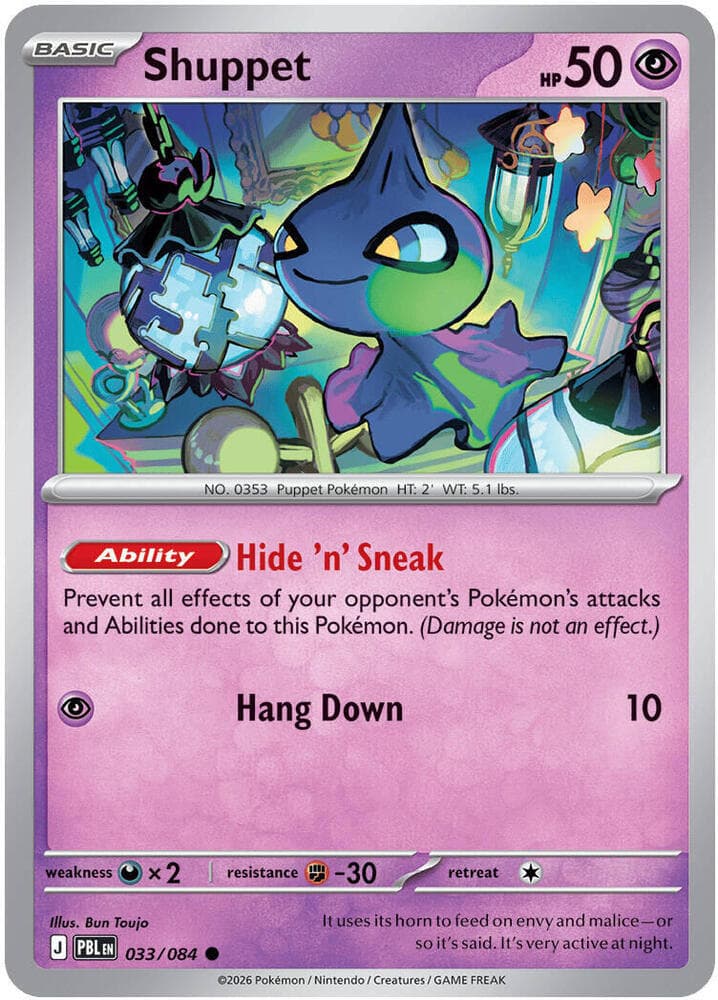
A $1.33 presale on a common raises an eyebrow. Shuppet feeds Banette, and Ghost-line basics have been trading above rarity all week — either prerelease players are testing something or collectors are hoarding the spooky page. Worth flipping while the premium lasts; common premiums rarely survive week two. Sell the spike, keep one copy for the page.
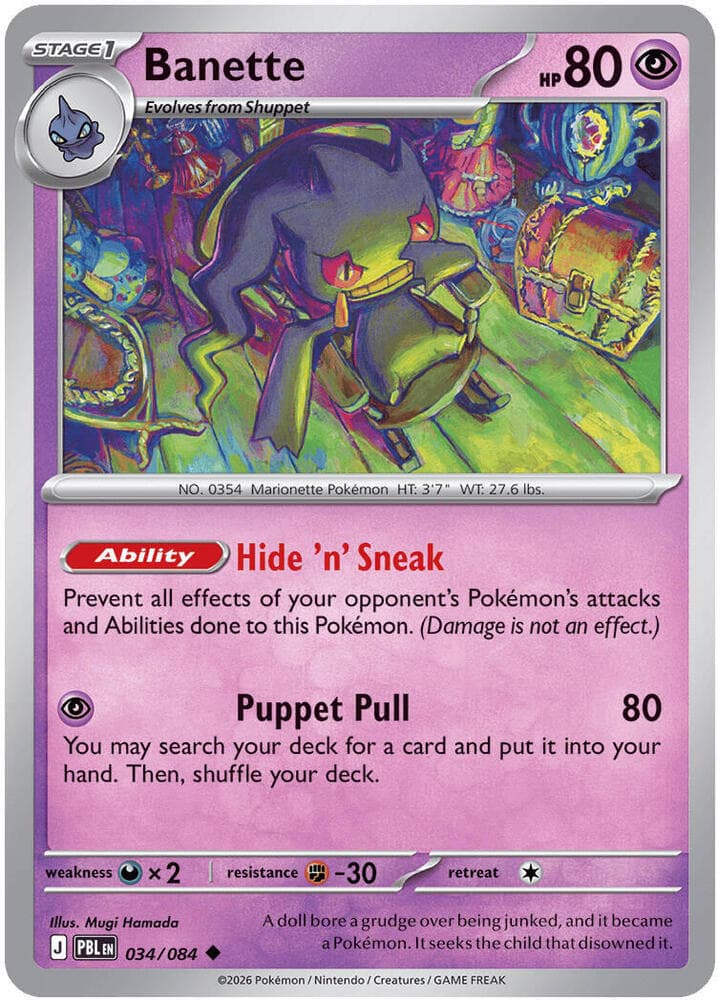
Banette at $2.28 presale is the most expensive non-Rare Pokémon card in the main set, and there is no hit version pulling the price up — this is demand for the card itself. When an uncommon prices like a Rare during prerelease week, playtesters usually know something. Watch the first tournament results before deciding whether to sell into the spike or hold.
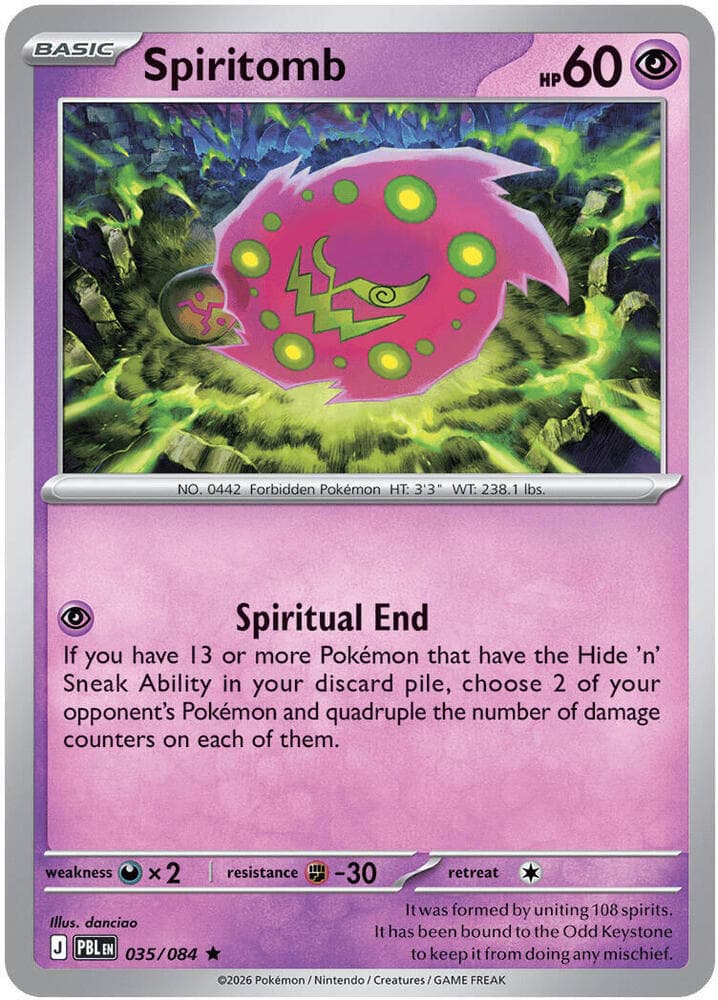
Spiritomb — 108 spirits in a keystone, and a card with a long history of being annoying in every format it touches. The $1.74 presale on this Rare carries a whiff of playability speculation. Spiritomb printings have a habit of becoming quietly necessary; this is a hold-and-see rather than a bulk-out. History rhymes with this one.
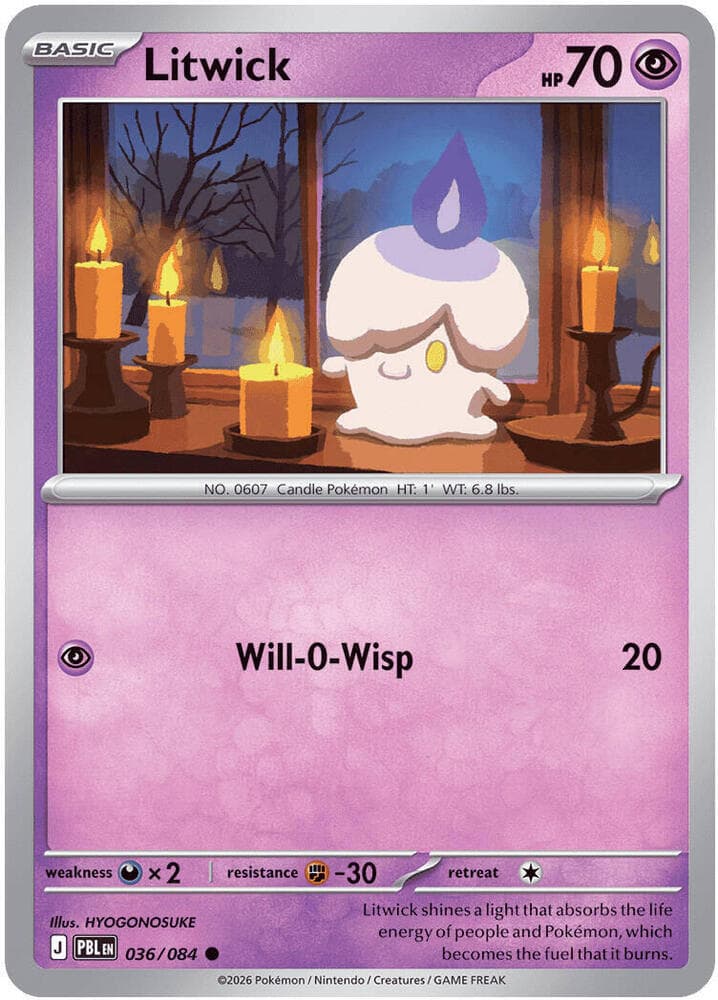
Litwick starts the set's marquee Ghost line at $0.73 presale. With Mega Chandelure ex two steps up and its SIR pushing $224, this little candle will be pulled from bulk boxes for years by line collectors. The cheapest entry ticket to one of Pitch Black's best stories. Cheap tickets to expensive stories are the best trade currency there is.
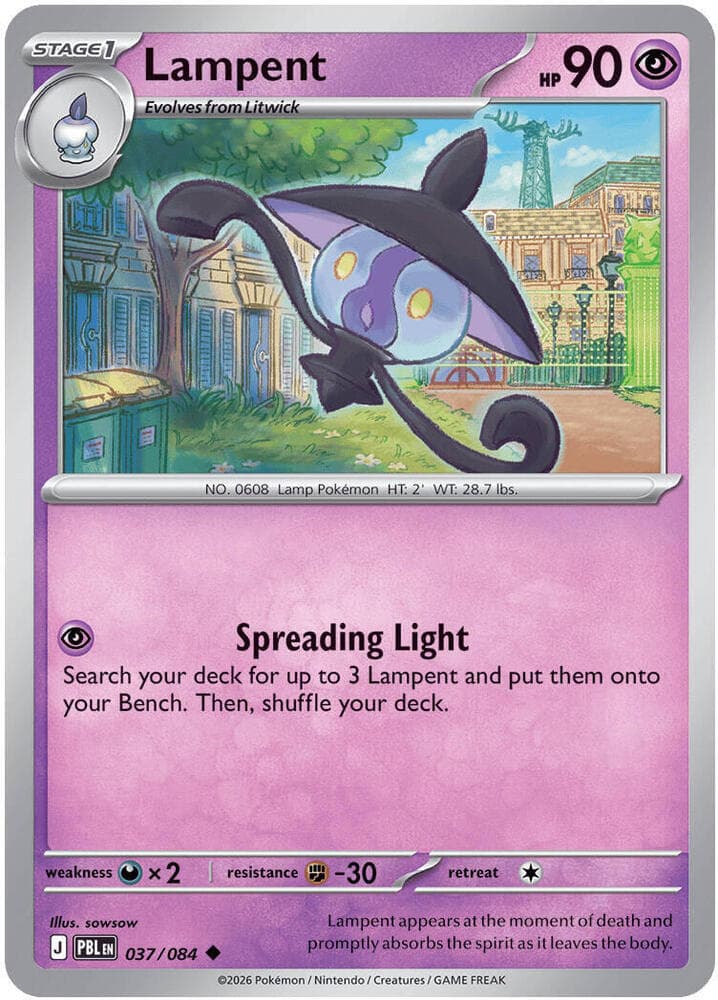
Lampent is the toll booth between Litwick and the set's third-priciest Mega. At $0.80 presale it is priced like the middle stage it is — but middle stages of chase lines are precisely the cards that vanish from trade binders first once a deck materializes. Set a playset aside before the deck exists, not after it does.
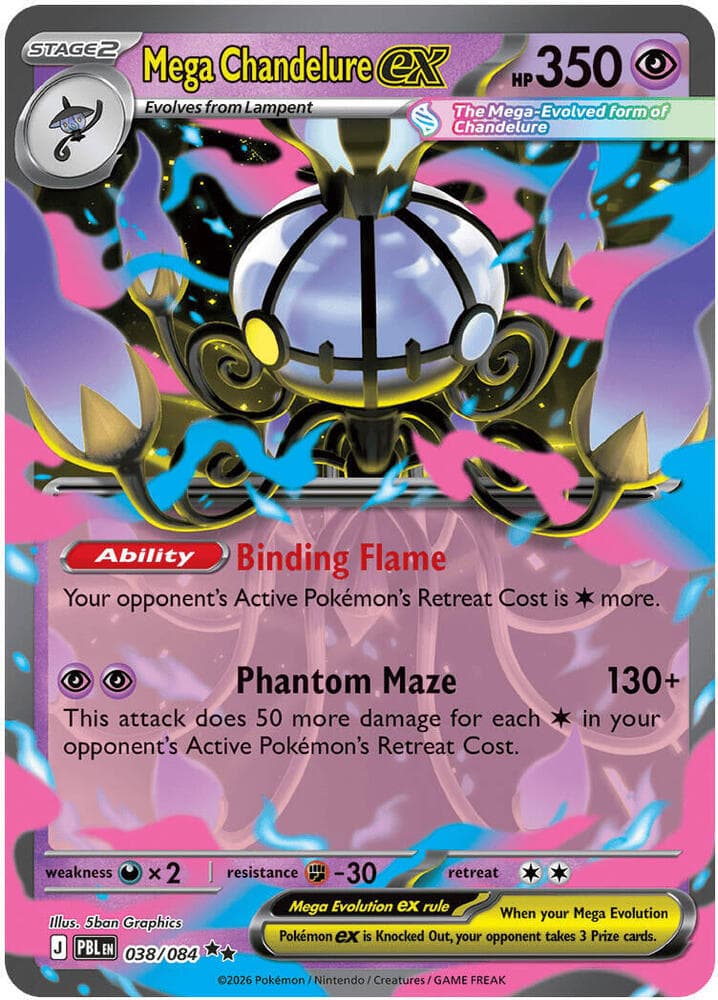
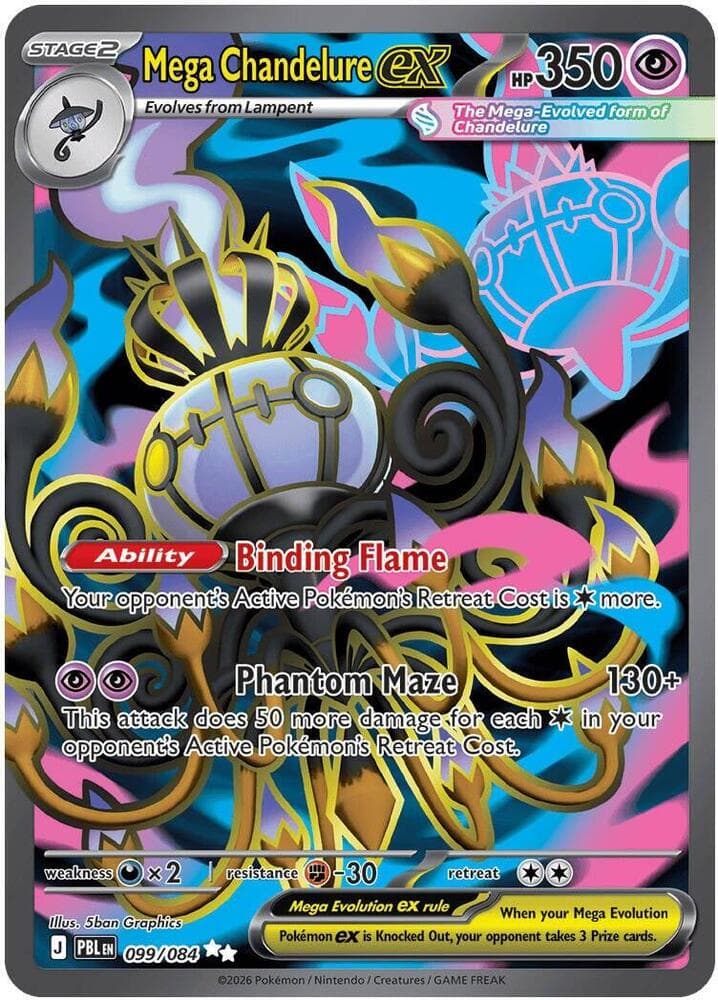
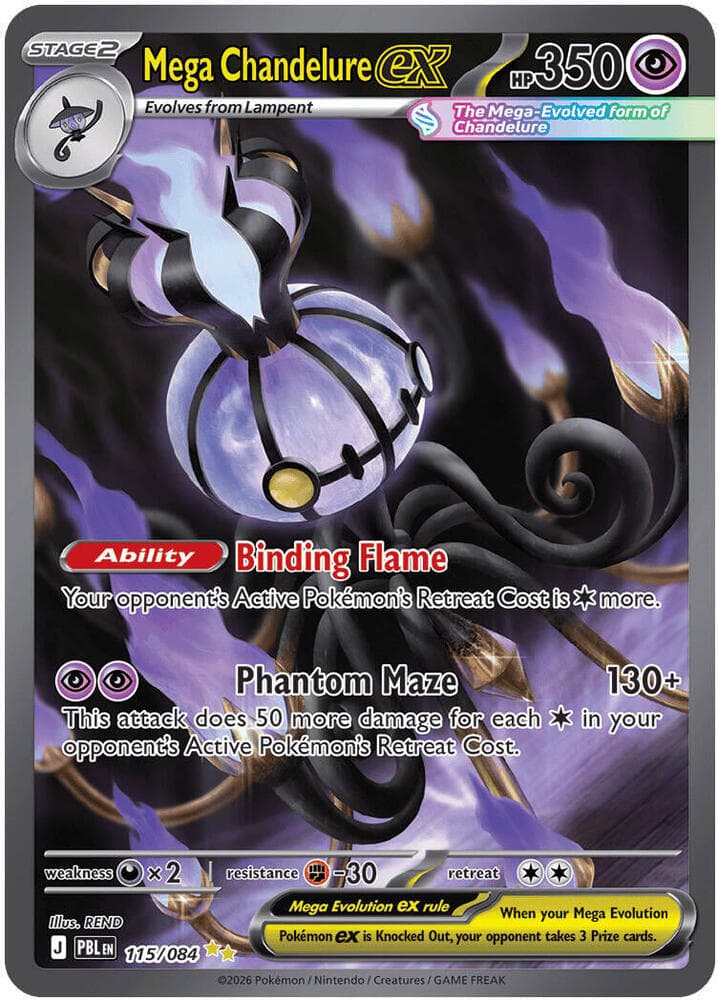
Mega Chandelure ex might be the most interesting risk-reward card in Pitch Black. The Double Rare presales at $5.99 — half of Zeraora's price — yet its Special Illustration Rare (#115) is the second-most-expensive card in the set at ~$224, and market watchers keep suggesting collectors are sleeping on it. If the deck or the artwork catches fire after July 17, this $6 copy will look silly. A sensible early trade target while attention is fixed on Darkrai.
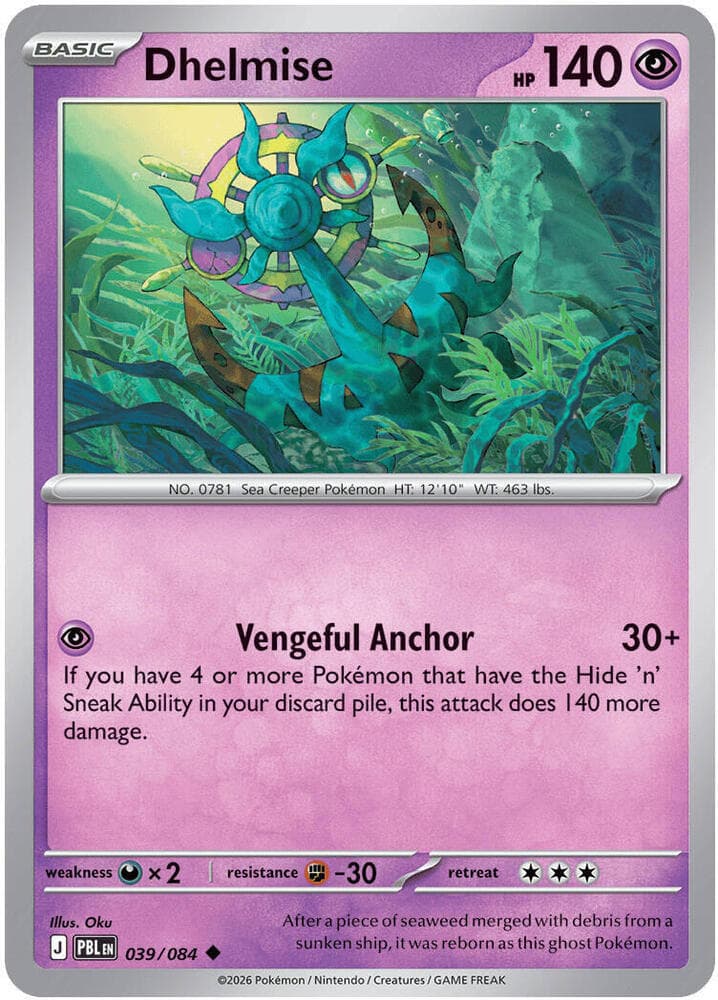
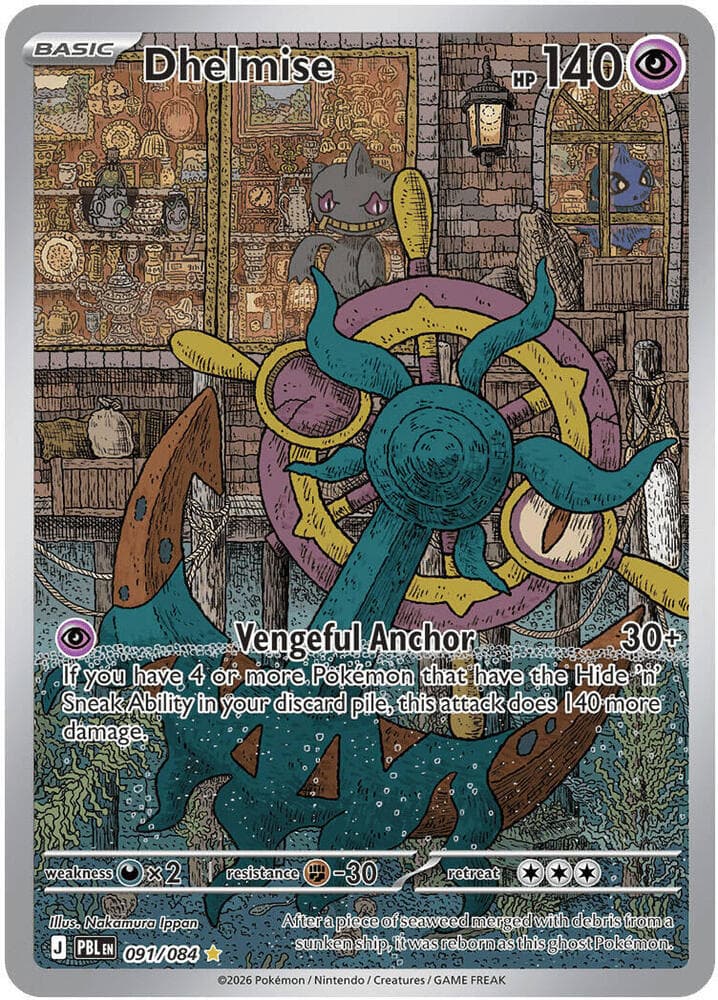
Dhelmise, the haunted anchor, presales at $2.37 — steep for an uncommon, explained partly by its role as one of the four stamped Build & Battle prerelease promos. Oddball single-stage Ghosts with promo duty tend to have shallow supply in pristine condition; grab a clean set copy cheap once launch supply floods in. Patience beats prerelease pricing.
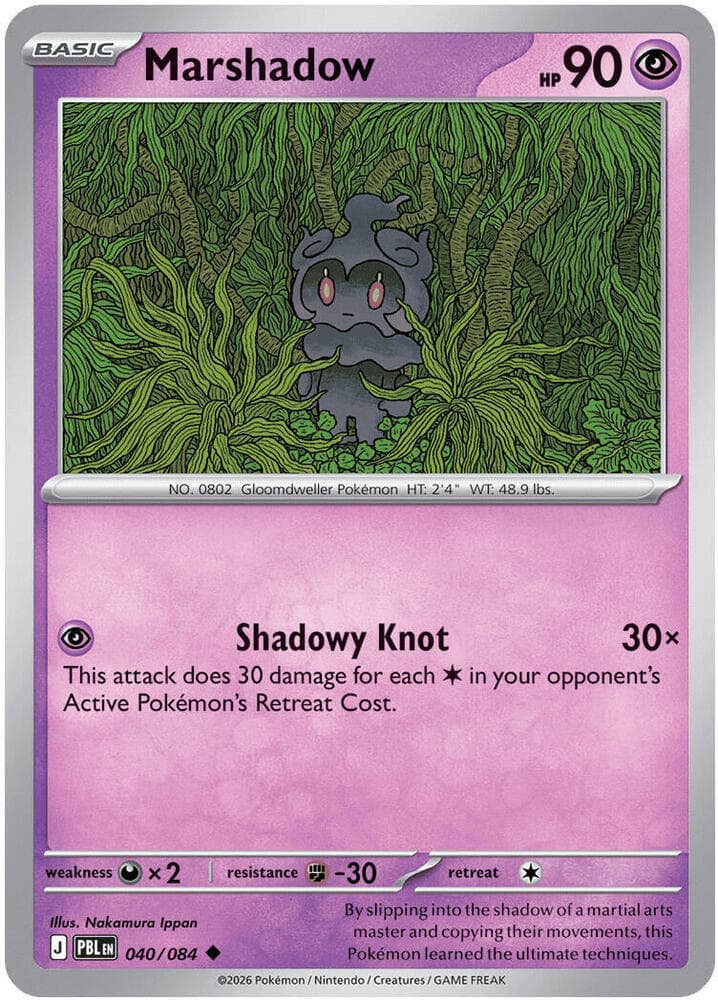
Marshadow keeps its mythical mystique even at uncommon rarity and $0.73 presale. Mythicals without a hit version in-set rarely move, but they also never quite hit true bulk prices — there is always one more Marshadow collector than you expected. The base copy asks nothing and promises little, but Marshadow pages have a way of filling themselves.
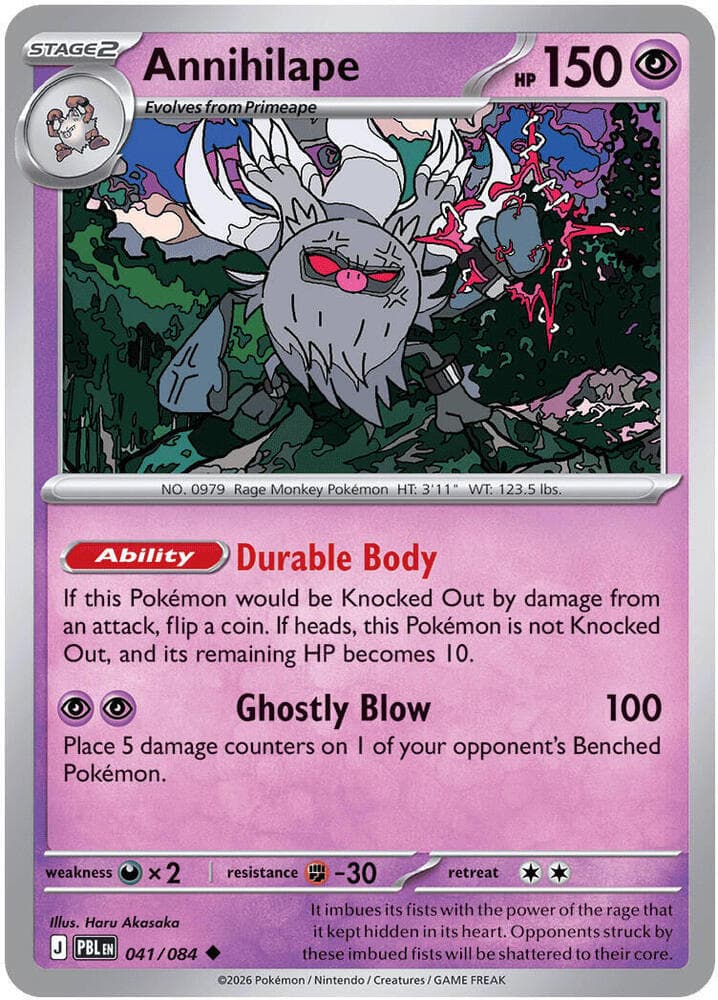
Annihilape arrives at $0.99 presale, oddly numbered ahead of its own pre-evolutions. The rage ape had a genuine competitive moment in the Scarlet & Violet era, so early buyers are keeping the price a hair above bulk on reputation alone. Reputation is not results; wait for the first weekend. Speculative pennies and nothing more, at least for now.
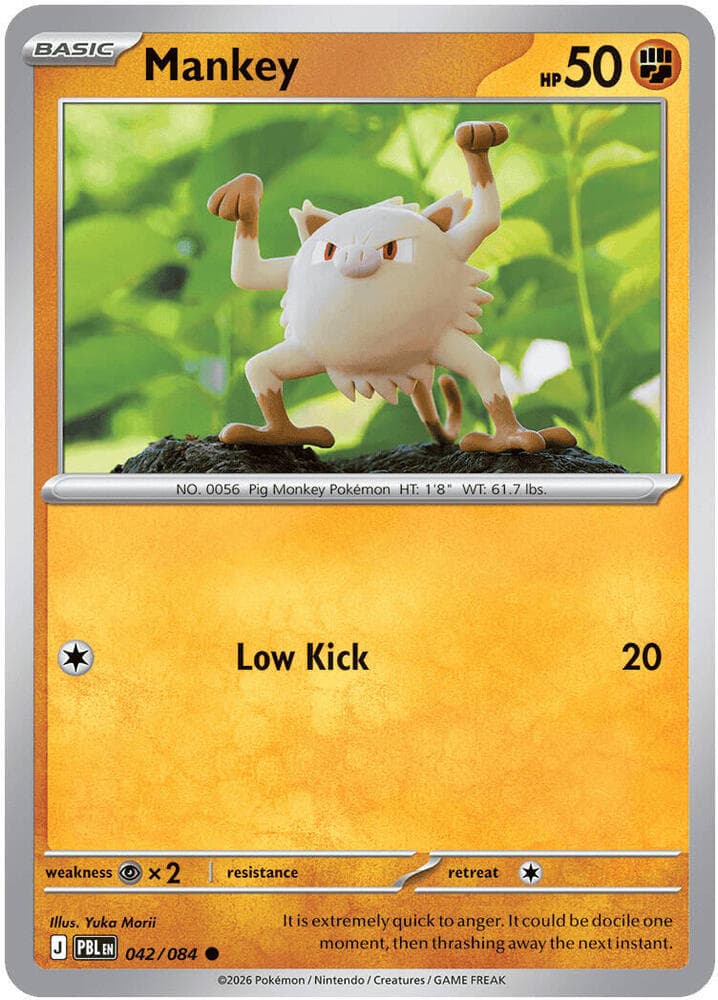
Mankey at $0.99 is priced above its common peers purely by association with Annihilape's line. That is how launch-window pricing works — proximity to a name people remember. If Annihilape finds a deck after launch, playset demand reaches all the way down here within hours; that is simply how evolution economics work. Until then, fine trade filler.
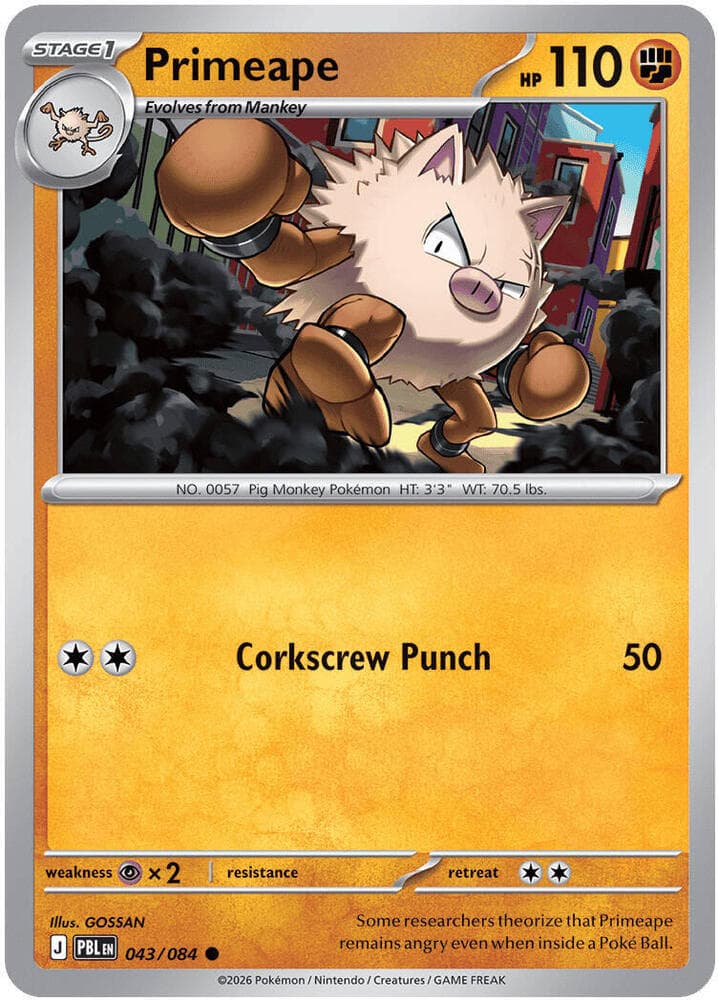
Primeape completes the anger-management arc at $0.85 presale. Nothing about this printing suggests it breaks out, but three-stage Fighting lines get playset demand whenever any member shows up in a list, so liquidity stays decent through launch month. The set gives the ape line no hit versions at all, which caps the ceiling on the whole page.
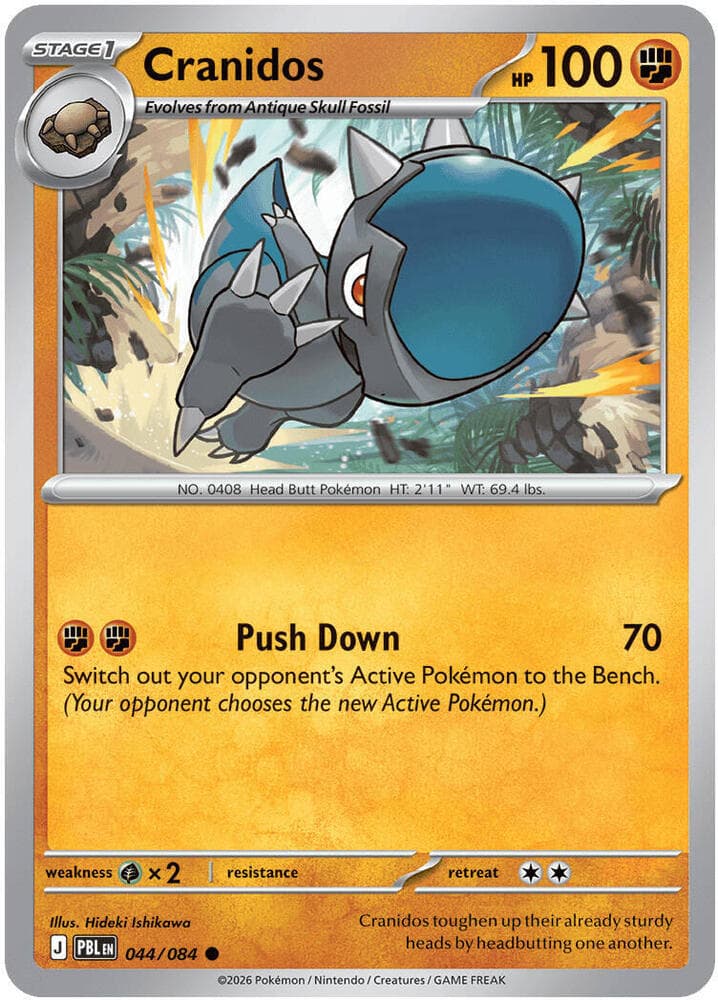
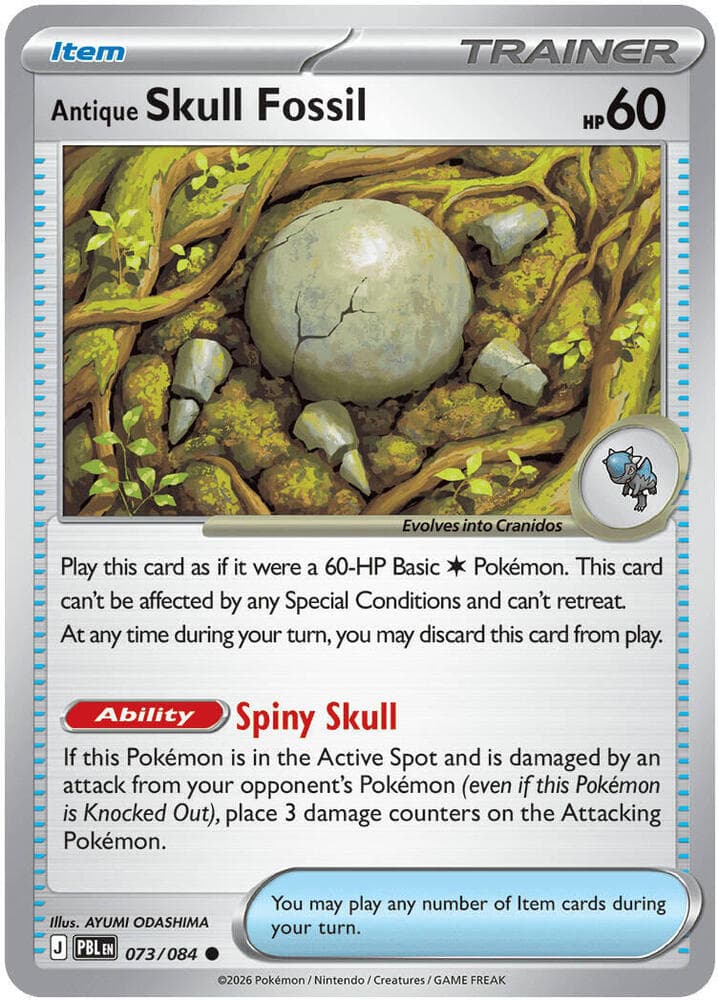
Cranidos is half of Pitch Black's fossil experiment, revived via the Antique Skull Fossil item at #073. At $0.73 presale it is bulk with a mechanic attached — and fossil basics are historically the first commons to disappear when a fossil deck cracks a tournament top cut. Cheap lottery ticket; every fossil era starts with someone hoarding the basics.
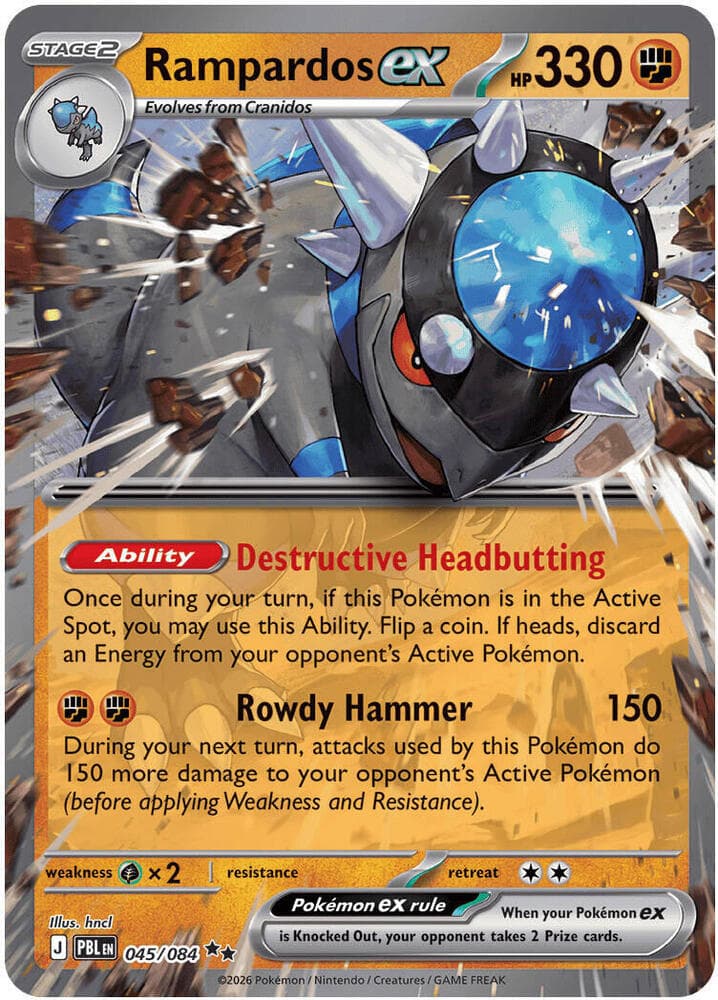
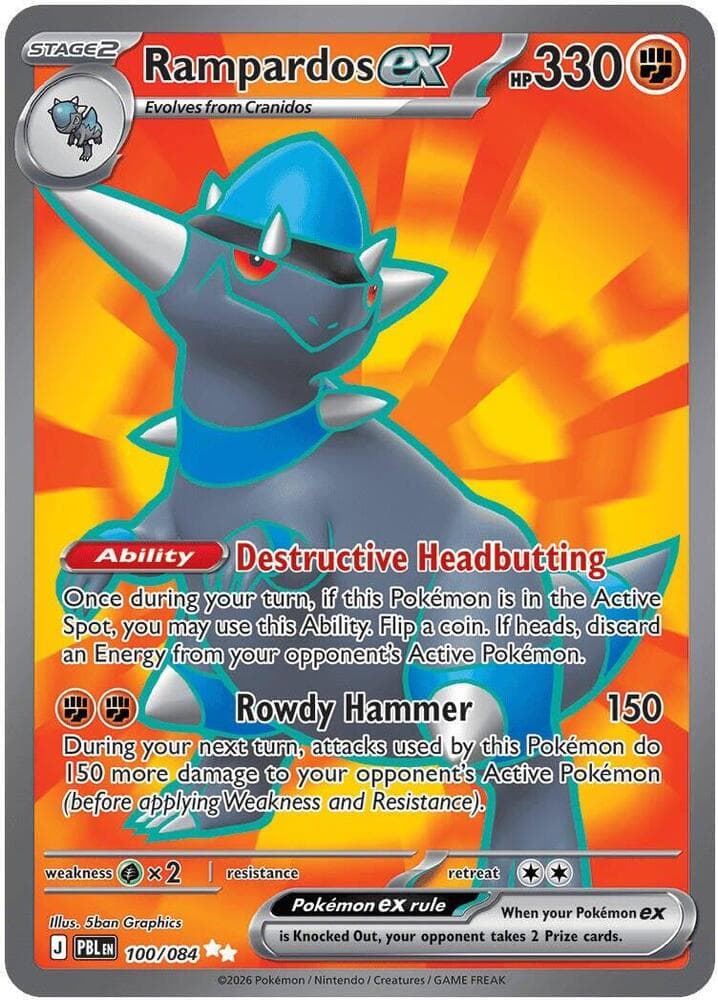
Rampardos ex headlines the fossil package at $5.24 presale, mid-pack for the set's Double Rares. Rampardos has a cult following as the glass-cannon fossil, and its Ultra Rare (#100) sits at a reasonable $14.24. Fossil decks are eternally one support card away from relevance; this is the definition of a low-cost speculative playset. Worst case, it stays a fan favorite.
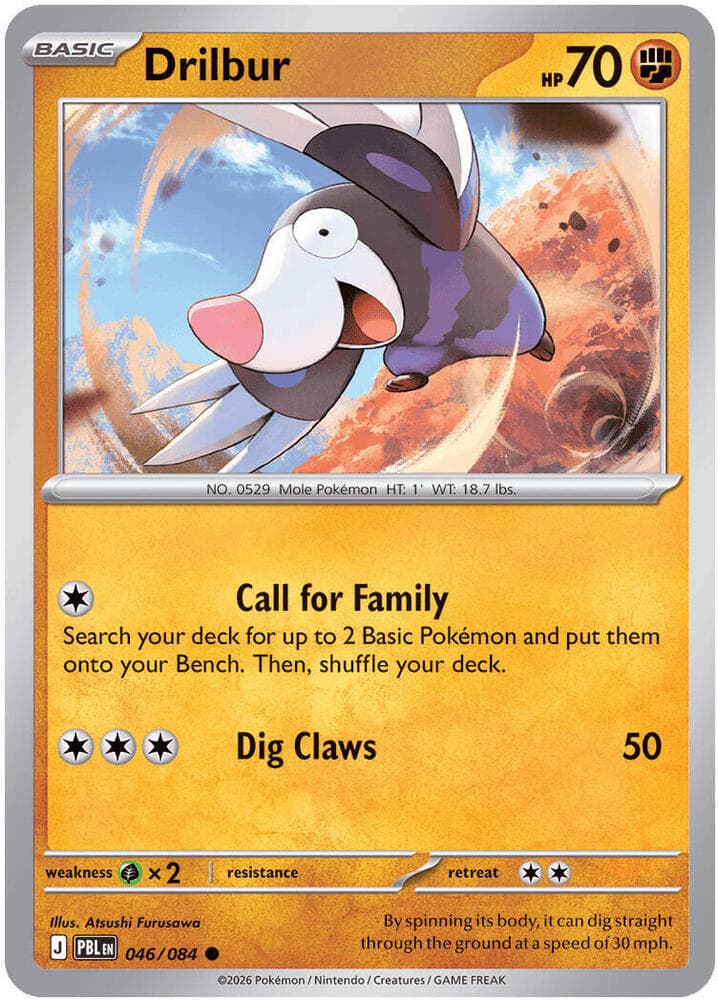
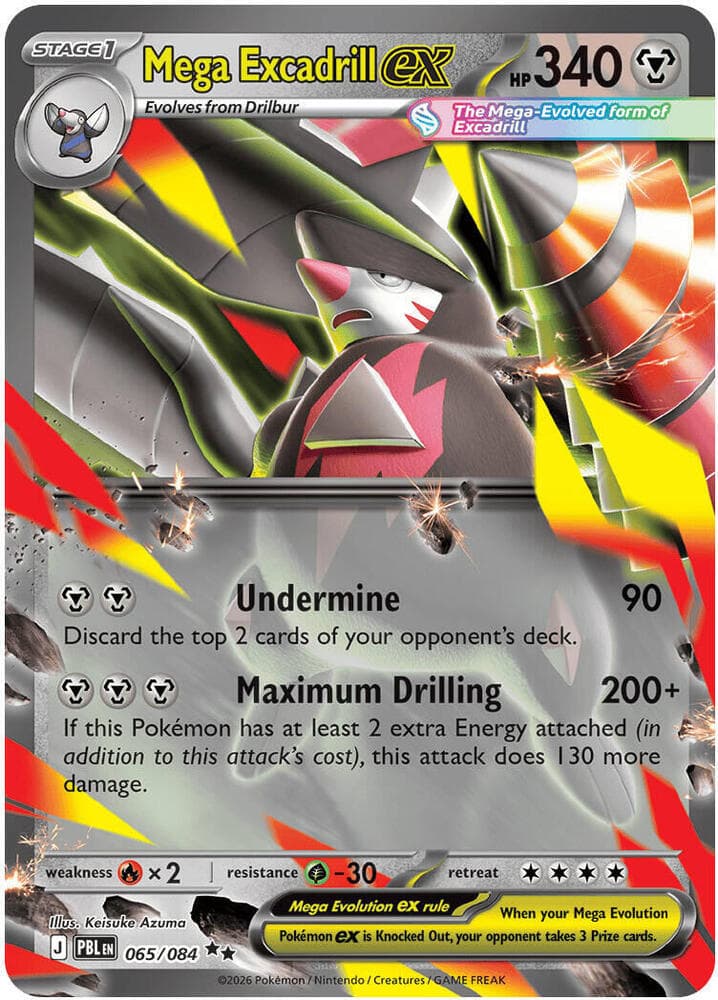
Drilbur burrows in at $0.77 presale, and it matters more than the price implies: it is the only route into Mega Excadrill ex at #065. Basics that feed Megas get quietly hoovered up in week one. Set it aside rather than bulking it — when a Mega's only feeder is a 77-cent common, the trade math writes itself.
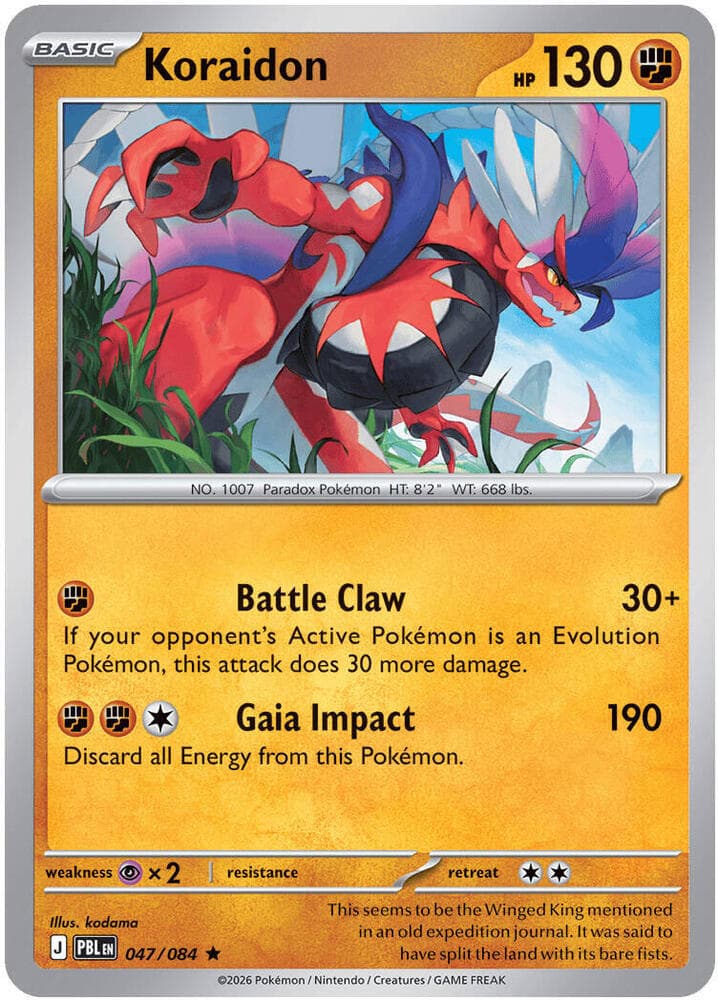
Like Miraidon, Koraidon takes a rarity demotion coming west — a $1.25 Rare here versus its higher Japanese billing. The ancient paradox legend still draws collector attention on name alone, but with no hit version in this set, the price has nowhere in particular to go. Good news for master-set budgets; a calm card in a loud set.
The heart of the set, thematically and financially: Mega Darkrai ex leads a Darkness block of tricksters, thieves and one very hangry hamster. If you trade for only one page of this set, make it this one.
The most important $12.49 in the set. This Double Rare is the playable printing of Mega Darkrai ex — the copy tournament decks will actually run four of — and its presale price already reflects real demand rather than pure hype. The signature attack, Abyss Eye, automatically Knocks Out any Pokémon affected by a Special Condition, one of the most binary effects in the modern game, and the entire early metagame conversation (including Hydrapple ex as the projected counter) revolves around it. Here is the launch math: if Darkrai tops an event in the first month, playset prices climb fast and drag the $600 SIR with them; if the deck underdelivers, this settles toward ordinary Double Rare territory around $5. That asymmetry makes #048 the single smartest trade target in Pitch Black right now — meaningful upside, shallow downside, and every launch-week pack ripper will have spares to swap away.
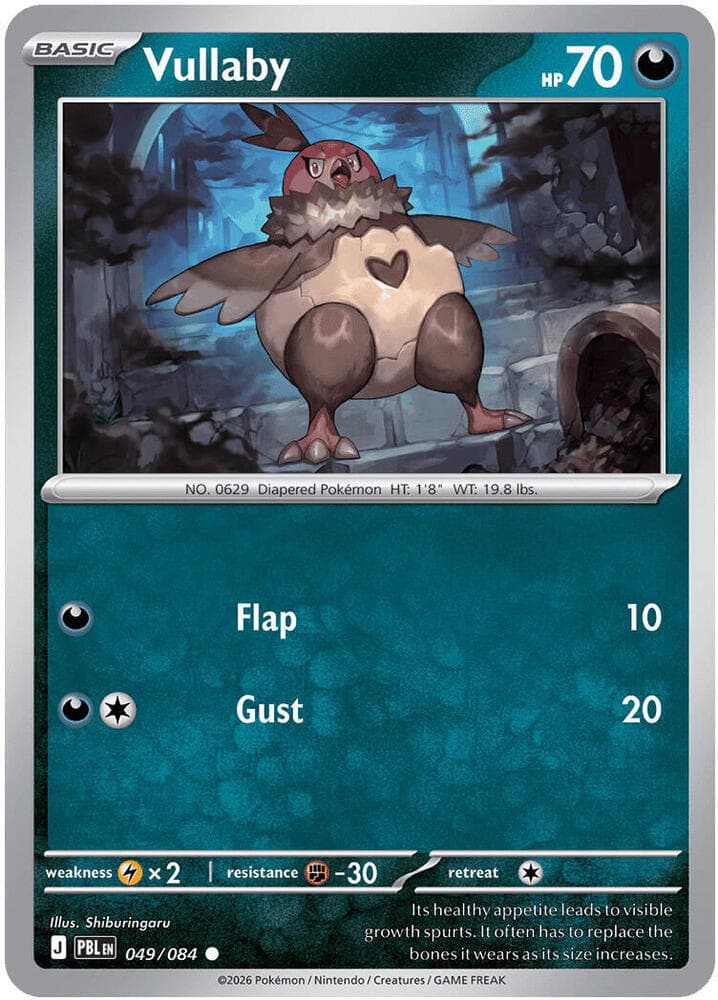
Vullaby opens the Darkness block's supporting cast at $0.85 presale. The diaper-skull vulture is pure line fodder for Mandibuzz, and neither has a hit version here. Trade ballast — though Darkness commons from this particular set will always have a thematic home in Darkrai-era binders. Sort it, stack it, and spend it as launch-week trade change.
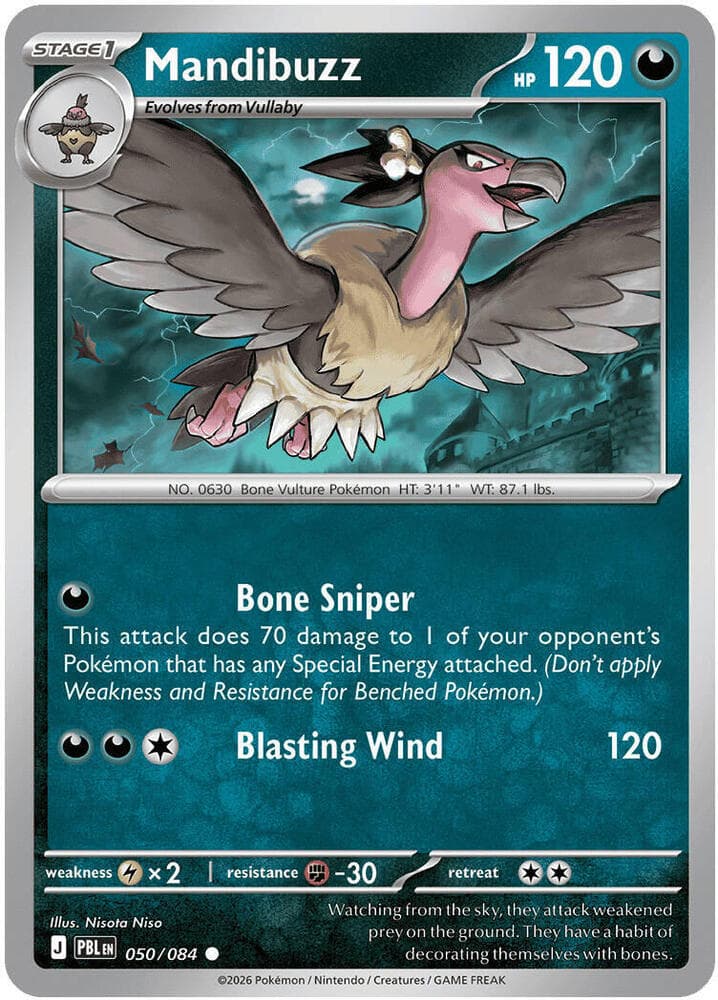
Mandibuzz has spent years as a disruption staple in other card games' discourse and occasionally this one's; here it is a $0.74 common with no printing above it. When the set's theme is darkness and your bone-vulture is still bulk, that is the market telling you it read the card. Some cards are simply supporting cast, and that is fine.
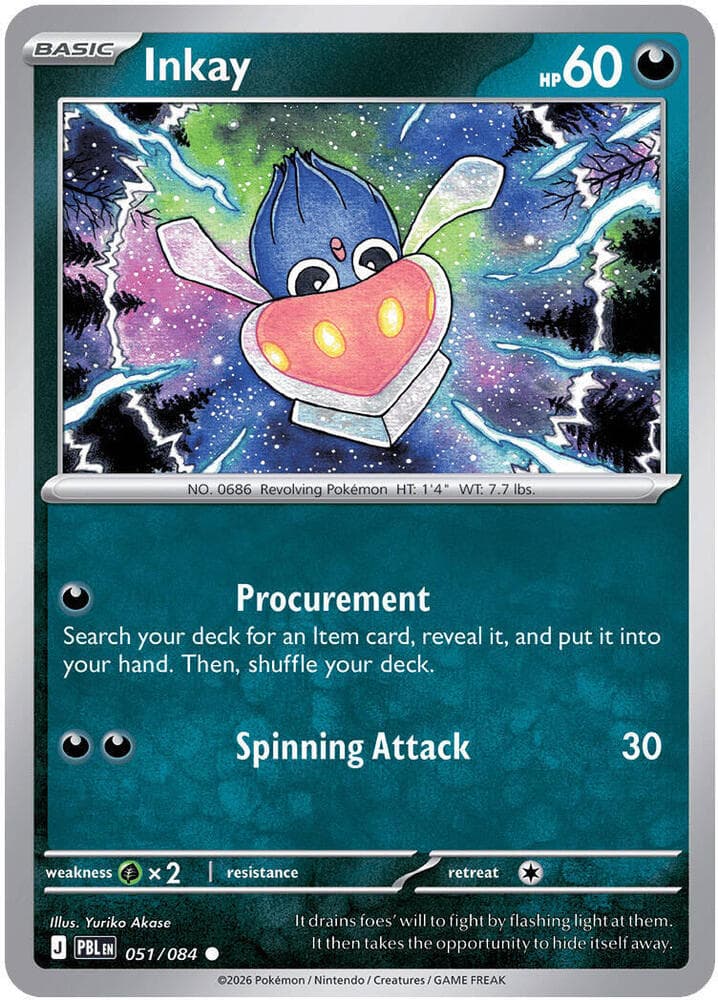
Inkay floats in at $0.74, the start of the topsy-turvy Malamar line. Malamar engines have powered real decks in past eras, so there is always residual playset demand for the basic. Reverse-holo copies from hyped sets always find master-set homes eventually, so nothing here is truly dead weight — just slow weight. Bulk, but liquid bulk; trade it in stacks.
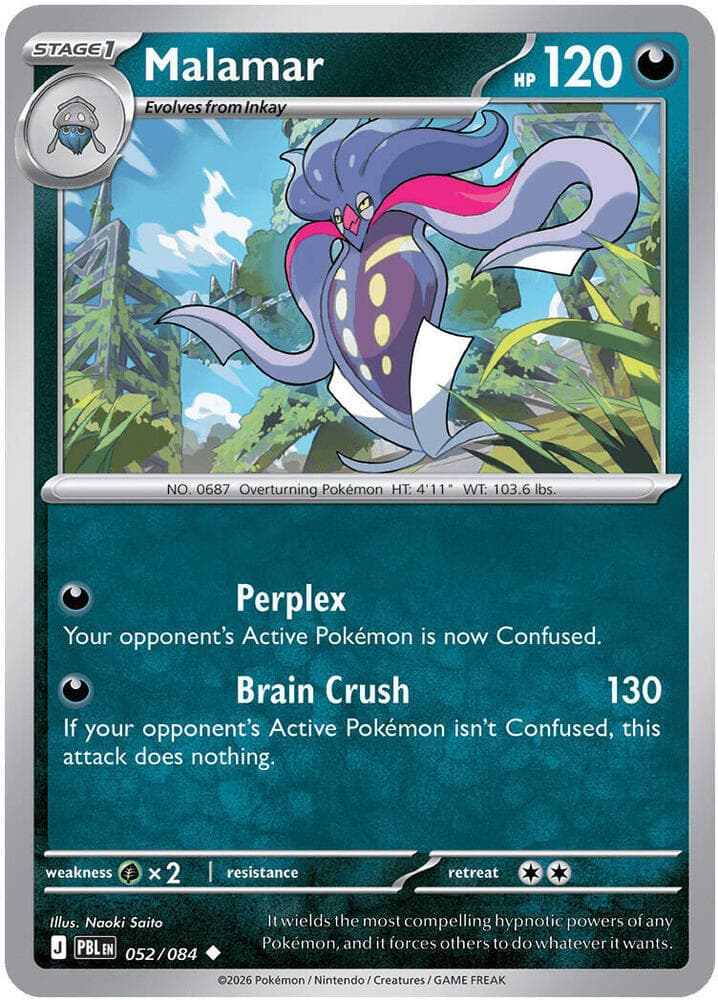
Malamar at $0.84 presale is worth a note precisely because of its history: whenever a Psychic-or-Darkness energy engine matters, Malamar is usually nearby. No early signals this time, but this is a card category where signals arrive suddenly after the first big event. Costs nothing to hold a playset — cheap optionality is still optionality, especially at 84 cents.
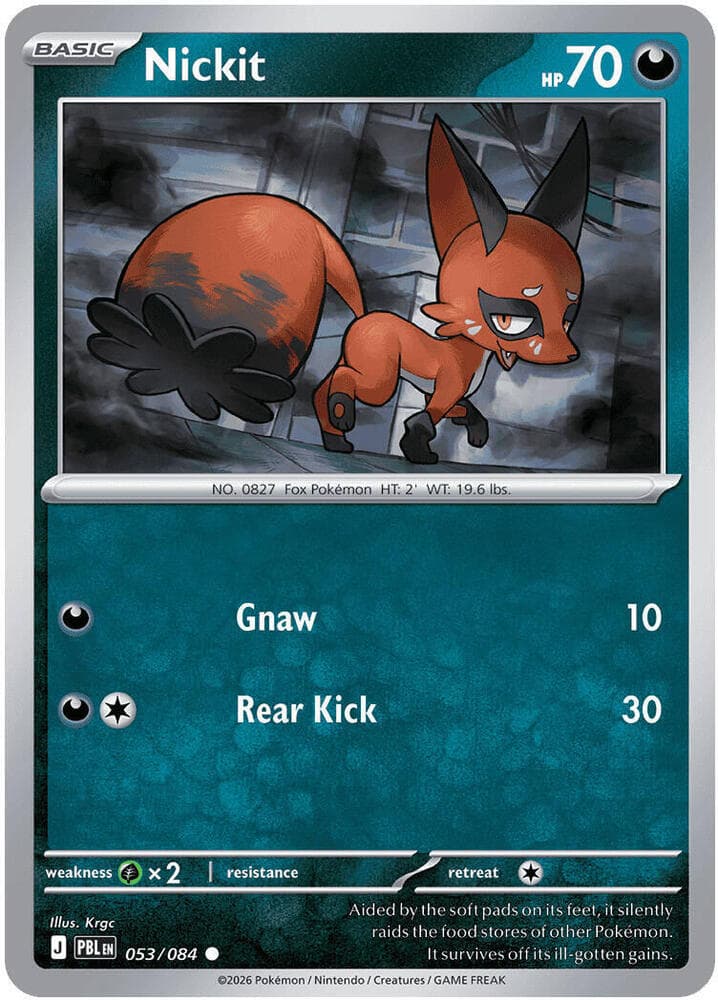
Nickit is Galar's little thief at $0.84 — a perfect thematic fit for a set about darkness and a syndicate of rustlers, and a perfectly ordinary common financially. The thief motif runs right through this set's trainer suite, which gives even its commons a little thematic glue. Its evolution's Illustration Rare (#092) is the budget entry to the set's IR page.
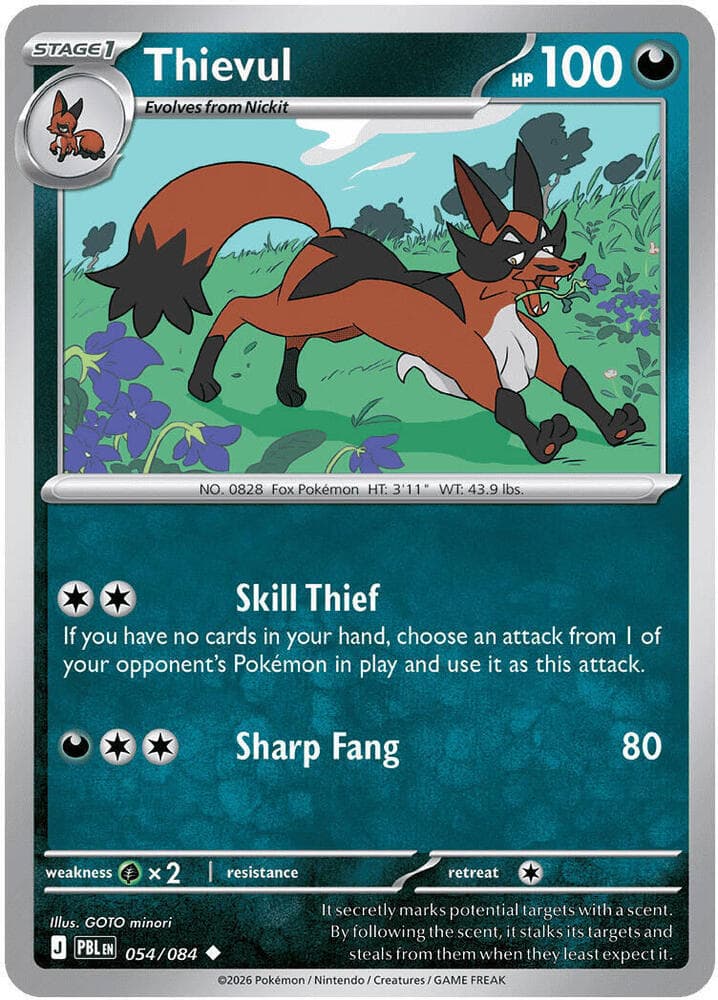
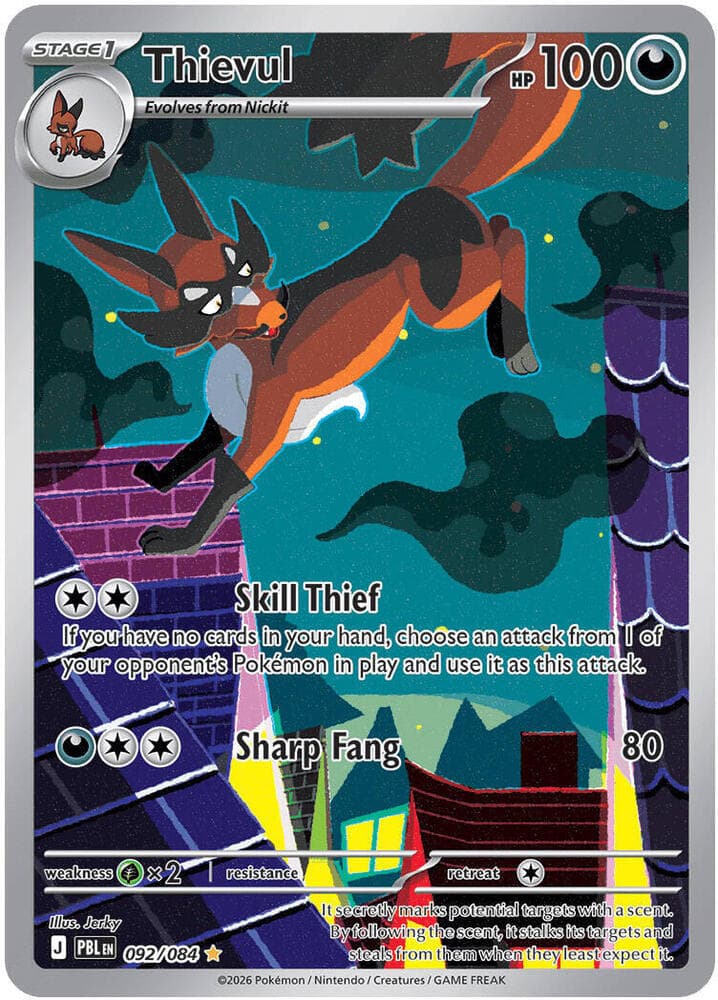
Thievul completes the fox heist at $0.84 presale, but the story is its Illustration Rare at #092 — the second-cheapest IR in the set at $12, and a genuinely characterful pick for collectors priced out of the Primarina and Armarouge pages. The base uncommon is set filler. Two different audiences, and two very different price tags.
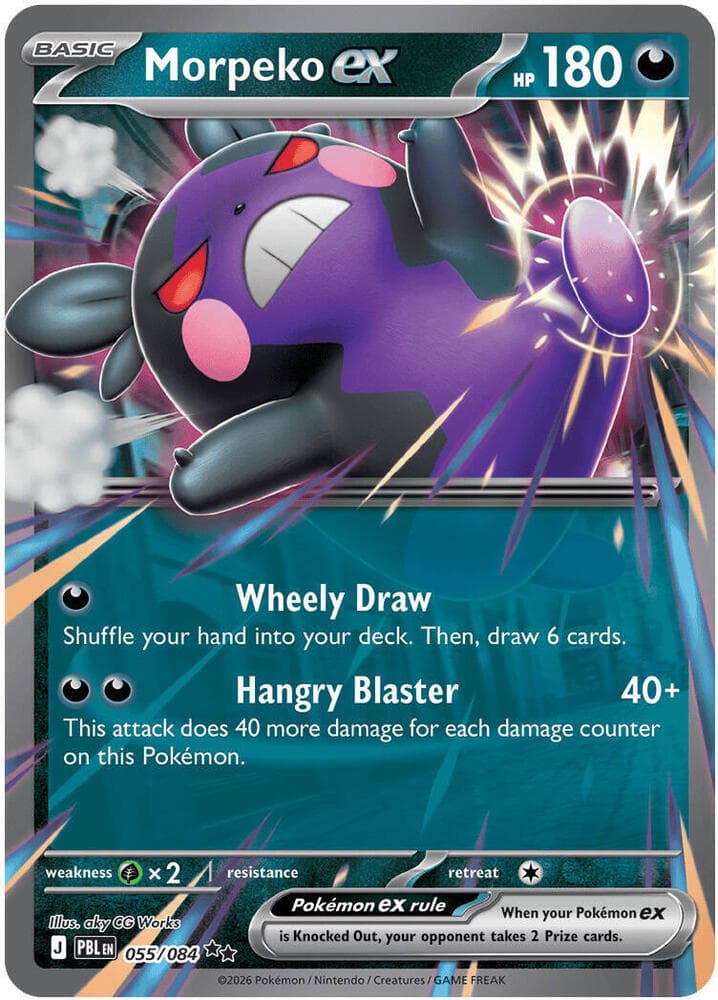
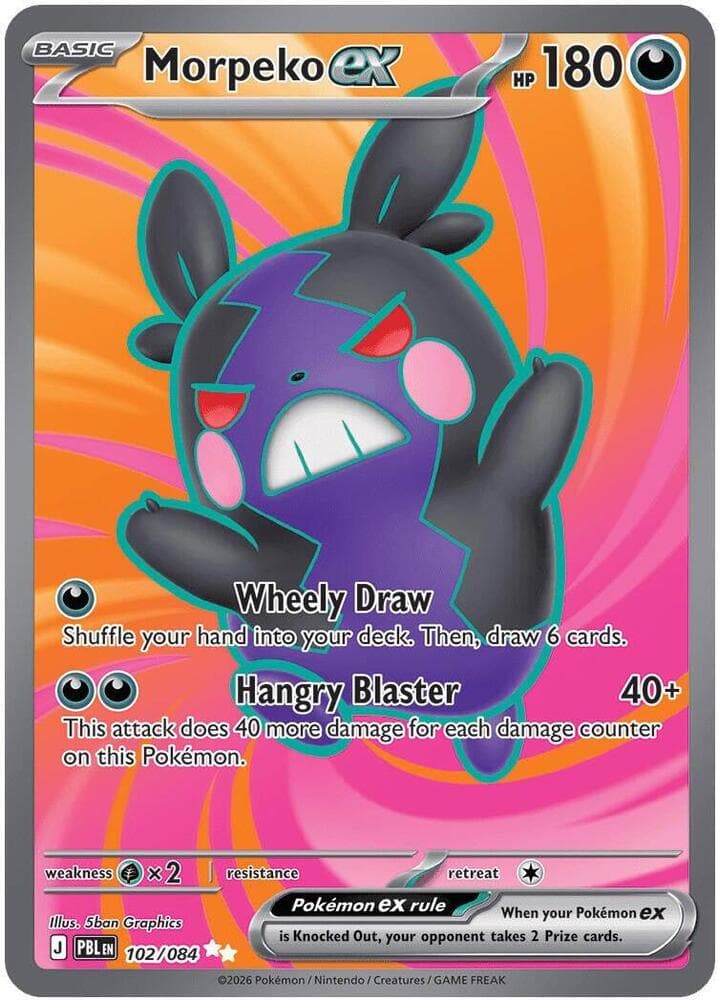
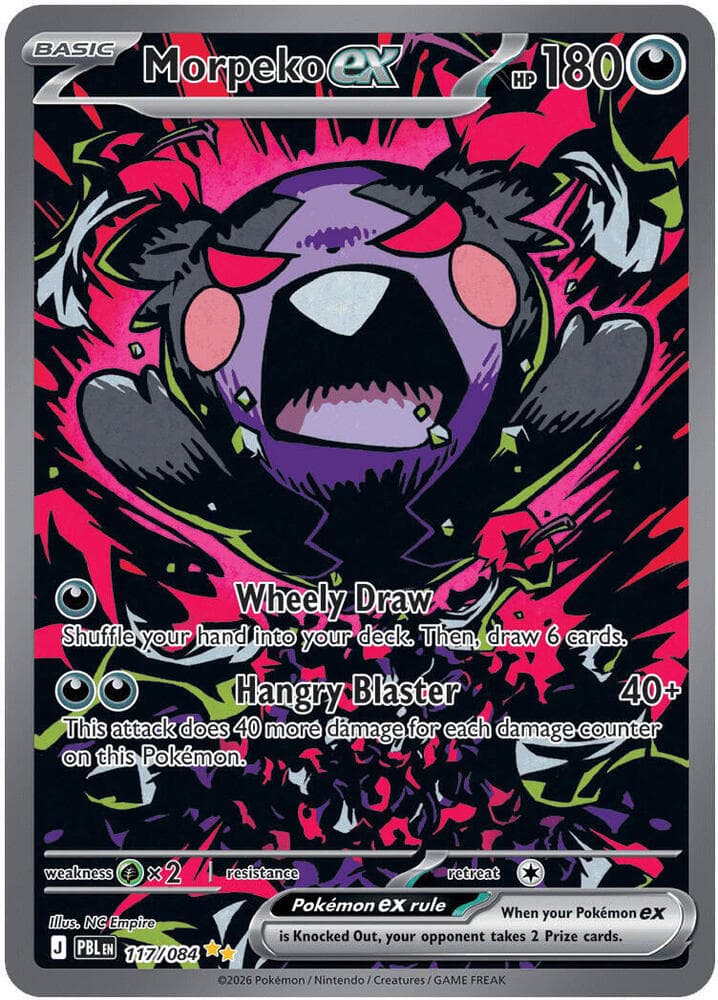
Morpeko ex is the set's personality hire, and the market loves personality: $5.00 for this Double Rare, $24.40 for the Ultra Rare (#102), and a Special Illustration Rare (#117) with no settled presale price at all as of July 11 — scarce listings, not absent demand. The hangry hamster consistently outsells its competitive relevance. Check prices before you sleeve any Morpeko into the trade binder at a guess.
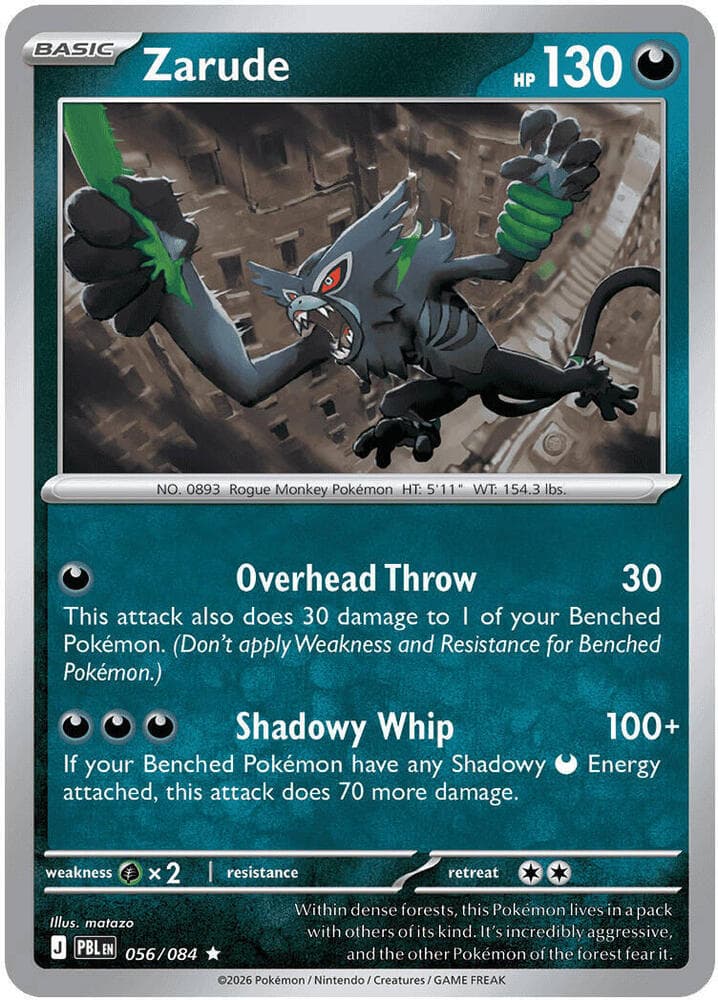
Zarude's set printing is a modest $2.49 Rare — but Zarude is arguably the mascot of Pitch Black's product line. Its Illustration Rare was cut from English boosters and lives exclusively as the stamped ETB promo (two copies in the Pokémon Center version), while a third, cosmos-holo Zarude waits at GameStop and EB Games. Three versions, none pullable from a booster except this one: a collector puzzle that trading solves far more cheaply than buying products.
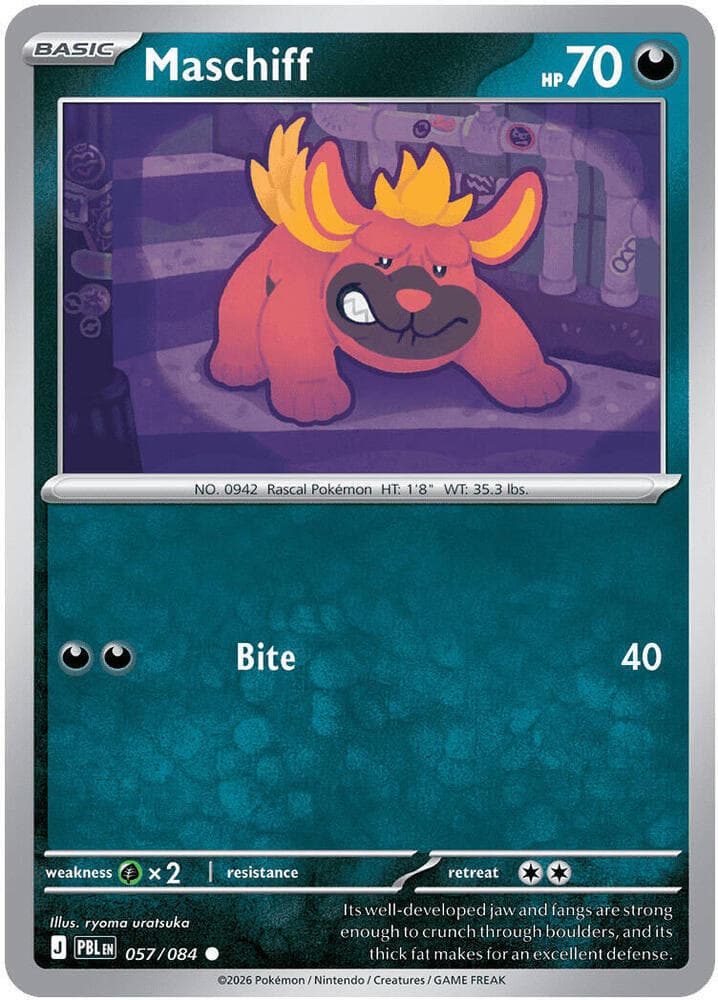
Maschiff at $0.84 presale starts Paldea's loyal-thug dog line. It exists in this set mostly to give Mabosstiff a page-mate; there is no hit version and no promo duty. Paldea's pup lines have quietly steady followings among players who ran them in the story campaign, which keeps liquidity alive at the penny level. Honest bulk — sort it and move on.
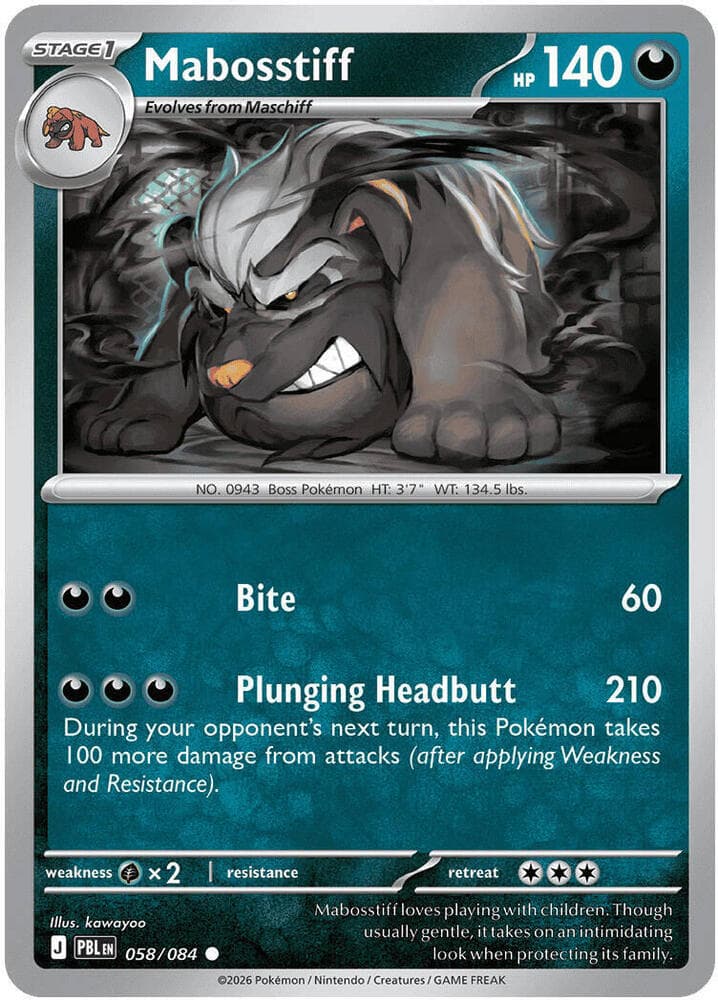
Mabosstiff closes its line at $0.74. The big-hearted boss dog earned real affection from Paldea's story campaign, which historically translates to steady penny-card demand rather than price spikes. The sort of common that trades out four at a time to one very happy person. Good dogs move slowly in every market, and that is perfectly fine.
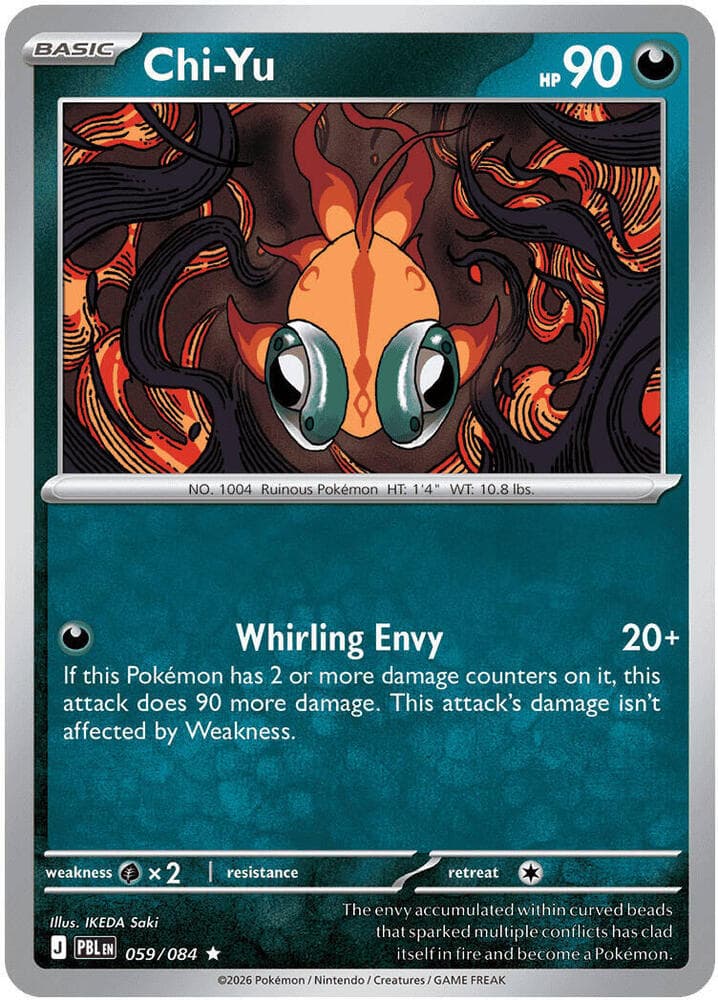
Chi-Yu, one of Paldea's Treasures of Ruin, lands at $2.49 — tied for the priciest non-ex Pokémon Rare in the set. Ruinous legendaries carry permanent collector demand, and Chi-Yu in particular has competitive history. A rare Rare that is worth pulling out of the bulk pile every time. Ruin sells — it always has, and Chi-Yu wears it well.
Metal brings the Bastiodon fossil line and Mega Excadrill ex; Colorless closes the roster with Alolan birds and Gladion's partner, Silvally. Quiet price territory — which makes it cheap territory for completion trades.
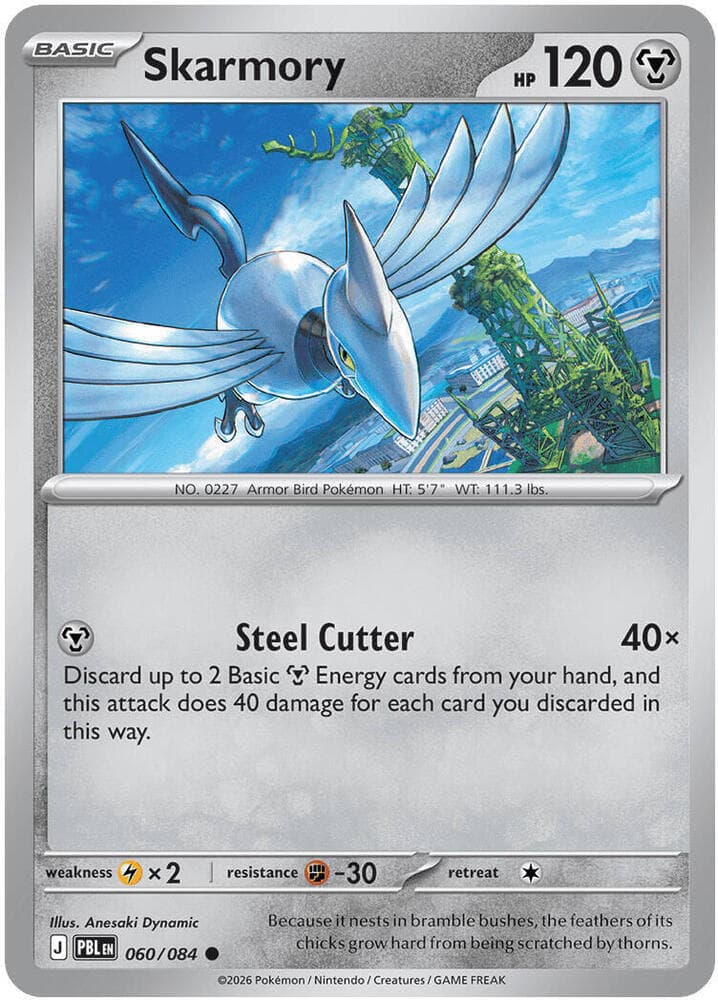
Skarmory opens the Metal block at $0.99 presale. Twenty-five years of appearing in sets, forever the reliable steel bird, never the star. There is honest value in a card you never have to think about: it fills its slot, balances small trades, and asks nothing. Playset demand ticks up whenever Metal decks surface; otherwise, Skarmory abides.
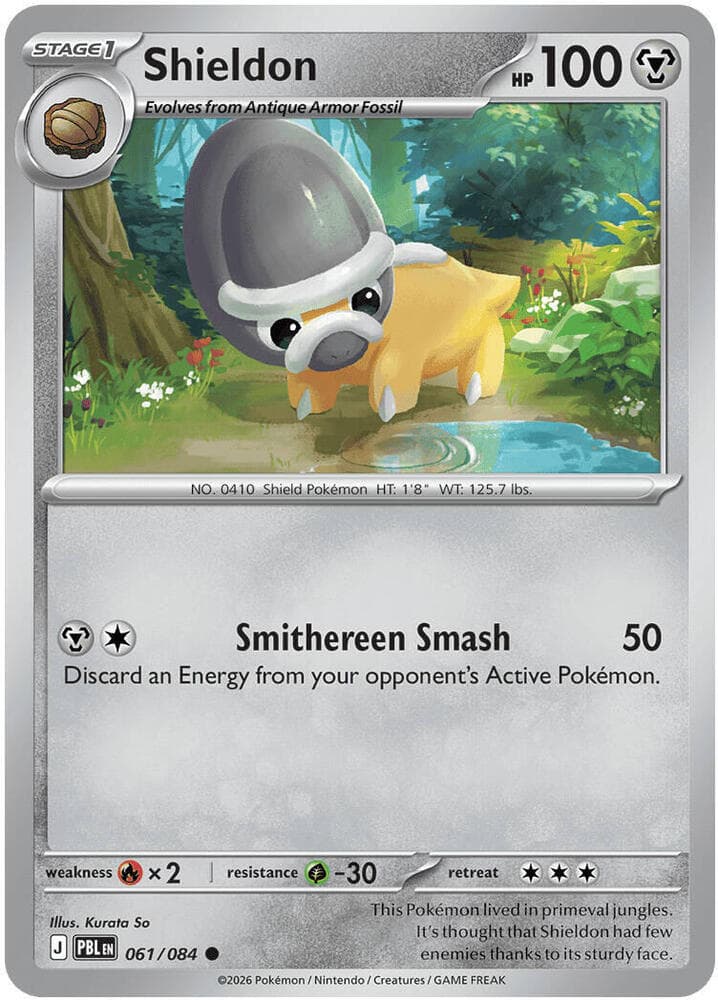
Shieldon is the second fossil basic, revived through the Antique Armor Fossil at #072, priced at $0.80. The same speculative logic as Cranidos applies — fossil bulk is free real estate if the archetype ever gets support, and this set is clearly trying. Between the two fossils, this is the defensive half — historically the less popular one, which keeps it a touch cheaper.
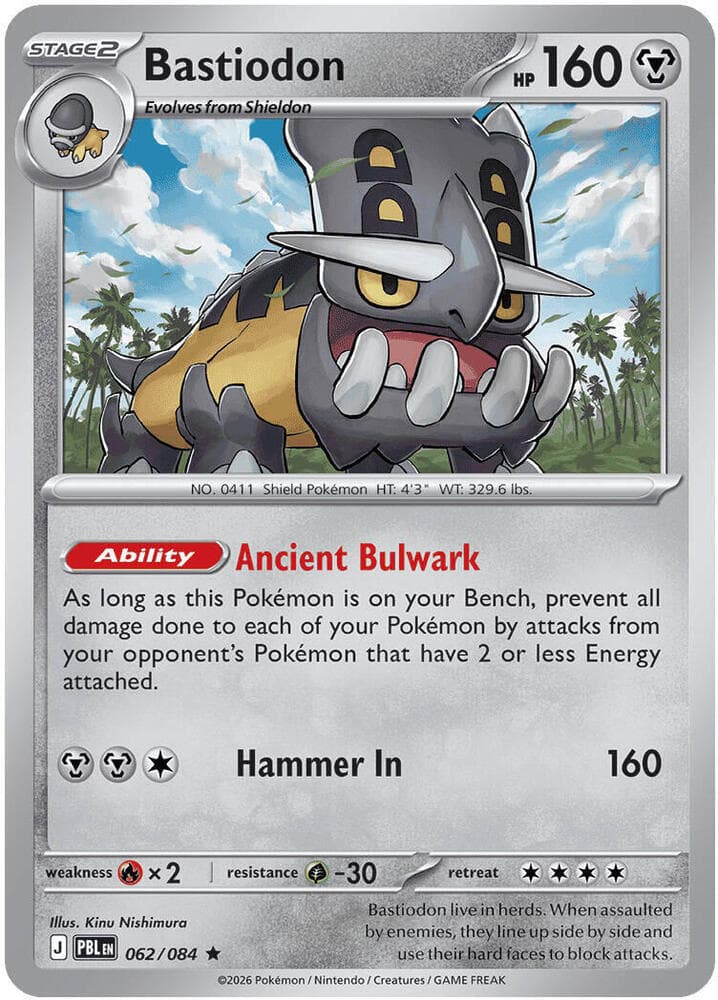
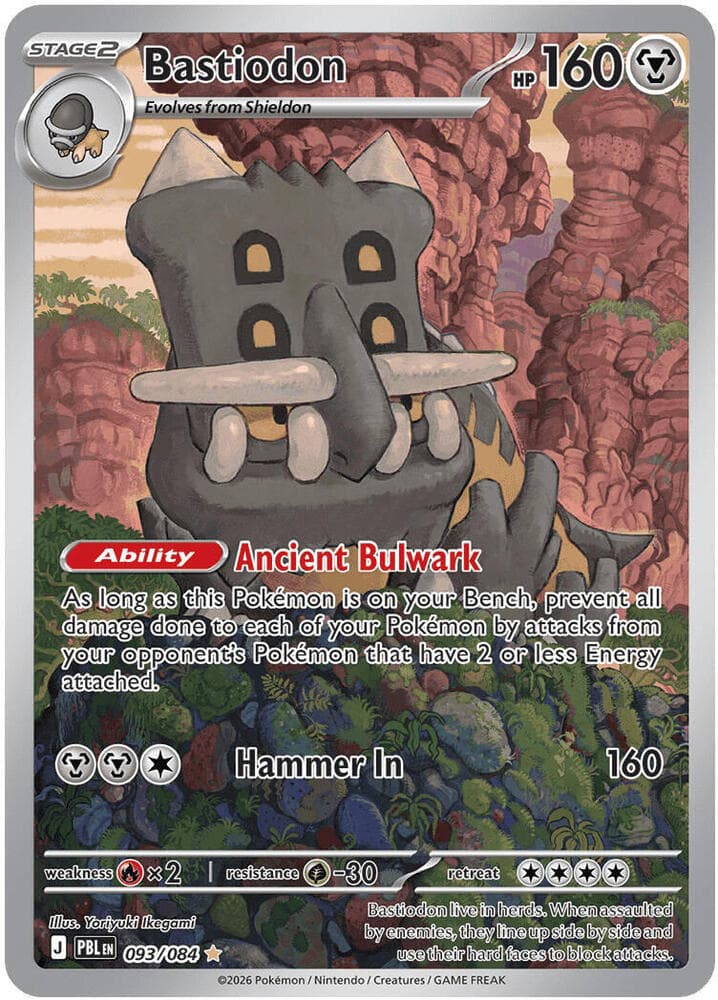
Bastiodon caps the defensive fossil line at $1.83 presale, elevated for a Rare because it is also one of the four stamped Build & Battle prerelease promos circulating this very weekend. The wall of Sinnoh has fans in every casual playgroup; the stamped copy is the one with a future. Stamps age far better than statistics do.
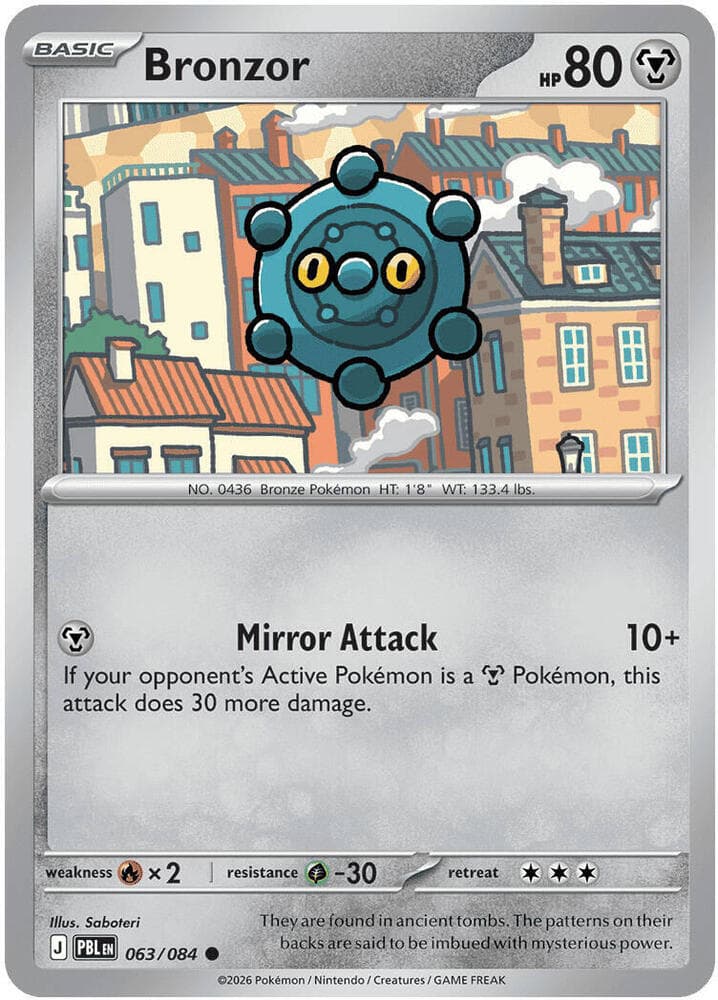
Bronzor at $0.75 is the definition of a set-completion common — no line hits, no promos, no speculation. It is genuinely useful to have cards like this in a hyped set: they calibrate what zero looks like, so you can price everything else honestly. Every master set needs one; almost nobody needs two. Bulk-box it with respect.
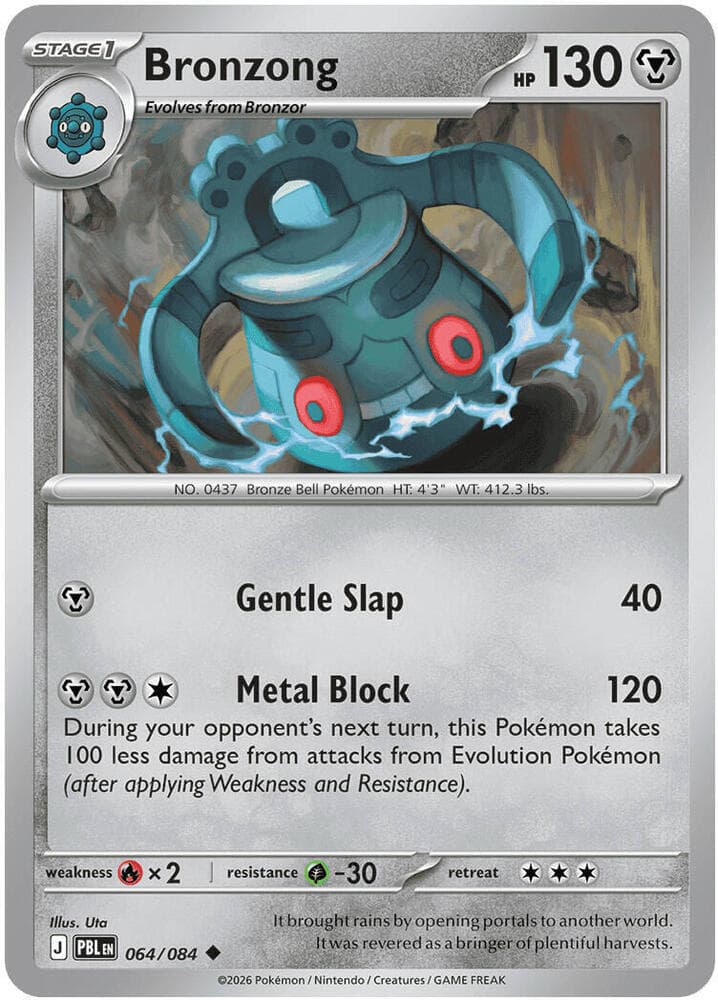
Bronzong rings in at $0.74. Its long history as a support piece in various eras keeps a faint pulse of playset interest alive, but nothing in the presale market suggests this printing is the one that matters. Bronzong has been one tournament away from mattering for fifteen years; the streak looks safe. Master-set duty only, executed with dignity.
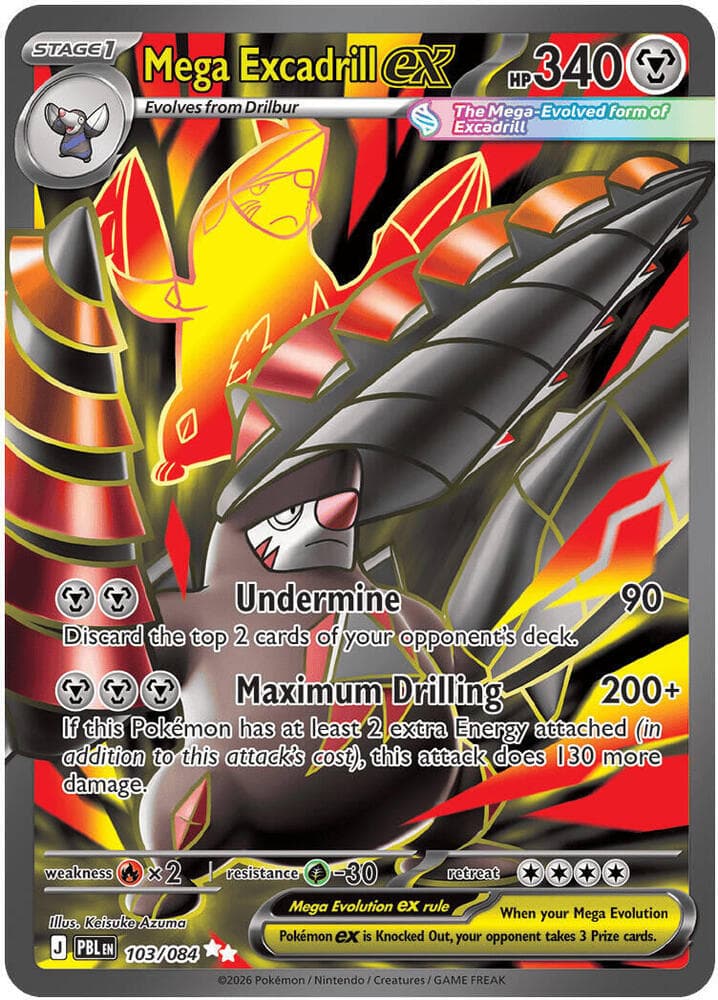
Mega Excadrill ex rounds out the set's new Mega quartet at $8.12 presale — third among the Mega Double Rares, ahead of Chandelure, behind Zeraora and Darkrai. Curiously, its Ultra Rare (#103) had no listed presale price on July 11, the only ex without one. A fair-price pickup now, and the printing most likely to be quietly revalued once real pull data and tournament lists exist.
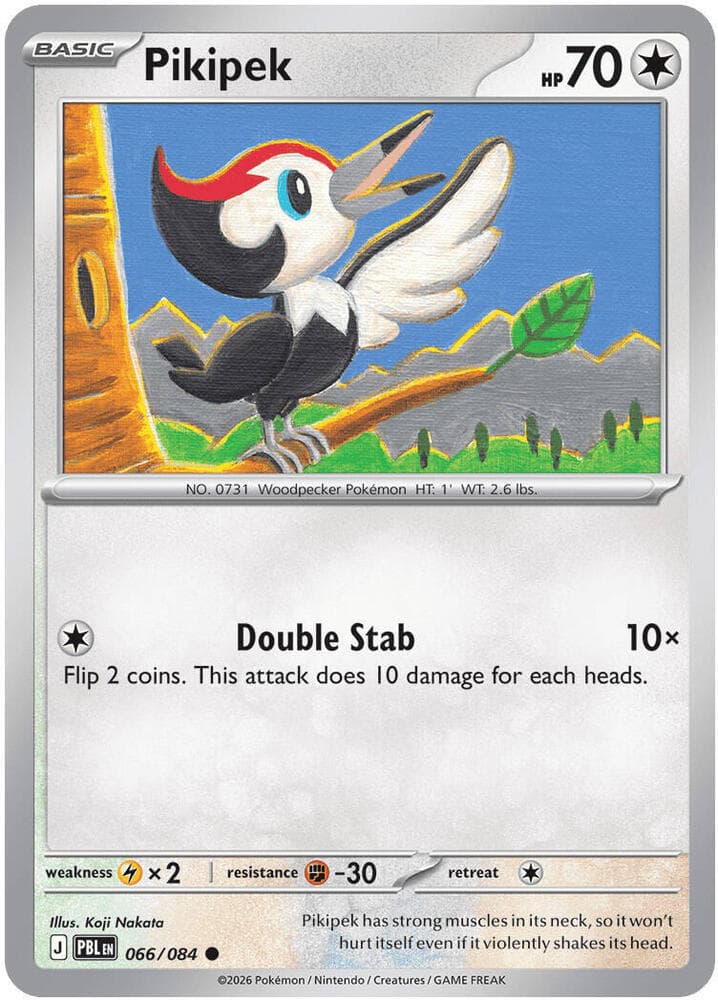
Pikipek starts Alola's woodpecker line at $0.92 presale — a touch above bulk, as first-route birds often are in week one. It will be $0.25 in August; such is the launch window. Launch premiums on bird commons are the purest hype artifact in the hobby — nobody is testing Pikipek, everyone is just excited. Enjoy the moment; trade the stack.
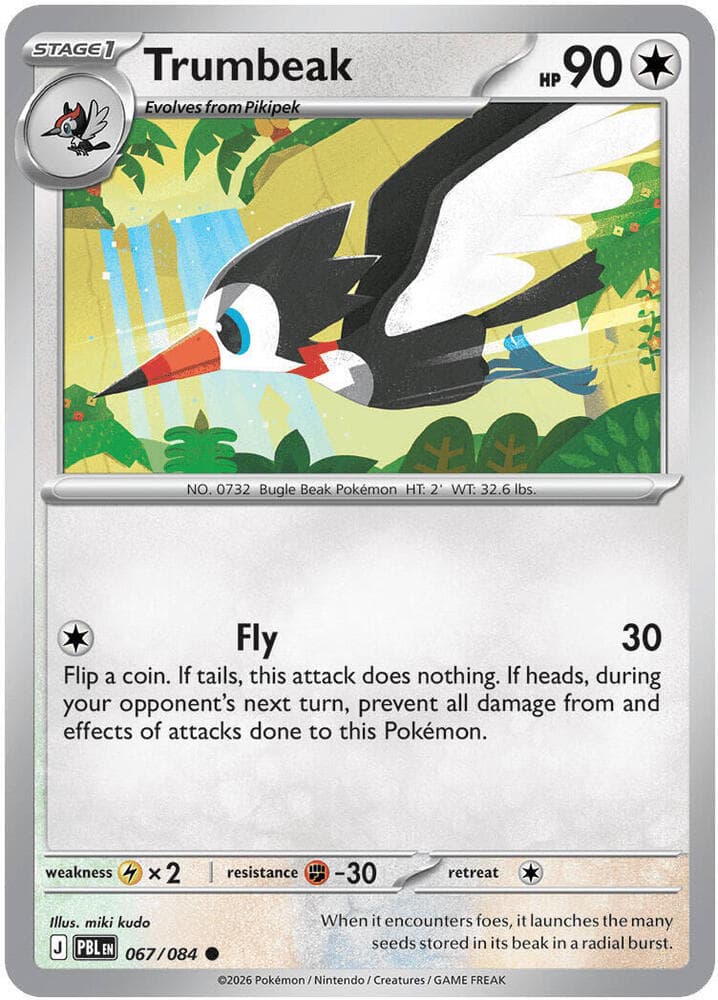
Trumbeak at $0.79 is the middle of a three-stage Colorless line that exists to fill the master set's back pages. Its one distinction: Toucannon's Illustration Rare makes the line's top stage collectible, so the full evolution page has a small audience. A page-filler with a purpose is still a page-filler, but the purpose helps it move.
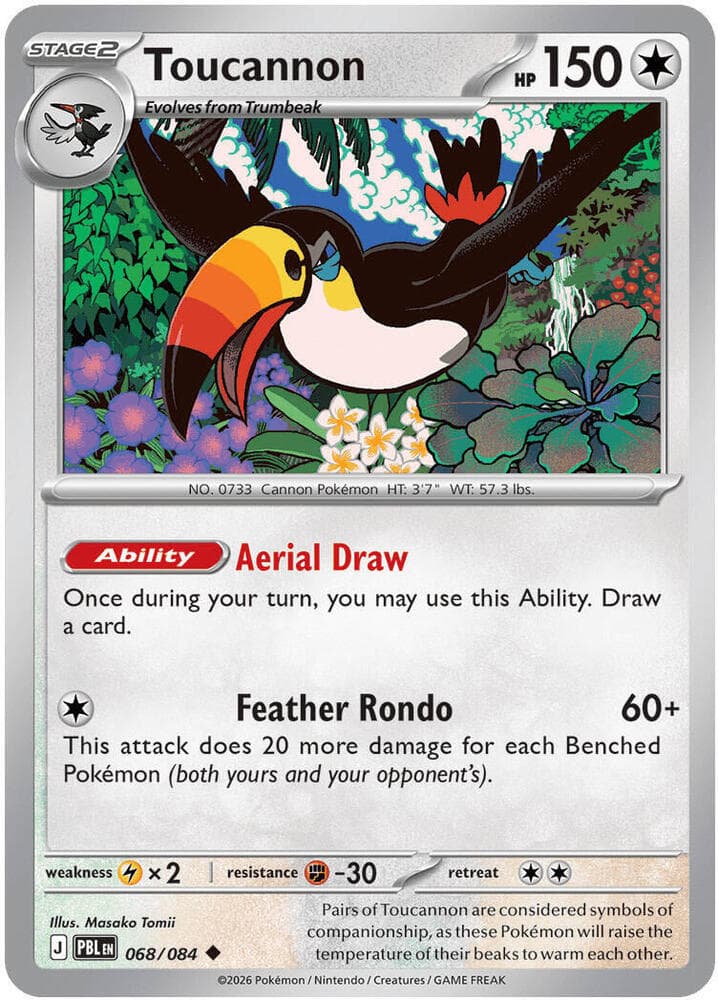
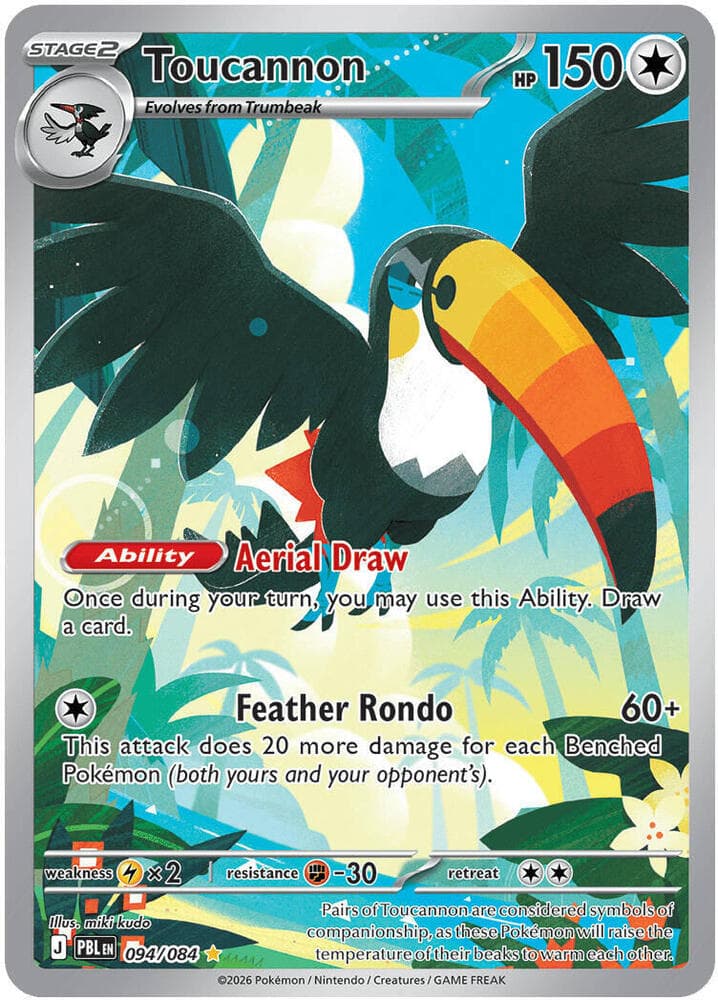
Toucannon closes the line at $0.98, but the headline is its Illustration Rare at #094 — the cheapest IR in Pitch Black at $10.66, and therefore the single most affordable entry into the set's art-card tier. The base uncommon is what it looks like. When the art tier is this affordable, the regular copy becomes almost ceremonial.
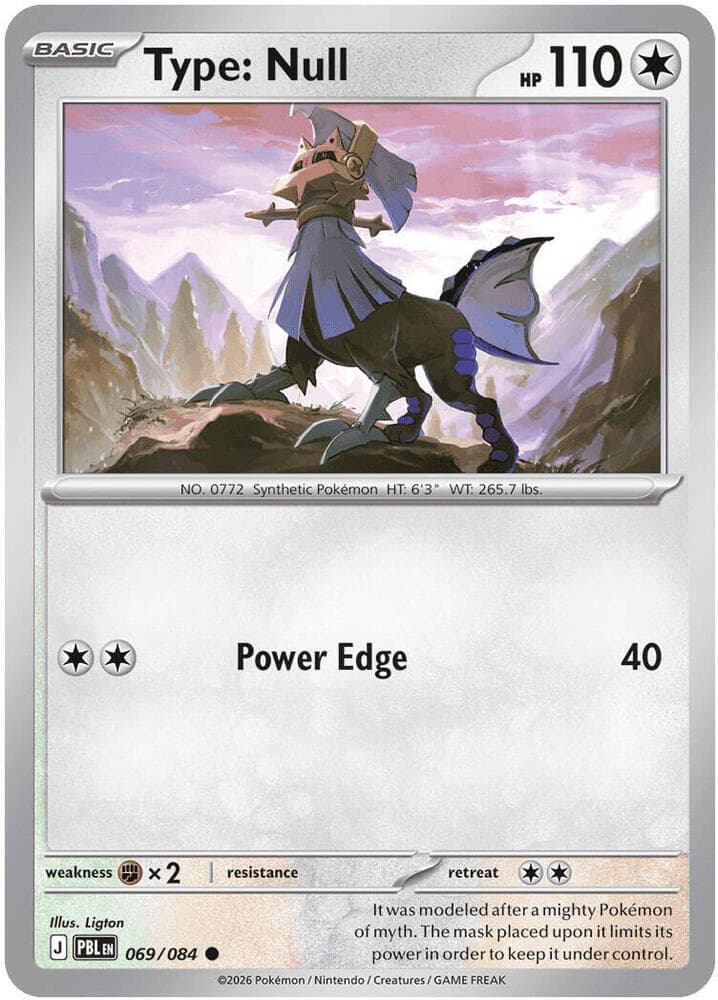
Type: Null at $0.84 carries more story than price. The chimera project is inseparable from Gladion, whose farewell card — Gladion's Final Battle — is one of this set's emotional and financial centerpieces. Lore-connected commons like this get pulled into character-themed collections at a rate their price never reflects. Sleeve a couple; story is the slowest, surest price support there is.
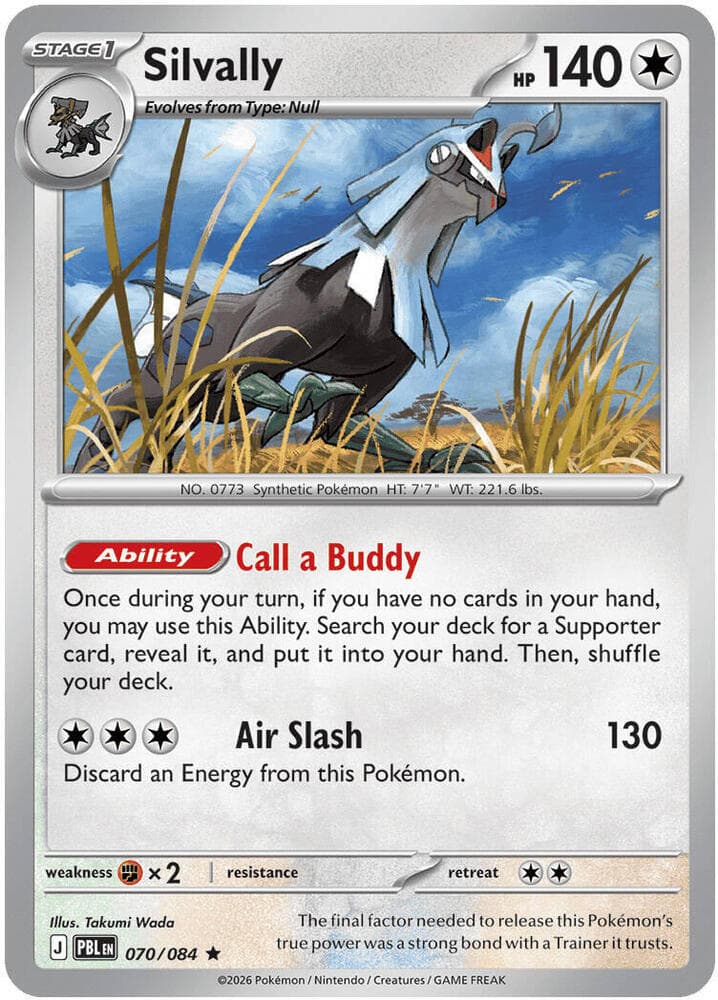
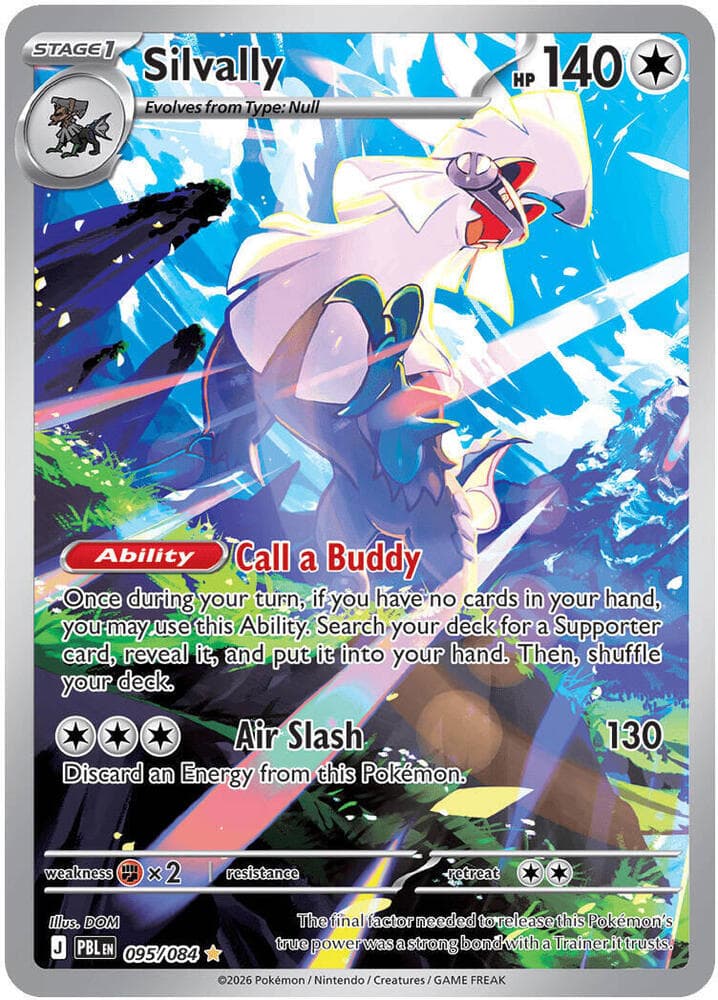
Silvally, freed of its limiter, lands as a $1.49 Rare with an Illustration Rare at #095 ($16). Its inclusion beside the Gladion's Final Battle trainer is deliberate storytelling, and paired lore cards tend to be collected together — expect Silvally demand to track the Gladion SIR's trajectory more than its own stats. Watch the pair, not the card.
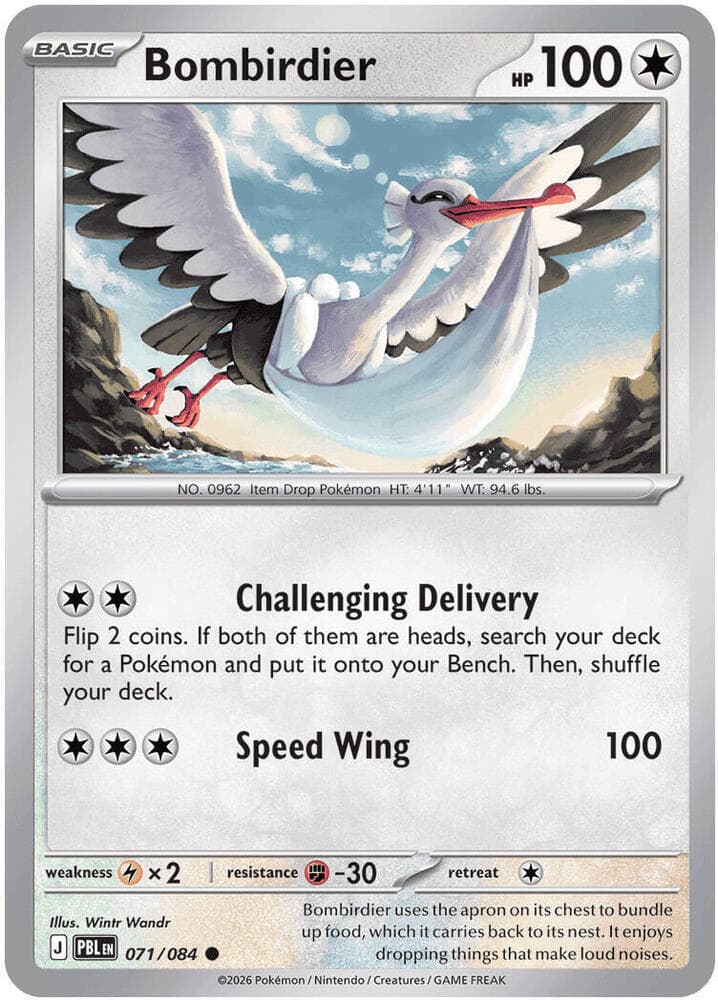
Bombirdier, the item-dropping stork, closes the Pokémon roster at $0.99 presale. A single-stage oddball with real charm and zero market momentum. Someday a Bombirdier card will matter and its fans will be insufferable; today is not that day. If you need a card to round out a trade, this remains the roundest card in the set.
The trainer suite is where Pitch Black's story lives — Gladion's farewell, newcomers Gwynn and Jett, the Rust Syndicate — plus two Special Energy cards. Several uncommons here are pricing like playables; the market is telling you something.
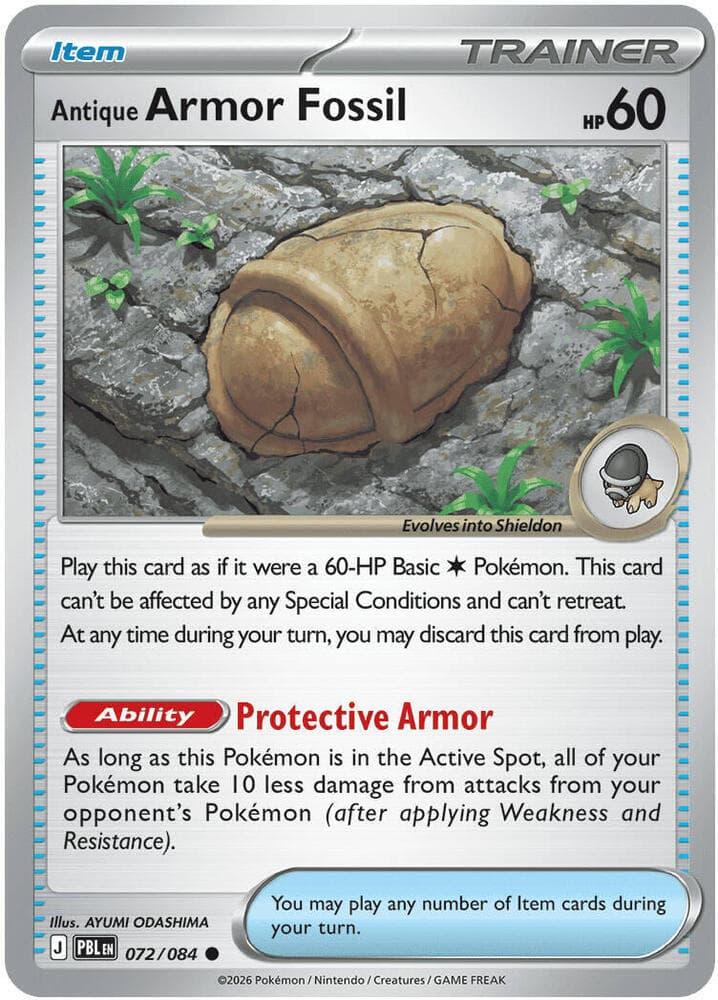
Antique Armor Fossil is half of the set's fossil engine, putting Shieldon's line into play, and at $0.87 it is priced like the plumbing it is. Fossil items are worthless until the moment a fossil deck exists, at which point everyone needs four at once. Four copies cost less than a coffee; hedge accordingly. The cheapest possible insurance in the set.
Antique Skull Fossil mirrors its partner at $1.06 — the small premium over the Armor Fossil tracks Rampardos ex outpricing Bastiodon in early markets. Fossil items live binary lives, irrelevant until suddenly mandatory, and this set is clearly seeding the archetype on purpose. Same advice: pennies now, playsets later if the archetype ever lands. A dollar of patience, essentially.
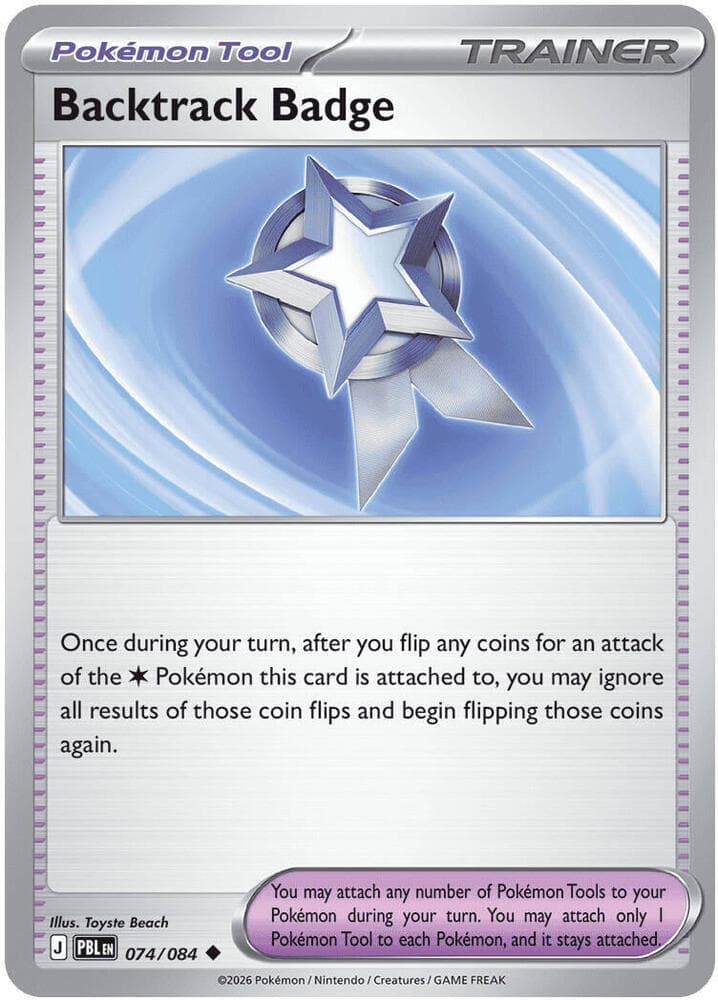
Backtrack Badge presales at $1.49, a mid-tier price for an uncommon item, and unlike most of the trainer suite it has no Ultra Rare version to chase. When an item prices above bulk before anyone has played the format, testers see a use case. One to watch on tournament weekend — quiet items with unexplained premiums deserve a week of attention.
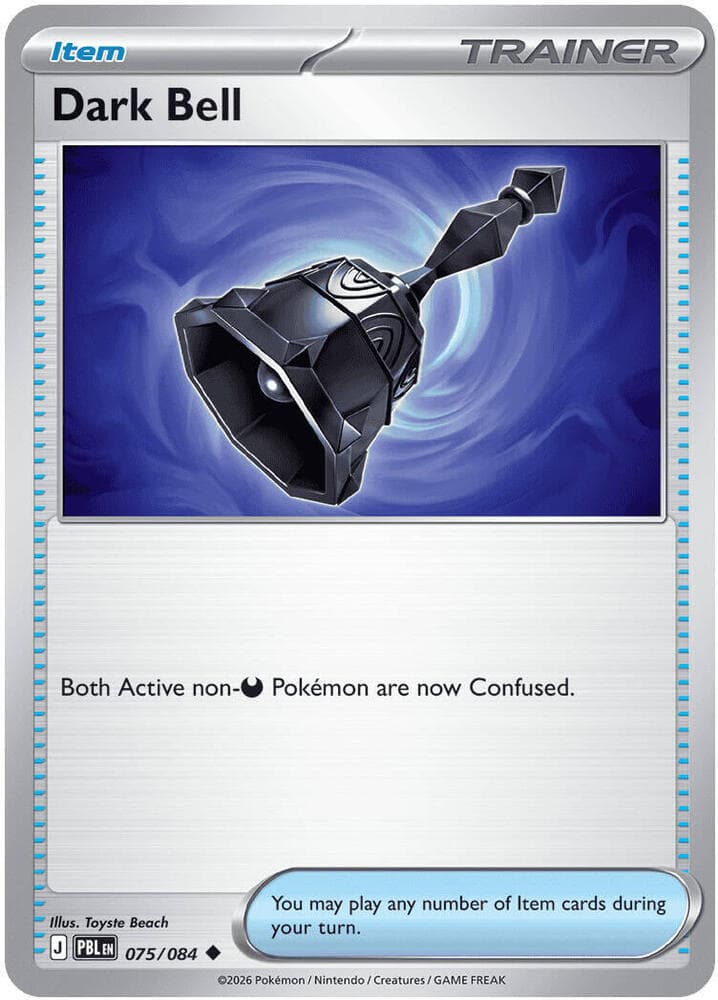
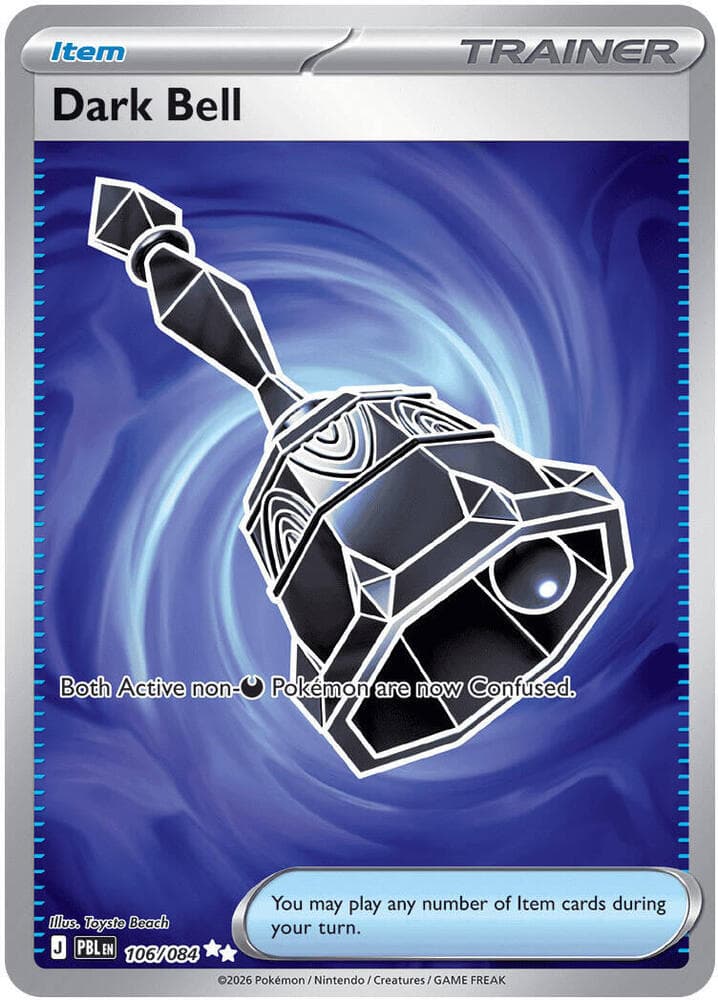
Dark Bell fits the set's theme right down to the name, and its $1.00 presale is quiet — but note it earned an Ultra Rare printing at #106, a treatment this set reserves for a select group of trainers. Someone at the design studio thinks this card matters. The market does not, yet. Interesting disagreement.
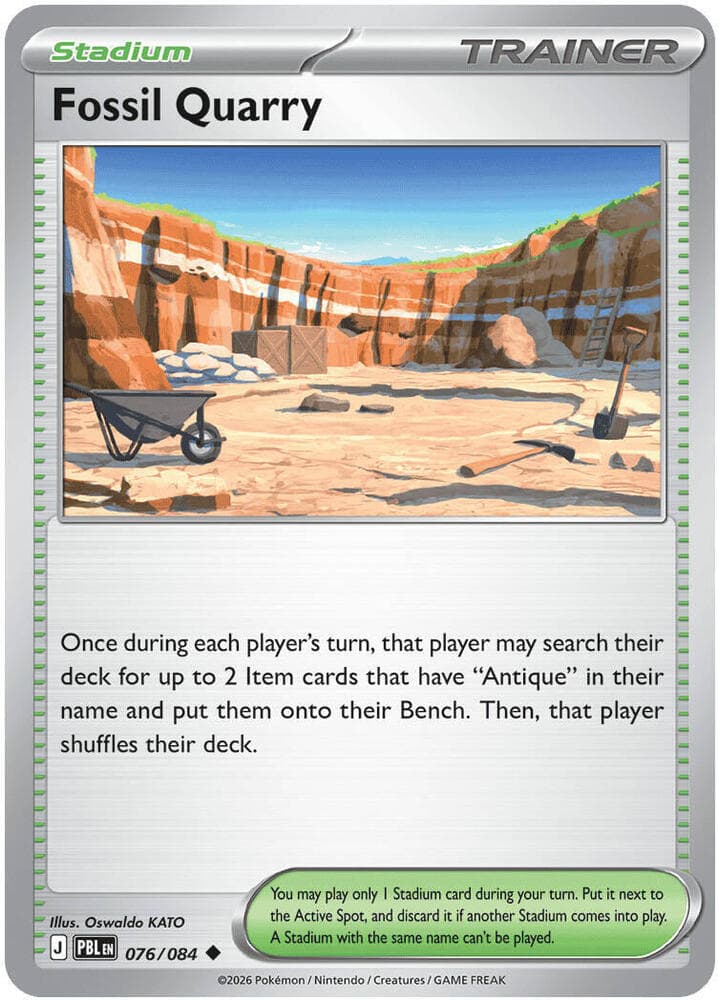
Fossil Quarry looks like the glue intended to hold the Cranidos and Shieldon packages together, and at $1.00 presale the market rates it strictly as archetype support. Trainer cards named after locations live and die entirely by their deck; this one's deck does not exist yet. Keep four in the box anyway — archetype glue is worthless exactly until it is priceless.
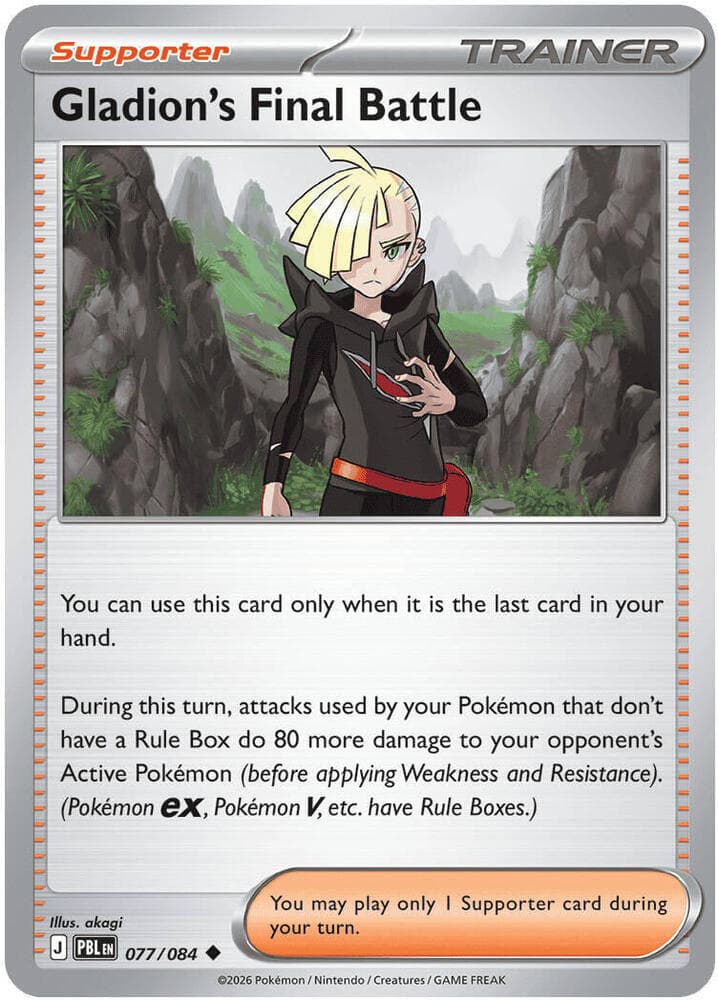
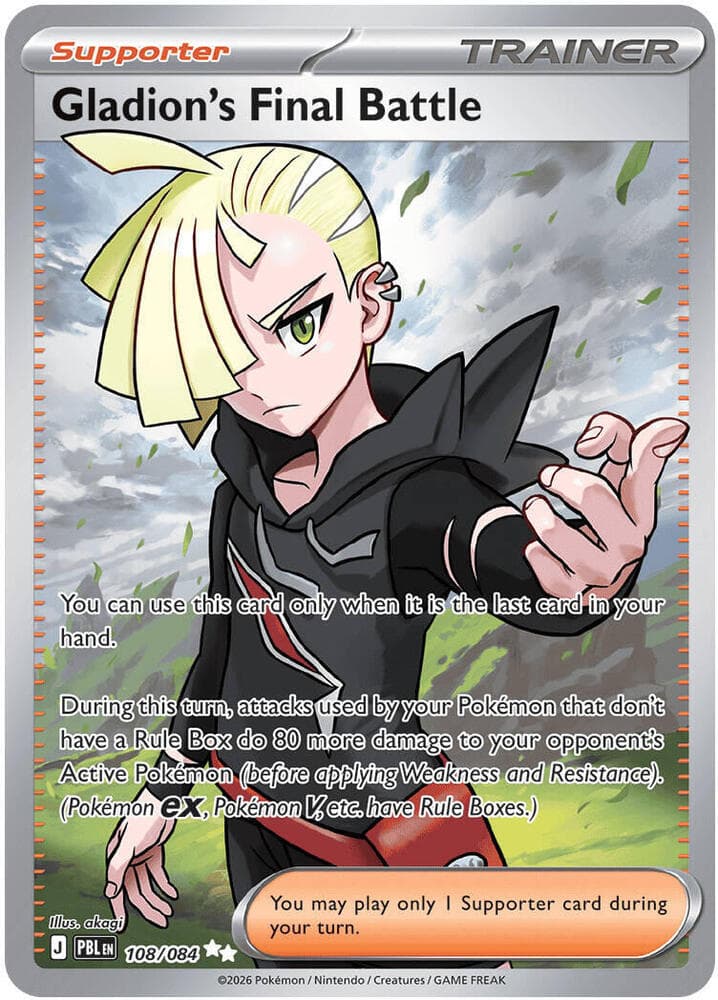
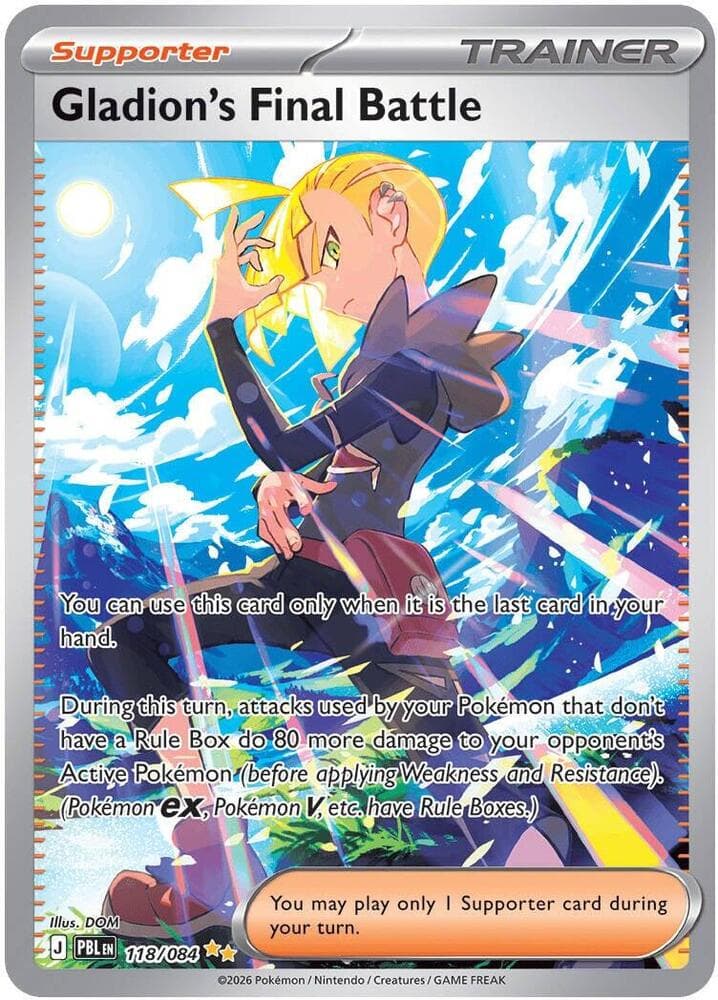
Gladion's Final Battle is the trainer card of the set, narratively — the send-off for one of the franchise's most beloved rivals. The regular uncommon presales at $1.94, but the pyramid above it is steep: $39.99 for the Ultra Rare (#108) and $119.99 for the SIR (#118). Emotional trainer cards with character art routinely outperform their playability. Even the humble version belongs in the binder, not the bulk box.
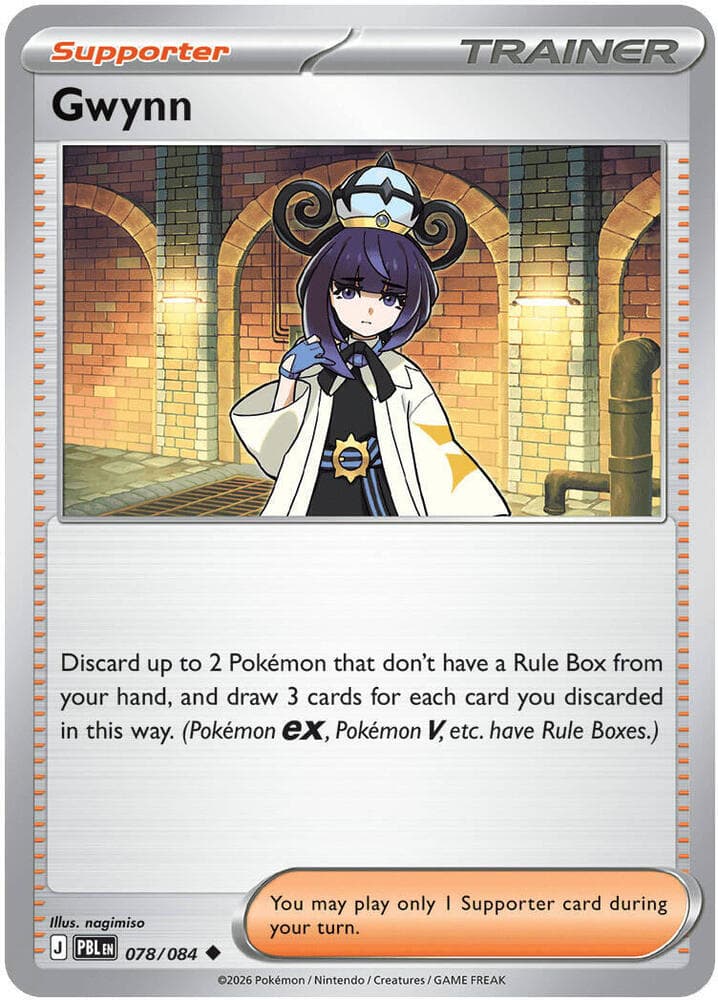
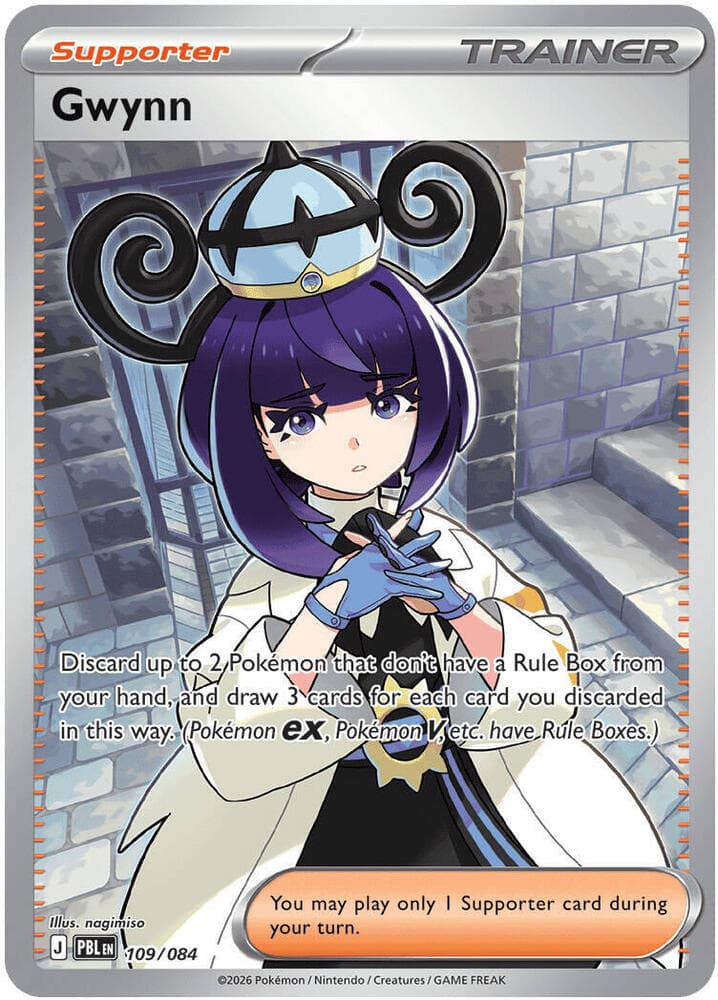
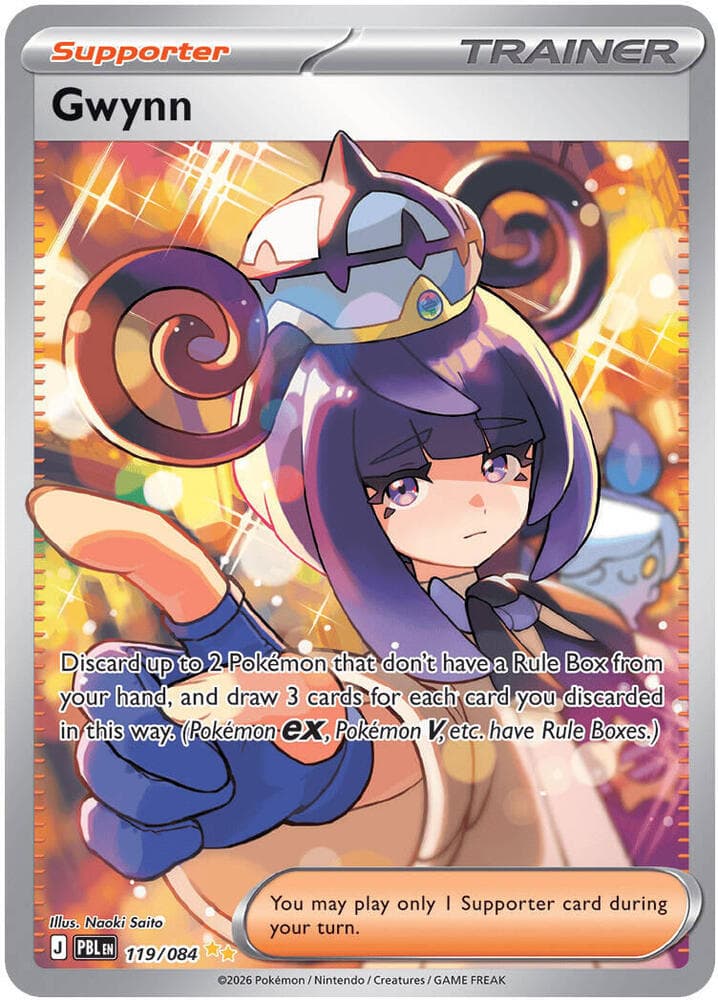
Gwynn is the Mega Dimension DLC's breakout character, and her card economy is the set's stealth story: $1.92 for this uncommon, $35.74 for the Ultra Rare (#109), and a Special Illustration Rare (#119) that has been outperforming the Mega Zeraora SIR in Japan. New characters with instant fanbases are the hardest launch-window cards to price — Japan says up. This base copy is the cheap seat at that show.
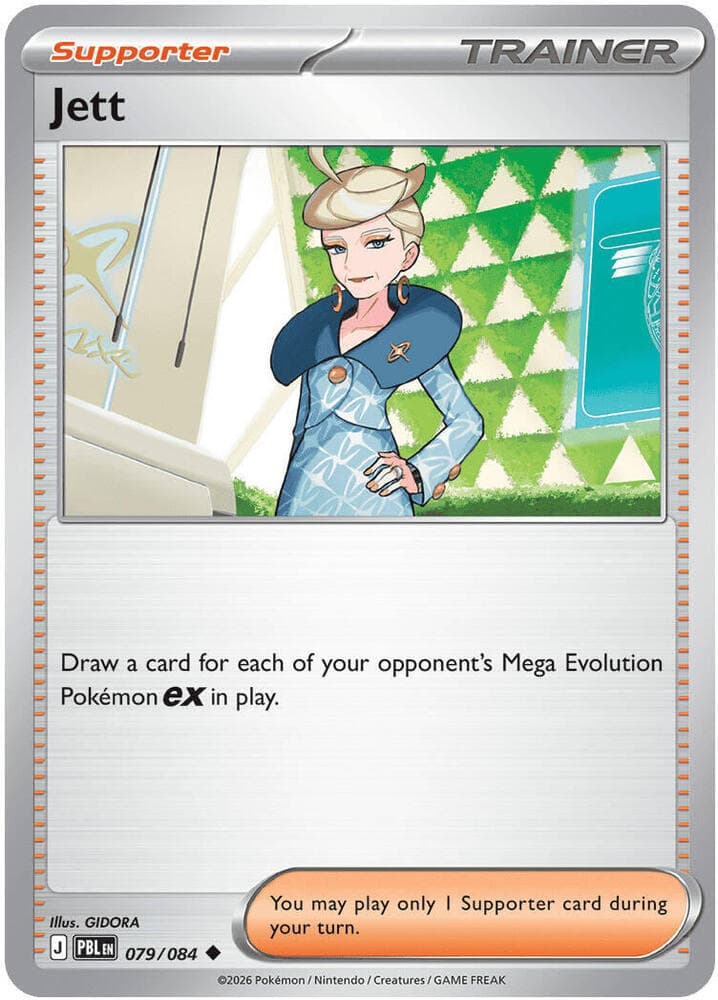
Jett, the other new Mega Dimension character, arrives at a sleepy $0.74 — dead last among the set's supporter-tier prices and a stark contrast with Gwynn one slot earlier. Notably, Jett is part of the material integrated into the English main set when Pitch Black was assembled from Abyss Eye. Character cards this cheap at launch are free bets; most stay cheap, but the exceptions pay for all the rest.
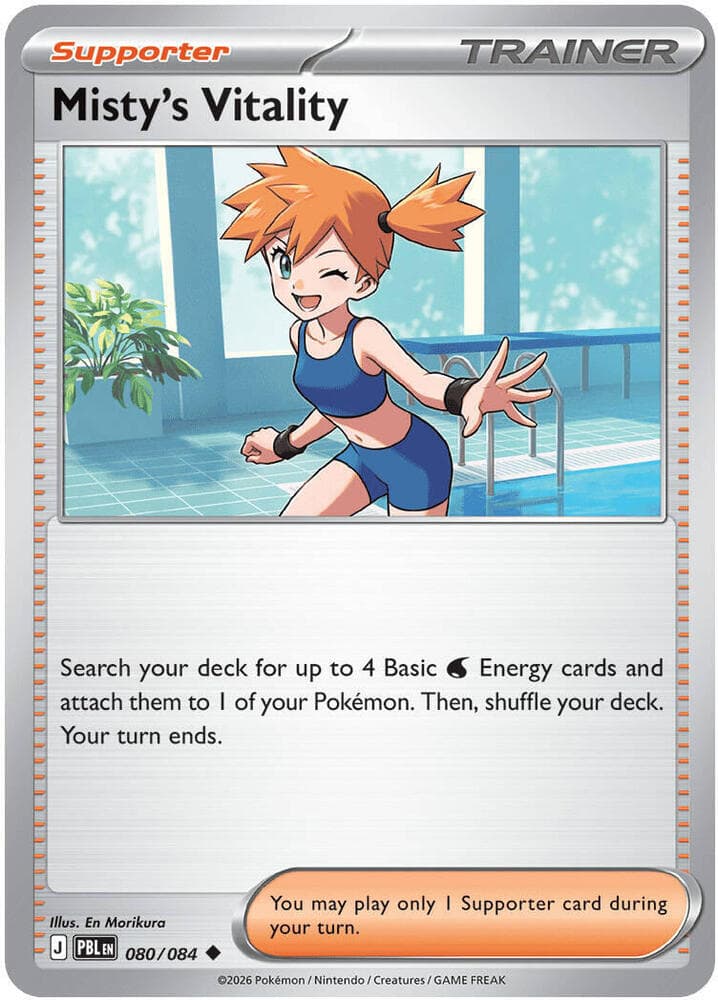
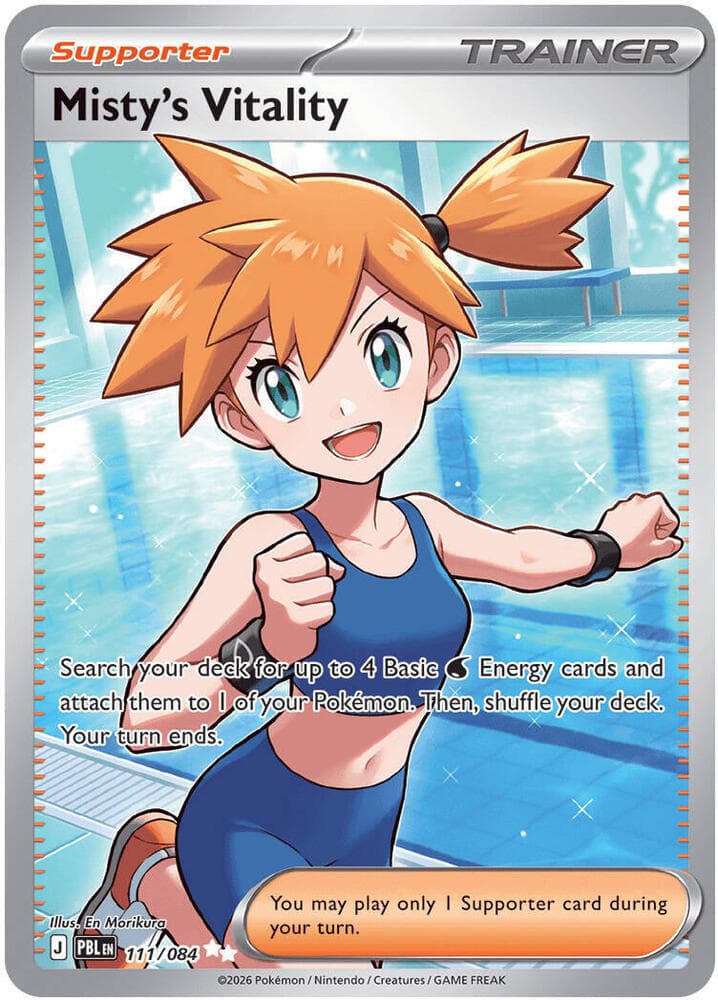
Misty's Vitality brings a Kanto gym leader into a Z-A era set, and nostalgia is doing exactly what nostalgia does: $1.98 presale for the uncommon, and a remarkable $75 for its Ultra Rare at #111 — the most expensive trainer UR in Pitch Black by a mile. Misty cards have a two-decade record of aging well. The regular copy is the sensible buy; the UR is the collector flex.
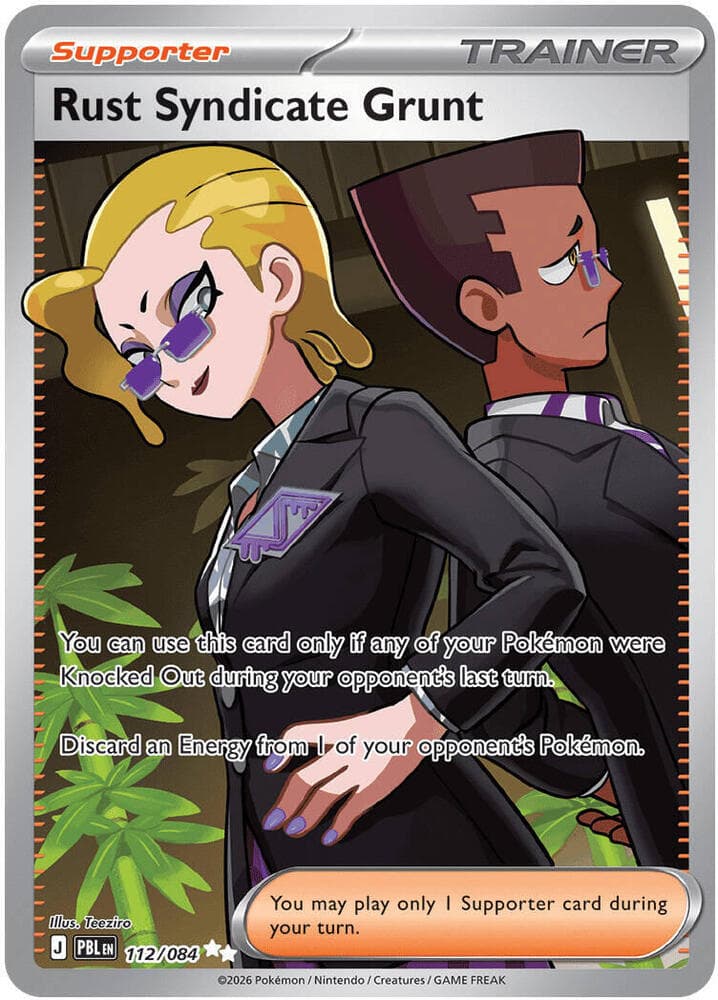
Rust Syndicate Grunt is the priciest regular trainer in the set at $2.99 — striking for a grunt card, and a strong hint from prerelease tables that the set's villain-faction supporter has real utility. Grunt supporters that see play get printed into the ground eventually, so this premium may be as good as it gets. Sell into launch demand; keep your playset from trades.
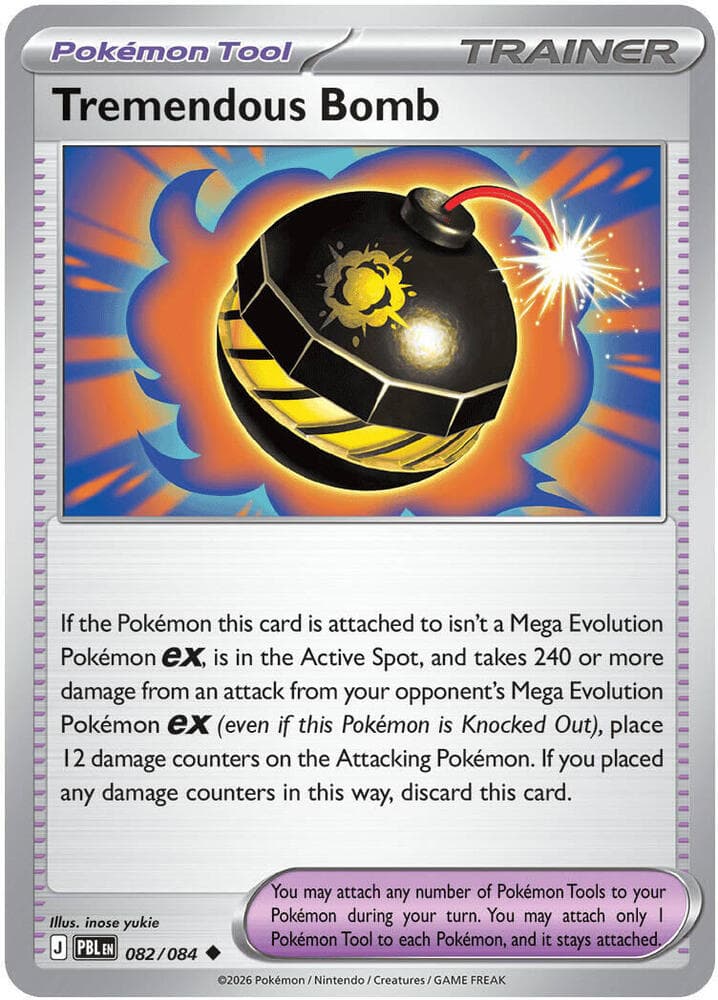
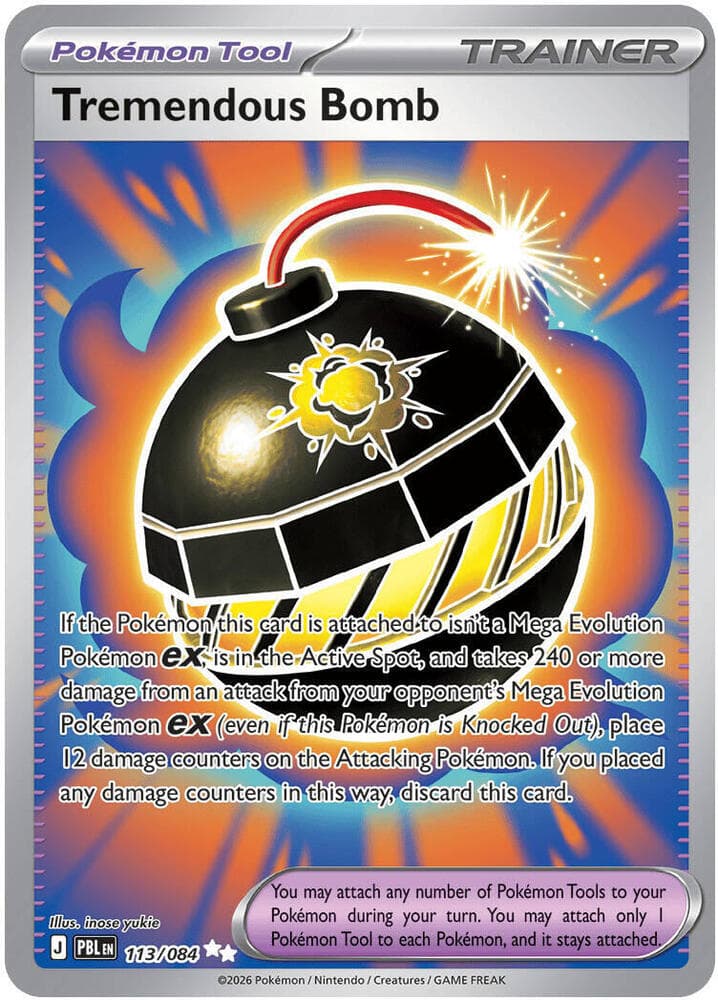
Tremendous Bomb sounds exactly as subtle as the set's mood implies, and its $1.99 presale — plus an Ultra Rare printing at #113 — suggests testers are taking it seriously. Item cards with scary names and early price premiums are the classic week-one overreaction candidates. Let the first tournament decide before paying up; names are not results.
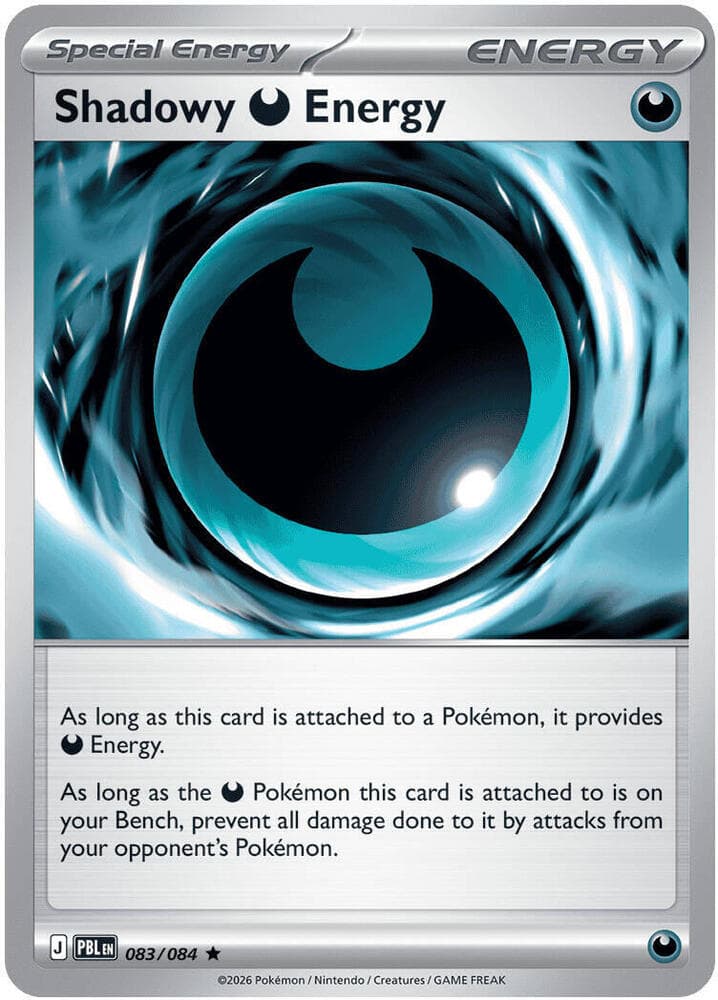
Shadowy Darkness Energy is one of two Special Energy cards in the set, presaling at $1.00. Special Energy tied to the marquee archetype is the ultimate demand-follower: if Mega Darkrai ex decks are real, every list runs four and this quietly triples; if not, it is a dollar forever. Cheap enough to hold on spec.
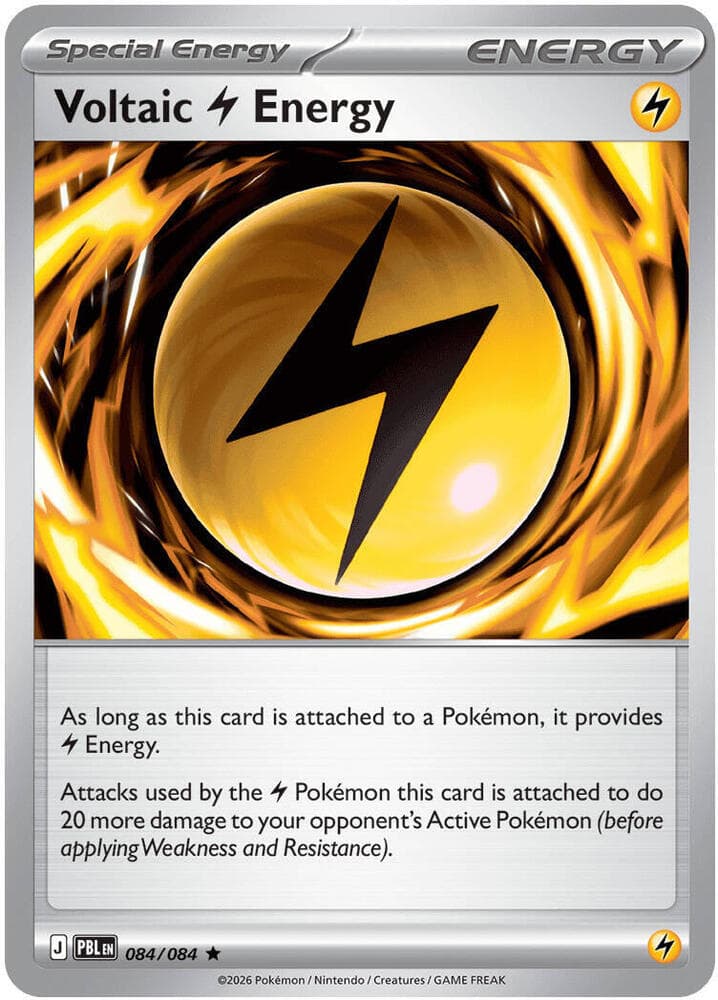
Voltaic Lightning Energy closes the main set at $1.65 — pricier than its Darkness twin, presumably riding early Mega Zeraora testing. The same logic applies in yellow: Special Energy is worthless without its deck and mandatory with it. A card whose entire future is decided by someone else's tournament list. Watch Zeraora's results; this card simply follows them.
Eleven Illustration Rares, all non-ex Pokémon, at an estimated three per booster box. The spread is unusually wide — from a $10 Toucannon to an $80 Primarina — so know which page you are chasing before you trade.
The Illustration Rare tier opens with Fomantis at $19.37 presale — mid-table for the set's IRs and a healthy multiple over its $0.75 base common. Grass-type IRs of small, charming Pokémon have been reliable mid-tier performers throughout the Scarlet & Violet and Mega Evolution eras; this fits the pattern exactly. A fair trade get around a $20 valuation, with the usual launch-premium haircut expected by August.
Armarouge's Illustration Rare is the second-priciest IR in Pitch Black at $58.31, and the fire knight is everywhere this launch — base rare, this IR, and the Best Buy/JB Hi-Fi anniversary promo. Multi-treatment attention like that usually signals durable collector interest rather than a fluke. Still a presale number, still built to deflate some, but this is one of the IRs most likely to keep a real price after the dust settles.
A $32.50 Goldeen. Yes, really — the fourth-priciest Illustration Rare in the set belongs to a fish whose base common costs 74 cents. Whimsical IRs of Gen 1 also-rans have a track record of cult followings, and the presale market clearly senses one forming here. Whether it holds is anyone's guess; whimsy prices are the most sentiment-driven corner of the hobby. If you pull it, price-check before trading it as a throw-in.
The queen of the tier: Primarina's Illustration Rare leads all Pitch Black IRs at $79.99 presale. Stack that on her store-promo duty and a strong base rare, and Primarina is the set's biggest non-ex collector magnet. IRs that open this far ahead of their tier usually stay first even after launch deflation. The realistic play: trade two or three mid-tier hits into one rather than paying the peak-week cash price.
Manectric's Illustration Rare at $18.95 is a 32-fold markup over its 59-cent base uncommon — the widest same-Pokémon gap in the set outside the Darkrai pyramid. Hoenn nostalgia does steady work at this tier. Line collectors chasing the IR will want the plain copies too, which keeps the whole page moving. Comfortably mid-table, comfortably tradeable, no drama.
Slowbro's Illustration Rare presales at $24.39, buoyed by the Pokémon's evergreen meme status and its extra visibility as a prerelease promo this very week. Slowpoke-line art cards are among the safest holds in the whole whimsy category — the fanbase is enormous and permanently amused. Solid tier-two IR; memes are the most durable fundamentals in this hobby.
The haunted anchor gets an Illustration Rare at $21.66, rounding out Dhelmise's surprisingly busy launch (uncommon, prerelease promo, and this). Ghost-type IRs consistently punch above their base card's weight, and single-stage oddballs make for memorable art pieces. Mid-tier now; the kind of card that ages into a binder favorite. Anchors, as it turns out, tend to hold.
Thievul's Illustration Rare is the value door into this tier at $12.00 — second-cheapest IR in the set. Sly fox, on-theme for a darkness set, and priced where a couple of spare Double Rares can trade straight across for it. If you want to start a Pitch Black IR page without touching the big names, start here.
Bastiodon's Illustration Rare lands at $19.99, giving the fossil wall a collectible ceiling to go with its prerelease promo duty. Fossil Pokémon art cards have a niche but loyal audience — the same people who will need the Antique Armor Fossil playset if the deck ever happens. Dead-center mid-tier; niche demand is still demand, and it is loyal.
At $10.66, Toucannon's Illustration Rare is the cheapest art card in Pitch Black — the entry ticket to the entire secret-rare experience. Cheapest-IR-in-set cards tend to be liquid forever because completionists always need them and pack-rippers always undervalue them. An easy first trade for anyone new to chasing art cards on Swaptio. Every tier has a doorway; this is it.
Silvally's Illustration Rare at $16.00 benefits from the Gladion narrative running through this set — the chimera and its trainer's farewell card will be collected as a pair, and paired demand is stickier than solo demand. Among the smartest holds in the lower half of the IR tier. Buy the story, hold the pair, and let sentiment compound.
Eighteen Ultra Rares split between ex Pokémon and trainers — several with no regular printing in this set at all. The classic launch-week value trap: flashy enough to feel special, common enough to fall fast.
The Ultra Rare tier opens at its floor: Lurantis ex at $8.76, the cheapest full-art ex in the set. UR ex cards without competitive traction are historically the fastest-deflating rarity in any launch window — flashy enough to feel like a hit, plentiful enough to pile up. Trade it while it still says almost nine dollars.
Wailord ex's Ultra Rare presales at $13.75, and if any UR in this tier has a nostalgia floor it is the giant whale — Wailord full-arts have a collector history dating back to one of the hobby's most famous big-card moments. Not a spec target, but a safer-than-average hold for the rarity. A gentle giant in every sense, price included.
Mega Zeraora ex in Ultra Rare form presales at $35.00, the second-priciest ex UR in the set. It sits in the shadow of its own $171 SIR, which is where the real Zeraora demand concentrates. The classic UR dilemma applies: same Pokémon, a third of the SIR's price, a tenth of the prestige. Fine pickup for players who want a blingier playset copy; modest hold otherwise.
Here is the tier's anomaly: Mega Chandelure ex's Ultra Rare at $64.00 — the most expensive ex UR in Pitch Black, ahead of even Darkrai's. Combined with its $224 SIR, the market keeps hinting that Chandelure is the set's most underrated chase line. When a UR outprices the face of the set at the same rarity, pay attention. This is the one UR we would actively trade toward at launch.
Rampardos ex UR at $14.24 gives the fossil cannon a full-art option at a modest premium over its Double Rare. URs of speculative archetypes are strictly worse holds than the playable base copies — if the fossil deck happens, #045 is where playset demand lands. This copy is for fans of the skull dome specifically.
The cheapest way to own a full-art Mega Darkrai ex, presaling at $28.83 as of July 11. Think of #101 as the value seat in the Darkrai pyramid: roughly 20x cheaper than the SIR, 35x cheaper than the gold, and still the same headliner on the card face. Ultra Rares of set mascots follow their SIR's trajectory at compressed amplitude — if #116 holds its $400–600 band after launch, this settles comfortably above $20; if the Darkrai deck disappoints, the launch premium bleeds out of both together. For most collectors this is honestly the sweet spot: real prestige, survivable downside, and a price that two or three mid-tier pulls can cover in a trade. The purely rational note: it is still a UR of a card that exists in four printings, so scarcity is not the argument — the artwork and the name are.
Morpeko ex UR at $24.40 outprices several Megas in the same tier — hangry mode remains undefeated in the collector market. With the Morpeko SIR unpriced as of July 11, this UR is temporarily the reference point for the whole Morpeko line, which inflates it slightly. Expect a correction once #117 establishes a number; personality premiums correct, but cults endure.
Mega Excadrill ex's Ultra Rare is the phantom of the tier: no listed presale market price as of July 11, the only ex UR without one. That is a listings gap, not a verdict — presale supply is thin and sellers are waiting on launch data. If you pull one in week one, you are partly setting the market. Check completed sales daily before trading it.
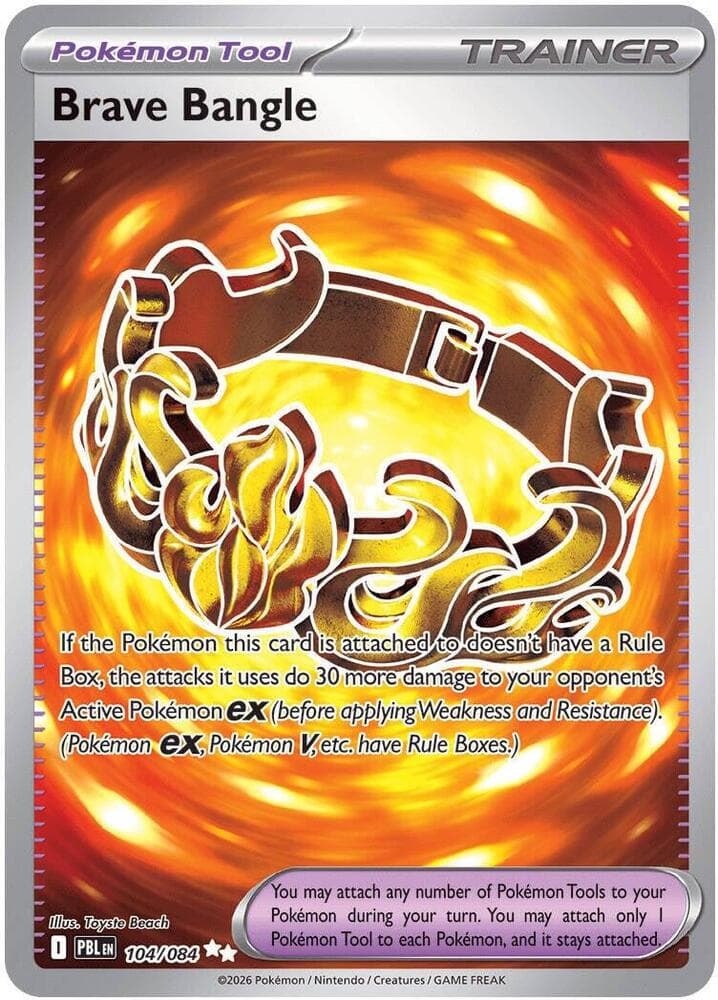
Brave Bangle's Ultra Rare presales at $19.49 — notably, there is no regular Brave Bangle in Pitch Black's main list, so this special version is the card's only appearance here. Trainer URs without an in-set base copy are pure collector plays, and this one's price says the bangle has admirers. Mid-tier trainer bling; completionists, take note early.
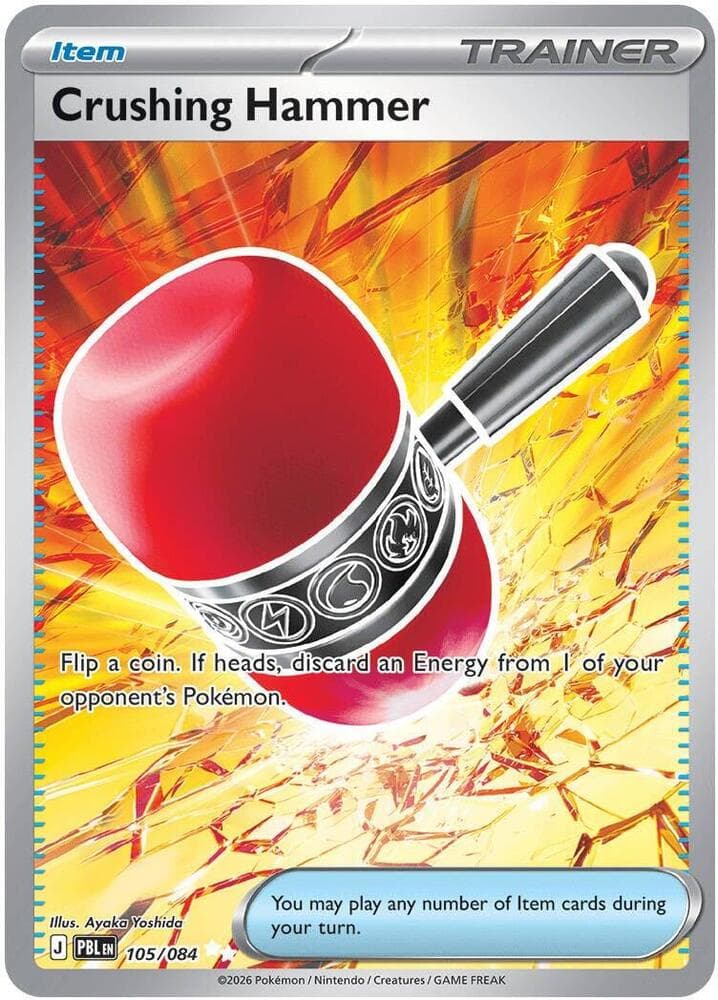
A $19.50 Ultra Rare of Crushing Hammer, one of the most-printed disruption items in the game's history, is a monument to the difference between a card and a treatment. Long-time staples in special dress always find buyers among the players who have discarded energy with plain copies for years. Steady, unspectacular, liquid — some cards sell on memory alone.
Dark Bell's Ultra Rare at $9.00 is the cheapest trainer UR in the set, trailing its own modest hype. Remember the disagreement flagged on the base copy: the designers gave this card a premium treatment while the market shrugs. If Dark Bell turns out to matter in Darkrai lists, this $9 version is the free-money pickup of the tier. If not, it is a shiny bell.
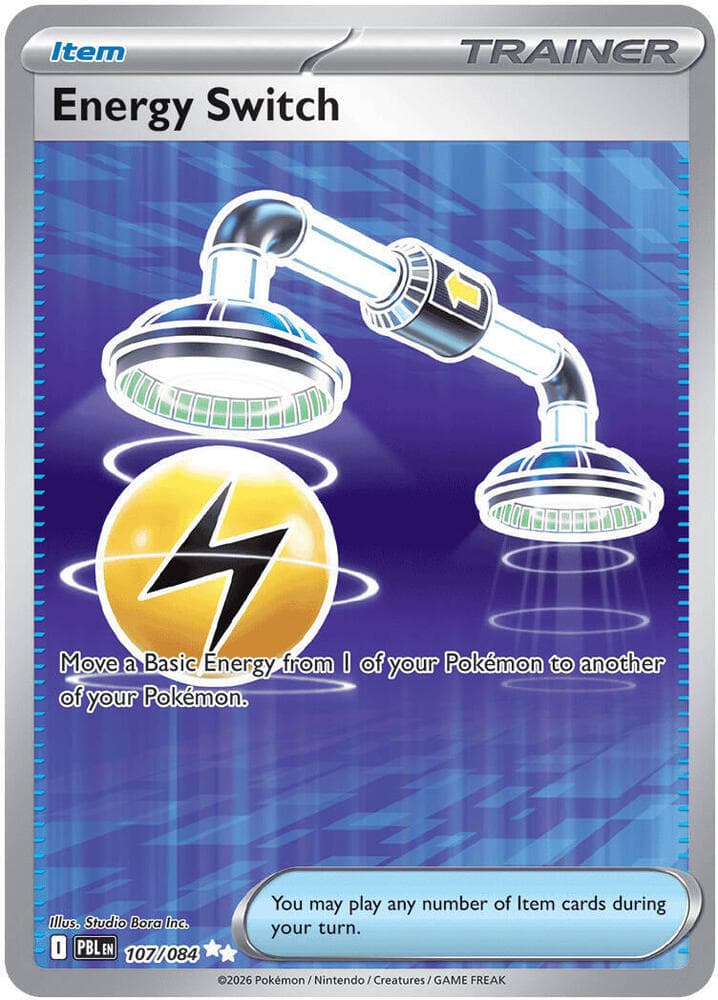
Energy Switch in Ultra Rare form presales at $12.00 — another evergreen staple with no base printing in this set, existing purely as a collectible upgrade for a card every player already owns in quadruplicate. These age like the reliable utility cards they dress up: slowly, steadily, and always tradeable to a deck-builder who wants matching bling.
Gladion's Final Battle UR at $39.99 is the second-priciest trainer in the tier, and unlike most trainer URs it has a clear narrative engine behind it. The card sits between a $1.94 base copy and a $119.99 SIR — a well-formed demand pyramid, which usually indicates real collector conviction rather than speculative froth. The middle of a strong pyramid is a defensible place to buy or trade in.
Gwynn's Ultra Rare presales at $35.74, remarkable for a debut character — it outprices every ex UR except Chandelure and Zeraora. The Japanese market already showed Gwynn demand running hotter than expected at the SIR level, and this UR is the affordable expression of the same bet. One of the tier's genuinely interesting holds; debut characters rarely price like this.
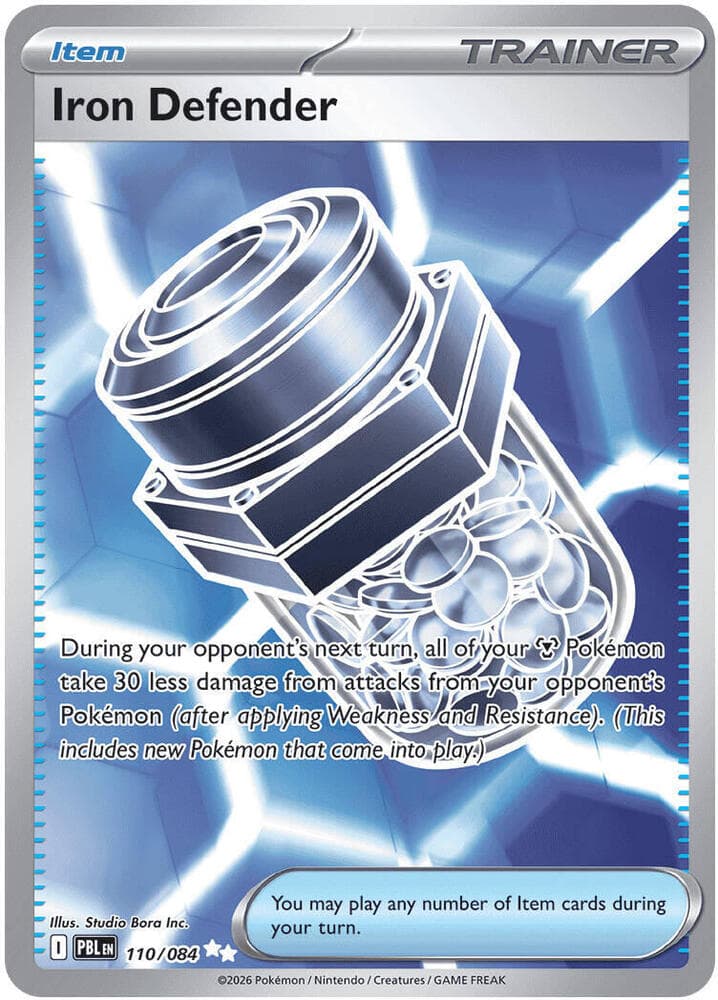
Iron Defender's Ultra Rare at $9.38 is another special-treatment-only appearance with no base copy in the set. It sits at the quiet end of the trainer URs, which for a purely collectible printing means limited urgency in either direction. Completionists need it; nobody else is looking. In a set full of loud signals, a silent card is its own kind of information.
The most expensive trainer card in Pitch Black outside the SIR block: Misty's Vitality UR at a striking $75.00 presale — Kanto gym-leader nostalgia expressed in cold cash, outpricing most of the set's ex URs. Misty-branded cards have one of the longest appreciation track records in the hobby, which is exactly why the launch premium here is so aggressive. Beautiful card, brutal entry price; a prime candidate to trade into a month from now instead of buying today.
Rust Syndicate Grunt's Ultra Rare at $14.99 rides the same signal as its $2.99 base copy — the market thinks the villain supporter is playable, and playable supporters in premium dress hold value better than decorative ones. If the Grunt shows up in winning Darkrai lists, this UR has room; if not, it drifts back toward the tier floor.
Tremendous Bomb UR at $19.25 closes the Ultra Rare block with the set's most ominously named item in gold-tier dress. Its price mirrors the base copy's speculative premium at roughly 10x — the standard UR multiple for a trainer the market is curious about but unconvinced by. Tournament results will resolve this one quickly, in one direction or the other.
Six cards, the set's crown jewels — roughly one SIR per five to six boxes by early estimates, a specific one closer to 1-in-20-to-30. Every card here is a legitimate chase, and every price here is a launch premium.
Mega Zeraora ex SIR, presaling at $171.34, is the third-priciest card in Pitch Black — and the SIR with the most complicated story. On raw name value, the electric mythical's first-ever Mega form in full alternate-art treatment should be an automatic top-two chase. But Japanese Abyss Eye data threw a curveball: Gwynn's SIR has been outperforming it, an almost unheard-of result for a character card versus a marquee Mega. That does not make Zeraora a bad card; it makes its $171 presale a genuinely uncertain number, capable of moving either direction once English pull rates and demand reveal themselves. The prudent read: if you want it for the binder, trade duplicates into it and enjoy it. If you are holding it as an investment, understand that this is the SIR most likely to be repriced — in either direction — by August. Mythical Pokémon with fresh Mega forms do not come along often, and neither does this much ambiguity at the top of a set.
Mega Chandelure ex SIR at $223.76 is the second-most-expensive card in the set, and the one seasoned market watchers keep calling underappreciated — the sense that collectors are sleeping on it has followed this card since the Japanese release. The case is easy to make: a brand-new Mega of one of the most beloved Ghost-types ever designed, the strongest UR-tier performance of any ex in the set backing it up ($64 at #099), and a fraction of the attention commanded by the Darkrai printings two slots down. Chase hierarchies set in launch week are not permanent; sets routinely re-rank once the crowd's gaze moves on and the quiet cards find their audience. At roughly a third of the Darkrai SIR's price, this is the premium Pitch Black card with the most plausible upside story — and the one we would most readily trade multiple mid-tier hits to land. If the ghost chandelier is ever going to be expensive, it starts from here.
This is the card of the set: Mega Darkrai ex SIR #116, illustrated by Akira Egawa, presaling in the $400–600 band — $599.69 on TCGplayer as of July 11, with European copies moving at €280–330. Egawa's name alone moves markets; his alternate arts have produced some of the era's most durable chase cards, and pairing him with the set mascot at its rarest non-gold tier is as close to a guaranteed grail as modern Pokémon gets. Now the sober part: this price is a pre-launch number for a card nobody has legally pulled yet, sitting at the exact peak of the hype cycle, with early estimates suggesting a specific SIR falls once per 20–30 booster boxes. Launch-window history says cards like this typically shed 30–50% in the first weeks as supply floods in — which would put the settle zone somewhere around $300–400 if the pattern holds, before any long-term climb. Chasing it from packs costs more than buying it; buying it today costs more than trading for it in August. Patience is the entire strategy here.
Morpeko ex SIR #117 is the mystery box of the chase tier: as of July 11 it has no settled presale market price — a listings vacuum, not a lack of interest. The Japanese market treated the Morpeko SIR as a legitimate chase, and everything else in the hamster's Pitch Black line is overperforming its rarity (a $24.40 UR that outprices several Megas). When English product cracks open on July 17, this card's first week of sales will set its number in real time, and early sellers will be pricing blind against early buyers who know exactly how strong Morpeko's collector cult is. That is a volatile, information-poor market — the kind where trades are safer than cash deals, because both sides exchange cards rather than guessing a dollar figure. If you pull one, resist the urge to move it in the first 48 hours; if you want one, launch weekend's confusion may honestly be your best entry window.
Gladion's Final Battle SIR #118, presaling at $119.99, is the emotional centerpiece of Pitch Black — the farewell card for one of the most beloved rivals the franchise has written, printed in a set built around his partner Pokémon's story. Character and trainer SIRs have become the sneaky outperformers of the modern era: they are printed at the same rarity as the Pokémon SIRs but attract a different, often deeper-pocketed audience of story collectors, and their prices tend to be stickier once established. The full Gladion pyramid in this set — $1.94 uncommon, $39.99 UR, this SIR — shows conviction at every tier, which is the healthiest demand shape a card can have at launch. At roughly $120, this is the most affordable card in the SIR block, and quite possibly the one whose price five years from now will least resemble its price today. Sentiment is not a market fundamental, except in trading cards, where it is the only one.
Gwynn SIR #119 is the data point that should reorganize how you read this whole set: in Japan, this card has been outperforming the Mega Zeraora ex SIR — a debut character supporter outselling a marquee Mega at equal rarity. The English presale market has not caught up, listing her at a flat $100.00, the cheapest Pokémon-or-character SIR in the block. Maybe Western collectors will not bond with the Mega Dimension DLC's breakout the way Japanese collectors did; regional taste gaps are real. But when the market that has actually had the cards for months prices a card one way, and the market that has not prices it another, the informed side is usually not the guessing one. At $100 into a $170+ Japanese signal, Gwynn is the closest thing Pitch Black's chase tier has to a mispricing — and the SIR we would quietly prioritize in launch-week trades while everyone else is staring at Darkrai.
The summit: Mega Darkrai ex Mega Hyper Rare #120, the gold card, presaling at $999.69 with the Japanese equivalent already trading above $1,000. Early estimates put it at roughly one copy per 45 booster boxes — which, at presale box prices, makes the expected cost of pulling one yourself something north of $4,000 in sealed product. Nobody should ever rip for this card; it is acquired, not opened. The gold MUR tier is where launch economics get genuinely strange: supply is so thin in week one that the price is set by a handful of transactions between the most motivated buyers on earth, and then drifts as copies accumulate. Whether this Darkrai holds its four figures depends on the same question as everything else in Pitch Black — does the deck deliver, and does the set become iconic? A bet that size belongs only in portfolios that can laugh it off. For everyone else, this card's job is to make the $600 SIR look reasonable. Do not fall for that either.
Presale and week-one prices are set by the most impatient money in the hobby, and then supply arrives: hyped launch singles historically shed 30–50% of their value in the first weeks as boxes get cracked. The $600 Darkrai SIR and the $75 Misty UR are prices from a market with almost no supply and maximum attention. That imbalance ends July 17.
The sealed math is just as unforgiving: at one SIR per 5–6 boxes, the average SIR costs $800–900 in sealed product to pull — and probably not the one you wanted, since a specific SIR runs 1-in-20-to-30 boxes. Opening packs is a joy and we will never tell you not to. As a way to acquire a $224 Chandelure, though, it is roughly a 4x overpay with extra steps.
Which leaves the third option, and the reason Swaptio exists. Launch week means thousands of people simultaneously opening product and pulling hits they did not want; the ripper who pulled Gwynn but wanted Darkrai and the collector who worships Gwynn solve each other's problem at zero premium. Think in three trade-value bands: premium (the SIR block and the gold, $100+ — trade only against equivalent hits), solid (IRs, URs and the Mega Double Rares, roughly $5–80 — the liquid middle) and bulk-plus (the throw-ins that balance a deal). Price both sides of a trade on the same day; numbers move daily this week.
The playbook: list every duplicate hit on your offers page while the launch premium still inflates trade value, and put targets on your wishlist so matches find you. Trading a $170 Zeraora you did not want for $170 of cards you did costs nothing — during the one week when everything is overpriced together, the inflation cancels out. Sellers love launch week; traders should love it more.
Pitch Black vs Abyss Eye: what changed crossing the ocean
Pitch Black is a near 1:1 adaptation of Japan's Abyss Eye (M5) — same story, same Mega quartet, same SIR lineup — with changes worth knowing, especially if you own Japanese copies or followed our Abyss Eye set guide. The English set folds extra material into one 84-card main list, so numbers do not map one-to-one; cross-reference by card name and rarity.
The headline differences: Mega Delphox ex (#008), Mega Slowbro ex (#031) and Jett (#079) are integrated into Pitch Black's main numbering; the Zarude Illustration Rare was cut from boosters and became the stamped ETB promo; and Miraidon, Koraidon and Zarude all took rarity demotions to ordinary Rares — which quietly makes the English master set cheaper to complete.
For price forecasting, Abyss Eye is the best crystal ball available. Japanese singles have had months to settle, and two signals stand out: the gold Darkrai holding above $1,000, and Gwynn's SIR outrunning Mega Zeraora's. The markets never converge exactly, but direction travels even when magnitude does not.
Frequently asked questions
When does Pokémon Pitch Black release?
Mega Evolution — Pitch Black (ME05) releases worldwide on July 17, 2026. Prereleases run through July 12, with Build & Battle Boxes containing one of four stamped promos: Miraidon, Slowbro, Dhelmise or Bastiodon.
How many cards are in Pitch Black?
120 cards: 84 in the main numbered set plus 36 secret rares — 11 Illustration Rares, 18 Ultra Rares, 6 Special Illustration Rares and 1 Mega Hyper Rare, confirmed against the full card database.
What is the most expensive card in Pitch Black?
The gold Mega Darkrai ex Mega Hyper Rare (#120), presaling near $1,000 as of July 11, 2026. Next is the Mega Darkrai ex SIR (#116) by Akira Egawa at $400–600. These are pre-launch prices — hyped singles typically drop 30–50% in the first weeks.
What promo comes in the Pitch Black Elite Trainer Box?
A stamped Zarude Illustration Rare that never appears in booster packs. The standard ETB is $49.99; the Pokémon Center version ($59.99, 11 packs, two Zarude promos) sold out on day one, with secondary prices near $185.
Is Pitch Black worth buying at launch?
Ripping on release weekend is fun — just know the math: at early pull-rate estimates, one Special Illustration Rare costs $800–900 in sealed product on average. Singles are cheaper than sealed, post-launch is cheaper than launch week, and trading duplicates on Swaptio is cheaper than both.
Is Mega Darkrai ex good competitively?
Potentially very. Its signature attack, Abyss Eye, automatically Knocks Out any Pokémon affected by a Special Condition — and Hydrapple ex is already being discussed as the format's counter. The playable copy is the Double Rare #048 (~$12.49 presale), not the expensive art versions.
How many cards is a Pitch Black master set?
Plan for roughly 190–200 cards depending on how you count: the 120-card list, reverse holo variants of the main set, plus product and event promos — the ETB Zarude, the four prerelease stamps and the three 30th-anniversary store promos (Primarina, Zarude, Armarouge).
Is Pitch Black the same set as Abyss Eye?
Essentially yes — it is the international version of Japan's Abyss Eye (M5). Differences: Mega Delphox ex, Mega Slowbro ex and Jett join the main list, the Zarude IR became an ETB-exclusive promo, and Miraidon, Koraidon and Zarude were demoted to regular Rares. Card numbers do not map one-to-one.